
Somewhere in the cool, dark belly of a Vermont cheese cave, evolution is rewriting the rules—not with roaring dinosaurs or woolly mammoths, but with mold. Quietly, slowly, but quite literally changing color.

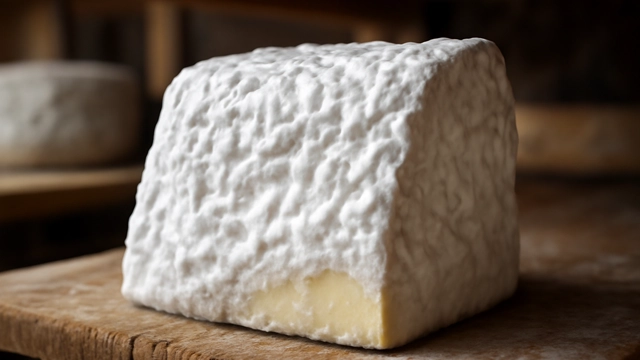
The star of this fungal drama? Penicillium solitum, a rind-ripening mold once known for painting Bayley Hazen Blue cheeses in a velvety green coat. That is, until it went pale. Not sick, not shy—just… unpigmented. Ghostly white.

At first, cheesemakers blinked. Was this a contamination? A one-off mutation? Or had something deeper shifted in their caves?
A team of scientists from Tufts University and Jasper Hill Farm leaned in with microscopes, sequencers, and a touch of microbial curiosity. What they discovered is a modern fable of real-time evolution—one that could reshape how we think about food, fermentation, and the intimate choreography between humans and microbes.
When Pigment Stops Paying Rent
Let’s start with the gene: alb1. In the fungal world, this one is a big deal. It controls the production of melanin, the pigment responsible for all that leafy green color. Melanin isn’t just aesthetic—it protects fungi from UV radiation and oxidative stress. But here’s the kicker: in a cheese cave, where the sun doesn’t shine and the walls are bathed in 90% humidity, UV protection is about as useful as sunscreen at midnight.
That’s where relaxed selection comes in. When a trait stops being useful, evolution tends to let it go—especially if maintaining it costs energy. Producing melanin is metabolically expensive, and over time, P. solitum did what any thrifty mold would do: it shed the pigment pathway.
Multiple strains, from different lineages, converged on this pale outcome. Some picked up point mutations in alb1—tiny tweaks that silenced pigment production. Others saw jumping genes (a.k.a. transposons) insert themselves in regulatory regions, blocking melanin like a stubborn gate. This isn’t coincidence. It’s convergent evolution, and it’s being choreographed by the cave itself.

From Mutation to Market Opportunity?
Now, if you’re picturing mold as an aimless drifter in your brie, think again. This stuff matters. Cheesemakers are as much microbial curators as they are artisans. When a new strain appears, they don’t just watch—they test, taste, and trial.
So when the ghost-white P. solitum started showing up more frequently, Jasper Hill did what any microbially literate dairy artist would: they inoculated a few trial wheels. What they found wasn’t a crisis—it was an opportunity.
Aesthetics: The white rind looked cleaner and more refined—less “wild forest floor,” more “Nordic minimalism.” That’s a visual advantage in high-end markets.
Flavor: The flavor, according to tasters, shifted from funky to a slightly nutty, more subtle profile—still rich, but toned down.
Texture: No drop in growth or structure. The mold ripened cheese just as evenly as its green counterpart.

If you’re a brand thinking about rind identity, this is gold. You’re not just making cheese. You’re cultivating microbial style.
Mold Gets Domesticated
Here’s the big picture: Penicillium in cheese isn’t just “mold.” It’s a living, evolving co-tenant in a carefully constructed ecosystem. And it’s domesticated—not unlike dogs, wheat, or grapes. Except instead of centuries, the changes happen in seasons. The cheese cave becomes an evolutionary pressure cooker.
And just like we’ve bred tomatoes for sweetness or cows for milk, we’re now seeing spontaneous microbial domestication in fermentation environments. We create the niche. Evolution fills it. Sometimes slowly. Sometimes—like here—with surprising speed.
This means microbial management isn’t just about sanitation or starter cultures anymore. It’s about evolutionary awareness. Want consistency in flavor and rind? You’d better know what’s mutating in your aging room.

But There’s a Catch (or Three)
Before we all start painting our cheddar caves white, let’s talk caveats.
- Pigment Loss = Stress Loss?
Melanin isn’t just for show. It helps fungi resist environmental stressors—oxidative stress, light (rare in caves, but not in packaging rooms), even microbial competition. Strip that protection away, and the mold might get more fragile. - Microbiome Interactions Matter
Cheese isn’t a monoculture. It’s a microbial metropolis—bacteria, yeasts, molds, enzymes—all working (or clashing) together. One mutation in one gene of one mold could ripple across the ecosystem. Will the white strain affect proteolysis? Lipolysis? Will it play well with Brevibacterium linens or Geotrichum candidum? - Don’t Generalize Yet
This is P. solitum, in Bayley Hazen Blue, in one cave. We can’t assume other Penicillium species—or different environments—will evolve the same way. But it does tell us one thing: microbes are listening to their environments. Are we?

Evolve or Be Eaten
If this all sounds poetic, that’s because it is. Mold is a storyteller—and in this case, it’s telling us it doesn’t need color anymore. It’s adapting, shedding the ornamental, and keeping what counts.
This is evolutionary biology in the real world. Not in the rainforest or petri dish, but in our food, on our plates, and under our noses. It’s science you can taste, evolution you can package, and microbial design that’s already happening—whether we plan for it or not.
So next time you unwrap a wheel of blue cheese, take a moment. That rind might be white not because something went wrong—but because something evolved. And that, dear reader, is the real funk.
Key Takeaways
- Please login Somewhere in the cool, dark belly of a Vermont cheese cave, evolution is rewriting the rules—not with roaring dinosaurs or woolly mammoths, but with mold.
- What they discovered is a modern fable of real-time evolution—one that could reshape how we think about food, fermentation, and the intimate choreography between humans and microbes.
- Melanin isn’t just aesthetic—it protects fungi from UV radiation and oxidative stress.
- Producing melanin is metabolically expensive, and over time, P.
- Some picked up point mutations in alb1—tiny tweaks that silenced pigment production.
Frequently Asked Questions
What should you know about please login to bookmark?
Please login Somewhere in the cool, dark belly of a Vermont cheese cave, evolution is rewriting the rules—not with roaring dinosaurs or woolly mammoths, but with mold. Quietly, slowly, but quite literally changing color.
What are the key findings about Mold Gets a Makeover?
Please login Somewhere in the cool, dark belly of a Vermont cheese cave, evolution is rewriting the rules—not with roaring dinosaurs or woolly mammoths, but with mold. Quietly, slowly, but quite literally changing color.
How does Mold Gets a Makeover affect public health or safety?
The star of this fungal drama? Penicillium solitum, a rind-ripening mold once known for painting Bayley Hazen Blue cheeses in a velvety green coat. That is, until it went pale. Not sick, not shy—just… unpigmented. Ghostly white.
What do researchers and experts say about Mold Gets a Makeover?
At first, cheesemakers blinked. Was this a contamination? A one-off mutation? Or had something deeper shifted in their caves?
What are the main risks associated with Mold Gets a Makeover?
A team of scientists from Tufts University and Jasper Hill Farm leaned in with microscopes, sequencers, and a touch of microbial curiosity. What they discovered is a modern fable of real-time evolution—one that could reshape how we think about food, fermentation, and the intimate