A Fungus That Changed How Hospitals Think About Infection Control
Candida auris is not the kind of fungus most people picture when they think about mold. It does not grow as a fuzzy patch on shower grout or a dark stain on damp drywall. It is a yeast — a single-celled fungus invisible without laboratory equipment — and yet it has fundamentally changed how hospitals approach fungal infection control.
In healthcare settings, C. auris can spread between vulnerable patients, survive on surfaces and equipment for extended periods, and resist some of the antifungal drugs used to treat serious fungal infections. It can cause invasive bloodstream infections, but it can also colonize people without causing any symptoms — making silent transmission between patients and facilities difficult to detect and contain.
For healthy people at home, C. auris is not a routine daily concern. For hospitals, long-term care facilities, and the infection-control teams working inside them, it represents a serious and ongoing challenge.
What Candida auris Is — and What It Is Not
Candida auris (also being reclassified as Candidozyma auris in some literature) was first described after being isolated from a patient’s ear canal in Japan — “auris” is Latin for ear. But the species is not primarily an ear pathogen. Its clinical significance lies in bloodstream infections, wound infections, and colonization of skin and body surfaces in hospitalized patients.
It belongs to the broader group of Candida yeasts but behaves differently from familiar species like Candida albicans, which are more commonly associated with oral thrush and vaginal yeast infections. C. auris is a healthcare-adapted organism with traits that make it particularly difficult to contain once introduced into a clinical environment.
Colonization: The Silent Transmission Problem
One of the most important concepts for understanding C. auris in healthcare is colonization. Colonization means the yeast is present on a person’s skin or at body sites without causing symptoms or active infection. A colonized patient may feel entirely well — but the yeast can still move from their skin to surfaces, medical equipment, healthcare workers’ hands, and other patients.
This creates a major infection-control challenge. In a hospital or long-term care facility, a single colonized patient can initiate a transmission chain that is difficult to trace once it begins. Colonized patients generally do not require antifungal treatment when no active infection is present, but the facility still needs precautions to prevent spread: contact precautions, gown and glove use, appropriate room placement, and careful equipment disinfection.
Healthcare teams may use screening — swabs from the axilla, groin, or other body sites — to identify colonized patients, particularly during outbreaks, patient transfers, or admissions from facilities with known transmission. What cannot be seen can still move.

Why It Is Hard to Diagnose Quickly
Candida auris does not produce a unique or distinctive symptom pattern. If it causes infection, symptoms depend on the body site involved — fever and chills that do not respond to antibacterial treatment can raise clinical suspicion in the right context, but those findings are not specific to fungal infection.
Accurate identification requires laboratory testing. Some clinical laboratory systems have misidentified C. auris as other yeast species when conventional biochemical methods were used. Reliable identification may require MALDI-TOF mass spectrometry, molecular methods, or updated database references. Without accurate identification, appropriate treatment cannot begin and infection-control measures may not be initiated promptly.
Antifungal Resistance: Narrowing Treatment Options
The rise of C. auris in global healthcare is closely tied to antifungal resistance. Some strains are resistant to one or more major antifungal drug classes — including azoles, polyenes, and in some documented cases, echinocandins, which are often the preferred first-line treatment. Resistance patterns must be confirmed through susceptibility testing because pan-resistant strains have been reported.
This narrows treatment options precisely when patients are already critically ill. Treating every colonized patient would not control the organism and could increase drug resistance pressure. Targeted treatment for confirmed infection — guided by susceptibility data — combined with strong environmental and contact precautions for colonized patients represents the current clinical approach.
Surfaces, Equipment, and the Role of Environmental Cleaning
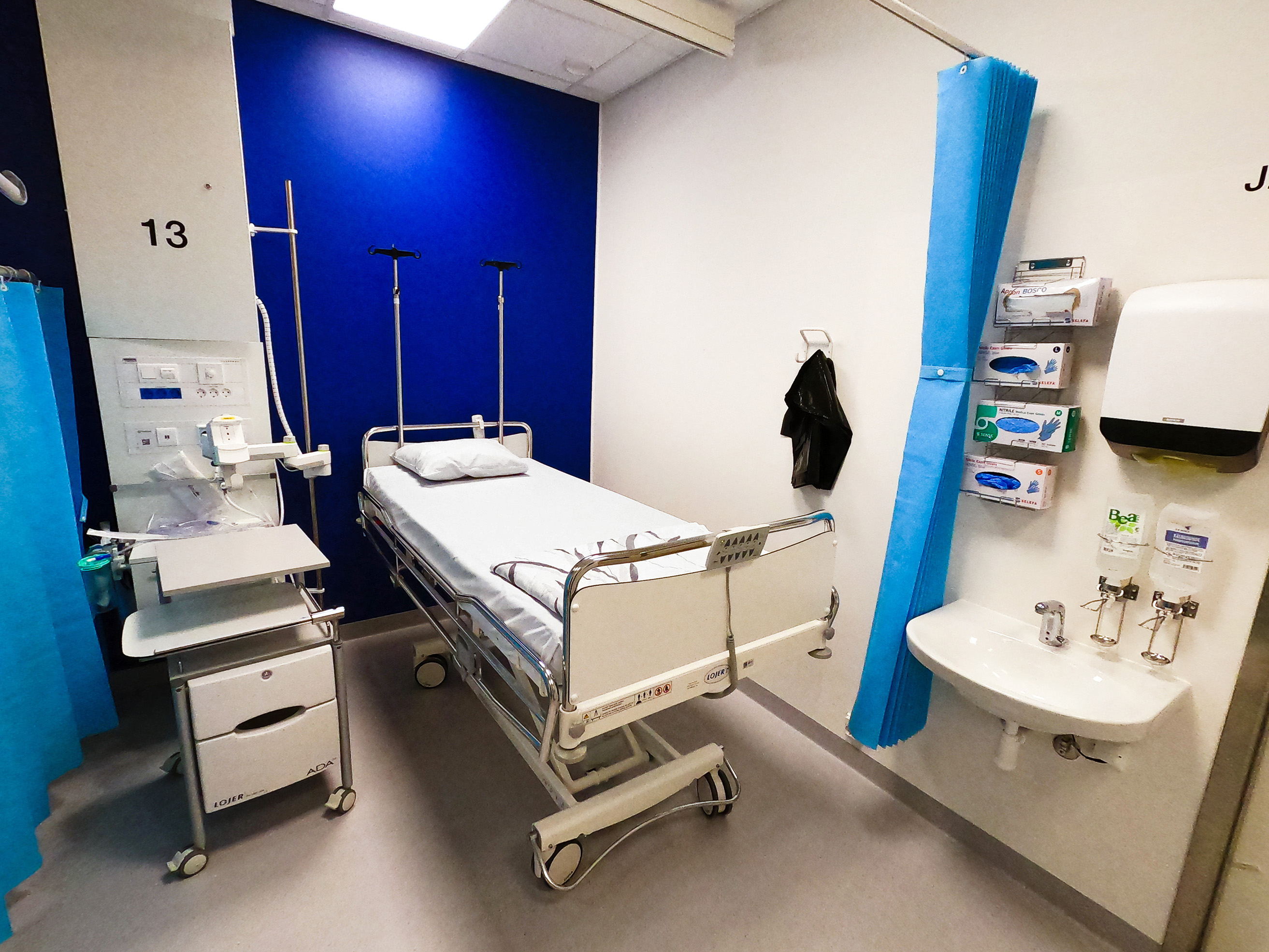
C. auris can persist on surfaces and shared medical equipment significantly longer than many other healthcare pathogens. Bedrails, bedside tables, blood pressure cuffs, thermometers, monitoring equipment, IV poles, and other high-contact items can remain contaminated unless cleaned with products proven effective against this organism.
Standard disinfectants that perform well against common bacteria and other fungi may be insufficient for C. auris. Healthcare facilities need EPA-registered disinfectants with demonstrated efficacy against this organism and must use correct contact times and cleaning frequency. Environmental services teams are therefore a direct component of infection prevention — a critical link in the containment chain, not only housekeeping support.
Why Transfer Communication Is a Key Control Measure
Patients in complex care situations often move between hospitals, nursing homes, long-term acute care facilities, dialysis centers, and rehabilitation settings. When a patient colonized with C. auris transfers without notifying the receiving facility, infection-control precautions may not be initiated, screening may be missed, and equipment may not be appropriately disinfected.
Interfacility communication about C. auris status is recognized as one of the most important control measures. Without it, a small organism can expose significant gaps in a large healthcare system. Standardized transfer documentation, laboratory reporting requirements, and public-health notification systems are part of the infrastructure needed to interrupt transmission chains.
A Growing Surveillance Priority
In the United States, the CDC reported 6,304 clinical cases of C. auris in 2024. While the rate of increase has moderated from earlier years, the trend confirms that surveillance is working and that healthcare facilities need to remain alert. Cases have been identified across multiple geographic regions and in countries with no previous reporting history, reflecting the organism’s ability to spread through international healthcare networks.
Rising case counts reflect a combination of factors: true spread, improved detection methods, expanded screening programs, and increased laboratory awareness. Regardless of the precise mix, the trend reinforces the importance of strong fungal surveillance capacity — the ability to identify, report, and respond to emerging organisms before they become endemic within healthcare systems.
Frequently Asked Questions
Is Candida auris a mold?
No. It is a yeast — a single-celled fungus — not a filamentous mold. It does not form visible fuzzy patches on surfaces and cannot be seen without laboratory equipment.
Who is most at risk?
Hospitalized patients and long-term care residents with serious underlying illness, weakened immune systems, surgical wounds, or invasive medical devices carry the highest risk. Healthy people in ordinary home settings face very low risk.
What does colonization mean?
Colonization means C. auris is present on a person’s skin or at body sites without causing symptoms. Colonized patients may still transmit the yeast to surfaces, equipment, and other patients in healthcare settings.
Why is Candida auris difficult to control?
It can survive on surfaces, spread through healthcare contact, resist some antifungal drugs, colonize patients silently, and be misidentified without appropriate laboratory methods — a combination that makes it one of the more challenging healthcare-associated pathogens currently under surveillance.
How do hospitals reduce its spread?
Through a combination of patient screening, contact precautions (gown and gloves), environmental disinfection with appropriate products, equipment cleaning protocols, antifungal stewardship, and clear communication when patients transfer between facilities.