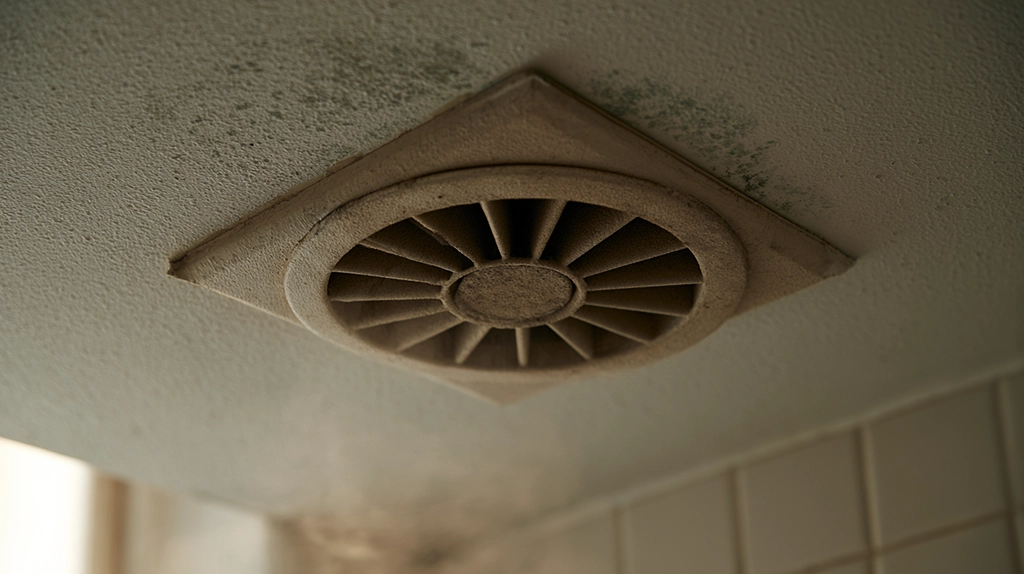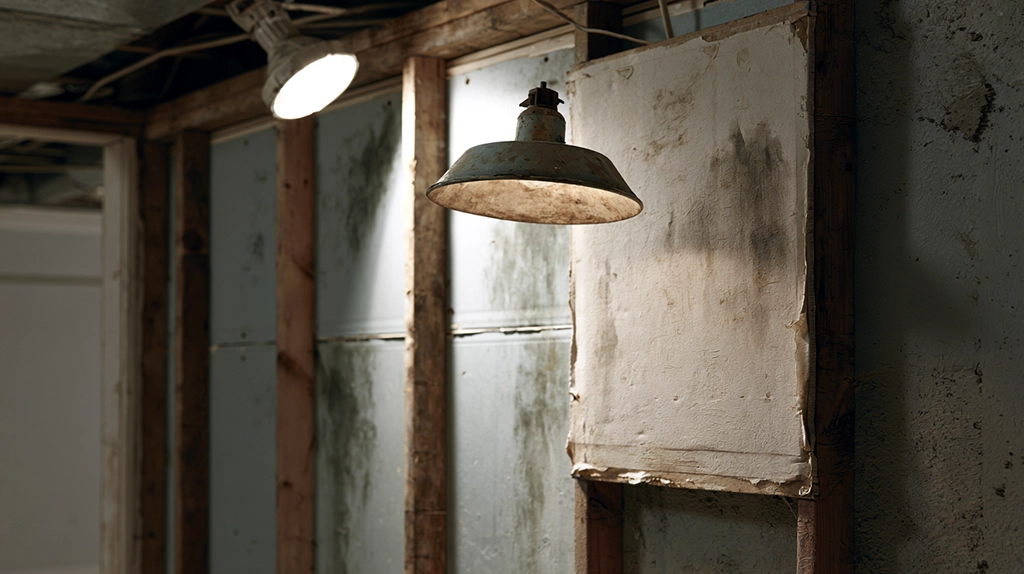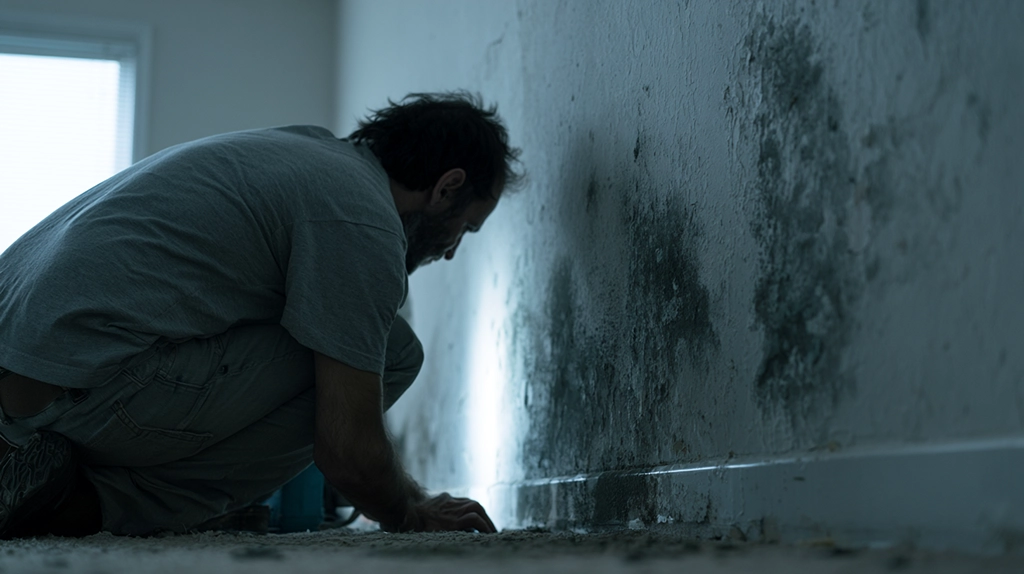
A dark patch appears on a wall, ceiling tile, or damp corner after a leak. The reaction is almost automatic: black mold. That association is understandable — Stachybotrys chartarum is one of the most discussed indoor molds, often linked to “black mold” and “toxic black mold.” But the shorthand misleads. Dark color is not a species identifier. What matters is understanding what Stachybotrys actually is, where it actually grows, and when to seek professional help.
1. Dark Color Does Not Mean Stachybotrys
Many indoor molds can appear black, brown, gray, olive, or dark green. Aspergillus niger, Cladosporium cladosporioides, Alternaria alternata, and Chaetomium globosum can all form dark patches on damp surfaces. Color is not a reliable identification method — it cannot distinguish Stachybotrys chartarum from dozens of other species without laboratory analysis. The better question when finding dark mold is not “Is it black mold?” but: why did this surface stay wet long enough for mold to grow?
2. Stachybotrys Needs Chronic Dampness, Not Just Moisture
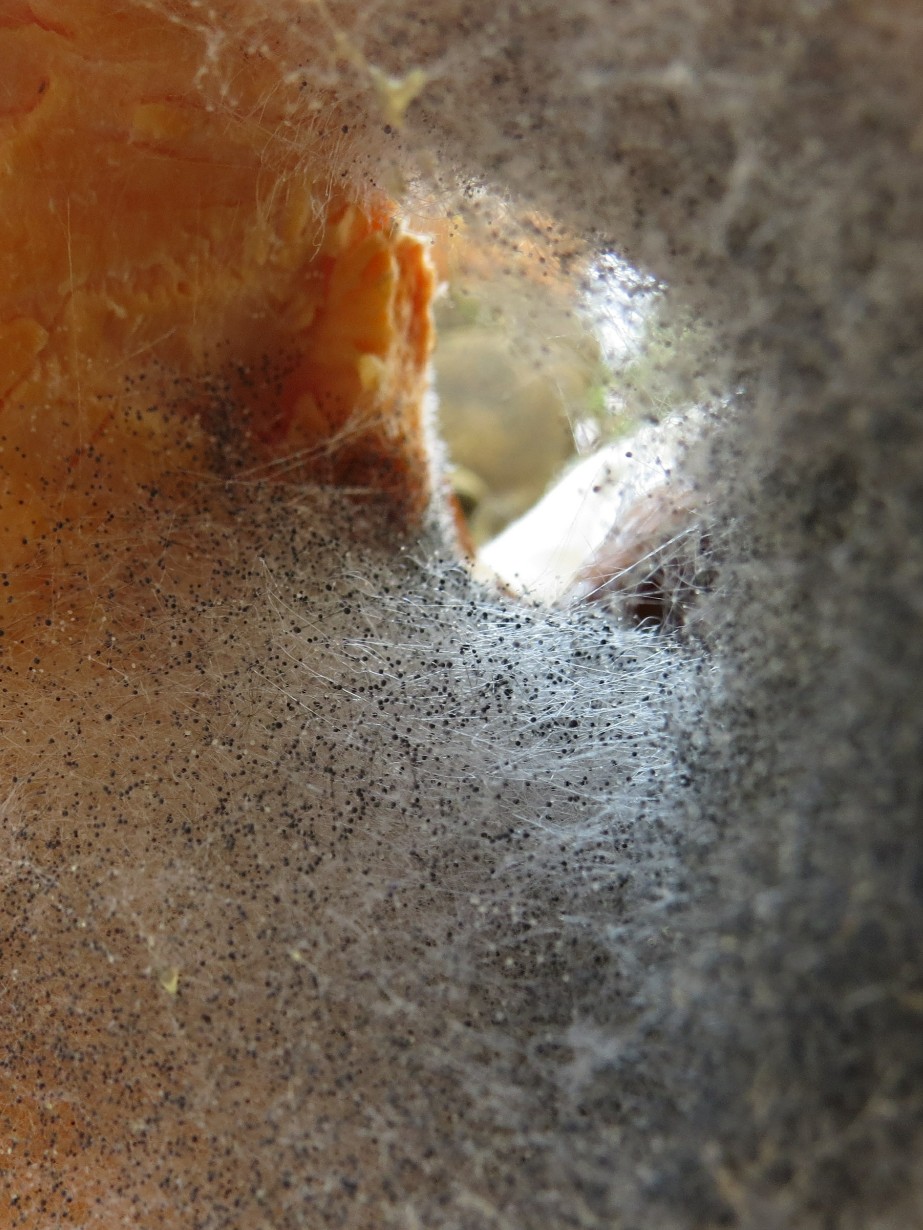
Stachybotrys chartarum is a filamentous fungus that grows as threadlike hyphae across wet, cellulose-rich building materials — paper-faced drywall, fiberboard, cardboard, ceiling tiles. A brief splash is rarely enough. The association is with chronic moisture: prolonged leaks, flooding, condensation, or materials that never fully dried after water contact. This is why S. chartarum appears behind walls near long-term plumbing failures, under wet drywall, or inside flood-damaged structures where drying was incomplete. The mold follows the moisture; the moisture problem came first.

3. Identification Requires More Than a Visual
Stachybotrys is often described as greenish-black to black, but that description also fits several unrelated species. Under microscopy, S. chartarum has a distinctive spore structure — dark-pigmented conidia on phialide-bearing hyphae — but visual inspection in a building context cannot confirm it. Certified air sampling, bulk sampling, or surface sampling sent to an accredited laboratory is required for species-level identification. For many practical situations, the exact species is not the first priority: visible indoor mold means a moisture source must be found and affected materials handled safely, regardless of species.
4. The Mycotoxin Question Is Nuanced
Some strains of Stachybotrys chartarum can produce trichothecene mycotoxins under certain growth conditions. This is documented. But “some strains, under certain conditions” is a different statement than “every dark stain is toxic.” Not all S. chartarum strains produce mycotoxins, and production varies with growth stage, moisture level, substrate, and temperature. Risk also depends on exposure. A small, undisturbed colony discovered during renovation is a different situation from active disturbance of large contaminated areas. The response should be proportionate and informed — not reactive based on color alone.
5. The Response Should Match the Problem
Small surface mold on hard, non-porous, easily dried materials can sometimes be cleaned once the moisture source is corrected. Stachybotrys, however, is typically found on porous, water-saturated materials that are poor candidates for surface cleaning alone. Contaminated drywall, insulation, and fiberboard often need to be safely removed and replaced. Professional assessment is advisable when mold growth is large, recurring, hidden behind walls, linked to a leak or flooding, or accompanied by a persistent musty odor. Do not paint over suspected mold — paint hides the stain but does nothing for the moisture condition beneath.
Frequently Asked Questions
Is all black mold Stachybotrys chartarum?
No. Many mold species produce dark-colored colonies, including Aspergillus niger, Cladosporium, Alternaria, and Chaetomium. Color alone cannot identify a species. Laboratory analysis — air, bulk, or surface sampling — is required for confirmation.
Is Stachybotrys always toxic?
No. Only some strains of S. chartarum produce trichothecene mycotoxins, and production depends on specific growth conditions. Not every colony is toxigenic, and health risk depends on exposure level, individual sensitivity, and whether the material has been disturbed.
What conditions does Stachybotrys need to grow?
S. chartarum requires chronically wet, cellulose-rich building materials — primarily paper-faced drywall, fiberboard, and ceiling tiles. Brief moisture exposure is generally insufficient; prolonged saturation from leaks, flooding, or persistent condensation is typically involved.
Should I test for black mold before calling a professional?
Visual assessment and moisture testing are reasonable first steps. If visible mold covers a large area, recurs after cleaning, or appeared after significant water damage, professional assessment is advisable before disturbing the material.