
A Biological Response to Climate Pressure
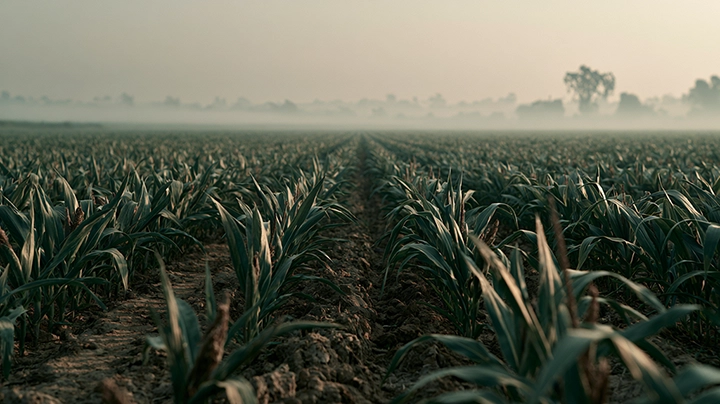
In the shadow of a changing climate, agriculture is being asked to do more with less. Droughts stretch longer, rain arrives out of season, and soils seem to lose their strength year by year. But if you look beneath the surface—beyond the stubble and the dust—there’s a world of possibility stirring, powered by the smallest partners in the field: fungi and bacteria.
A new study by Rehman et al. (2025) brings this hidden community into the spotlight, showing how the right microbial alliances can help wheat not just survive, but thrive, even when water is in short supply. It’s a story about teamwork at the tiniest scale, and it just might point toward a more resilient future for global food systems.

Source: USDA ARS, Public Domain
Roots Under Stress: The Experimental Story
The researchers designed their study to mimic the pressures wheat faces in real-world drought: plants were grown under well-watered, moderately dry, and severely dry conditions. Into these soils, they introduced four microbial scenarios—no inoculation (as a control), arbuscular mycorrhizal fungi (AMF) alone, plant growth-promoting rhizobacteria (PGPR) alone, or both AMF and PGPR together.
Their chosen partners were Rhizophagus irregularis—a widely studied AMF species known for enhancing water and nutrient uptake—and Bacillus amyloliquefaciens, a PGPR associated with root stimulation and stress tolerance.
Throughout the experiment, the team tracked soil organic carbon (SOC), carbon-cycling enzyme activity, microbial biomass, CO₂ assimilation, water use efficiency, and final grain yield. To make sense of these interacting variables, they applied machine learning models, including gradient boosting, to interpret and predict system-level outcomes.

Source: Wikimedia Commons, CC BY-SA
What the Microbes Achieved
The results were remarkable. Wheat plants receiving combined AMF and PGPR inoculation consistently outperformed all other treatments, particularly under severe drought stress. Soils in these systems accumulated over 5% more soil organic carbon than controls, indicating improved fertility and enhanced carbon sequestration.
Key enzymes involved in carbon cycling—including β-glucosidase, xylosidase, and cellobiohydrolase—showed significantly higher activity, accelerating the conversion of plant residues into stable soil carbon pools.
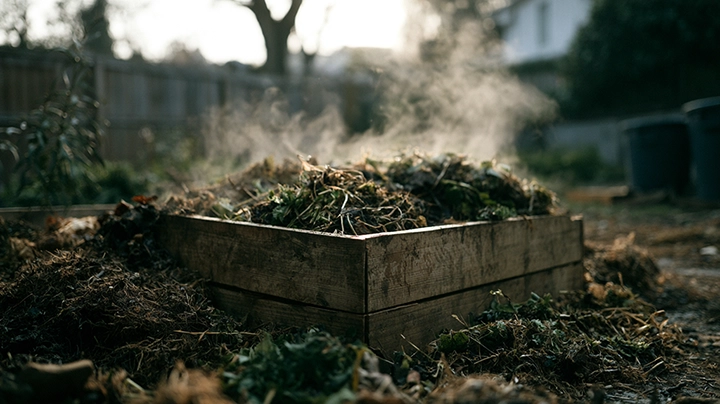
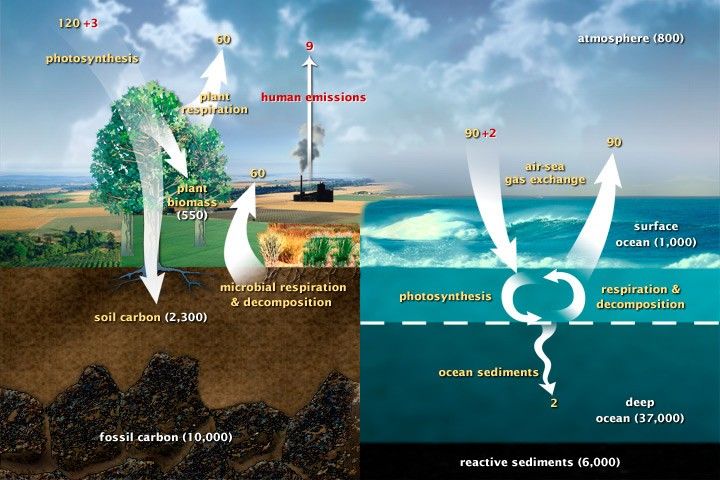
Carbon emission efficiency improved alongside CO₂ assimilation, suggesting that the plant–soil system processed carbon more effectively rather than losing it through respiration. Water use efficiency and grain yield also increased, demonstrating that the crops were not merely enduring drought but optimizing resource use under stress.
Machine learning analysis further revealed that these biological indicators reliably predicted soil carbon outcomes, highlighting the potential of data-guided microbial management in future agricultural systems.
Source: NASA Earth Observatory, Public Domain
Why This Matters: Toward Carbon-Smart Agriculture
For years, microbial inoculants have been discussed as promising but inconsistent tools. This study clarifies why: single-organism solutions are limited, but strategic microbial partnerships can rewire the rhizosphere itself.
Neither AMF nor PGPR alone produced effects comparable to co-inoculation. Together, however, they reshaped nutrient flow, carbon retention, and water efficiency. These gains extend beyond yield, contributing directly to climate mitigationby storing more carbon in soils and reducing dependency on external inputs.
Carbon-smart agriculture, in this sense, is not only about reducing emissions—it is about restoring biological efficiency where climate stress has eroded it.
The Human Element: Quiet Hope Beneath Our Feet
What stands out most is the lesson of partnership. Resilience emerges not from isolation, but from cooperation—between roots and fungi, bacteria and soil, farmers and science.
For growers in drought-prone regions, this research offers a practical strategy: dual inoculation as a low-input, scalable intervention. For scientists, it signals the need to measure not just nutrient presence, but system efficiency and recovery capacity. For technologists, it points toward AI-driven decision tools that recommend microbial consortia tailored to local conditions.
And for policymakers, it highlights a climate adaptation pathway that does not rely on heavy infrastructure or chemical dependence—but on empowering soil’s oldest inhabitants to do what they have always done best.
In a time when food and climate narratives often feel bleak, this study reminds us that hope can be microscopic, cooperative, and already alive beneath our feet.

Source: USDA NRCS, Public Domain
References
- Rehman, M. et al. (2025). Synergistic effects of arbuscular mycorrhizal fungi and plant growth-promoting rhizobacteria on soil carbon dynamics and wheat productivity under drought stress. Agriculture, Ecosystems & Environment, xxx(x), xxx–xxx.
- FAO. Soil organic carbon and climate change.
https://www.fao.org/soils-portal/soil-organic-carbon/en/ - Smith, S.E. & Read, D.J. (2008). Mycorrhizal Symbiosis. Academic Press.
- Bacillus amyloliquefaciens — NCBI Taxonomy.
https://www.ncbi.nlm.nih.gov/Taxonomy/Browser/wwwtax.cgi?id=1390 - Rhizophagus irregularis — NCBI Taxonomy.
https://www.ncbi.nlm.nih.gov/Taxonomy/Browser/wwwtax.cgi?id=588596
Key Takeaways
- Please login A Biological Response to Climate Pressure In the shadow of a changing climate, agriculture is being asked to do more with less.
- But if you look beneath the surface—beyond the stubble and the dust—there’s a world of possibility stirring, powered by the smallest partners in the field: fungi and bacteria.
- It’s a story about teamwork at the tiniest scale, and it just might point toward a more resilient future for global food systems.
- To make sense of these interacting variables, they applied machine learning models, including gradient boosting, to interpret and predict system-level outcomes.
- Soils in these systems accumulated over 5% more soil organic carbon than controls, indicating improved fertility and enhanced carbon sequestration.
Frequently Asked Questions
What should you know about please login to bookmark?
Please login A Biological Response to Climate Pressure In the shadow of a changing climate, agriculture is being asked to do more with less. Droughts stretch longer, rain arrives out of season, and soils seem to lose their strength year by year. But if you look beneath the surface—beyond the stubble
What should you know about a Biological Response to Climate Pressure?
In the shadow of a changing climate, agriculture is being asked to do more with less. Droughts stretch longer, rain arrives out of season, and soils seem to lose their strength year by year. But if you look beneath the surface—beyond the stubble and the dust—there’s a world of possibility stirring,
What should you know about roots Under Stress: The Experimental Story?
The researchers designed their study to mimic the pressures wheat faces in real-world drought: plants were grown under well-watered, moderately dry, and severely dry conditions. Into these soils, they introduced four microbial scenarios—no inoculation (as a control), arbuscular mycorrhizal fung
What the Microbes Achieved?
The results were remarkable. Wheat plants receiving combined AMF and PGPR inoculation consistently outperformed all other treatments, particularly under severe drought stress. Soils in these systems accumulated over 5% more soil organic carbon than controls, indicating improved f
Why This Matters: Toward Carbon-Smart Agriculture?
For years, microbial inoculants have been discussed as promising but inconsistent tools. This study clarifies why: single-organism solutions are limited, but strategic microbial partnerships can rewire the rhizosphere itself.