
The Collection That Became a Timeline
Somewhere in a laboratory freezer, vials of fungal material sit labeled with dates from the 1950s, 60s, 70s. They were collected from diseased wheat fields, infected hop plants, and struggling grain crops — preserved as reference samples for future identification work, filed away and largely forgotten once newer isolates came along.
For decades, these collections served a straightforward archival purpose: here is what Fusarium culmorum looked like in 1963, here is a sample of Verticillium nonalfalfae from a 1978 outbreak. Useful for comparison, not much else.
A 2025 study in BMC Genomics changed that interpretation. By sequencing 32 archived fungal genomes spanning roughly fifty years — isolates of Fusarium culmorum, Verticillium nonalfalfae, and Fusarium lateritium collected between 1950 and 2000 — researchers demonstrated that these collections are not static records. They are temporal datasets: a record of how pathogens were actually changing, year by year, under real agricultural conditions.
The freezers, it turns out, contain evidence.
Fifty Years of Genomes, Read Directly
Most evolutionary studies work by inference. Researchers sequence pathogens as they exist today, compare them against related species or known ancestral forms, and construct models of how change probably occurred. It is a powerful approach, but it is necessarily indirect.
What historical genomics allows instead is direct comparison across time. The 1963 isolate can be placed beside the 1998 isolate and the differences measured without reconstruction.
📷 [IMAGE 1: Fusarium culmorum on wheat or grain crop]

Fusarium culmorum infection on wheat: head blight symptoms (A–B), brown/purplish stem discoloration (C), and orange sporodochia on spikelets (D–F). One of three fungal pathogens whose archived genomes were sequenced across fifty years to track evolutionary adaptation.
Credit: Barbara Scherm et al., via Wikimedia Commons, CC BY 4.0
The dataset here is modest — 32 genomes from three species across approximately five decades — and the researchers are careful to frame its scope accordingly. This is not a global survey of fungal evolution. It represents specific pathogens from specific regions during a specific period of agricultural history. But within those limits, it provides something most evolutionary datasets cannot: a direct window into how pathogen populations shifted under sustained environmental pressure, rather than a model of how they might have.
Agriculture as a Pressure System
The decades between 1950 and 2000 were not a neutral period for agriculture. They encompassed the Green Revolution, the widespread adoption of synthetic fungicides, the development and deployment of resistant crop varieties, and the expansion of large-scale monoculture across much of the world.
For fungal pathogens, all of this represented sustained pressure. Crops were more genetically uniform, making large-scale infection easier but also creating consistent selection pressure. Fungicide application became routine, targeting specific biochemical pathways. The agricultural environment that fungi encountered was, by the end of this period, substantially different from the one they had faced at its beginning.
The study detected measurable shifts in single nucleotide polymorphism frequencies within genes associated with pathogenicity across this timeframe. These shifts suggest that fungal populations were responding — not to any single intervention, but to the cumulative pressure of agricultural intensification as a system.
The relationship is associative rather than causal. Agriculture operates alongside climate shifts, soil ecology changes, and microbial competition, and the study does not isolate individual drivers. But it establishes that the agricultural environment of the second half of the twentieth century was doing something to these populations at the genomic level.
Resistance Is Part of the Story, Not All of It
When fungal adaptation gets discussed in agricultural or medical contexts, the conversation tends to center on resistance: a fungicide is applied, a mutation emerges that neutralizes it, the resistant strain spreads. It is a well-documented and genuinely important process.
This study complicates that picture in a useful way. Fungicide target genes showed relatively limited evolutionary change compared with other genomic regions. The more significant shifts appeared in genes associated with pathogenicity and host interaction — the systems that govern how fungi engage with plants, bypass plant defenses, and establish infection.
This suggests that adaptation in these populations was not primarily a story of direct chemical resistance. It was broader: adjustments in infection strategy, ecological fitness, and interaction dynamics that accumulated across decades of changing agricultural conditions.

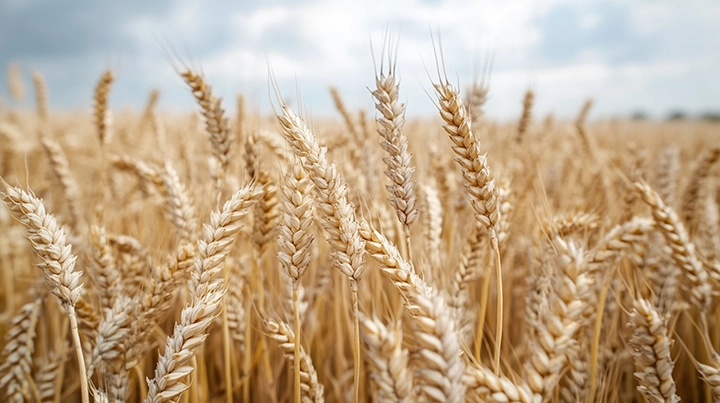
White heads of wheat caused by *Fusarium* crown rot — a chronic fungal disease affecting wheat and barley yields. Fungal pathogens like *Fusarium* have been adapting their infection strategies over decades of agricultural intensification, as revealed by historical genomic analysis.Credit:
CSIRO, via Wikimedia Commons, CC BY 3.0Resistance is real and important. But framing it as the central mechanism of fungal adaptation may cause other forms of change — potentially equally consequential — to go unmonitored.
Effector Genes: The Infection Toolkit Shifts
Among the most specific findings in the study is the observed turnover in effector gene content across historical isolates. Effector genes are a class of fungal genes that encode proteins used to interact with and manipulate host plants — essentially the molecular tools fungi use to breach plant defenses and establish infection.
The fact that effector gene content changed across decades of archived isolates indicates that fungal pathogens were modifying their infection toolkit as agricultural conditions evolved. As crop varieties changed, as plant immune systems were bred for specific resistances, as the host environment shifted, the pathogens adjusted the proteins they deployed in response.
This does not mean a single fungicide triggered a specific effector change. The relationship between individual agricultural practices and individual genomic shifts is not what the data shows. What it does show is that effector systems are dynamic — not fixed biological programs but evolving responses to a changing host environment.
For plant breeders and crop protection researchers, this matters. Resistance traits bred into crops today are encountering pathogens whose infection strategies are not static. The target is moving.
What the Archive Cannot Tell Us
Historical genomics has real limitations worth naming directly. Thirty-two genomes from three species across one region of fifty years is a constrained dataset. It cannot tell us how other pathogens in other regions evolved during the same period. It cannot isolate which specific agricultural practices drove which specific genomic changes. It cannot be used to generate precise predictions about what will happen next.
The researchers are appropriately restrained about these limits. This is a study that opens a direction rather than closing a question.
What it does establish — usefully and concretely — is that archived collections can be treated as evolutionary records rather than simply as catalogues of historical specimens. Other researchers, with access to other collections, can apply the same approach to other pathogens. The methodology is the contribution as much as the specific findings.
Toward Predictive Monitoring
The practical direction this work points toward is a shift in how fungal pathogens are monitored in agricultural systems: from reactive surveillance — detecting and responding to outbreaks after they occur — toward something more anticipatory.
If archived genomic data can reveal how pathogen populations shifted over decades in response to agricultural pressure, then combining that historical data with current monitoring could support earlier identification of emerging trends. Population shifts, changes in pathogenicity-related gene frequencies, turnover in effector gene content — tracked over time, these could provide early signals of adaptation that current outbreak-focused monitoring would miss entirely.
This is a conceptual direction rather than an operational system. The infrastructure, the sequencing capacity, and the analytical frameworks required to make this work at scale do not yet exist in most agricultural monitoring programs. But the underlying logic is sound, and this study provides part of the evidence base for building toward it.
Pathogens as Moving Targets
There is a default assumption built into a lot of crop protection thinking: that pathogens are stable enough to be understood, catalogued, and then managed according to known characteristics. Breed in this resistance. Apply this fungicide. The pathogen is the fixed variable; the intervention is the moving one.
What this study contributes, alongside a growing body of evolutionary research in plant pathology, is evidence that the assumption deserves more scrutiny. Fungal pathogens are not static. Their genomes shift in response to the agricultural systems they inhabit. Their infection strategies evolve. The version of Fusarium culmorum that appeared in a 1998 collection was not the same organism, genomically, as the one preserved in 1963 — even though it carried the same species name and caused the same category of disease.
The vials in the freezer hold more than old samples. They hold a record of adaptation — one that agriculture helped write, and that agriculture will need to keep reading.
FAQ
What does this study show about fungal evolution? By sequencing 32 archived genomes spanning fifty years, it demonstrates that fungal pathogen populations change measurably over decades under sustained environmental and agricultural pressure.
Does the study prove agriculture caused these changes? No. It shows association rather than isolated causation. Agriculture is a major pressure, but climate, soil conditions, and ecological competition also shape fungal evolution.
Is fungicide resistance the main adaptation mechanism found? Not primarily. Fungicide target genes showed limited change compared with pathogenicity-related genes and effector gene content, suggesting broader genomic adaptation beyond direct chemical resistance.
Why are historical fungal samples scientifically valuable? They allow direct genomic comparison across time, providing evidence of long-term adaptation that inference-based evolutionary models cannot replicate.
Can this research help predict future outbreaks? It contributes to predictive frameworks, but requires integration with current monitoring data and broader ecological context to support actionable forecasting.
References
- BMC Genomics (2025). Historical genomics of crop fungal pathogens reveals long-term adaptation under agricultural conditions. BMC Genomics. https://link.springer.com/article/10.1186/s12864-025-12472-2
Key Takeaways
- Please login The Collection That Became a Timeline Somewhere in a laboratory freezer, vials of fungal material sit labeled with dates from the 1950s, 60s, 70s.
- A 2025 study in BMC Genomics changed that interpretation.
- It is a powerful approach, but it is necessarily indirect.
- The 1963 isolate can be placed beside the 1998 isolate and the differences measured without reconstruction.
- But within those limits, it provides something most evolutionary datasets cannot: a direct window into how pathogen populations shifted under sustained environmental pressure, rather than a model of how they might have.
Frequently Asked Questions
What should you know about please login to bookmark?
Please login The Collection That Became a Timeline Somewhere in a laboratory freezer, vials of fungal material sit labeled with dates from the 1950s, 60s, 70s. They were collected from diseased wheat fields, infected hop plants, and struggling grain crops — preserved as reference samples for future
What should you know about the Collection That Became a Timeline?
Somewhere in a laboratory freezer, vials of fungal material sit labeled with dates from the 1950s, 60s, 70s. They were collected from diseased wheat fields, infected hop plants, and struggling grain crops — preserved as reference samples for future identification work, filed away and largely forgott
What should you know about fifty Years of Genomes, Read Directly?
Most evolutionary studies work by inference. Researchers sequence pathogens as they exist today, compare them against related species or known ancestral forms, and construct models of how change probably occurred. It is a powerful approach, but it is necessarily indirect.
What should you know about agriculture as a Pressure System?
The decades between 1950 and 2000 were not a neutral period for agriculture. They encompassed the Green Revolution, the widespread adoption of synthetic fungicides, the development and deployment of resistant crop varieties, and the expansion of large-scale monoculture across much of the world.
What should you know about resistance Is Part of the Story, Not All of It?
When fungal adaptation gets discussed in agricultural or medical contexts, the conversation tends to center on resistance: a fungicide is applied, a mutation emerges that neutralizes it, the resistant strain spreads. It is a well-documented and genuinely important process.