I. The Soil Beneath Our Civilization
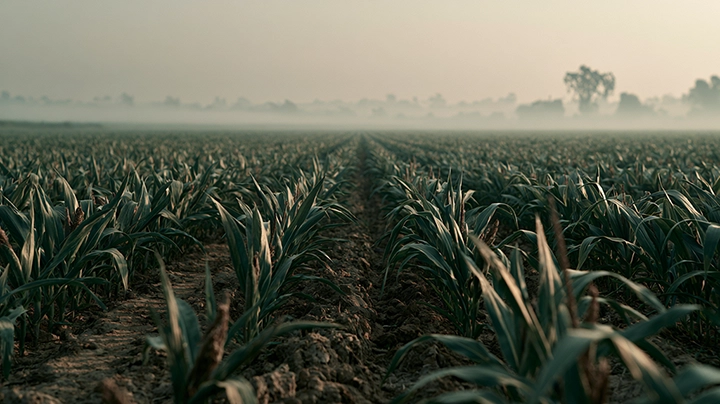
They say adventure lies in the uncharted corners of the world — but the real frontier might be right under our boots. Beneath the crops we harvest and the cities we pave, the soil is quietly rewriting its own story.
Thanks to decades of industrial runoff and e-waste, heavy metals like bismuth (Bi) are slipping into farmland ecosystems once thought safe. Bismuth isn’t the loudest villain in the periodic table, but it’s insidious — toxic enough to cripple photosynthesis, stunt growth, and trigger biochemical chaos inside a plant’s cells.
Most crops wither under such pressure. But oats, it seems, have found a way to fight back — not alone, but with allies. Living, microscopic ones.

II. The Discovery
A team of plant biologists tested how oats respond when partnered with arbuscular mycorrhizal fungi (AMF) — the ancient underground network that once helped early plants colonize land — and an unexpected companion: the trace element germanium (Ge).
Germanium is a curious character. Chemically akin to silicon — the stuff that makes up glass and computer chips — it also has a subtle biological side. In trace amounts, it strengthens cell walls and supports photosynthesis. In excess, it can distort growth.
The researchers wanted to know: could germanium, together with fungi, teach plants to endure metal stress?
They set up four conditions — control, bismuth-only, AMF-only, and AMF + Ge — and let the underground drama unfold.
III. Bismuth’s Wrath
First came the control test: oats grown in bismuth-tainted soil without help.
The results were brutal.
Fresh weight fell by 65%, dry weight by almost 70%. The plants’ chlorophyll faded, and their photosynthesis all but collapsed. Inside, the cells were drowning in oxidative stress — hydrogen peroxide (H₂O₂) and malondialdehyde (MDA) levels spiked, marking the telltale fingerprint of damage.
Even the plants’ internal defense systems — their antioxidants and detox enzymes — couldn’t keep up. Imagine a ship patching leaks faster than it sails, until the sea wins. That’s what bismuth does to unprotected roots.

IV. The Fungal Alliance
Then the scientists tried again, this time giving the oats fungal partners.
AMF — invisible threads that weave between root cells — began to form their symbiotic networks. They don’t just share nutrients; they reshape the plant’s entire physiology.
Under their influence, the oat roots started drawing in phosphorus and water more efficiently. But the real surprise came when germanium entered the picture.
Together, AMF and Ge turned the tables:
- Fresh weight rose by 92.8%
- Dry weight increased by 123.9%
- Photosynthesis improved by 67% compared to damaged controls
Oxidative chaos subsided — antioxidant molecules like glutathione (GSH) and ascorbate (vitamin C) surged, neutralizing reactive oxygen species before they could burn through the cells.
Even more intriguing, the detox machinery shifted strategy: the plants increased phytochelatins and glutathione, locking up metals into safe complexes, while metallothioneins — usually a distress signal — decreased.
It’s as if the oats stopped panicking and started strategizing.

V. Germanium: The Wild Card
Germanium rarely gets a line in the script of plant science, but here it stole the scene.
It stabilized membranes, reduced ion leakage, and even improved water balance by promoting osmolyte accumulation — small molecules like proline and sugars that help cells retain moisture under stress.
Researchers suspect germanium mimics silicon’s beneficial effects — fortifying structure and maintaining photosynthesis under duress. But its synergy with AMF suggests something deeper: the element doesn’t just reinforce the plant physically — it amplifies the fungal network’s signaling power.
Together, they function like a living biofilter, translating environmental stress into a controlled, measured response.
If you’ve ever seen a field of oats shimmering in polluted soil, that resilience may not be luck. It’s architecture at the molecular level — a blueprint of cooperation drawn long before humans discovered metallurgy.
VI. Lessons from the Underground
What this study offers is more than just data — it’s a new chapter in environmental biology.
By pairing symbiotic fungi with trace micronutrients, researchers are uncovering a nature-based alternative to costly soil remediation. Instead of bulldozing contaminated land or relying solely on genetic engineering, we can activate the resilience already coded into life.
AMF can immobilize or sequester heavy metals, buffer osmotic stress, and enhance antioxidant capacity — a multitool forged by evolution itself. Add micronutrients like germanium, and the results become almost orchestral: balanced, efficient, and sustainable.
The implications stretch beyond oats. Wheat, barley, rice — any cereal rooted in stressed soils could benefit. In regions where industrial pollution is rising faster than cleanup budgets, biological partnerships may outpace biotechnology.
Image: Mycorrhizal fungi networks under soil micrograph — Source: Wikimedia Commons (CC BY-SA 4.0)
VII. The Explorer’s Reflection
Reading this study feels like standing at a dig site, brushing dust off an ancient inscription — except the artifact is alive.
We’ve long imagined that progress means conquering nature. Yet here, the lesson runs opposite: survival depends on collaboration, not domination. The soil remembers how to fight back — we just forgot how to listen.
In my field notes, I’d mark this one down under “Evidence of Symbiotic Intelligence.”
Because what the oats and fungi are teaching us isn’t just about plant physiology; it’s about the logic of resilience itself.
In contaminated landscapes, strength doesn’t come from resistance — it comes from relationship.
VIII. MoldNews Verdict
Headline finding: AMF + Ge dramatically mitigates bismuth toxicity in oats by enhancing antioxidative defenses, detox regulation, and osmotic balance.
Translation: The smartest defenses are underground.
If we can harness these biological networks at scale, crop resilience may no longer hinge on synthetic fixes or genetic shortcuts — but on reviving ancient microbial alliances that already know how to endure a toxic world.
And somewhere out there, in the rhizosphere’s quiet darkness, a few fungal filaments are probably smiling.
References
- Wikimedia Commons – CC Licensed Images of Plant–Fungi Interactions
- EPA: Heavy Metals and Agricultural Impact Studies
Key Takeaways
- The Soil Beneath Our Civilization They say adventure lies in the uncharted corners of the world — but the real frontier might be right under our boots.
- Thanks to decades of industrial runoff and e-waste, heavy metals like bismuth (Bi) are slipping into farmland ecosystems once thought safe.
- Chemically akin to silicon — the stuff that makes up glass and computer chips — it also has a subtle biological side.
- The researchers wanted to know: could germanium, together with fungi, teach plants to endure metal stress?
- The results were brutal.Fresh weight fell by 65%, dry weight by almost 70%.
Frequently Asked Questions
What should you know about please login to bookmark?
Please login I. The Soil Beneath Our Civilization They say adventure lies in the uncharted corners of the world — but the real frontier might be right under our boots. Beneath the crops we harvest and the cities we pave, the soil is quietly rewriting its own story.
What are the key findings about Fungus?
Please login I. The Soil Beneath Our Civilization They say adventure lies in the uncharted corners of the world — but the real frontier might be right under our boots. Beneath the crops we harvest and the cities we pave, the soil is quietly rewriting its own story.
How does Fungus affect public health or safety?
Thanks to decades of industrial runoff and e-waste, heavy metals like bismuth (Bi) are slipping into farmland ecosystems once thought safe. Bismuth isn’t the loudest villain in the periodic table, but it’s insidious — toxic enough to cripple photosynthesis, stunt growth, and trigger bioche
What do researchers and experts say about Fungus?
Most crops wither under such pressure. But oats, it seems, have found a way to fight back — not alone, but with allies. Living, microscopic ones.
What are the main risks associated with Fungus?
A team of plant biologists tested how oats respond when partnered with arbuscular mycorrhizal fungi (AMF) — the ancient underground network that once helped early plants colonize land — and an unexpected companion: the trace element germanium (Ge).