
When Mold Toxins Strike
Every compelling plant-health story begins with an antagonist, and Fumonisin B1 (FB1) remains one of the field’s most formidable. Produced by Fusarium species that plague global cereal production, FB1 destabilizes plant cells by interfering with ceramide biosynthesis — a key lipid pathway that maintains membrane integrity and regulates programmed cell death. Once ceramide signaling collapses, the consequences unfold quickly: cells fall apart, chloroplasts dim, and tissues begin to die in expanding patches.
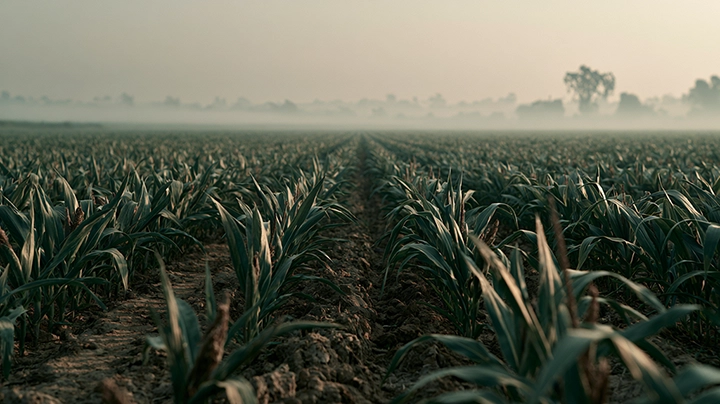
For farmers, FB1 is not a biochemical footnote. It is a worldwide contaminant, striking maize fields with repercussions that echo through livestock feed, human food safety, and international trade. Yet despite FB1’s agricultural importance, the internal defense systems plants use to withstand its damage have been only partially understood.
A new study in New Phytologist reveals an elegant twist in this long-running drama. Arabidopsis thaliana, the modest research plant that rarely receives heroic framing, appears to possess a peptide-based rescue system. At the center of this defense is phytosulfokine (PSK), a small signaling molecule that has quietly waited for its starring role.

A Peptide-Based Plot Twist
The research began with a curious observation: plants pre-treated with microbe-associated molecular patterns (MAMPs) — small biochemical fragments released by microbes — survived FB1 exposure far better than untreated plants. It was as though a soft alarm bell prepared their defenses before the toxin arrived.

Following the molecular trail, the researchers found that the signal translating this microbial warning into genuine resilience came from PSK. Long known for regulating cell expansion and growth, PSK demonstrated a second identity in this study: when supplied externally, it offered complete protection against FB1-induced cell death. Not partial support. Not modest improvement. Complete interruption of the toxin’s lethal cascade.
Receptor activity proved central to this phenomenon. Plants lacking PSKR1, the primary receptor for PSK, or BAK1, an essential co-receptor, were unable to benefit from PSK treatment. Without these receptors, the peptide’s message never arrived, and FB1 advanced unchallenged.
Another layer of complexity emerged when the bacterial peptide flg22 — a classic immune-priming signal — also enhanced FB1 resistance. But this protection worked only when PSK signaling was functional. In other words, flg22 primes the system, but PSK executes the rescue. Defense is not a jumble of independent pathways; it is a coordinated communication network with PSK at its center.
Photosynthesis: The Unexpected Battleground
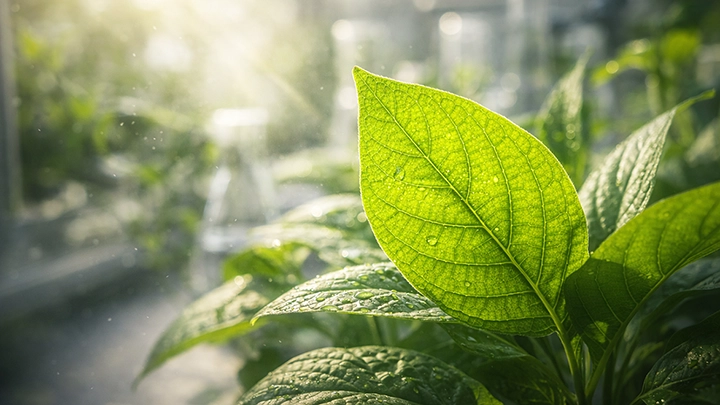
FB1’s damage extends beyond cell death. Proteomic analysis revealed that the toxin suppresses multiple enzymes central to the Calvin cycle, the biochemical engine that powers photosynthesis. When these reactions falter, the plant loses its ability to recover; every attempt at repair is undercut by a failing energy factory.

Here PSK plays yet another unexpected role. Under active PSK signaling, Calvin cycle enzymes rebound, restoring metabolic function even while the toxin remains present. PSK is not simply a shield. It is a restart button, allowing growth to resume in the aftermath of biochemical sabotage. Few known defense pathways offer both protection and metabolic recovery; PSK seems able to do both simultaneously, a rarity in plant stress biology.
Implications for Mold Risk and Crop Safety
Although the research centers on Arabidopsis, its agricultural relevance is unmistakable. FB1 contamination affects maize and other staple crops worldwide, and PSK’s ability to protect cells while supporting photosynthesis positions it as an appealing tool for crop resilience.

Priming crops with synthetic PSK or MAMP-based treatments could activate internal defenses ahead of fungal exposure, reducing reliance on chemical fungicides. Alternatively, breeding or engineering plants with strengthened PSKR1/BAK1 signaling might create varieties naturally equipped to withstand FB1 without compromising yield.
Because PSK supports growth rather than diverting energy away from it, it fits agricultural needs more effectively than many defense pathways, which often impose metabolic costs. A defense mechanism that preserves productivity represents a significant opportunity in a warming climate where fungal pressures are intensifying.
A Multi-Kingdom Conversation
Perhaps the most intriguing dimension of this study is the layered communication it reveals. Bacteria release MAMPs. Plants detect them and respond through peptide signals like PSK. These signals then protect the plant against fungal toxins. It is a conversation spanning kingdoms, where microscopic cues coordinate survival strategies.
Plants emerge not as passive organisms awaiting rescue, but as interpreters of microbial information — organisms capable of translating a bacterial whisper into a full biochemical defense. Plant immunity, in this view, is less a reaction than a multilingual system of negotiations and responses.
Plants have always lived amid chemical threats, but they do not survive by brute resistance alone. They rely on internal messages — peptides like PSK — that interpret danger and orchestrate recovery with precision. In an era defined by climate volatility and rising fungal load, these ancient communication systems may become essential tools for safeguarding global food supplies.
Survival, it turns out, is often less about armor and more about listening for the right signal.
References
Academic Sources
Loivamäki, M., et al. (2023). Phytosulfokine signaling mediates protection against fumonisin B1-induced cell death in Arabidopsis. New Phytologist.
DOI: https://doi.org/10.1111/nph.19072
Wang, H., et al. (2015). Ceramide signaling in plant stress responses. Plant Physiology.
Ranf, S. (2017). Sensing of molecular patterns through cell surface immune receptors. Current Opinion in Plant Biology.
DOI: https://doi.org/10.1016/j.pbi.2017.04.012
Official Sources
Food and Agriculture Organization (FAO): Mycotoxin prevention in crops.
https://www.fao.org
World Health Organization (WHO): Mycotoxin health effects.
https://www.who.int/news-room/fact-sheets/detail/mycotoxins
National Center for Biotechnology Information (NCBI): Arabidopsis research database.
https://www.ncbi.nlm.nih.gov
Key Takeaways
- Please login When Mold Toxins Strike Every compelling plant-health story begins with an antagonist, and Fumonisin B1 (FB1) remains one of the field’s most formidable.
- It is a worldwide contaminant, striking maize fields with repercussions that echo through livestock feed, human food safety, and international trade.
- It was as though a soft alarm bell prepared their defenses before the toxin arrived.
- Plants lacking PSKR1, the primary receptor for PSK, or BAK1, an essential co-receptor, were unable to benefit from PSK treatment.
- But this protection worked only when PSK signaling was functional.
Frequently Asked Questions
What should you know about please login to bookmark?
Please login When Mold Toxins Strike Every compelling plant-health story begins with an antagonist, and Fumonisin B1 (FB1) remains one of the field’s most formidable. Produced by Fusarium species that plague global cereal production, FB1 destabilizes plant cells by interfering wi
When Mold Toxins Strike?
Every compelling plant-health story begins with an antagonist, and Fumonisin B1 (FB1) remains one of the field’s most formidable. Produced by Fusarium species that plague global cereal production, FB1 destabilizes plant cells by interfering with ceramide biosynthesis —
What should you know about a Peptide-Based Plot Twist?
The research began with a curious observation: plants pre-treated with microbe-associated molecular patterns (MAMPs) — small biochemical fragments released by microbes — survived FB1 exposure far better than untreated plants. It was as though a soft alarm bell prepared their defenses befor
What should you know about photosynthesis: The Unexpected Battleground?
FB1’s damage extends beyond cell death. Proteomic analysis revealed that the toxin suppresses multiple enzymes central to the Calvin cycle, the biochemical engine that powers photosynthesis. When these reactions falter, the plant loses its ability to recover; every attempt at repair is undercut
What should you know about implications for Mold Risk and Crop Safety?
Although the research centers on Arabidopsis, its agricultural relevance is unmistakable. FB1 contamination affects maize and other staple crops worldwide, and PSK’s ability to protect cells while supporting photosynthesis positions it as an appealing tool for crop resilience.