
A Cultural Shift Rooted in Mycelium
Functional mushrooms have undergone a remarkable cultural transformation. Once relegated to herbalist shops and alternative health circles, they have now entered the mainstream with a confidence that reflects shifting consumer priorities. The appetite for natural cognitive support, immune resilience, steady energy, and sustainable living has pulled reishi, lion’s mane, cordyceps, turkey tail, and chaga out of obscurity and into everyday routine. What was once viewed as mysticism or folklore has become a modern symbol of biochemical intelligence and regenerative thinking.
This shift is not accidental. It aligns with a growing public desire for solutions that bridge ancient practices and contemporary science. Functional fungi tap into that desire seamlessly: they are biologically rich, ecologically gentle, and culturally resonant. Their rise speaks to a society exploring new relationships with microbial life and seeking wellness models that feel both grounded and forward-looking.
Mushrooms in the Morning Routine
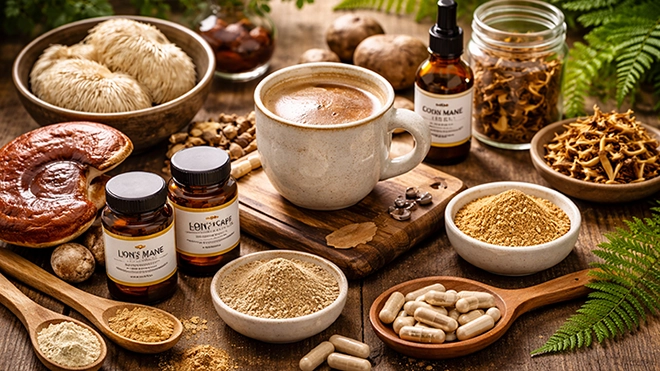
One of the clearest indicators of this movement is the transformation of the morning ritual. Mushroom-infused coffees and lattes, ready-to-drink tonics, and powdered blends have become staples on supermarket shelves. Lion’s mane is marketed for mental clarity, reishi for relaxation, chaga for antioxidant protection, and cordyceps for sustained energy without the turbulence of caffeine. These beverages simplify what was once a niche practice, integrating fungi into daily habits with surprising ease.
The appeal is equal parts wellness aspiration and aesthetic preference. Consumers seek plant-derived compounds that feel natural and minimally processed, yet supported by emerging scientific evidence. This combination has allowed mushroom beverages to migrate from boutique cafés into mainstream circulation, transforming taste, branding, and expectations around functional drinks.
From Soil to Skincare: A Market Expanding in Every Direction
The mushroom movement extends far beyond the cup. Food companies incorporate fungi into wellness bars, functional snacks, and prebiotic powders. Supplement brands formulate cognitive, immune, and stress-support blends anchored in mushroom extracts. Even the skincare sector has embraced fungal compounds, with reishi, cordyceps, and tremellaappearing in serums and moisturizers for their antioxidant and hydrating properties.
This expansion signals a broader consumer shift. People increasingly expect everyday products to provide physiological benefits that go beyond basic nutrition or cosmetic effect. Functional fungi fit naturally into this expectation because they embody adaptogenic potential, microbiome support, and biochemical complexity. Their rise reflects a convergence of health literacy, ingredient transparency, and the desire for routines that nourish both body and identity.

Science Rising Behind the Hype
The popularity of functional fungi has accelerated ahead of clinical consensus, yet research momentum is substantial. Studies continue to explore erinacines and hericenones from lion’s mane, with preliminary findings suggesting roles in neuro-supportive pathways. Reishi’s beta-glucans remain of interest for immune modulation, while cordyceps draws attention for its relationship to energy metabolism and oxygen use. Chaga’s antioxidant properties are under evaluation for potential anti-inflammatory effects.
The key development is the shift toward standardized production. Companies now invest in controlled cultivation, extraction precision, and chemical fingerprinting to ensure consistent potency. This alignment between traditional use and modern biotechnology strengthens credibility while maintaining the cultural allure of fungal medicine. The path forward is not without unanswered questions, but the scientific framework supporting functional fungi is more robust than ever before.

Sustainability as the Movement’s Backbone
Beyond wellness, fungi have become emblematic of ecological possibility. Their cultivation requires minimal land and water, their substrate options include agricultural residues, and their carbon footprint is far lower than many plant- or animal-based alternatives. These traits make mushrooms uniquely attractive in a world searching for sustainable foods and materials.
Mycelium-based innovations extend the movement into packaging, insulation, textiles, and structural composites designed to replace plastics and petroleum-derived products. Whether grown into foam-like panels or shaped into leather-like fabrics, mycelium offers a regenerative alternative that appeals to environmentally conscious consumers. Functional fungi have therefore become symbolic ambassadors of a circular economy, linking personal health to planetary stewardship.

Culture, Aesthetics, and the Rise of the Fungal Imagination
Beyond food and medicine, fungi have infiltrated culture. Mushroom motifs appear in ceramics, clothing, lighting design, architecture, and digital art. The symbolism is difficult to ignore: interconnectedness, resilience, subtle intelligence, and the hidden systems that sustain life. These themes resonate with a public increasingly aware of microbiomes, root networks, and ecological interdependence.
This cultural embrace reflects a broader comfort with concepts once considered esoteric. Microbial narratives feel less foreign today, and fungi serve as tangible reminders that complexity thrives below the surface. In the same way that kombucha, kefir, and probiotics once reframed gut health for consumers, functional fungi are reframing cognition, immunity, and natural materials through the lens of microbial ecosystems.
Where the Mushroom Movement Is Heading
The trajectory of functional fungi points toward deeper integration into modern life. Biotechnology companies are exploring precision fermentation to produce high-purity bioactive compounds. Food developers are experimenting with hybrid formulations combining fungi with algae, botanicals, or plant proteins. Wellness brands are moving toward neuro-supportive and stress-adaptive formulations grounded in controlled extraction and ingredient transparency. Meanwhile, designers continue to push the boundaries of mycelium as a sustainable material.
As scientific validation strengthens and quality standards rise, functional fungi are transitioning from a trend to an established sector. Over time, they may become as normalized as vitamins or probiotics — an embedded part of health, design, and ecological practice. The mushroom movement is not merely expanding; it is restructuring how society approaches wellness and sustainability at the same time.
References
Chang, S.-T., & Wasser, S. P. (2012). The role of culinary-medicinal mushrooms on human welfare. International Journal of Medicinal Mushrooms.
Smith, J. E., Rowan, N. J., & Sullivan, R. (2002). Medicinal mushrooms: Their therapeutic properties and current medical usage.
FAO. Sustainable food systems and alternative proteins.
Key Takeaways
- Please login A Cultural Shift Rooted in Mycelium Functional mushrooms have undergone a remarkable cultural transformation.
- What was once viewed as mysticism or folklore has become a modern symbol of biochemical intelligence and regenerative thinking.
- Their rise speaks to a society exploring new relationships with microbial life and seeking wellness models that feel both grounded and forward-looking.
- Mushroom-infused coffees and lattes, ready-to-drink tonics, and powdered blends have become staples on supermarket shelves.
- The appeal is equal parts wellness aspiration and aesthetic preference.
Frequently Asked Questions
What should you know about please login to bookmark?
Please login A Cultural Shift Rooted in Mycelium Functional mushrooms have undergone a remarkable cultural transformation. Once relegated to herbalist shops and alternative health circles, they have now entered the mainstream with a confidence that reflects shifting consumer priorities. The appetite
What should you know about a Cultural Shift Rooted in Mycelium?
Functional mushrooms have undergone a remarkable cultural transformation. Once relegated to herbalist shops and alternative health circles, they have now entered the mainstream with a confidence that reflects shifting consumer priorities. The appetite for natural cognitive support, immune resilience
What should you know about mushrooms in the Morning Routine?
One of the clearest indicators of this movement is the transformation of the morning ritual. Mushroom-infused coffees and lattes, ready-to-drink tonics, and powdered blends have become staples on supermarket shelves. Lion’s mane is marketed for mental clarity, reishi for relaxation, chaga for antiox
What should you know about from Soil to Skincare: A Market Expanding in Every Direction?
The mushroom movement extends far beyond the cup. Food companies incorporate fungi into wellness bars, functional snacks, and prebiotic powders. Supplement brands formulate cognitive, immune, and stress-support blends anchored in mushroom extracts. Even the skincare sector has embraced fungal compou
What should you know about science Rising Behind the Hype?
The popularity of functional fungi has accelerated ahead of clinical consensus, yet research momentum is substantial. Studies continue to explore erinacines and hericenones from lion’s mane, with preliminary findings suggesting roles in neuro-supportive pathways. Reishi’s be