
The Promise of One Health — And the Corners It Fails to Illuminate
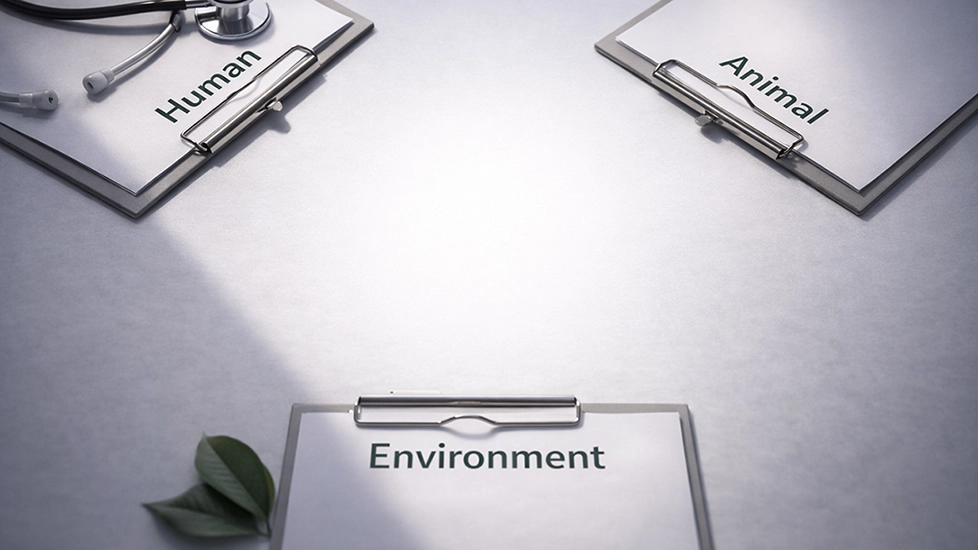
One Health was built as a unifying lens, a framework meant to capture the intertwined fates of humans, animals, and the environments that sustain them. Its ambition is sweeping: nothing should fall through the cracks. Yet the latest analysis of One Health studies reveals a quiet but consequential omission. When researchers mapped risk assessments, surveillance plans, and conceptual models across the field, they found a curious asymmetry. Bacterial and viral threats command center stage, while chemical hazards — especially fungal toxins — linger at the margins, acknowledged but rarely examined with the rigor their impact demands.

This creates a paradox within a system designed for holistic vision. Mycotoxins, toxic metabolites produced by filamentous fungi, have shaped food safety outcomes for centuries. They influence liver cancer rates, child development, livestock productivity, and the resilience of entire agricultural regions. And yet, within One Health, these hazards appear like a misplaced thread — something the loom should have caught but didn’t.

When the Data Speaks, the Silence Is Obvious
The review’s authors sifted through policy frameworks, academic repositories, and the intellectual scaffolding behind One Health initiatives. What emerged was not a minor oversight but a patterned imbalance. The microbial celebrities of food safety — Salmonella, Listeria, Campylobacter — dominate funding, policy agendas, and algorithmic modeling. Their pathways are mapped, quantified, modeled, and forecast.

By contrast, chemical contaminants such as pesticide residues and the wide biochemical spectrum of mycotoxins receive minimal analytical depth. They are often treated as predictable residue problems rather than dynamic, climate-sensitive risks. Even more striking is how rarely climate change enters these discussions, despite decades of evidence connecting drought stress, warming temperatures, and fungal toxin proliferation. A framework meant to integrate ecosystems, pathogens, and public health somehow treats mycotoxins as if they live outside the ecosystem entirely.

A Mold Crisis That Never Raises Its Voice
Mycotoxins rarely trigger alarms in the way infectious outbreaks do. Instead, they exert a slow, almost subterranean influence. Aflatoxins remain among the most potent natural carcinogens. Ochratoxin A stalks kidney tissue. Fumonisins disrupt lipid pathways that cells rely on for signaling. Deoxynivalenol (DON), aptly nicknamed “vomitoxin,” wears down immunity and growth. These toxins infiltrate cereals, nuts, spices, coffee beans, and the feed that sustains livestock — not in dramatic waves, but in steady, persistent currents.

The result is a diffuse form of harm: children who grow more slowly; herds that produce less; economies that lose value not through catastrophe but through constant erosion. Because these effects unfold across years rather than days, they are easier for research agendas to deemphasize. Yet climate change isn’t ignoring them. It is fueling them.
Climate Shift, Fungal Drift
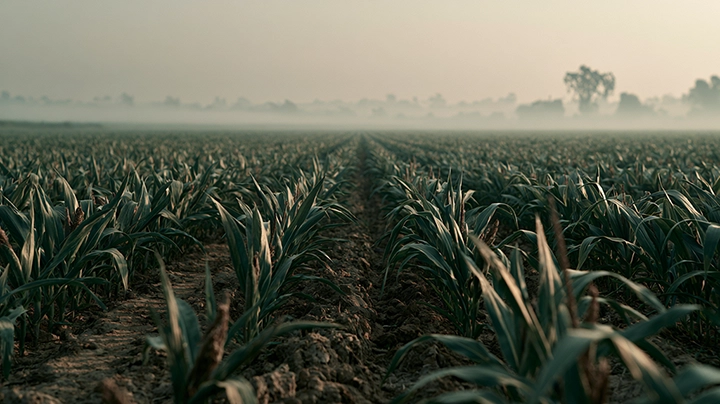
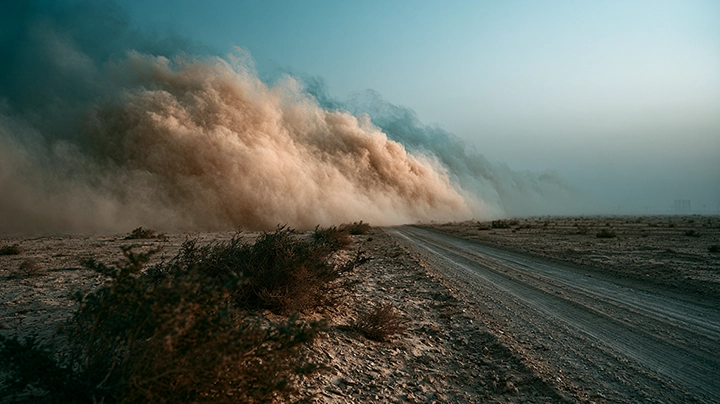
A warming climate rearranges biology’s stage set. Fungal species track humidity, heat, and plant stress like seasoned navigators. When drought weakens a crop, Aspergillus flavus can claim new ground. When torrential rain saturates stored grain, Fusarium species flourish. As international trade accelerates, contaminated commodities can now move between continents long before testing systems catch up.
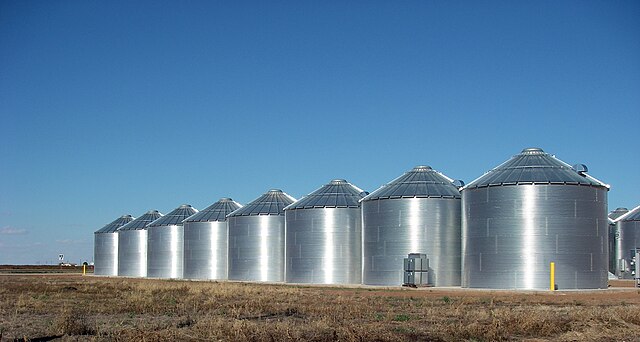
So when mycotoxins are missing from One Health predictive models, the blind spot isn’t academic. It is directional. Without accounting for climate-linked fungal evolution and toxin expression, One Health lacks the compass needed to anticipate risk rather than merely react to it. A framework that prides itself on holistic foresight becomes elegant but incomplete.
Why This Blind Spot Creates Real-World Consequences
Research priorities determine what governments choose to measure. Those measurements determine what they regulate. Regulation, in turn, shapes the safety nets that keep food systems resilient. When mycotoxins occupy only the periphery of One Health discussions, the consequences cascade.
Surveillance systems miss contamination until it has already spread. Predictive tools fail to model climate-driven toxin shifts. Agricultural strategies overlook soil moisture, storage design, and the ecological cues that modulate fungal metabolism. Public health calculations underestimate the chronic nature of exposure. Chemical hazards may not replicate like microbes, but they behave dynamically — responding to stress, environment, and climate with biological precision. They deserve the same analytical seriousness we apply to pathogens.
Toward a Mold-Literate One Health
The review’s authors argue that the way forward is not to expand One Health, but to refocus its lens so that fungal toxins sit within its conceptual core. That means treating mycotoxins as climate-linked hazards rather than administrative residue issues. It means bringing toxicologists, plant pathologists, agronomists, and environmental scientists into closer dialogue with clinicians and epidemiologists. It means recognizing that grain storage, soil conditions, and humidity control are not agricultural details — they are part of public health’s architecture.
Above all, it means shifting public perception. Mold is not merely something that grows on leftovers or hides in damp corners. It is a biochemical force that can undermine health and economies when ignored.
The Human Weight of an Invisible Threat
The burden of mycotoxins falls unevenly. Farmers may lose entire harvests when contamination renders crops unfit for sale. Livestock industries tied to imported feeds suffer when toxins degrade animal health. Children living in regions with food insecurity shoulder long-term consequences — slower growth, compromised immunity, diminished cognitive potential. These are the communities most exposed to climate volatility, least protected by infrastructure, and most affected when One Health fails to see the full picture.
If a food system is to be truly protective, it must recognize the fungal dimension shaping it. Ignoring that axis weakens the foundation.
One Health promises a unified understanding of how risks move across people, animals, and ecosystems. But unity requires attention to the quiet forces as much as the explosive ones. Mycotoxins will never erupt like a pathogen outbreak, but their climate-sensitive persistence shapes health over lifetimes. To protect future food systems, the One Health lens must extend into the shaded, humid corners where fungi thrive and adapt. Only then does “One Health” fulfill its name.
References
Academic Sources
Eskola, M., et al. (2020). Worldwide contamination of food-crops with mycotoxins: Validity of the widely cited ‘FAO estimate’. Critical Reviews in Food Science and Nutrition.
DOI: https://doi.org/10.1080/10408398.2019.1658570
Bennett, J. W., & Klich, M. (2003). Mycotoxins. Clinical Microbiology Reviews.
DOI: https://doi.org/10.1128/CMR.16.3.497-516.2003
Battilani, P., et al. (2016). Mycotoxin mixtures in food and feed: Climate change implications. World Mycotoxin Journal.
Official Sources
World Health Organization (WHO): Mycotoxin fact sheet.
https://www.who.int/news-room/fact-sheets/detail/mycotoxins
Food and Agriculture Organization (FAO): Mycotoxin prevention and control.
https://www.fao.org
Centers for Disease Control and Prevention (CDC): Fungal diseases and health impact.
https://www.cdc.gov/fungal
Key Takeaways
- Its ambition is sweeping: nothing should fall through the cracks.
- Bacterial and viral threats command center stage, while chemical hazards — especially fungal toxins — linger at the margins, acknowledged but rarely examined with the rigor their impact demands.
- And yet, within One Health, these hazards appear like a misplaced thread — something the loom should have caught but didn’t.
- The microbial celebrities of food safety — Salmonella, Listeria, Campylobacter — dominate funding, policy agendas, and algorithmic modeling.
- They are often treated as predictable residue problems rather than dynamic, climate-sensitive risks.
Frequently Asked Questions
What should you know about please login to bookmark?
Please login The Promise of One Health — And the Corners It Fails to Illuminate One Health was built as a unifying lens, a framework meant to capture the intertwined fates of humans, animals, and the environments that sustain them. Its ambition is sweeping: nothing should fall through the crack
What should you know about the Promise of One Health — And the Corners It Fails to Illuminate?
One Health was built as a unifying lens, a framework meant to capture the intertwined fates of humans, animals, and the environments that sustain them. Its ambition is sweeping: nothing should fall through the cracks. Yet the latest analysis of One Health studies reveals a quiet but consequenti
When the Data Speaks, the Silence Is Obvious?
The review’s authors sifted through policy frameworks, academic repositories, and the intellectual scaffolding behind One Health initiatives. What emerged was not a minor oversight but a patterned imbalance. The microbial celebrities of food safety — Salmonella, Listeria, Campylobacte
What should you know about a Mold Crisis That Never Raises Its Voice?
Mycotoxins rarely trigger alarms in the way infectious outbreaks do. Instead, they exert a slow, almost subterranean influence. Aflatoxins remain among the most potent natural carcinogens. Ochratoxin A stalks kidney tissue. Fumonisins disrupt lipid pathways that cells r
What should you know about climate Shift, Fungal Drift?
A warming climate rearranges biology’s stage set. Fungal species track humidity, heat, and plant stress like seasoned navigators. When drought weakens a crop, Aspergillus flavus can claim new ground. When torrential rain saturates stored grain, Fusarium species flourish. As inter