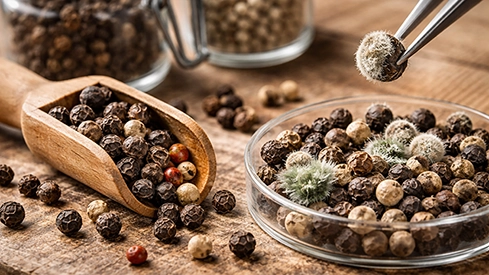

Peppercorns Found to Harbor Toxigenic Fungi with Mycotoxin Potential
A Hidden Risk in the World’s Favorite Spice
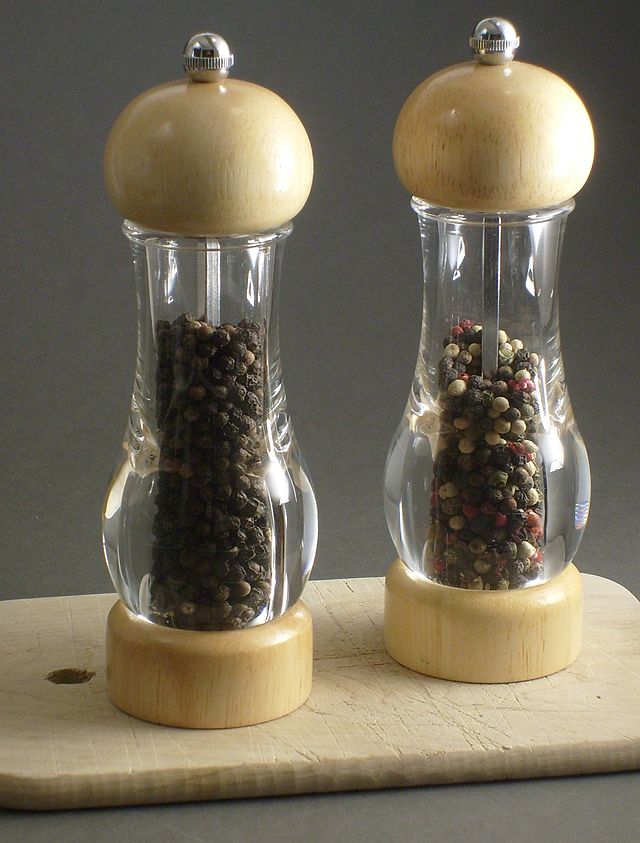
Step into any kitchen and you’ll find black and white pepper—the world’s most ubiquitous spice—gracing shelves as a presumed symbol of stability and safety. We grind it onto our meals, scatter it over salads, and trust its dryness to guard against spoilage. Yet, the latest research from Scientific Reports (Azuddin & Zakaria, 2025) cracks open this sense of security: beneath the hard shell of peppercorns, a living, toxigenic fungal world may be waiting.
What Lies Beneath: Fungi and Mycotoxin Potential
Azuddin and Zakaria’s study took a comprehensive look at commercial peppercorns using classical mycology alongside cutting-edge molecular tools. Their investigation revealed an impressively diverse fungal community hiding in both black and white pepper. Among the fungi identified were familiar troublemakers—Aspergillus chevalieri, A. tamarii, A. fumigatus, A. niger, A. tubingensis, A. flavus—as well as Penicillium citrinum, Talaromyces atroroseus and T. rapidus, Paecilomyces variotii and P. maximus, and Collariella bostrychodes. These names are not just academic: several are notorious for producing potent mycotoxins in food.
To determine their toxic potential, the researchers cultured the isolates on Coconut Cream Agar (CCA)—a medium that literally shines a green light on possible mycotoxin production under UV. The glow revealed a worrying truth: all isolates of P. citrinum, T. atroroseus, and T. rapidus fluoresced, as did 26 isolates of A. chevalieri. While not every Aspergillus or Penicillium glowed, many are known mycotoxin producers, raising concern even for those not flagged by this quick screen.

Beyond Dryness: Rethinking Spice Safety
The study delivers a sobering message: “dry” does not mean “safe.” Peppercorns, even when fully dried, can carry viable fungi. These molds may remain dormant on the shelf, only to reactivate and start producing toxins when exposed to humidity or improper storage. Kitchens with high moisture, poorly sealed packaging, or long transit times across continents all set the stage for these fungi to awaken.
What makes the risk insidious is that the presence of these fungi does not guarantee visible spoilage. Mycotoxins—like aflatoxins or ochratoxin A—can be produced at levels that evade taste, smell, or sight, yet pose genuine health risks, particularly for infants, the immunocompromised, and heavy spice users.

From Mycology to Molecular ID: The New Food Safety Frontier
One of the key advances of this research is its blend of traditional and molecular diagnostics. Morphological ID, while helpful, can easily misclassify fungi—especially in groups like Talaromyces or Collariella. By sequencing the ITS region and β-tubulin genes, the team achieved precise identification, revealing a spectrum of risk not previously recognized in everyday spices.
CCA’s green fluorescence is a low-cost warning system, but it’s not a definitive test. It flags likely mycotoxin producers, serving as an early alert for food processors and safety regulators. As supply chains globalize, and single shipments of pepper can move across continents, there’s a growing need for molecular mycology to become a routine part of food inspection.

Recommendations: For Industry and Home
For spice producers, exporters, and regulators, the message is clear: routine fungal screening must expand beyond grains and nuts to include dried spices. Improved post-harvest drying, fungal monitoring, and better packaging (especially against humidity) will be essential to keep peppercorns safe. Retailers and processors would do well to invest in airtight, moisture-resistant packaging and consider adopting rapid molecular ID tools.
For consumers, storage matters. Peppercorns should be kept in airtight containers, far from moisture and kitchen steam. For those preparing food for infants, the immunocompromised, or in high-risk settings, briefly heating peppercorns before grinding may further reduce risk.
The global spice trade is a marvel of culinary culture and commerce, but it brings with it hidden challenges from the microbial world. As this study makes clear, fungal risk in dried spices is real and underappreciated. In the era of globalized food chains and climate-driven changes in storage conditions, vigilance—both scientific and practical—is the new watchword.

References
Academic sources
Azuddin, M., & Zakaria, L. (2025). Fungal diversity and mycotoxin-producing potential in commercial peppercorns. Scientific Reports.
Official / institutional sources
Food and Agriculture Organization of the United Nations (FAO). Mycotoxins in food.
World Health Organization (WHO). Mycotoxins. https://www.who.int/news-room/fact-sheets/detail/mycotoxins
Key Takeaways
- Please login Peppercorns Found to Harbor Toxigenic Fungi with Mycotoxin Potential
- We grind it onto our meals, scatter it over salads, and trust its dryness to guard against spoilage.
- Azuddin and Zakaria’s study took a comprehensive look at commercial peppercorns using classical mycology alongside cutting-edge molecular tools.
- flavus—as well as Penicillium citrinum, Talaromyces atroroseus and T.
- While not every Aspergillus or Penicillium glowed, many are known mycotoxin producers, raising concern even for those not flagged by this quick screen.
Frequently Asked Questions
What should you know about please login to bookmark?
Please login Peppercorns Found to Harbor Toxigenic Fungi with Mycotoxin Potential
What are the key findings about The Mold Behind the?
Please login Peppercorns Found to Harbor Toxigenic Fungi with Mycotoxin Potential
How does The Mold Behind the affect public health or safety?
Step into any kitchen and you’ll find black and white pepper—the world’s most ubiquitous spice—gracing shelves as a presumed symbol of stability and safety. We grind it onto our meals, scatter it over salads, and trust its dryness to guard against spoilage. Yet, the latest research from Scienti
What do researchers and experts say about The Mold Behind the?
Azuddin and Zakaria’s study took a comprehensive look at commercial peppercorns using classical mycology alongside cutting-edge molecular tools. Their investigation revealed an impressively diverse fungal community hiding in both black and white pepper. Among the fungi identified were familiar troub
What are the main risks associated with The Mold Behind the?
The study delivers a sobering message: “dry” does not mean “safe.” Peppercorns, even when fully dried, can carry viable fungi. These molds may remain dormant on the shelf, only to reactivate and start producing toxins when exposed to humidity or improper storage. Kitchens with high moisture, poorly