
No single product kills mold. That’s the answer most people don’t want, but it’s the one that actually holds up.
The question itself is the problem. When people search for the best way to kill mold, they’re usually looking for the strongest cleaner — something they can spray, wait, and wipe away. But mold isn’t a stain. It’s a biological response to moisture. Treat the surface and leave the moisture, and you haven’t solved anything. You’ve just reset the clock.
Public health guidance from the EPA, CDC, WHO, and NIOSH all point to the same foundation: moisture control, physical removal, and material management. The chemical comes last, not first.
Start Here: Find the Water
Mold spores are everywhere — indoors, outdoors, in the air you’re breathing right now. That’s normal. What turns them into a problem is available moisture.
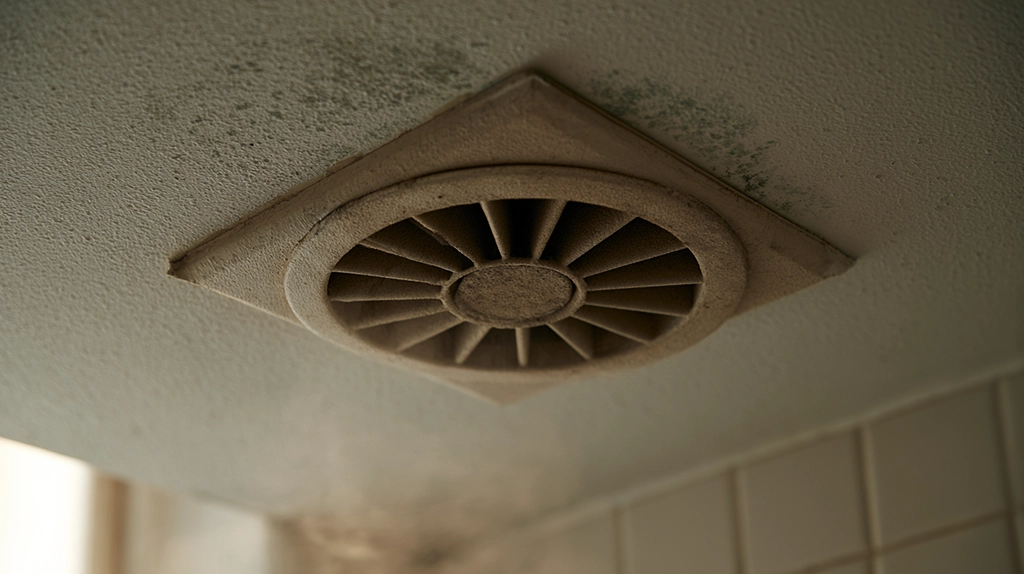
The source could be a slow plumbing leak behind a wall. Condensation on cold pipes or windows. Poor ventilation trapping humid air. A roof intrusion that soaked insulation three months ago. Whatever it is, finding it is step one. Without fixing it, any cleanup you do is temporary — the surface improves, the conditions don’t.
This is where most DIY mold removal fails. People clean what they can see and move on. The moisture stays, and six weeks later the mold is back in exactly the same spot.
Hard Surfaces: What Actually Works
For hard, non-porous surfaces — tile, glass, sealed countertops, metal — the process is straightforward and doesn’t require anything exotic.
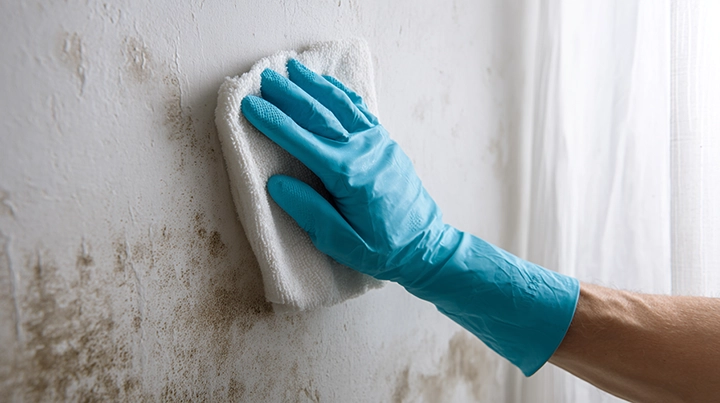
Scrub with detergent and water. Remove the mold physically. Dry the surface completely. That’s it.
Bleach can help with staining on hard surfaces, and it does kill surface mold on contact. But it’s not the centerpiece of the operation — physical removal is. Bleach used without scrubbing leaves dead mold fragments behind. It also doesn’t penetrate into porous materials, which is where it most often gets misapplied. If you use it, dilute it properly, ventilate the space, and never mix it with ammonia, vinegar, or other cleaners.
The goal after cleaning a hard surface is dryness. A surface that stays damp after treatment is a surface that will grow mold again.
Porous Materials: A Different Problem Entirely
The situation changes completely when mold gets into porous materials — drywall, carpet, insulation, cardboard, ceiling tiles, untreated wood.
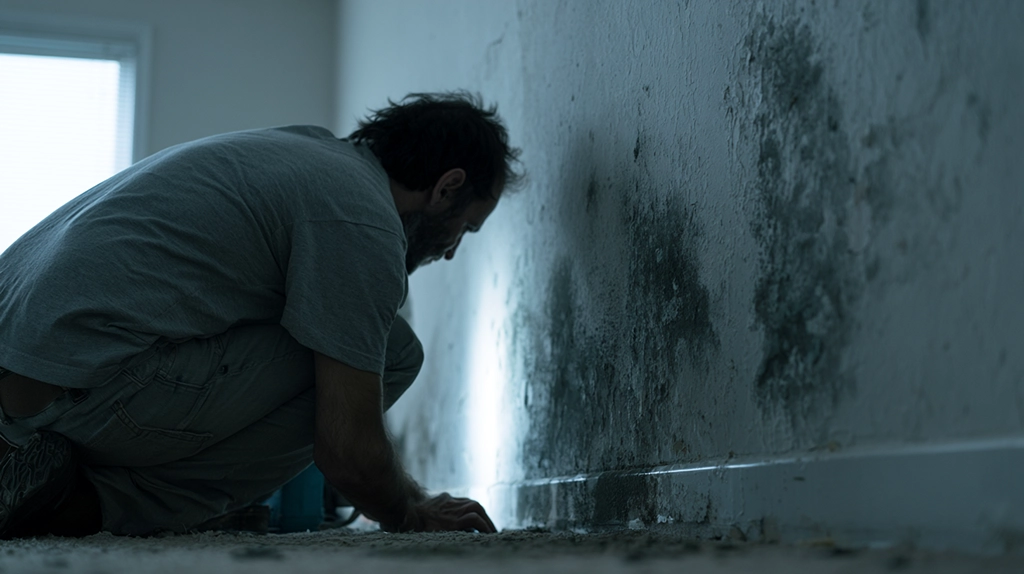
These materials absorb moisture and allow mold to grow below the visible surface. What you see on the outside is not the full extent of the contamination. Fungal structures penetrate into the material itself, which means surface treatment doesn’t reach the problem — it only addresses the part you can see.
EPA guidance is direct on this: contaminated porous materials usually need to come out. Not cleaned, not sealed over, not treated with a spray — removed and replaced.
This feels like an extreme response until you understand why it’s necessary. Sealing over mold in drywall doesn’t kill it. Painting over mold on a ceiling doesn’t stop it. These approaches trap the problem rather than resolving it, and in many cases the mold continues developing behind the surface.
Protective Gear: Not Optional
Disturbing mold — scrubbing, cutting, pulling out materials — releases spores and fragments into the air. Exposure goes up significantly during cleanup, which is exactly the wrong time to skip protection.
CDC recommends an N95 respirator as the minimum standard for mold cleanup. Add gloves and eye protection. Keep the work area ventilated. If you have asthma, allergies, or a compromised immune system, consider whether you should be doing this work at all — the exposure risk during cleanup is real and disproportionate for people in these categories.
For large infestations, hidden mold (inside walls, under flooring, in HVAC systems), or situations where the source hasn’t been identified, professional remediation isn’t just a convenience — it’s the safer option. EPA guidance suggests that areas larger than about 10 square feet should generally involve a professional assessment.
The Sequence That Actually Works
Put it all together and the process looks like this:
- Find and fix the moisture source — nothing else matters until this is done
- Remove mold from hard surfaces by scrubbing with detergent, then dry completely
- For porous materials with significant contamination, remove and replace rather than clean
- Use bleach or other cleaners as a supplementary step on hard surfaces, not as a substitute for physical removal
- Maintain dry conditions after cleanup to prevent recurrence
This isn’t complicated, but it requires accepting that there’s no shortcut in the first step. No spray, no matter how strong, controls mold in a persistently damp environment.
Where the Science Points
Research on indoor mold remediation consistently shows that proper intervention — addressing moisture and physically removing contamination — significantly reduces airborne fungal levels. Studies have also linked successful mold remediation in homes to measurable reductions in asthma symptoms and respiratory complaints, particularly in children.
The evidence doesn’t point to a specific product. It points to a process: control the environment, remove the growth, eliminate the conditions that support it.

The Future Direction: Build Out Moisture
Building science is increasingly focused on prevention rather than remediation. Improved ventilation systems, moisture-resistant materials, humidity sensors, and leak detection technology are all aimed at the same goal: creating environments where mold doesn’t get the conditions it needs to establish itself.
This reflects the same logic that makes cleanup work — controlling moisture is the lever that controls mold. The difference is doing it before contamination develops rather than after.
FAQ
Is there a single product that kills mold completely? No. Effective mold control depends on moisture removal and physical cleanup. Chemical treatments are supplementary, not primary.
What is the first step in mold cleanup? Identifying and fixing the source of moisture. Without this, any cleaning effort is temporary.
Can mold be cleaned from all materials? No. Porous materials like drywall, carpet, and insulation often need to be removed if significantly contaminated — surface cleaning doesn’t reach the mold below.
Is bleach always necessary? Not always. It can help with staining on hard surfaces, but proper scrubbing and drying matter more. It doesn’t work effectively on porous materials.
When should professionals be involved? For large areas, hidden mold, recurring problems, or when health risks are present — particularly for anyone with respiratory conditions or a compromised immune system.
References
- Centers for Disease Control and Prevention — Mold Cleanup: https://www.cdc.gov/mold-health/about/clean-up.html
- North Carolina Department of Health and Human Services — Porous Materials and Mold: https://epi.dph.ncdhhs.gov/oee/mold/porous.html
- U.S. Environmental Protection Agency — Mold Cleanup in Your Home: https://www.epa.gov/mold/mold-cleanup-your-home
Key Takeaways
- That’s the answer most people don’t want, but it’s the one that actually holds up.
- Public health guidance from the EPA, CDC, WHO, and NIOSH all point to the same foundation: moisture control, physical removal, and material management.
- A roof intrusion that soaked insulation three months ago.
- For hard, non-porous surfaces — tile, glass, sealed countertops, metal — the process is straightforward and doesn’t require anything exotic.
- Bleach used without scrubbing leaves dead mold fragments behind.
Frequently Asked Questions
What should you know about please login to bookmark?
Please login No single product kills mold. That’s the answer most people don’t want, but it’s the one that actually holds up.
What should you know about start Here: Find the Water?
Mold spores are everywhere — indoors, outdoors, in the air you’re breathing right now. That’s normal. What turns them into a problem is available moisture.
What should you know about hard Surfaces: What Actually Works?
For hard, non-porous surfaces — tile, glass, sealed countertops, metal — the process is straightforward and doesn’t require anything exotic.
What should you know about porous Materials: A Different Problem Entirely?
The situation changes completely when mold gets into porous materials — drywall, carpet, insulation, cardboard, ceiling tiles, untreated wood.
What should you know about protective Gear: Not Optional?
Disturbing mold — scrubbing, cutting, pulling out materials — releases spores and fragments into the air. Exposure goes up significantly during cleanup, which is exactly the wrong time to skip protection.