
When “One Cell, One Genome” No Longer Applies
Imagine discovering that the blueprint of life—the very thing you thought every cell carried in full—has been quietly partitioned into separate offices inside the same building. That’s the case with some of the world’s most damaging plant pathogens, Sclerotinia sclerotiorum and Botrytis cinerea, known for their devastating impacts on lettuce, beans, grapes, sunflowers, and more.
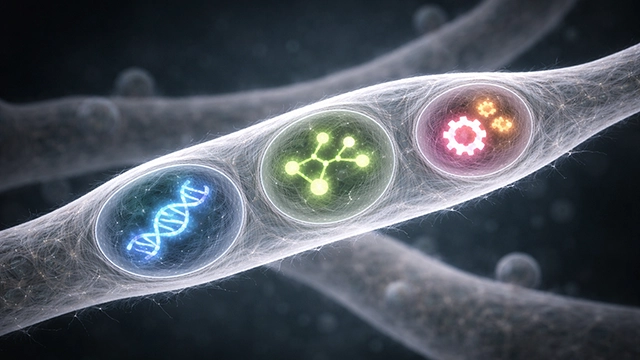
For years, geneticists assumed that every nucleus within a fungal cell held the entire set of genetic instructions. But in a twist worthy of a musical plotline, researchers using fluorescent microscopy and molecular tools have revealed that these white mold fungi divide their chromosomes among several nuclei —with no single nucleus containing the complete set.
In S. sclerotiorum, 16 chromosomes are split across two nuclei. In B. cinerea, the arrangement is even more dramatic—chromosomes dispersed among four to six nuclei. The cell’s full genome is a collaborative affair, with each nucleus carrying a fraction of the instructions. It’s a biological innovation, and it throws the “one nucleus, one genome” dogma right out the window.


Cracking Open the Mystery
Why would fungi take such an unusual approach? The answer is as fascinating as the mechanism itself. It’s not about redundancy; it’s about division of labor. Imagine a company where marketing, finance, and logistics each have their own headquarters, but work together seamlessly—each nucleus is now an “expert department,” carrying out a segment of the cell’s operation.

This has profound consequences for both science and agriculture:
New Genetic Playbook
First, it shatters a central tenet of eukaryotic cell biology. Instead of seeing each nucleus as a full archive, we now need to think of them as collaborating specialists. It suggests an evolutionary pathway where flexibility and rapid adaptation could be built right into the genome’s architecture.

Gene Editing: Not So Simple Anymore
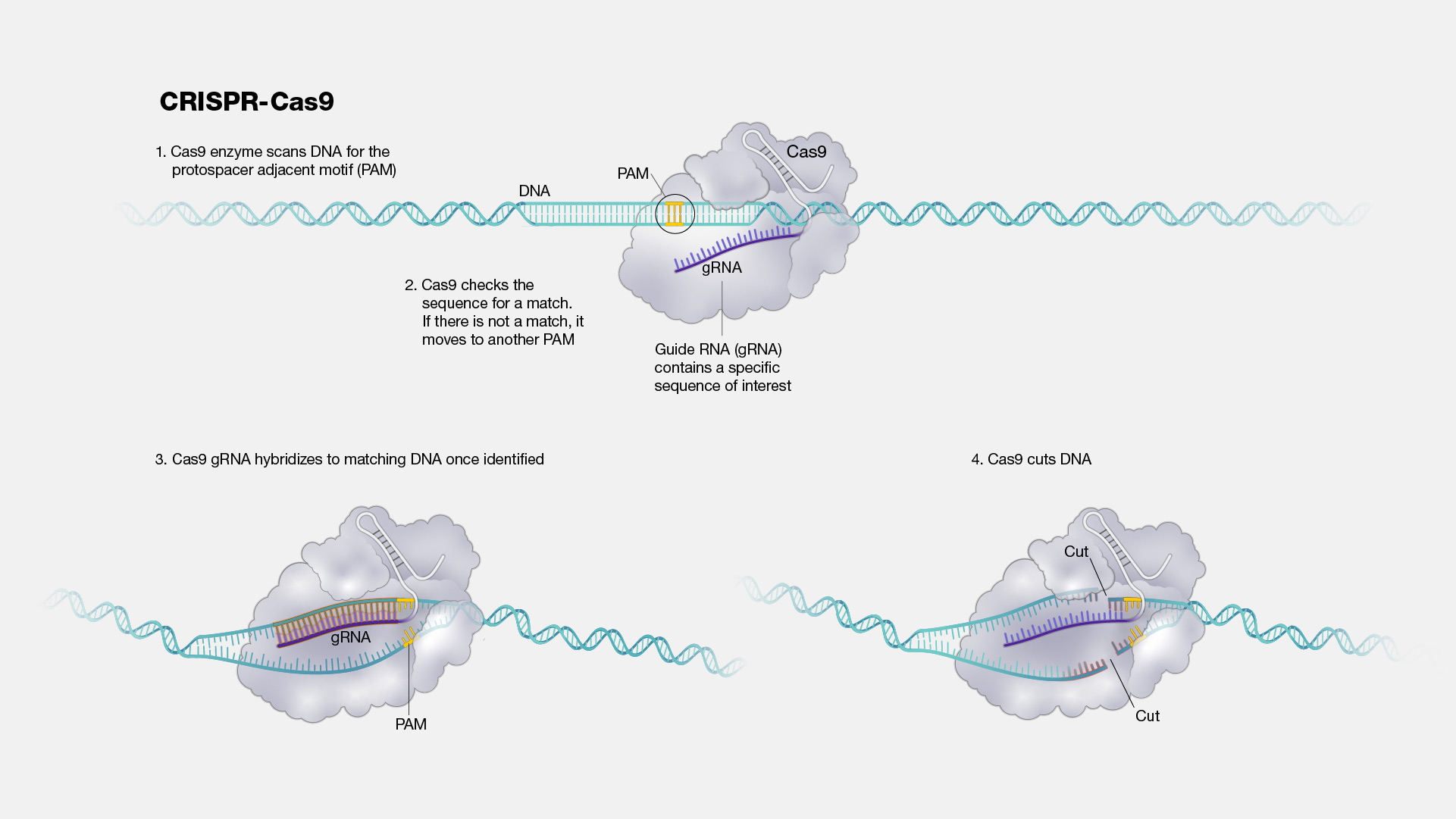
For scientists and industry, this raises the stakes. Traditional genome editing tools, like CRISPR, are designed to target genes in a single, complete genome within each nucleus. But what happens when that gene—and its regulatory partners—are split between different nuclei? Editing may require new approaches, potentially targeting multiple nuclei or orchestrating edits in a precise sequence.

Outsmarting Fungicides
For crop scientists, this helps explain why Sclerotinia and Botrytis have proven so persistent and adaptable in the field. If their survival toolkit is distributed across nuclei, they may be able to mix and match gene combinations faster than previously thought—developing resistance or new pathogenic traits without waiting for traditional mutation or sexual reproduction.

Evolution’s Double Down
Could this genome-splitting strategy be an evolutionary masterstroke? There’s a strong argument for “yes.” By shuffling chromosomes among nuclei, these fungi could generate diversity and test out new gene combinations without undergoing full sexual reproduction. It’s adaptability on the fly—a key reason they’ve thrived in changing agricultural environments and resisted conventional control.
Updating the Science Books
Textbooks, beware: If more fungi or even other organisms are found to use similar strategies, we’ll need a rewrite of basic molecular biology. It might also prompt new studies in protozoans, slime molds, or even cancer cells—where multinuclear oddities sometimes appear.
Multinucleate cells — https://en.wikipedia.org/wiki/Multinucleate
And there’s an evolutionary lesson too: perhaps this system harks back to ancient cellular strategies, and white mold fungi are just the survivors of an old, once widespread genetic architecture.
The Fungal Blueprint for the Future
What’s the takeaway for MoldNewsHub readers? This isn’t just another case of mold being troublesome—it’s proof of their strategic genius. Fungi like Sclerotinia sclerotiorum and Botrytis cinerea remind us that adaptation can be built into the very structure of life, not just its code.
As agriculture, medicine, and biotech move forward, understanding (and maybe borrowing from) the fungal approach to genomic organization could lead to new breakthroughs in disease control, smart materials, and bioengineering.
References
- Mehta, N. et al. (2023). Chromosome partitioning across nuclei challenges the one nucleus–one genome paradigm in fungi. Nature Communications.
- USDA Agricultural Research Service — Plant Pathology Image Gallery (Public Domain).
- National Human Genome Research Institute — CRISPR overview.
- Wikipedia (cross-checked): Sclerotinia sclerotiorum, Botrytis cinerea, CRISPR, Multinucleate cells.
Key Takeaways
- That’s the case with some of the world’s most damaging plant pathogens, Sclerotinia sclerotiorum and Botrytis cinerea, known for their devastating impacts on lettuce, beans, grapes, sunflowers, and more.
- sclerotiorum, 16 chromosomes are split across two nuclei.
- The cell’s full genome is a collaborative affair, with each nucleus carrying a fraction of the instructions.
- Imagine a company where marketing, finance, and logistics each have their own headquarters, but work together seamlessly—each nucleus is now an “expert department,” carrying out a segment of the cell’s operation.
- First, it shatters a central tenet of eukaryotic cell biology.
Frequently Asked Questions
What should you know about please login to bookmark?
Please login When “One Cell, One Genome” No Longer Applies Imagine discovering that the blueprint of life—the very thing you thought every cell carried in full—has been quietly partitioned into separate offices inside the same building. That’s the case with some of the world’s most damaging plant pa
When “One Cell, One Genome” No Longer Applies?
Imagine discovering that the blueprint of life—the very thing you thought every cell carried in full—has been quietly partitioned into separate offices inside the same building. That’s the case with some of the world’s most damaging plant pathogens, Sclerotinia sclerotiorum and Botryt
What should you know about cracking Open the Mystery?
Why would fungi take such an unusual approach? The answer is as fascinating as the mechanism itself. It’s not about redundancy; it’s about division of labor. Imagine a company where marketing, finance, and logistics each have their own headquarters, but work together seamlessly—each nucleus is now a
What should you know about new Genetic Playbook?
First, it shatters a central tenet of eukaryotic cell biology. Instead of seeing each nucleus as a full archive, we now need to think of them as collaborating specialists. It suggests an evolutionary pathway where flexibility and rapid adaptation could be built right into the genome’s architecture.
What should you know about gene Editing: Not So Simple Anymore?
For scientists and industry, this raises the stakes. Traditional genome editing tools, like CRISPR, are designed to target genes in a single, complete genome within each nucleus. But what happens when that gene—and its regulatory partners—are split between different nuclei? Editing may require