
When Fungi Become Food-System Engineers
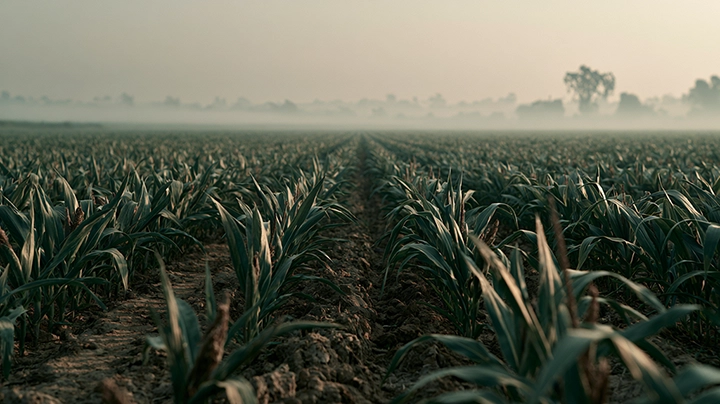
The standard mental model of fungi in food contexts runs in one direction: contamination, spoilage, things going wrong. Mold on bread. Fungal disease in crops. Unwanted growth in poorly stored ingredients. The organism as a problem.
A recent study published in the Journal of Agricultural and Food Chemistry proposes a different frame. It explores how edible fungal mycelium — the dense network of filaments that forms the body of a fungus — can be cultivated on the liquid residues left behind by carrot processing, converting what would otherwise be low-value industrial waste into protein-rich biomass suitable for vegan and vegetarian food products.
The same biological capabilities that make fungi powerful decomposers in natural ecosystems — their ability to digest complex organic material and extract nutritional value from it — are here being applied inside a food manufacturing system. The residue of one process becomes the substrate for another. The fungus becomes an industrial recycler.
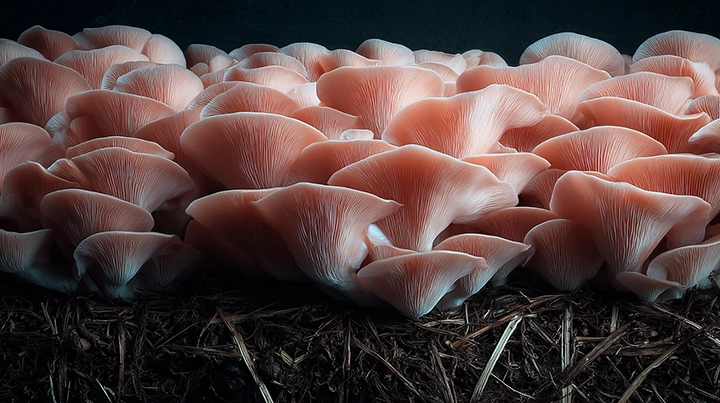
Among 106 fungal strains tested for their capacity to grow on carrot-processing side streams, Pleurotus djamor — the pink oyster mushroom — emerged as one of the most promising candidates: capable of producing meaningful yields of protein-rich biomass from a substrate that the food industry currently has limited uses for.
The Hidden Value Inside Food Side Streams
Modern food processing generates side streams at scale. Juices, purees, colorants, and ingredient extractions all leave behind liquid and solid residues — peels, fibers, pulps, press liquids — that still contain nutrients but are not useful as finished foods in their current form. Some become animal feed or compost. Many are disposed of as waste despite carrying compounds that could support further biological activity.
Carrot processing is a clear example. The liquid remaining after carrot juice or puree production carries sugars, amino acids, minerals, and other compounds that microorganisms can metabolize. For the food industry, this liquid is largely a disposal challenge. For fungi, it is a growth medium.
Fungal fermentation systems can work with substrates that are too complex, too dilute, or too variable for most conventional processing approaches. The mycelium grows through the substrate, absorbs available nutrients, and accumulates biomass — and in doing so, concentrates nutritional value into a form that can be harvested and used as a food ingredient.
In a circular food system, this changes the economic and environmental logic of side streams. The residue of carrot processing does not move toward disposal. It moves toward fermentation, and from fermentation toward food.

Credit: Zinnmann, via Wikimedia Commons, CC BY-SA 3.0
Why Pleurotus djamor Stood Out
Screening 106 fungal strains for performance on a specific industrial substrate is methodologically demanding — each strain must be evaluated for growth rate, biomass yield, protein content, and compatibility with the substrate’s chemical composition. Most strains will perform poorly on any given substrate. The ones that work well define the research direction.
Pleurotus djamor performed well. On optimized orange carrot medium, it produced biomass yields of approximately 15 grams per liter, with protein content reaching around 31 grams per 100 grams of biomass. These figures are meaningful in the context of alternative protein development, where biomass yield and protein concentration directly influence whether a system is commercially viable.
The species also carries practical advantages beyond its performance on carrot side streams. Pleurotus djamor is an edible fungus with an established culinary history — widely consumed in parts of Asia and increasingly available in specialty food markets globally. Its mycelium, unlike some fungal biomass, does not require extensive safety validation as a novel organism. It has texture characteristics, particularly a fibrous, slightly chewy structure, and flavor properties, including savory umami notes, that are compatible with meat-alternative applications.
What makes the research significant is not only that P. djamor can grow on carrot waste. It is that it can grow efficiently enough, and produce biomass with sufficient nutritional value, to serve as an ingredient in real food products.
From Laboratory Biomass to Vegan Foods
Research that stops at biomass production has limited practical relevance. The study extended to what matters more for food system applications: whether consumers would actually eat the result.
Researchers incorporated the fungal protein into vegan patties and sausage analogs and evaluated consumer response. Participants rated the fungal-protein products as tastier than comparable products made from conventional plant proteins.
This finding carries more weight than it might initially appear. Alternative protein development has a persistent sensory problem. Products made from pea protein, soy protein, or other plant-based sources frequently struggle with off-flavors, dry or crumbly textures, and an overall sensory profile that signals processing rather than food. The gap between laboratory nutrition and consumer acceptance has been one of the significant barriers to market adoption.
Fungal mycelium offers a different textural and flavor starting point. Its fibrous network structure translates into a texture that is closer to muscle fiber than to extruded plant material. Its naturally savory compounds contribute flavor rather than requiring masking. These are genuine advantages in the category where many alternative proteins have struggled most.
The study is not claiming that fungal protein from carrot waste will replace existing plant proteins across the industry. It is demonstrating that a circular system — waste in, protein out, consumer-acceptable product at the end — can work in practice.

Credit: Horatio Snickers, via Wikimedia Commons, CC BY-SA 3.0
A Circular-Economy Logic for Protein Production
The argument for fungal protein in food systems is not primarily about taste or texture, though those matter. It is about what the production system does with resources.
Global protein demand is rising alongside population growth, dietary shifts, and increasing awareness of the environmental costs of conventional animal protein production. Meeting that demand while reducing land use, water consumption, greenhouse gas emissions, and food waste requires manufacturing systems that generate more nutritional value from less raw input.
Fungal fermentation on industrial side streams fits this requirement in a specific way. The carrot-processing residues that serve as substrate are generated regardless of whether fungi are grown on them. They exist as a byproduct of existing food production. Using them as a growth medium for edible fungi does not require new agricultural land, new water allocation, or new resource extraction. The fungi are working with what is already there.
The production logic runs: side streams are generated by carrot processing; fungi ferment the nutrients in those streams; mycelial biomass accumulates; biomass is incorporated into food products; products reach consumers. At each stage, materials that would otherwise lose value are converted into something useful. The fungi are operating as biological components of a manufacturing system rather than as organisms in a natural ecosystem — but the underlying mechanism is the same: organic material becomes nutritional value through fungal metabolism.
The Scaling Challenge Still Matters
Describing a promising research finding and describing a commercially viable production system are not the same thing, and the distinction matters for how this research should be understood.
Consistent industrial-scale production of fungal protein from carrot side streams requires stable substrate composition across seasons and carrot varieties, reliable fermentation yields, food safety validation of the harvested biomass, sensory consistency across batches, regulatory approval in relevant markets, and fermentation economics that are competitive with existing protein sources.
Carrot-processing side streams present particular challenges. Their sugar content, microbial load, and nutrient profile vary depending on the time of year, the processing method, and the carrot variety. Industrial fungal fermentation systems would need to accommodate this variability — either by standardizing the substrate before fermentation or by adjusting fermentation parameters in response to incoming substrate quality.
Proximity matters too. Transporting liquid side streams over long distances is economically and logistically challenging. The most practical configurations would likely involve fermentation facilities located close to vegetable-processing plants, allowing side streams to move directly from one system to the other without the costs and quality losses associated with transport and storage.
These are real constraints. The research demonstrates that the biological system works. Whether it can be made to work at commercial scale, at competitive cost, within regulatory frameworks, and with consistent product quality is a set of questions that cannot be answered in a single laboratory study.
Controlled Fungal Growth vs Contamination
The distinction between controlled fungal fermentation and uncontrolled mold growth is not merely semantic. It describes fundamentally different biological and safety situations.
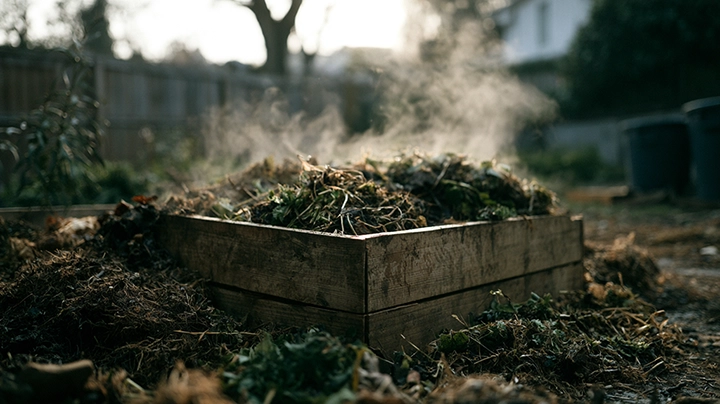
In uncontrolled environments — poorly stored food, damp building materials, inadequately processed ingredients — fungal growth is opportunistic. The species present may produce toxins, the growth conditions are not optimized for any useful outcome, and the result is typically spoilage or contamination.
In industrial fermentation systems, the organism is selected intentionally from a screened library of strains, the substrate is prepared and monitored, growth conditions are controlled, and the harvested biomass is evaluated for safety and nutritional performance before it enters food production. The fungus is not growing accidentally. It is growing as a managed production organism.
This framing matters for how fungal protein fits into public understanding of food safety. The same category of organism — fungi — produces very different outcomes depending entirely on whether growth is controlled or not. The research reviewed here is operating in the controlled category, which is why its outputs are food ingredients rather than food safety problems.
The Food of the Future May Be Grown Differently
The deeper implication of the research is about what food production systems might look like as resource constraints intensify.
For most of industrial food history, production has followed a relatively linear model: grow crops, process them into food, dispose of residues. The residues represent lost value — nutrients and compounds that exit the production system without contributing to its output.
Fungal fermentation on side streams offers a partial correction to that model. By placing a biological conversion step between processing residue and disposal, it recovers some of that lost nutritional value and redirects it toward food production. The fungi are not a replacement for the crops or the processing. They are an addition to the system — a step that currently does not exist in most food manufacturing pipelines, but that could exist given the right economic and infrastructure conditions.
Whether fungal protein from carrot waste becomes a significant contributor to global protein supply depends on factors well beyond any single study. The biology is promising. The sensory results are encouraging. The scaling questions remain open. What the research establishes is that the direction is worth pursuing — that the relationship between food waste, fungal biology, and sustainable nutrition is not theoretical. It is already working in the laboratory, and demonstrably capable of producing food that people find palatable.
The residues of industrial food production may not have to be residues forever. Some of them may eventually become the starting point for the next batch.
FAQ
What is fungal mycelium protein? Protein-rich biomass produced from the filament-like growth network of edible fungi under controlled fermentation conditions — harvested and used as a food ingredient.
How can carrot waste become food protein? Nutrient-rich liquid residues from carrot processing can serve as fermentation substrates for edible fungi, which convert those nutrients into mycelial biomass that can be incorporated into food products.
Why did Pleurotus djamor perform well in this study? It produced strong biomass yields and meaningful protein content on carrot side-stream media, and as an edible species with established culinary use, it offers practical advantages for food applications.
Is fungal protein the same as plant protein? No. Fungal protein comes from fungal biomass rather than plant seeds or legumes, and may offer different texture and flavor characteristics — particularly in meat-alternative applications.
Can fungal fermentation reduce food waste? Potentially. Controlled fungal systems can convert food-processing residues into higher-value edible ingredients, adding a circular step to production systems that would otherwise lose that material.
References
- Journal of Agricultural and Food Chemistry — Fungal Mycelium Protein from Carrot Side Streams: https://pubs.acs.org/doi/10.1021/acs.jafc.5c11223
Key Takeaways
- Please login When Fungi Become Food-System Engineers The standard mental model of fungi in food contexts runs in one direction: contamination, spoilage, things going wrong.
- The residue of one process becomes the substrate for another.
- Many are disposed of as waste despite carrying compounds that could support further biological activity.
- Fungal fermentation systems can work with substrates that are too complex, too dilute, or too variable for most conventional processing approaches.
- In a circular food system, this changes the economic and environmental logic of side streams.
Frequently Asked Questions
What should you know about please login to bookmark?
Please login When Fungi Become Food-System Engineers The standard mental model of fungi in food contexts runs in one direction: contamination, spoilage, things going wrong. Mold on bread. Fungal disease in crops. Unwanted growth in poorly stored ingredients. The organism as a problem.
When Fungi Become Food-System Engineers?
The standard mental model of fungi in food contexts runs in one direction: contamination, spoilage, things going wrong. Mold on bread. Fungal disease in crops. Unwanted growth in poorly stored ingredients. The organism as a problem.
What should you know about the Hidden Value Inside Food Side Streams?
Modern food processing generates side streams at scale. Juices, purees, colorants, and ingredient extractions all leave behind liquid and solid residues — peels, fibers, pulps, press liquids — that still contain nutrients but are not useful as finished foods in their current form. Some become animal
Why Pleurotus djamor Stood Out?
Screening 106 fungal strains for performance on a specific industrial substrate is methodologically demanding — each strain must be evaluated for growth rate, biomass yield, protein content, and compatibility with the substrate’s chemical composition. Most strains will perform poorly on any given su
What should you know about from Laboratory Biomass to Vegan Foods?
Research that stops at biomass production has limited practical relevance. The study extended to what matters more for food system applications: whether consumers would actually eat the result.