
When Fungi Switch Roles
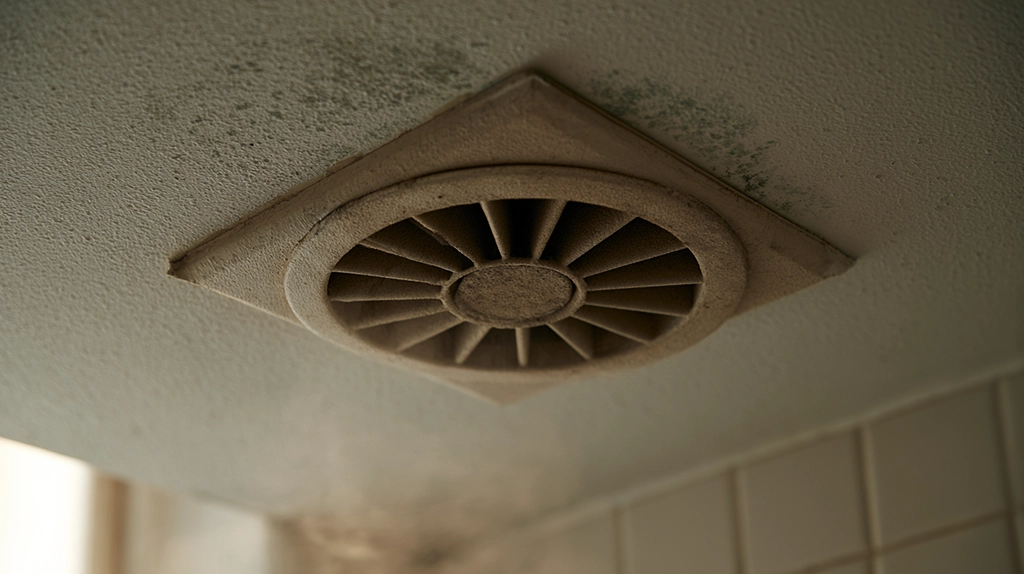
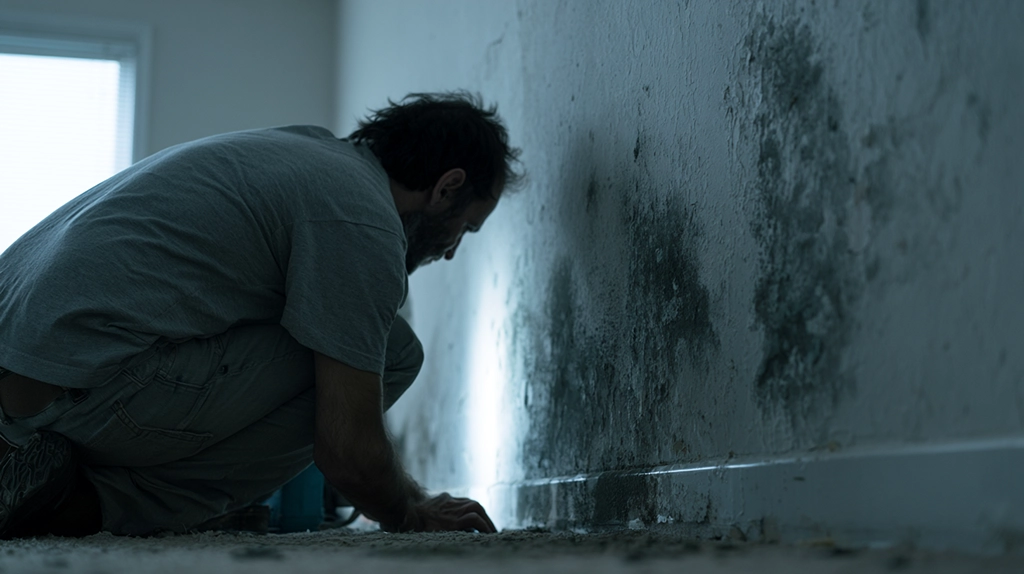
Walk into a building with a mold problem, and fungi signal something gone wrong — moisture behind a wall, a roof leak, a ventilation failure. The spores, the discoloration, the smell: all signs that fungal biology has moved in uninvited.
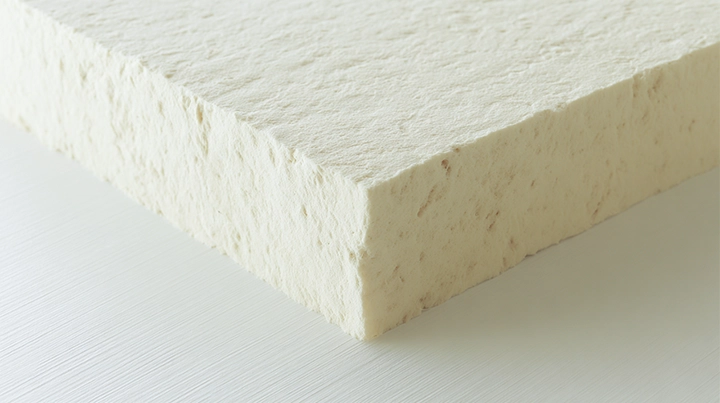
But the same biological machinery that makes fungi such effective decomposers — the way their thread-like hyphae spread through organic material, break down plant matter, and bind substrates together — turns out to be exactly what certain researchers are trying to harness.
A 2026 study published in Scientific Reports tested whether fungal mycelium grown on hemp-shiv substrate could produce insulation materials with competitive thermal performance. Eighteen fungal strains representing 17 species were evaluated across 76 specimens, with researchers measuring thermal conductivity, density, and chemical composition to understand what drives insulation quality in these bio-based composites.
The conceptual inversion is worth sitting with. The same hyphal growth, substrate colonization, and organic-matter transformation that make fungi problematic in damaged buildings are, under controlled manufacturing conditions, the mechanisms that make them potentially useful ones.
Why Construction Needs a Materials Reset
The construction industry is responsible for approximately 36% of global CO₂ emissions, and a significant portion of that footprint comes from operational energy use — heating and cooling buildings over their lifetimes. Insulation sits at the center of that equation.
Conventional insulation products address the thermal problem, but many carry their own environmental costs: energy-intensive manufacturing, petrochemical feedstocks, limited recyclability at end of life. The materials work. The supply chain behind them is harder to defend.

A mycelium-plant composite panel lifted from its mold during the MY-CO SPACE production process. Hemp shives inoculated with fungal mycelium were cultivated for approximately four weeks before drying to stabilize the material.Credit:
Vera Meyer & Sven Pfeiffer / Wolfgang Günzel, via Wikimedia Commons, CC BY-SA 4.0Mycelium-based composites take a different path. Agricultural residues — hemp shiv, straw, paper waste, plant fibers — serve as the growing substrate. Fungal networks colonize and bind those particles into lightweight, structured composites. No high-temperature processing, no petrochemical inputs.
In this model, plant waste becomes feedstock, fungal growth becomes fabrication, and biological structure becomes insulation. It maps closely onto circular-construction principles: renewable inputs, reduced embodied carbon, minimal manufacturing waste.
How Mycelium Insulation Is Actually Made
Mycelium is the vegetative body of a fungus — a dense, branching network of hyphae that spreads through organic material in search of nutrients. In nature, this network is what breaks down dead wood, leaf litter, and plant debris on a forest floor.
In a manufacturing context, researchers redirect that same growth. Hemp-shiv substrate is inoculated with fungal grain spawn and placed under controlled temperature and humidity conditions. The fungal network colonizes the material, spreading through it and physically binding the particles into a coherent composite structure.
Once the colonization is complete, the material is dried. That step halts all fungal activity and stabilizes the specimen.
This point matters more than it might initially seem. The insulation is not a living colony installed inside a wall cavity. The fungus acts as a manufacturing organism during production — then exits the picture entirely. What remains is a stable, dried biomaterial, not an active biological system.
Thermal Performance Across More Species Than Expected

From cultivation to composite: mycelium growing through substrate in bags (A), and the resulting dried biocomposite specimens (B, C). Image from a 2019 review of mycelium-based biocomposite properties.Credit:
Girometta, Carolina & Rebecca Michela Baiguera, via Wikimedia Commons, CC BY 4.0One of the study’s most practically significant findings is also one of its least flashy: most of the fungi tested worked.
Thermal conductivity values across all 76 specimens ranged from approximately 0.0376 W/m·K — recorded for Pholiota adiposa composites — to around 0.0451 W/m·K for Lentinus tigrinus composites. Both figures fall well below the threshold generally considered effective for insulation materials. So did the results from the other 15 species tested.
That breadth matters for real-world manufacturing. A fungal insulation industry doesn’t have to depend on sourcing one optimal species globally. Different fungi may suit different regional climates, available agricultural substrates, production timelines, or aesthetic requirements — and the thermal performance across candidates appears robust enough to support that flexibility.
The finding reframes the biological question. It isn’t “which single fungus is best?” It’s “across how many fungi does this approach remain viable?” The answer, based on this dataset, appears to be: quite a few.
What Drives Insulation Quality — Structure More Than Chemistry
If species choice doesn’t explain the thermal performance differences, what does?
Researchers identified a moderate positive correlation between density and thermal conductivity across specimens. Denser composites transferred heat more readily; lighter, more porous materials insulated better. Physical structure — not biological origin — appears to be the primary lever.
To test whether chemistry played a role, the team used FTIR-ATR spectroscopy to analyze chemical differences between fungal composites. They found variations related to polysaccharides, chitin in fungal cell walls, and the extent to which different fungi degraded the hemp-shiv substrate. But those chemical differences didn’t translate into strong, direct relationships with thermal performance.
That finding has real implications for product development. Improving mycelium insulation probably isn’t primarily a biology problem — it’s a materials-engineering problem. Controlling density, managing pore structure, optimizing drying methods, refining substrate geometry: these are the variables most likely to move the needle. The choice of fungal species matters, but it operates within a broader set of physical and structural factors that engineers can actively shape.
The Commercial Road Ahead
Strong thermal conductivity data is a necessary condition for mycelium insulation, but it isn’t a sufficient one.
Building materials face a comprehensive gauntlet of requirements before they reach walls and ceilings: fire resistance, moisture behavior, long-term dimensional stability, compression strength, contamination control, installation compatibility, and building-code approval across different regulatory environments. Each of those represents a research and engineering challenge that thermal data alone doesn’t address.
Public perception adds another layer. Fungi are deeply associated with contamination, damage, and indoor air-quality risk. That association is legitimate — uncontrolled mold growth is a genuine problem — but it creates a communication challenge for an industry trying to sell dried, stabilized fungal composites as safe building materials.
The study provides a solid scientific foundation. It doesn’t claim mycelium composites are ready to replace conventional insulation tomorrow, and that restraint is appropriate. What it establishes is that the thermal performance case is real, reproducible across multiple species, and worth the further engineering investment required to get there.
Controlled Growth vs. Mold Contamination: Not the Same Problem
The distinction between uncontrolled mold growth and controlled fungal manufacturing deserves direct attention, because conflating them is the most likely source of public resistance to these materials.
Mold in a building is unplanned. It responds to moisture, grows where conditions allow, degrades materials, may release spores into occupied air, and signals underlying structural or ventilation failures. It is, by definition, a system out of control.
Mycelium manufacturing is the opposite. Selected species grow on monitored substrates under controlled temperature and humidity. The process is intentional, bounded, and terminated deliberately through drying. The resulting material contains no active fungal colony.
This is biotechnology applied to construction — closer in logic to fermentation or tissue culture than to a damp basement. Understanding that distinction is probably a prerequisite for public acceptance of fungal building materials at scale.
Why This Direction Matters
Buildings need better insulation as energy demands rise and emissions targets tighten. Agriculture and manufacturing continue generating large volumes of lignocellulosic waste — hemp shiv, straw, crop residues — that often have limited outlets.
Mycelium composites sit at the intersection of both problems. They offer a pathway to convert agricultural residues into functional building products, potentially reducing both landfill pressure and reliance on petrochemical insulation systems.
The deeper implication is philosophical as much as technical. Not all building materials need to be mined, synthesized, or processed through high-energy industrial systems. Some can be grown — using biological organisms that have been doing exactly this kind of structural work in ecosystems for hundreds of millions of years.
Fungi helped build the world’s soils. The question this research raises is whether they might, under the right conditions, help build some of its walls too.
FAQ
What is mycelium-based insulation? A bio-based insulation material produced by growing fungal mycelium through plant-derived substrates such as hemp shiv or agricultural residues. Once colonization is complete, the composite is dried and stabilized for use.
Is mycelium insulation the same as indoor mold? No. Indoor mold is uncontrolled fungal contamination driven by moisture and poor conditions. Mycelium insulation is produced intentionally under controlled manufacturing conditions and is dried and inactivated before use.
Why is fungal insulation considered sustainable? It uses renewable agricultural residues as feedstock, avoids petrochemical inputs, requires lower-energy manufacturing than conventional insulation, and aligns with circular-construction principles.
Which fungal species performed best in the study? Pholiota adiposa recorded the lowest thermal conductivity among tested species. However, all 17 species evaluated produced composites with effective insulation performance.
What challenges remain before fungal insulation becomes common? Fire resistance, moisture durability, long-term dimensional stability, scalability, regulatory approval, and consistent commercial manufacturing all require further development.
References
- Stefańska, E., et al. (2026). Mycelium-based composites as low-carbon insulation materials: thermal, physical and chemical characterisation of fungal species grown on hemp-shiv substrate. Scientific Reports. https://www.nature.com/articles/s41598-025-33828-4
Key Takeaways
- Please login When Fungi Switch Roles Walk into a building with a mold problem, and fungi signal something gone wrong — moisture behind a wall, a roof leak, a ventilation failure.
- A 2026 study published in Scientific Reports tested whether fungal mycelium grown on hemp-shiv substrate could produce insulation materials with competitive thermal performance.
- Conventional insulation products address the thermal problem, but many carry their own environmental costs: energy-intensive manufacturing, petrochemical feedstocks, limited recyclability at end of life.
- No high-temperature processing, no petrochemical inputs.
- It maps closely onto circular-construction principles: renewable inputs, reduced embodied carbon, minimal manufacturing waste.
Frequently Asked Questions
What should you know about please login to bookmark?
Please login When Fungi Switch Roles Walk into a building with a mold problem, and fungi signal something gone wrong — moisture behind a wall, a roof leak, a ventilation failure. The spores, the discoloration, the smell: all signs that fungal biology has moved in uninvited.
When Fungi Switch Roles?
Walk into a building with a mold problem, and fungi signal something gone wrong — moisture behind a wall, a roof leak, a ventilation failure. The spores, the discoloration, the smell: all signs that fungal biology has moved in uninvited.
Why Construction Needs a Materials Reset?
The construction industry is responsible for approximately 36% of global CO₂ emissions, and a significant portion of that footprint comes from operational energy use — heating and cooling buildings over their lifetimes. Insulation sits at the center of that equation.
How Mycelium Insulation Is Actually Made?
Mycelium is the vegetative body of a fungus — a dense, branching network of hyphae that spreads through organic material in search of nutrients. In nature, this network is what breaks down dead wood, leaf litter, and plant debris on a forest floor.
What should you know about thermal Performance Across More Species Than Expected?
One of the study’s most practically significant findings is also one of its least flashy: most of the fungi tested worked.