
What Market Vegetables Reveal About Hidden Microbial and Fungal Risks
The Beautiful Illusion of “Fresh”
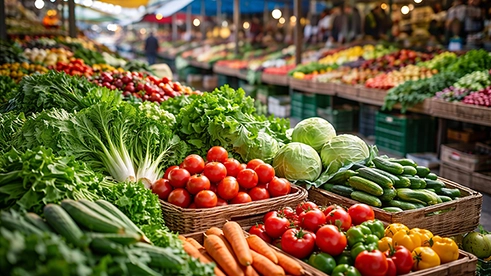
Fresh vegetables carry an aura of health that few other foods can match. Their colors signal vitality, their textures suggest purity, and their presence in a meal feels like a promise — nourishment without compromise. Yet a 2025 study published in Scientific Reports examining vegetables sold in open markets across the South Gondar Zone of Ethiopia offers a quieter, more grounded truth: freshness is not sterility.
A vegetable plucked from the soil, handled by multiple people, washed with questionable water, and displayed in open air becomes a meeting point of microbial communities, not an untouched artifact.
The study does not undermine the value of vegetables; it reframes them. Every leaf, seed, and stem is a living surface shaped by environment, transport, human contact, and hygiene patterns. To understand their safety is to understand their ecological biography.

What the Researchers Saw Beneath the Surface
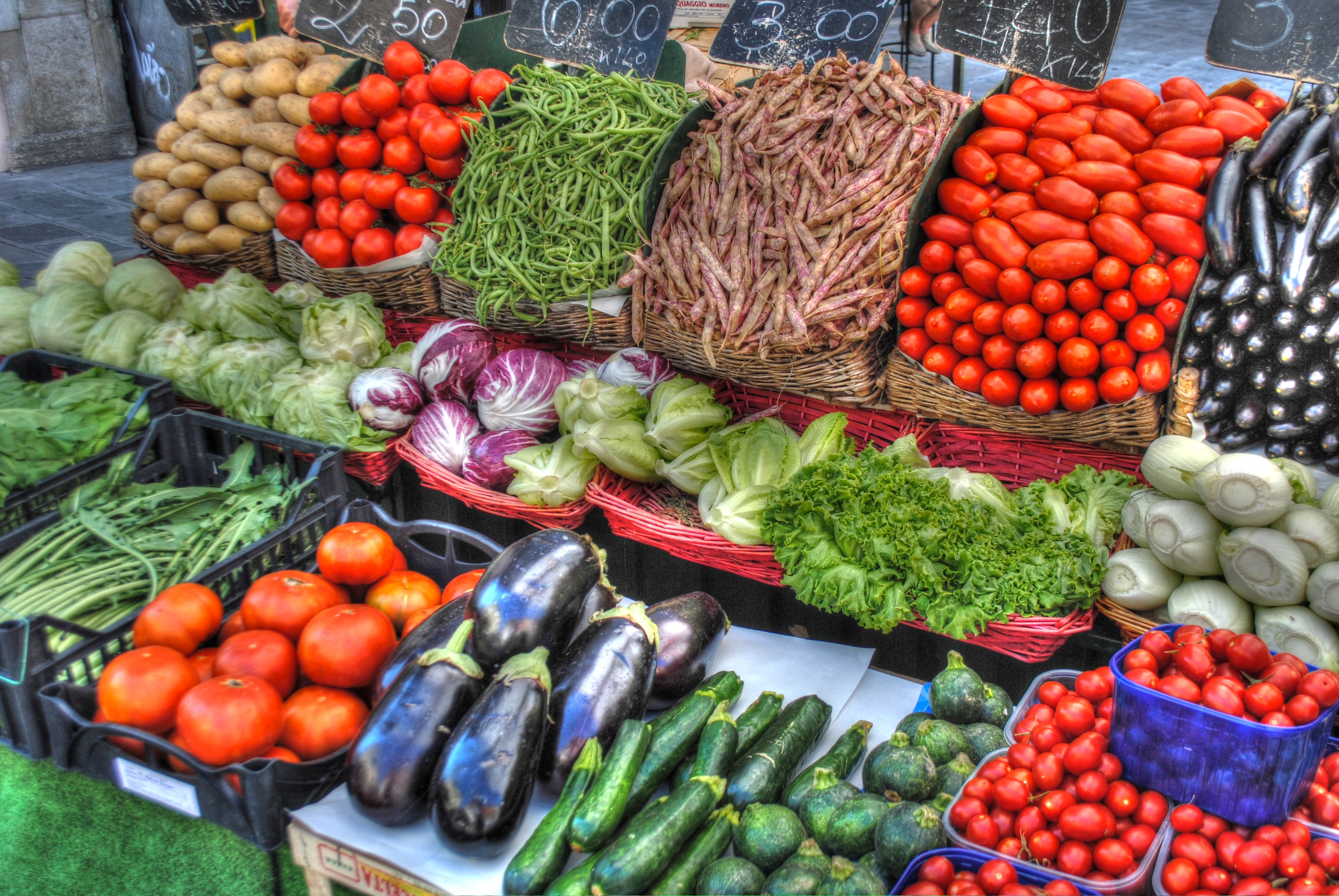
To map the microbial landscape of commonly consumed produce, the researchers analyzed 120 samples of lettuce, cabbage, spinach, carrots, tomatoes, and green peppers. These vegetables were chosen not for exotic traits but because they populate daily meals — the workhorses of home cooking and street markets alike.
Each sample was assessed for total bacterial load, levels of yeasts and molds, presence of parasitic contamination, and the influence of vendor handling practices.
Across every vegetable type, microbial communities were present. Some samples carried only light loads; others bore significantly higher counts. While bacteria dominated numerically, yeasts and molds appeared consistently, even in the absence of visible spoilage. Their presence at sub-visible levels reinforces an essential idea in fungal ecology: mold does not need to announce itself to exist.
Parasites were also detected in roughly one-third of samples, indicating that the issue extends beyond fungal or bacterial growth. In open-market systems, produce becomes an environmental snapshot — a biological reflection of soil, water, handling behavior, and sanitation infrastructure.

🍄 Mold as an Invisible Traveler
The fungal findings, although modest compared to bacterial counts, reveal important patterns. Many market vegetables carried measurable mold loads, averaging around 0.90 log units. This is not catastrophic contamination; it is ecological normalcy.
Spores from Aspergillus, Penicillium, Cladosporium, and Fusarium species are widespread in the atmosphere, settle easily on surfaces, and require minimal opportunity to colonize plant tissues.
What matters is not merely their presence but their potential. In warm, humid markets, spores may remain quiescent until conditions shift — a sudden rise in temperature, a pocket of moisture trapped beneath leaves, or extended display times without refrigeration. Mold can move quietly, accelerating spoilage, producing discoloration, or in some cases generating Mycotoxin long before visible growth appears.
These risks are not theoretical. They are ecological habits honed over millions of years. Spores do not wait for permission; they wait for conditions.


The Human Factor: Hands, Habits, and Hygiene
One of the most compelling aspects of this study lies in its exploration of risk factors tied to human behavior. Vegetables displayed openly in markets accumulated more contamination than those partially covered. Produce transported by hand rather than by vehicle experienced greater microbial exposure.
Vendors with inadequate hygiene practices — including unwashed hands or untrimmed fingernails — contributed unknowingly to microbial transfer.
Vegetable safety, the study suggests, depends as much on behavior as biology. A clean field cannot compensate for contaminated wash water. A well-grown tomato cannot offset repeated handling without sanitation. Even a simple lapse — resting vegetables on the ground, splashing with the wrong water, picking up produce after handling money — creates microbial bridges between environments.
This is where fungi and public health converge. Molds are opportunistic, and their opportunities often come from human routines rather than agricultural origins.
A One Health Lens on Fresh Produce
Open-air markets are essential to food access in many regions, yet they often operate within infrastructural constraints: limited refrigeration, scarce clean water, minimal formal training, and ambient temperatures that encourage microbial persistence.
Vegetables in these environments are not failures of cleanliness; they are participants in a broader One Health system connecting soil microbes, human hygiene, environmental sanitation, and the physical conditions of market spaces.
Similar patterns appear worldwide in regions where produce moves through informal or semi-formal supply chains. Vegetables become vectors not because they are inherently risky, but because they travel through ecologies laden with water scarcity, seasonal humidity, crowding, transportation challenges, and uneven sanitation awareness.
Understanding vegetable safety means understanding the ecosystem that cradles the food.
Public Health Through a Fungal Lens
The global burden of foodborne illness remains staggering. The World Health Organization estimates roughly 600 million cases of foodborne illness and 420,000 deaths each year worldwide.
In children under five — a demographic particularly vulnerable to microbial exposure — fresh produce can be both essential nutrition and a microbial conduit.
The solution is neither panic nor avoidance. It is investment in hygiene training, infrastructure for clean water, improved post-harvest transport, and safe display conditions. It is consumer awareness that washing vegetables is not a courtesy but a barrier — one of the few interventions ordinary households can reliably control.
Vegetable safety is not a single action; it is a chain of stewardship from soil to table.
References
Academic Sources
Gebremedhin, A., et al. (2025). Microbial contamination and parasitic load in fresh vegetables sold in open markets of South Gondar Zone, Ethiopia. Scientific Reports.
Beuchat, L. R. (2002). Ecological factors influencing survival and growth of human pathogens on raw fruits and vegetables. Microbes and Infection.
DOI: https://doi.org/10.1016/S1286-4579(02)01555-1
Tournas, V. H. (2005). Moulds and yeasts in fresh and minimally processed vegetables. International Journal of Food Microbiology.
DOI: https://doi.org/10.1016/j.ijfoodmicro.2005.03.016
Official Sources
World Health Organization — Foodborne disease burden
https://www.who.int/news-room/fact-sheets/detail/food-safety
Food and Agriculture Organization — Food safety and hygiene guidance
https://www.fao.org/food-safety
Centers for Disease Control and Prevention — Foodborne pathogens and prevention
https://www.cdc.gov/foodsafety
Key Takeaways
- What Market Vegetables Reveal About Hidden Microbial and Fungal Risks
- Their colors signal vitality, their textures suggest purity, and their presence in a meal feels like a promise — nourishment without compromise.
- Every leaf, seed, and stem is a living surface shaped by environment, transport, human contact, and hygiene patterns.
- These vegetables were chosen not for exotic traits but because they populate daily meals — the workhorses of home cooking and street markets alike.
- Some samples carried only light loads; others bore significantly higher counts.
Frequently Asked Questions
What should you know about the Beautiful Illusion of “Fresh”?
Fresh vegetables carry an aura of health that few other foods can match. Their colors signal vitality, their textures suggest purity, and their presence in a meal feels like a promise — nourishment without compromise. Yet a 2025 study published in Scientific Reports examining vegetables so
What the Researchers Saw Beneath the Surface?
To map the microbial landscape of commonly consumed produce, the researchers analyzed 120 samples of lettuce, cabbage, spinach, carrots, tomatoes, and green peppers. These vegetables were chosen not for exotic traits but because they populate daily meals — the workhorses of home cooking and street m
What should you know about 🍄 Mold as an Invisible Traveler?
The fungal findings, although modest compared to bacterial counts, reveal important patterns. Many market vegetables carried measurable mold loads, averaging around 0.90 log units. This is not catastrophic contamination; it is ecological normalcy.
What should you know about the Human Factor: Hands, Habits, and Hygiene?
One of the most compelling aspects of this study lies in its exploration of risk factors tied to human behavior. Vegetables displayed openly in markets accumulated more contamination than those partially covered. Produce transported by hand rather than by vehicle experienced greater microbial exposu
What should you know about a One Health Lens on Fresh Produce?
Open-air markets are essential to food access in many regions, yet they often operate within infrastructural constraints: limited refrigeration, scarce clean water, minimal formal training, and ambient temperatures that encourage microbial persistence.