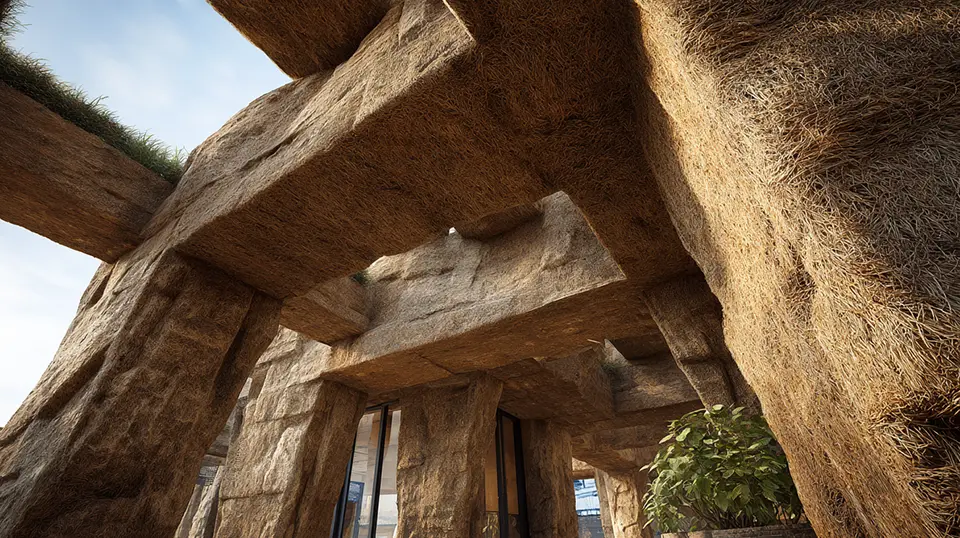
According to CLIMATE WIRE
The Construction Crisis and the Quest for a Carbon Cure
The global construction industry is a colossus, responsible for a significant portion of the world’s carbon emissions and landfill waste. Concrete and steel—the foundational pillars of our modern urban landscape—come with a heavy environmental price tag. The pursuit of genuinely sustainable building materials has become one of the most urgent challenges for architects and engineers aiming for a “net zero” future.
This quest for a cleaner, greener alternative has led researchers not to a high-tech lab synthesis, but to a humble, living organism found beneath the forest floor: mycelium.
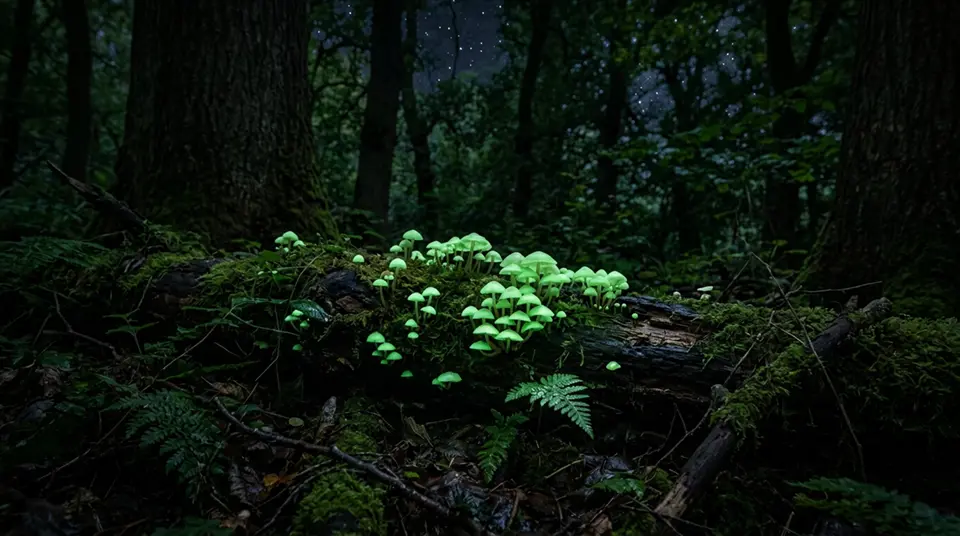
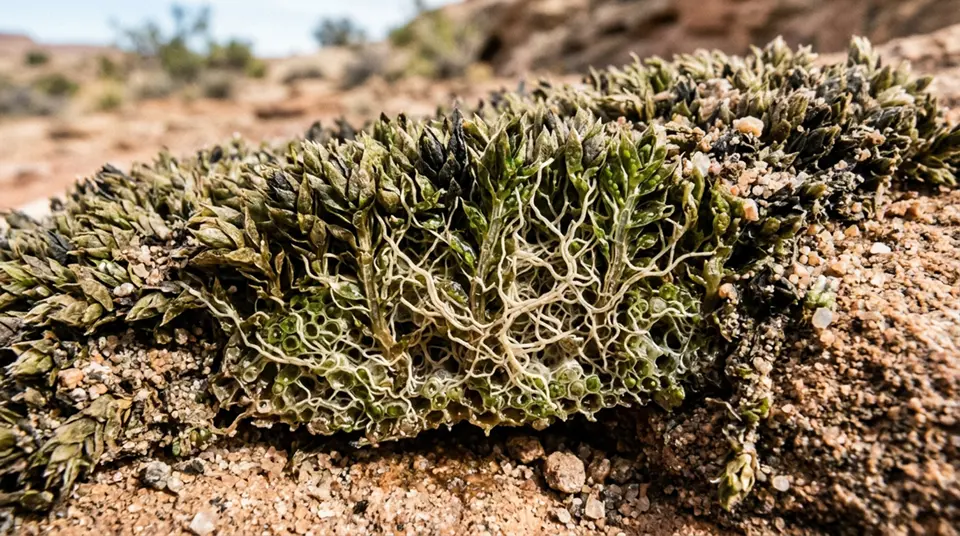
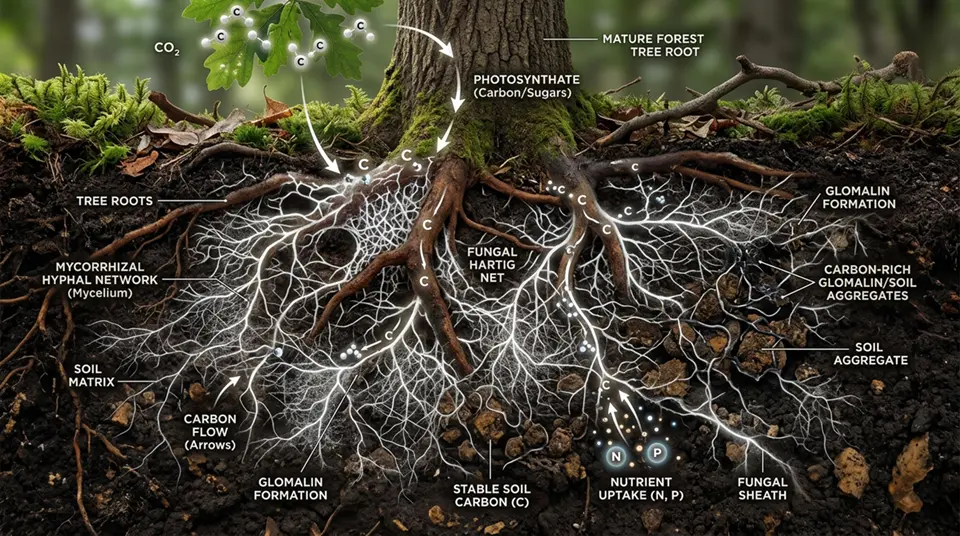
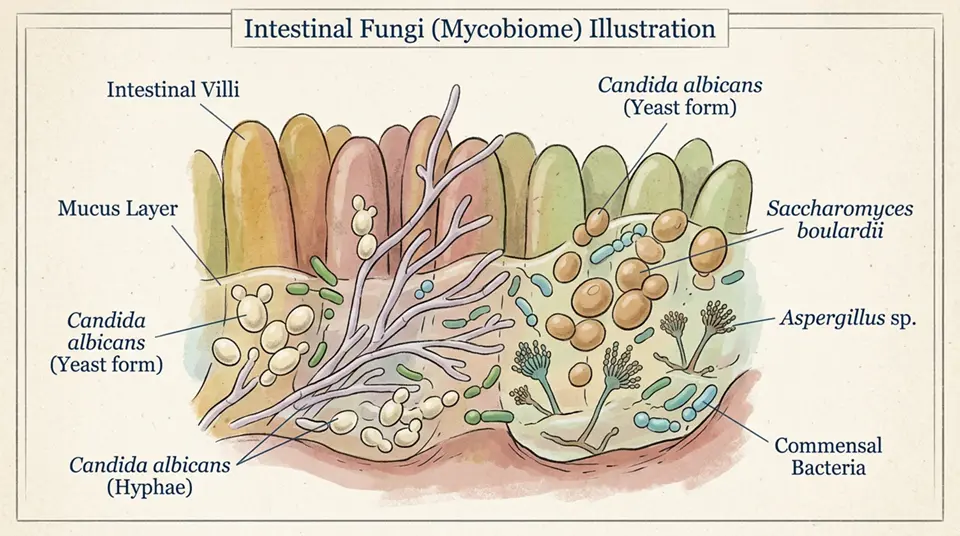
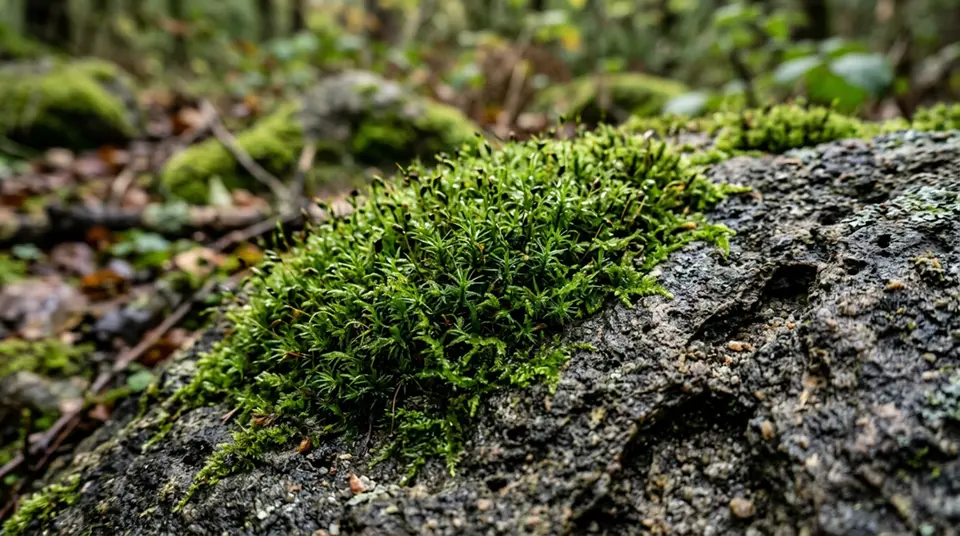
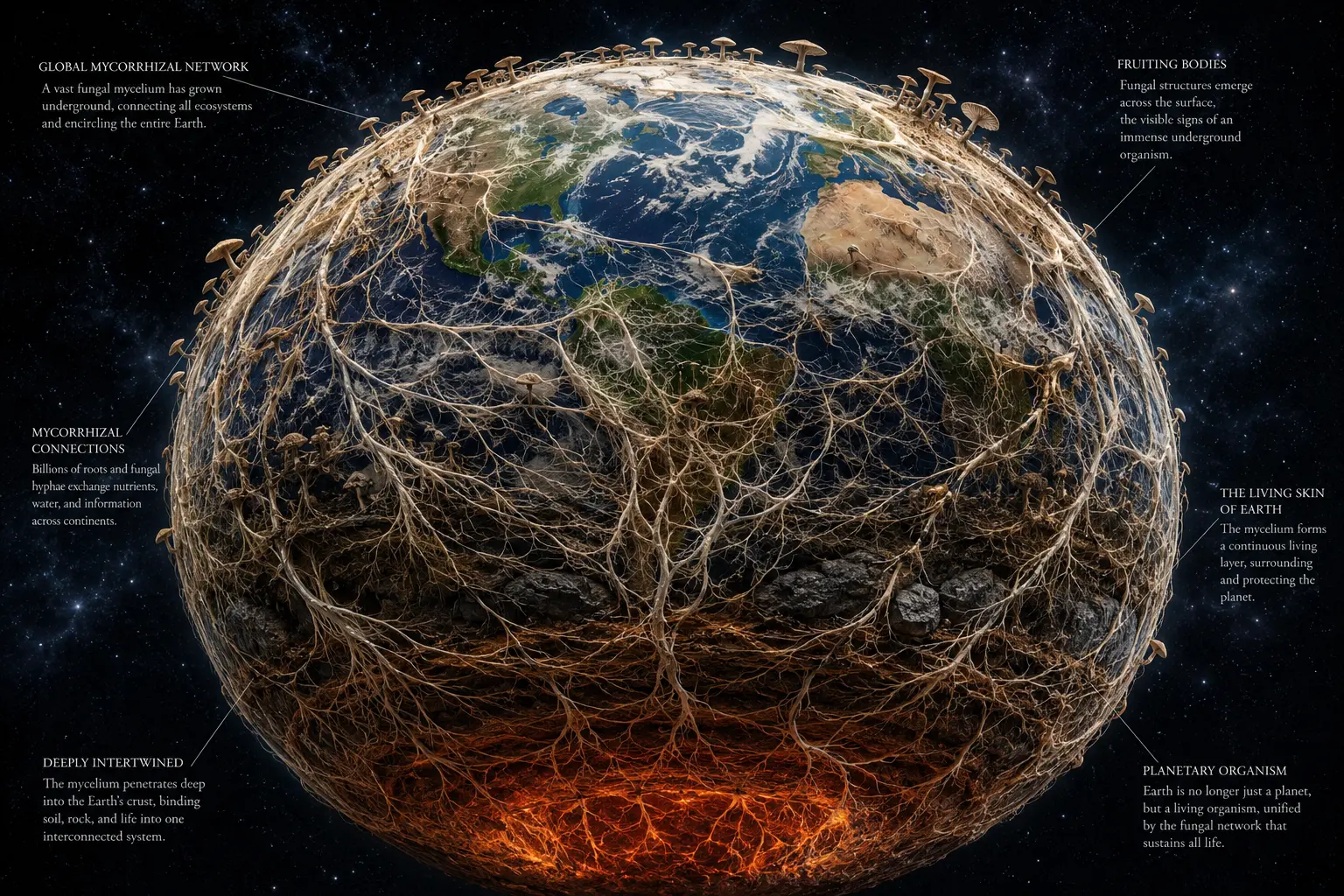
Mycelium is the intricate, root-like network of threads, or hyphae, that constitutes the vegetative part of a fungus. It is the invisible architect of nature, constantly decomposing organic matter. This natural process—occurring without heat, pressure, or toxic chemicals—holds the key to a revolutionary shift in construction: a shift from resource extraction to bio-fabrication.

Source: Wikimedia Commons — CC BY-SA 4.0
The Biomaterial Revolution: Growing Your Own Brick
The process of turning this delicate network into industrial-grade building material is elegantly simple and fundamentally circular. It begins with low-value agricultural waste—such as corn husks, straw, or wood chips—which serves as the nutrient-rich substrate. This waste is mixed with specialized fungal spores or mycelial cultures. The mycelium then begins to grow, consuming the organic waste and, in a matter of days, self-assembling into a dense, interlocking matrix.
This natural binding process, often termed “biocycling” or “bio-fabrication,” produces a composite material that is then dried and compressed. The result is a material that can be molded into virtually any shape—bricks, panels, insulation boards, or custom architectural components—using minimal energy, often just room temperature and basic agricultural waste.
The material’s production is inherently carbon-negative or carbon-neutral, as the fungus is primarily using upcycled waste and sequestering carbon during its growth.
The Material’s Miraculous Properties
What elevates mycelium from a novelty to a genuine game-changer are its intrinsic physical properties. It possesses a suite of characteristics that challenge traditional building materials:
- Insulation: Mycelium-based composites exhibit excellent thermal and acoustic insulation properties, making them highly effective for energy-efficient buildings and noise reduction.
- Fire Resistance: Many mycelium materials are naturally fire-retardant. Unlike chemical-based retardants, they often burn cleanly, emitting only water and carbon dioxide (Frontiers in Materials, 2023).
- Sustainability and End-of-Life: Mycelium is biodegradable, meaning it can be composted at end-of-life, returning nutrients to the soil and leaving zero toxic residue—a true circular economy achievement.

Source: Wikimedia Commons — CC BY-SA 4.0
The Practical Limits and the Road Ahead
Despite its revolutionary potential, mycelium is not yet ready to completely replace our current heavy-duty materials. The primary limitation lies in its structural strength. While mycelium boasts a remarkable strength-to-weight ratio, its compressive strength remains far below that of reinforced concrete.
For now, its most promising applications lie in non-load-bearing elements such as:
- Insulation and Acoustic Panels: Replacing synthetic foams and plastics.
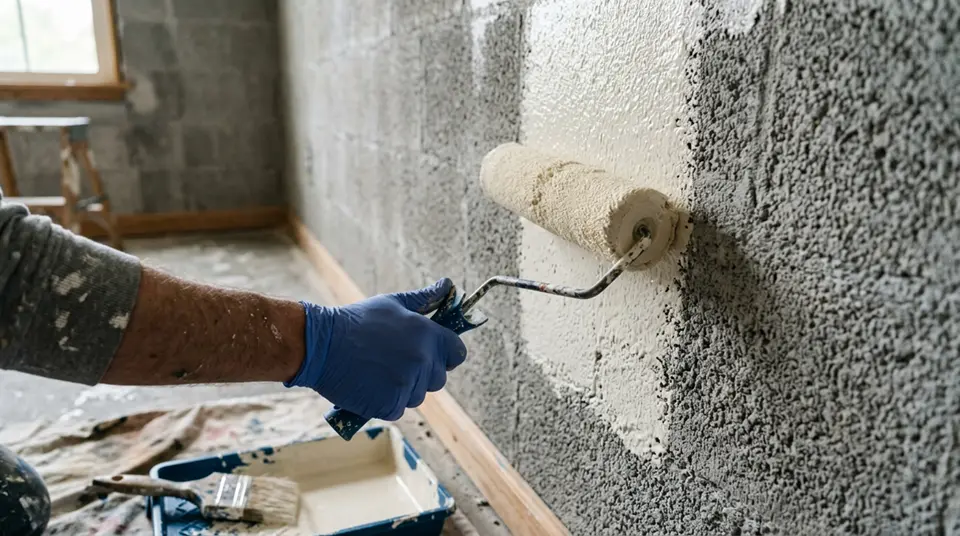
- Interior Partitions and Cladding: Lightweight, aesthetic finishes.
- Packaging: Substituting petroleum-based foams.
Researchers are experimenting with hybrid materials that combine mycelium with polymers, cellulose, or bio-resins to increase mechanical stability and meet global building codes.
Projects like Hy-Fi—a 40-foot tower built from 10,000 mycelium bricks in New York—and a pilot house in Namibia developed with NASA showcase the scalability and creative possibilities of this living material.
A Paradigm Shift in Architecture
The excitement surrounding mycelium is palpable not just in laboratories, but in architectural firms around the world. This material gives designers a new creative vocabulary—structures that mirror nature’s logic through organic geometry and local production.
It signals a profound philosophical shift: moving from extracting resources to cultivating them. Instead of burning fuel and emitting carbon, architects can literally grow buildings.
Mycelium is more than an eco-friendly substitute; it’s a living technology offering a viable path to a sustainable, low-carbon construction future. Though standardization and certification remain hurdles, its invisible root network has already started reshaping the foundations of green architecture.

Source: Wikimedia Commons — CC BY 4.0
References
- MDPI Materials, 2022. Thermal and Acoustic Properties of Mycelium-Based Insulation Panels.
- NASA Feature: Mycelium Bricks Could Revolutionize Habitat Construction on Mars and Earth.
According to CLIMATE WIRE
Key Takeaways
- Architects and construction engineers are developing building structures using mycelium (the vegetative root network of fungi) as a primary structural and insulating material, creating living, self-repairing, and fully biodegradable architectural components.
- Mycelium composites achieve compressive strengths of 100–500 kPa and densities comparable to expanded polystyrene foam, making them viable for load-bearing applications in low-rise construction and packaging.
- Companies including Ecovative Design, MOGU, and Arup have demonstrated commercial-scale mycelium building panels, insulation products, and acoustic tiles.
- The carbon footprint of mycelium construction materials is dramatically lower than conventional alternatives: hemp or agricultural waste feedstocks are combined with fungal mycelium at ambient temperature and pressure, requiring no energy-intensive manufacturing.
- Mycelium biomaterials can be grown into virtually any shape using moulds, enabling mass customisation of complex architectural geometries that would be costly or impossible with conventional materials.
Frequently Asked Questions
How are mycelium composites made for construction?
Mycelium composites are produced by combining fungal mycelium with an agricultural substrate—typically hemp hurds, corn stover, straw, or wood chips. The substrate is sterilised or pasteurised, inoculated with a selected fungal species (most commonly Ganoderma lucidum, Pleurotus ostreatus, or species selected for specific mechanical properties), and packed into moulds in the desired shape. Over 5–14 days, the fungal mycelium grows through and binds the substrate into a cohesive composite material. The material is then killed (heat-treated) and dried, stopping further growth and stabilising the product. The result is a lightweight, rigid composite with the internal structure of the agricultural substrate bound by a dense, continuous network of fungal hyphae.
What are the structural properties of mycelium building materials?
Mycelium composites are relatively low in compressive strength (100–500 kPa, compared to 20,000+ kPa for concrete) but high in specific stiffness for their weight, and perform well in applications where load is primarily compressive and distributed. Their mechanical properties are comparable to rigid expanded polystyrene (EPS) foam—the material they most closely replace—making them suitable for insulation panels, packaging, acoustic tiles, and non-structural architectural elements. Research is ongoing to improve structural performance through optimisation of fungal species selection, substrate choice, and post-processing treatments. Some formulations have demonstrated fire resistance and moisture resistance superior to standard EPS.
Is mycelium architecture biodegradable, and what happens at end of life?
Killed and dried mycelium composites are fully biodegradable—they will decompose in soil or compost under normal conditions, breaking down into carbon dioxide, water, and biological nutrients. This represents a dramatic improvement over conventional construction materials (EPS foam, mineral wool, and rigid foam insulation boards) that persist in landfill for hundreds to thousands of years. End-of-life pathways for mycelium construction materials include: home composting; municipal green waste streams; agricultural incorporation; and natural degradation if left exposed to the environment. The biodegradation timeline varies by substrate and moisture conditions but is typically weeks to months for finely structured material.
What fungal species are best suited for architectural applications?
Different fungal species are selected for different applications based on their growth characteristics and the properties of the resulting composite. Ganoderma lucidum produces very dense, hard mycelium composites with good compressive strength. Pleurotus ostreatus grows rapidly and produces lightweight, flexible composites better suited for acoustic applications. Trametes versicolor produces composites with higher resistance to moisture and biological degradation. Researchers are also exploring hybrid approaches using multiple species in sequential growth stages, or genetically selecting strains for specific mechanical properties. The substrate composition—the agricultural waste component—significantly influences the mechanical properties independent of fungal species choice.
What is the commercial status of mycelium building materials?
Mycelium building materials have reached early commercial scale. Ecovative Design (US) produces commercial mycelium packaging (used by IKEA, Dell, and others) and has a home insulation product. MOGU (Italy) offers commercial mycelium acoustic tiles and flooring products used in commercial interior applications. Biomyc (UK) and similar startups are developing mycelium insulation board products. A major proof-of-concept was achieved when Arup engineering firm developed mycelium structural column prototypes. Commercial adoption in primary construction is limited by current cost relative to conventional alternatives, but projections suggest price parity with EPS insulation boards within 5–10 years as production scales. Regulatory approval for building codes in most jurisdictions is a parallel requirement being addressed.