According to INTERESTING ENGINEERING
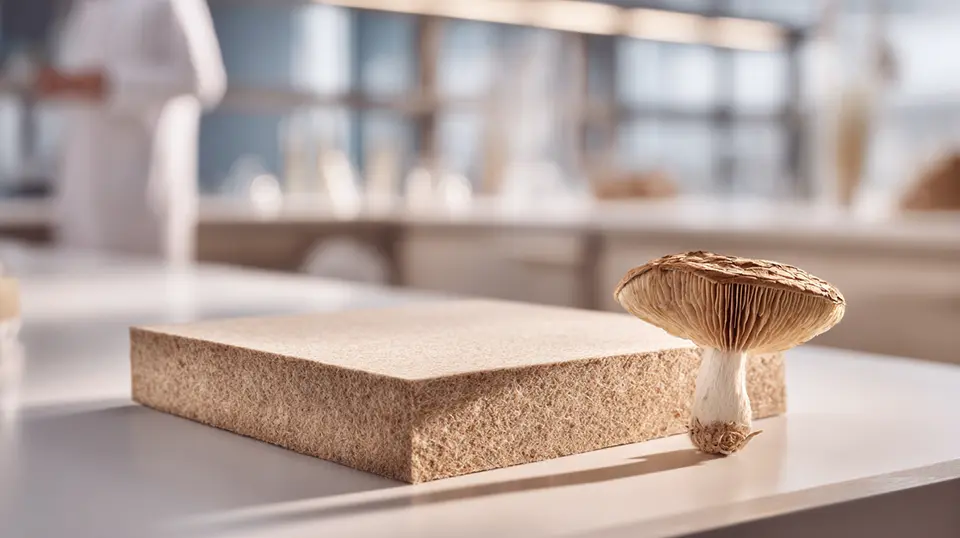
In a quiet laboratory nestled within the Hof University of Applied Sciences in Bavaria, Germany, a revolution in sustainable construction is taking root—quite literally. A team of researchers led by Dr. Robert Honke is growing insulation boards out of mushrooms, and if their success continues, these panels may become a key component in the green buildings of tomorrow.
Dubbed the “Mycobuild” project, this ambitious effort uses Pleurotus ostreatus, commonly known as oyster mushroom, and other native fungi to create an eco-friendly, mold-resistant, and carbon-absorbing insulation material. The project, backed by Germany’s DATIpilot program, seeks to bring this innovation from the laboratory to large-scale industry production by 2026.

Source: Wikimedia Commons, CC BY-SA 3.0
From Soil to Structure: How Fungi Become Insulation
Unlike traditional insulation materials such as fiberglass or foam—which are often manufactured using energy-intensive processes and petrochemical ingredients—mycelium-based insulation is cultivated from natural elements.
The process begins with agricultural byproducts, primarily dry straw sourced from local farms. This plant material serves as the substrate, or growing medium, for the fungi. Researchers inoculate the straw with mushroom spores in a sterile environment to prevent contamination. Over the course of a few days, the mycelium—fungal root structures—spread throughout the straw, binding it together into a dense, foam-like mass.
Once the desired form and density are achieved, the composite is heated and dried to halt the growth process and stabilize the structure. The end result is a solid, lightweight board that behaves much like commercial insulation while also being compostable and low in embodied carbon.
The Mold Myth: Fungi That Don’t Breed Mold
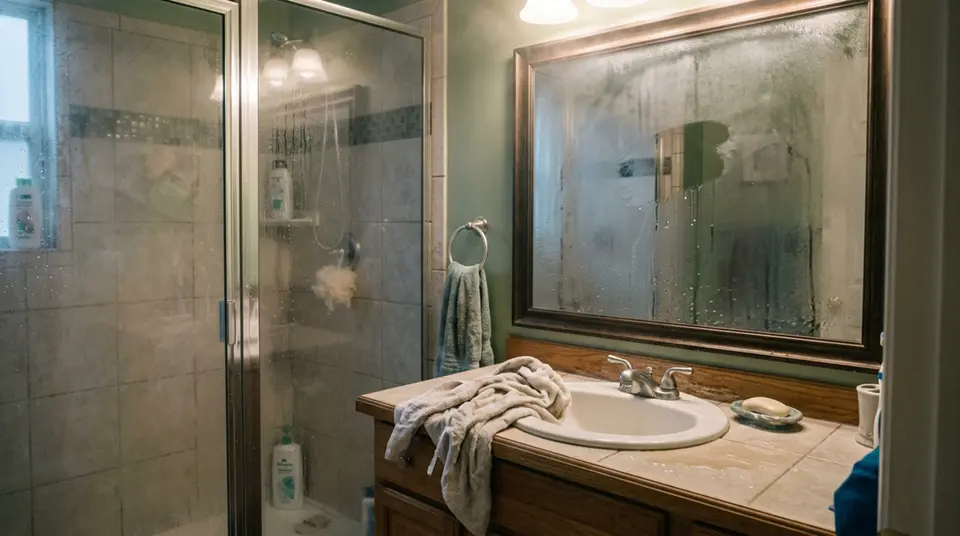
One of the main concerns facing this innovation is psychological. As Honke candidly admits, “Many people might be skeptical about an insulation material that is based on fungi, as they fear that this could lead to mold problems in their homes.”
This assumption, while understandable, is largely unfounded. In fact, the team goes to great lengths to eliminate any risk of mold growth. According to Dr. Katharina Wellmanns, a research associate on the project, the key lies in balance: “The substrate must provide enough nutrients for the mycelium to grow optimally, but must not contain too many sugars to prevent mold growth.”
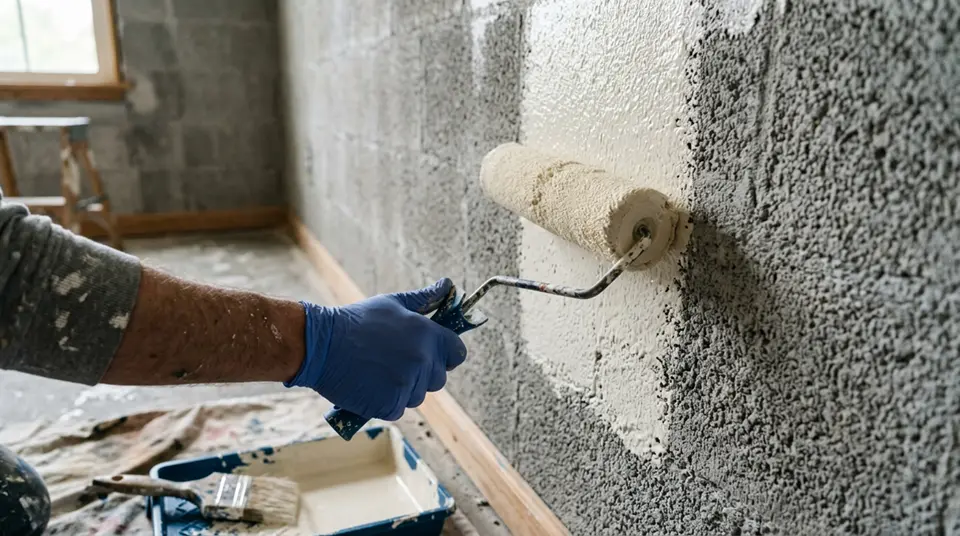
Moreover, the mycelium is inactivated by heat treatment, ensuring it can no longer grow or sporulate. To further address moisture concerns, the team partnered with Johann Bergmann GmbH & Co. KG to add a mineral coating to the boards. This top layer not only repels water but also enhances the material’s strength and insulation performance.
Performance Testing: From Moisture to Mold Resistance
The Mycobuild team subjects each board to rigorous testing before it earns a place in potential construction applications. Moisture resistance, thermal conductivity, structural integrity, and mold resilience are all measured under various conditions. According to early data, the material performs favorably when compared to conventional insulation options.
The added mineral layer allows the boards to retain low thermal conductivity while enhancing their surface durability. This development is critical for real-world application, especially in regions prone to humidity, where mold poses a serious health risk and economic burden.
“Our goal is to not only compete with existing insulation materials but to exceed them in environmental and performance metrics,” Wellmanns explains.

Source: Wikimedia Commons, CC BY-SA 3.0
Sustainability at the Core
Perhaps the most compelling feature of these mycelium-based panels is their ecological footprint. The insulation absorbs CO2 during the fungal growth phase, contributing to carbon sequestration. Once the boards reach the end of their life cycle, they can be composted, returning nutrients to the earth.
“This is a circular material in the truest sense,” says Honke. “It starts as agricultural waste, provides insulation and protection, and then decomposes harmlessly. It embodies the principles of cradle-to-cradle design.”
Unlike synthetic insulation, which often ends up in landfills and emits harmful toxins if burned, Mycobuild boards offer a path toward more responsible material use in the built environment.

Source: Wikimedia Commons, Public Domain
Scaling Up: From Lab to Industry
Currently, the insulation boards are still in the pilot stage, being produced in controlled laboratory conditions. The researchers are working tirelessly to scale the process to industrial levels without sacrificing quality or ecological benefits.
“One of our key challenges is maintaining sterile conditions at scale,” Wellmanns notes. “Fungal cultivation is sensitive. Any small contamination can ruin an entire batch.”
To solve this, the team is developing clean-room production techniques and exploring automation to streamline substrate preparation and mycelium inoculation. Partnerships with building material companies like Johann Bergmann GmbH & Co. KG are vital in bridging the gap between academia and industry.
Market Outlook and Public Perception
Despite promising data, the market adoption of mycelium insulation hinges on public acceptance. As the team works on technical refinements, they are also focusing on education and outreach.
“There is a real cultural barrier to overcome,” says Honke. “People equate fungi with rot and decay, not with resilience and innovation. But we are proving that fungi can be part of the solution to our climate and building challenges.”
He likens the transition to the adoption of electric vehicles or plant-based meat alternatives—initially fringe, now increasingly mainstream.
“The next generation of builders, architects, and homeowners are thinking differently,” Honke adds. “They want materials that not only work but that align with their values.”
Looking Ahead
The Mycobuild project is expected to enter its industrial pilot phase in 2026, with field trials planned in both residential and commercial settings. If successful, the boards could be certified for use under EU building codes and international standards, paving the way for export and global adoption.
“We believe fungi-based insulation is more than a novelty,” Wellmanns says. “It’s a viable, scalable, and climate-positive material whose time has come.”
For now, the team at Hof University continues to nurture their living building materials one panel at a time—quietly growing a greener future in the most unexpected of places.

Source: Wikimedia Commons, CC BY-SA 4.0
References
- Pleurotus ostreatus – Wikipedia
- CDC – Fungal Diseases
- Hof University of Applied Sciences
- Johann Bergmann GmbH & Co. KG
According to INTERESTING ENGINEERING
Key Takeaways
- German researchers and companies have developed commercial mycelium-based insulation boards using agricultural waste substrates, demonstrating technical viability as a low-carbon alternative to conventional rigid foam insulation.
- Mycelium insulation boards achieve thermal conductivity values of 0.04–0.06 W/(m·K), comparable to conventional expanded polystyrene (EPS) and better than many natural insulation materials like wood fibre.
- Production energy requirements for mycelium insulation are dramatically lower than petrochemical foam insulation: no high-temperature processing, no chemical blowing agents, and feedstocks are agricultural by-products.
- German building standards (DIN norms) present a regulatory pathway for bio-based insulation materials; achieving formal building code approval requires fire resistance, vapour permeability, and long-term durability testing.
- Companies including Mogu (Italy), Ecovative (US), and German startups are commercialising mycelium insulation, though mass-market adoption requires cost parity with conventional materials.
Frequently Asked Questions
How do mycelium insulation boards perform thermally compared to conventional insulation?
Thermal performance of mycelium insulation boards depends on density, substrate type, and moisture content. Published studies report thermal conductivity (lambda) values of approximately 0.04–0.06 W/(m·K) for dried, heat-killed mycelium composites made with hemp, straw, or wood chip substrates. For comparison: EPS foam achieves 0.032–0.038 W/(m·K); mineral wool (rock wool, glass wool) achieves 0.033–0.044 W/(m·K); natural wood fibre board achieves 0.038–0.052 W/(m·K). Mycelium insulation performs better than loose cellulose (0.040–0.060 W/(m·K)) and better than unprocessed straw bales (0.052–0.080 W/(m·K)) at equivalent density, making it thermally competitive with many established natural insulation alternatives.
What substrates are used to grow mycelium insulation in Germany?
German mycelium insulation research and production typically uses locally available agricultural waste streams as substrates, reflecting both economic and sustainability goals. Hemp hurds (the woody core of the hemp stalk, a by-product of fibre processing) are one of the most studied substrates, providing both structure and nutrition for fungal growth. Straw (wheat, rye, barley) is another common substrate. Wood chips and sawdust from wood processing industries provide lignocellulosic nutrition. Regional availability of these agricultural by-products is a key advantage of mycelium insulation—unlike EPS (petroleum-derived) or mineral wool (energy-intensive mineral processing), the raw materials exist locally across all German agricultural regions without long supply chains.
Is mycelium insulation fire resistant?
Fire behaviour is a critical building code requirement for insulation materials. Raw dried mycelium composites have moderate fire resistance—they char and smoulder rather than flaming rapidly like EPS (which is highly flammable), but do not achieve the excellent fire resistance of mineral wool. Published research indicates mycelium insulation materials typically fall into Euroclass E or D (limited to moderately burning) without additional fire treatment—below the B or C classification required for many building applications. Research is active on improving fire resistance through: mineral additives (silica, calcium carbonate) incorporated into the growth substrate; post-production intumescent coatings; and fungal species selection favouring more thermally stable hyphal chemistry. Achieving mainstream building code fire compliance remains a key technical challenge.
What is the vapour permeability of mycelium insulation and why does it matter?
Vapour permeability (the ability of a material to allow water vapour to diffuse through it) is an important property for wall insulation, particularly in European building traditions that favour ‘breathing’ wall assemblies that can manage moisture without vapour barriers. Mycelium composites are naturally vapour-permeable due to their porous, fibrous structure—vapour diffusion resistance factors (μ values) are typically in the range of 2–8, similar to natural wood fibre and hemp-lime insulation, and far lower than EPS (40–100) or XPS (80–250). This makes mycelium insulation naturally compatible with vapour-open wall assemblies and particularly suitable for retrofitting historic buildings where maintaining vapour permeability of the building fabric is important.
When might mycelium insulation boards become widely available in Germany and Europe?
Commercial mycelium insulation products are available in limited quantities in Germany and Europe primarily through specialist suppliers and pilot projects, but mass-market construction use requires further development. Key milestones needed before wide adoption: European Technical Assessment (ETA) approval enabling CE marking and specification in building projects; fire classification testing to demonstrate compliance with EN 13501-1; long-term durability data (10–25 year performance datasets currently largely absent); manufacturing scale-up to achieve cost parity with EPS (currently mycelium insulation may cost 3–5× more per unit); and development of supply chain infrastructure for consistent substrate supply and growing capacity. Industry analysts suggest 5–10 years for meaningful market penetration in Germany under favourable regulatory and commercial conditions.