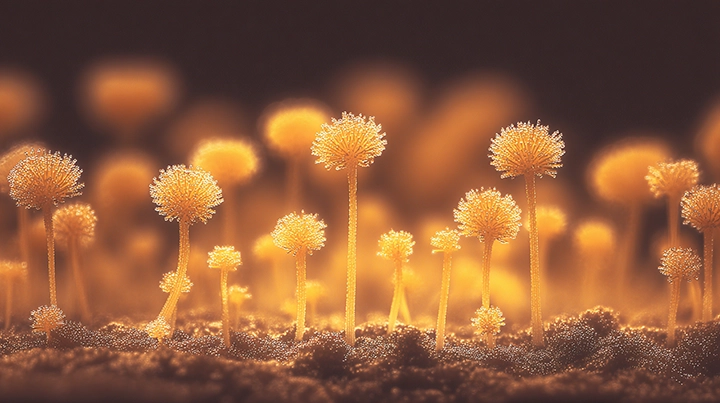

A Climate Story Written in Fungal Spores
The familiar images of climate change — coastlines receding, glaciers thinning, agricultural zones creeping northward — share a common characteristic: they are visible. You can photograph a retreating ice shelf. You can map a shifting crop boundary. You can measure a rising sea.
What is harder to see, and receiving far less attention, is a parallel transformation happening at the microbial scale. Climate change is also rewriting the global geography of fungi.
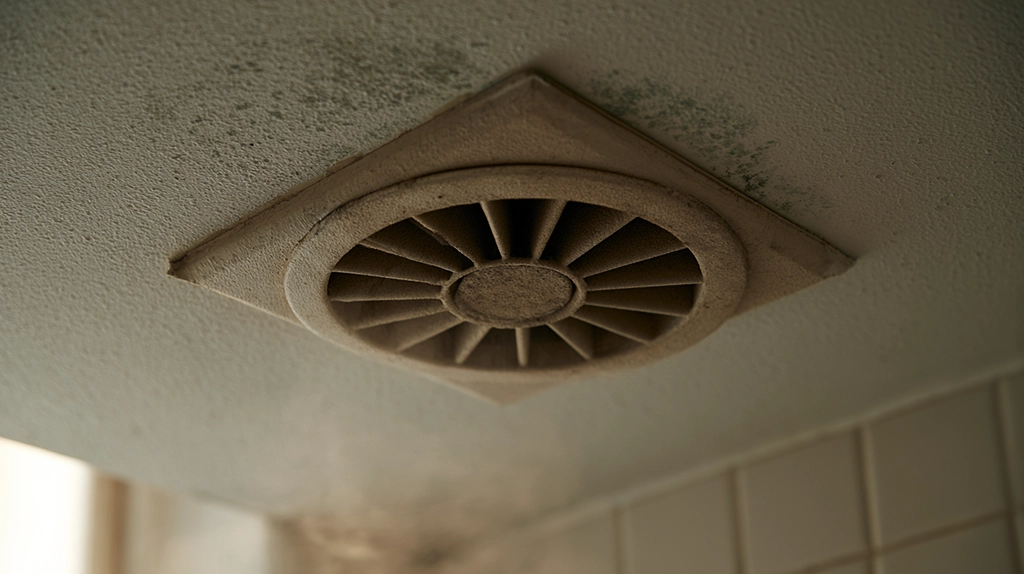
A recent Research Square preprint examined how shifting climate conditions may alter the environmental suitability of three major Aspergillus species: Aspergillus fumigatus, Aspergillus flavus, and Aspergillus niger. These are not obscure laboratory curiosities. They live in soil, compost, crops, indoor dust, and organic debris. They act as opportunistic human pathogens and agricultural contaminants. They are already part of the environments most people move through every day.
Using global fungal metabarcoding data and species-distribution modeling, the researchers mapped where these fungi currently thrive — and projected how those habitats may shift as temperatures rise, precipitation patterns change, and seasonal rhythms are disrupted.
The central finding is both simple and significant: fungal risk is not geographically fixed. The zones where clinically and agriculturally important fungi are most at home may move alongside the climate that shapes them.
Three Species, Three Different Climate Profiles
The three Aspergillus species at the center of the study each occupy a distinct ecological niche — and each carries distinct implications for health and agriculture.
Aspergillus fumigatus is the species most associated with human disease, particularly aspergillosis in immunocompromised patients. It is predominantly found in temperate regions of the Northern Hemisphere, and its medical significance is significant enough that the World Health Organization has designated it a priority fungal pathogen.
Aspergillus flavus and Aspergillus niger are more characteristic of warmer, tropical and subtropical environments. Their primary concerns are agricultural: crop contamination, food spoilage, and — in the case of A. flavus — mycotoxin production that can render food unsafe even when the fungus itself is no longer visible.
Temperature emerges from the analysis as one of the strongest variables determining where each species can establish itself. This matters because it means climate warming does not affect all three species identically. Fungal risk is not shifting uniformly in one direction. It is redistributing unevenly — with some regions becoming more suitable for certain species, and others becoming less suitable, depending on the specific thermal profile of each organism.

The Poleward Shift of Fungal Risk
The most significant finding of the study, in geographic terms, is the projected poleward movement of fungal suitability zones.
Under future warming scenarios, regions that have historically been too cold to sustain certain Aspergillus species may become increasingly hospitable to them. Northern China, Russia, Scandinavia, Alaska, and the northern reaches of North America are identified as areas where suitability for species such as A. flavus may expand significantly in coming decades.
This is not simply a matter of mold appearing in new places. Fungal ecology connects to multiple systems simultaneously. Where particular Aspergillus species are environmentally dominant influences human exposure patterns, clinical disease prevalence, hospital diagnostic protocols, agricultural contamination risks, food storage challenges, and the conditions under which antifungal resistance develops and spreads. A hospital in a region that has never historically needed to monitor heavily for A. flavus may eventually find itself encountering it with increasing frequency. Agricultural systems that have operated with low aflatoxin pressure may face new requirements for monitoring and management.
The fungal species a region contends with today may not be the same species it contends with in thirty years.
Why Aspergillus Matters for Human Health
For healthy people, Aspergillus exposure is effectively invisible. Spores are so prevalent in both indoor and outdoor environments that most people inhale them regularly without any consequence. A functioning immune system clears them before they can establish infection.
The picture changes significantly for people with compromised immunity — whether from underlying disease, immunosuppressive therapy, organ transplantation, or severe viral illness. For these populations, Aspergillus exposure carries real clinical risk.
The study cites estimates that approximately 1.8 million people develop chronic pulmonary aspergillosis annually, while around 2.1 million develop invasive aspergillosis — a more aggressive form of the disease that may contribute to nearly 1.8 million deaths globally each year.
These are substantial numbers for a pathogen that receives comparatively little public attention. If climate-driven habitat shifts alter the fungal species that dominate local environments, then the populations most vulnerable to Aspergillus — patients in hospitals, people with lung disease, immunocompromised individuals — may face changing exposure pressures in regions where healthcare systems are not currently calibrated for those specific risks.

Credit: Korinna, via Wikimedia Commons, CC BY 4.0
The Aflatoxin Threat and Food Security
The agricultural stakes are at least as significant as the clinical ones.
Aspergillus flavus produces aflatoxins — among the most potent naturally occurring mycotoxins known. When A. flavuscolonizes crops, the aflatoxins it produces can render food unsafe for human or animal consumption, even after the visible fungal growth is gone. The contamination is chemical rather than biological; cooking and processing do not reliably eliminate it.
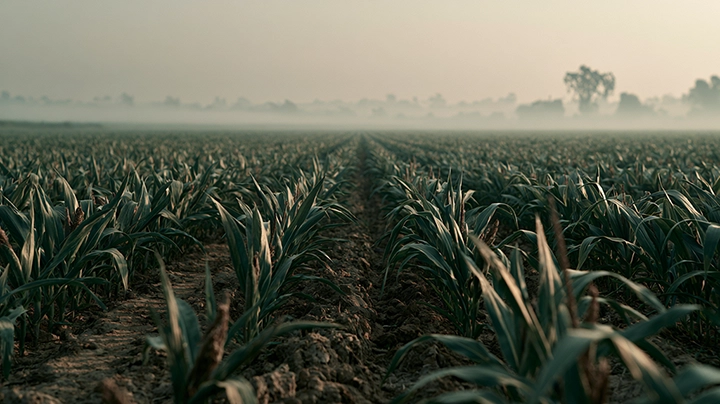
The crops at risk include some of the world’s most important food staples: maize, rice, wheat, soybeans, and others. The study highlights estimates suggesting that aflatoxin contamination could produce enormous economic losses in affected agricultural systems — and that climate conditions favorable to A. flavus expansion could extend that threat into regions currently experiencing low aflatoxin pressure.
The important nuance here is that the research does not suggest more warming simply means more mold everywhere. Fungal pressure shifts unevenly, depending on regional climate trajectories, specific crop systems, soil conditions, and which Aspergillus species is in question. An agricultural monitoring system built around historical fungal patterns may, over time, become misaligned with the actual fungal ecology developing in the field.
Azole Resistance: Where Agriculture Meets Medicine
One of the more important threads in the study involves the connection between agricultural fungicide use and clinical antifungal resistance — and how climate change may complicate that relationship.
Azoles are the primary antifungal drug class used to treat aspergillosis in human medicine. They are also widely used in agriculture as fungicides to protect crops from fungal disease. The chemical mechanisms overlap substantially.
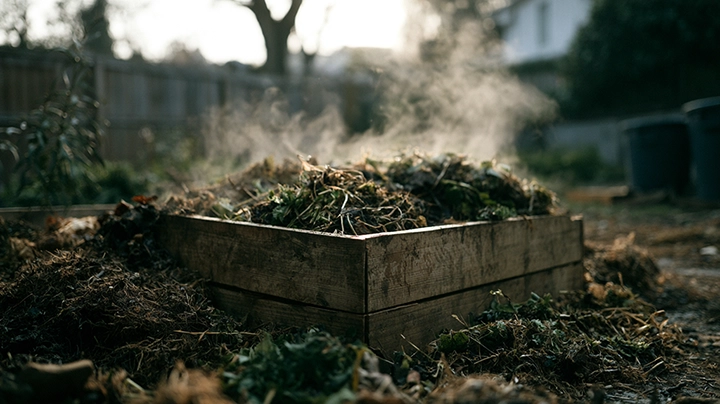
When A. fumigatus in agricultural environments is exposed to azole fungicides — in soil, compost, or crop residue — resistant strains can develop. Those resistant strains can then produce spores that become airborne and are subsequently inhaled by humans. The result is a resistance pathway that begins in a field or compost pile and ends in a hospital intensive care unit.
Climate change may intensify this pathway. If warming expands the geographic range of A. fumigatus and increases sporulation rates in affected regions, and if agricultural azole use remains widespread in those regions, the conditions for resistance development may intensify alongside the climate-driven habitat expansion.
Extreme Weather and Fungal Exposure
The study also identifies a connection between extreme weather events and acute spikes in fungal exposure.
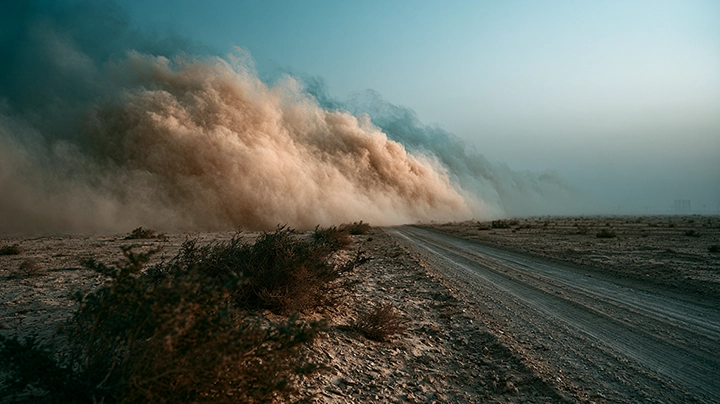
Droughts, floods, storms, and heatwaves disturb soil, organic debris, contaminated structures, and water-damaged materials in ways that mobilize fungal spores into the air. Researchers have already observed elevated aspergillosis cases following certain environmental disruptions. As extreme weather events become more frequent and more intense under climate change projections, the episodic exposure spikes they create may become a more significant contributor to human fungal disease burden.
This reframes fungal exposure as not only a biological concern but increasingly a climate-related exposure issue — one that follows the same logic as other climate-health connections: the environmental conditions that protect human health are being altered by the same forces reshaping ecosystems.
An Important Warning: This Is Still a Preprint
The paper has not yet completed peer review. The authors are explicit about this, and their caution should be taken seriously.
The modeling approach estimates relative habitat suitability, not guaranteed disease outcomes. The findings do not constitute a prediction of specific future infection rates or direct guidance for clinical practice. The research also acknowledges limitations — soil chemistry, land-use patterns, microclimates, genetic adaptation, virulence evolution, changing healthcare capacity, and future human behavior all influence actual outcomes in ways that distribution modeling cannot fully capture.
These limitations do not diminish the study’s significance. They place it accurately within the scientific process. The appropriate frame is an early-warning framework: a map of where attention may be warranted, not a forecast of what will inevitably happen.
Why Mold Surveillance Must Become Climate Surveillance
The study’s deeper implication is institutional as much as ecological.
Fungal monitoring systems, clinical diagnostic capacities, agricultural surveillance protocols, and public health infrastructure have historically been designed around the fungal ecology that exists in a given region at a given time. If that ecology shifts — if different Aspergillus species become dominant in regions where they were previously uncommon, if aflatoxin pressure extends into new agricultural zones, if clinical laboratories begin detecting patterns they have not previously needed to screen for — then systems built on historical baselines will eventually become misaligned with the actual risk landscape.
Adapting to that possibility requires integrating fungal surveillance with climate monitoring in ways that most systems do not currently do. It requires treating fungal distribution as a dynamic ecological variable rather than a fixed background condition.
Climate Change Is Also Rewriting Fungal Geography
The coastlines, the glaciers, the agricultural zones — these are the visible faces of a planetary transformation that extends far further than any single map can show. Fungal geography is part of that transformation.
For Aspergillus, changing climates may shift exposure patterns, alter agricultural risk, intensify antifungal resistance dynamics, and reshape the ecological conditions that determine which fungi inhabit which environments. The consequences connect human health, food security, and ecosystem stability in ways that no single discipline can address alone.
The study ultimately supports a One Health perspective: environmental change, fungal ecology, agriculture, and human health are not separate systems that occasionally interact. They are aspects of a single interconnected system that is changing together — and that needs to be understood and managed together.
Mold is not only an indoor problem. It is increasingly part of a shifting planetary ecology.
FAQ
How does climate change affect Aspergillus distribution? By altering temperature, humidity, rainfall, and seasonal patterns — the environmental variables that determine where different Aspergillus species can establish and persist.
Why is Aspergillus fumigatus important for human health? It is a major cause of aspergillosis, particularly in immunocompromised individuals, and is recognized by the WHO as a priority fungal pathogen.
Why is Aspergillus flavus a food safety concern? Because it produces aflatoxins — toxic compounds that can contaminate crops and food supplies, making them unsafe even after visible fungal growth is removed.
Can climate change increase fungal infection risk? Potentially. Shifting fungal habitats, altered spore dynamics, and changing exposure patterns may influence future infection risks, particularly in regions where certain Aspergillus species were not previously common.
Why are azole-resistant Aspergillus strains concerning? Because azoles are the primary antifungal drug class for aspergillosis, and resistant strains emerging from agricultural environments can spread through airborne spores into human populations.
References
- Research Square — Climate Change and Aspergillus Species Distribution Modeling: https://www.researchsquare.com/article/rs-6545782/v1
Key Takeaways
- What is harder to see, and receiving far less attention, is a parallel transformation happening at the microbial scale. Climate change is also rewriting the global geography of fungi.
- They act as opportunistic human pathogens and agricultural contaminants.
- The central finding is both simple and significant: fungal risk is not geographically fixed.
- Aspergillus fumigatus is the species most associated with human disease, particularly aspergillosis in immunocompromised patients.
- Aspergillus flavus and Aspergillus niger are more characteristic of warmer, tropical and subtropical environments.
Frequently Asked Questions
What should you know about please login to bookmark?
Please login A Climate Story Written in Fungal Spores The familiar images of climate change — coastlines receding, glaciers thinning, agricultural zones creeping northward — share a common characteristic: they are visible. You can photograph a retreating ice shelf. You can map a shifting crop bounda
What should you know about a Climate Story Written in Fungal Spores?
The familiar images of climate change — coastlines receding, glaciers thinning, agricultural zones creeping northward — share a common characteristic: they are visible. You can photograph a retreating ice shelf. You can map a shifting crop boundary. You can measure a rising sea.
What should you know about three Species, Three Different Climate Profiles?
The three Aspergillus species at the center of the study each occupy a distinct ecological niche — and each carries distinct implications for health and agriculture.
What should you know about the Poleward Shift of Fungal Risk?
The most significant finding of the study, in geographic terms, is the projected poleward movement of fungal suitability zones.
Why Aspergillus Matters for Human Health?
For healthy people, Aspergillus exposure is effectively invisible. Spores are so prevalent in both indoor and outdoor environments that most people inhale them regularly without any consequence. A functioning immune system clears them before they can establish infection.