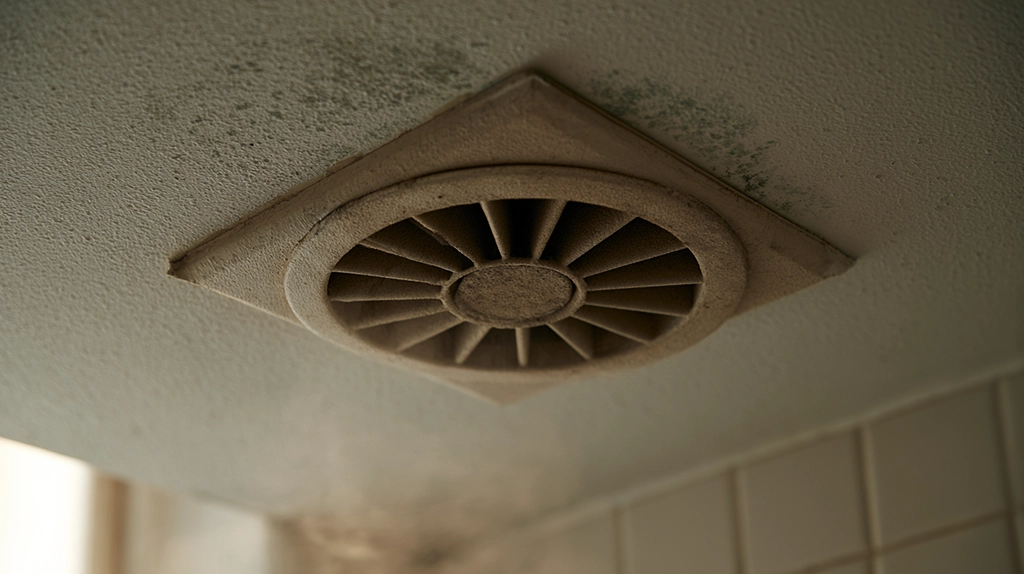

Mold is not always obvious.
In many cases, it doesn’t appear as the fuzzy patches people expect. Instead, it starts as subtle changes—slight discoloration, faint odor, or small dots that seem harmless.
Because of this, most people don’t take action early.
They assume it’s dust, dirt, or just moisture—and by the time it becomes visible, it’s already spread.
Here are five common situations where mold is often misjudged.
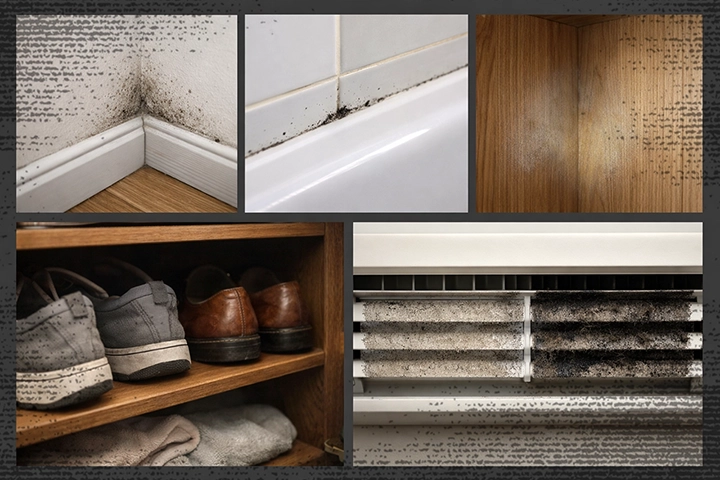
1. Shoes That Smell “A Bit Off”
You open a shoe cabinet and notice a slight odor.
The shoes look clean, no visible mold, nothing unusual.
Most people stop here.
But enclosed, humid spaces are one of the most common environments for mold growth—especially in materials like fabric, leather, and foam.
👉 What you smell might not just be moisture.
Not sure? Scan it with Mold AI.
2. Small Black Spots in the Bathroom
Tiny black dots near tile edges or silicone seams are often ignored.
They look minor, easy to wipe, not worth worrying about.
But bathrooms provide consistent warmth and moisture—ideal conditions for mold to develop and persist.
👉 If it keeps coming back, it’s usually not just a stain.
Take a photo. Let Mold AI check it for you.
3. Air Conditioner Vents That Look Dusty
Dark buildup around vents is often assumed to be dust.
After all, airflow naturally carries particles.
But inside air conditioning systems, condensation creates a damp environment—one of the key factors for microbial growth.
👉 What looks like dust could be something more active.
Not sure? Use Mold AI to find out.
4. Closet Corners That “Just Look Old”
Corners of closets or cabinets sometimes develop uneven coloring.
It’s easy to assume it’s aging material or poor lighting.
But limited airflow and trapped humidity can quietly create conditions for mold—especially on wood, fabric, and stored items.
👉 If it feels slightly damp or smells musty, don’t rely on guesswork.
Check it with Mold AI in seconds.
5. Wooden Surfaces with Subtle Stains
Furniture or wooden panels may show faint spots or uneven patches.
They don’t look alarming—just part of the material.
But wood is porous, and once moisture enters, it can support early-stage mold growth beneath the surface.
👉 By the time it becomes obvious, it’s often harder to manage.
A quick scan can give you clarity.
Why Visual Judgment Is Often Not Enough
Human judgment is based on what we can clearly see.
But mold doesn’t always present itself clearly—especially in early stages.
This is where misjudgment happens:
- Mistaking mold for dust
- Ignoring early odor signals
- Delaying action until it spreads
Using a detection tool helps reduce uncertainty—especially when the difference isn’t obvious.
A Simple Way to Check Before It Spreads
If you’re unsure, you don’t need to guess.
Mold AI is designed to help identify potential mold conditions through image analysis—allowing you to quickly assess what you’re looking at.
It’s not about overreacting.
It’s about knowing earlier.
👉 Take a photo. Know what you’re dealing with.
The question is: what’s happening in your space right now?
Scan your space

Key Takeaways
- Mold is not always obvious.In many cases, it doesn’t appear as the fuzzy patches people expect.
- Because of this, most people don’t take action early.They assume it’s dust, dirt, or just moisture—and by the time it becomes visible, it’s already spread.
- You open a shoe cabinet and notice a slight odor.The shoes look clean, no visible mold, nothing unusual.
- But bathrooms provide consistent warmth and moisture—ideal conditions for mold to develop and persist.
- But inside air conditioning systems, condensation creates a damp environment—one of the key factors for microbial growth.
Frequently Asked Questions
What should you know about 1. Shoes That Smell “A Bit Off”?
You open a shoe cabinet and notice a slight odor.The shoes look clean, no visible mold, nothing unusual.
What should you know about 2. Small Black Spots in the Bathroom?
Tiny black dots near tile edges or silicone seams are often ignored.They look minor, easy to wipe, not worth worrying about.
What should you know about 3. Air Conditioner Vents That Look Dusty?
Dark buildup around vents is often assumed to be dust.After all, airflow naturally carries particles.
What should you know about 4. Closet Corners That “Just Look Old”?
Corners of closets or cabinets sometimes develop uneven coloring.It’s easy to assume it’s aging material or poor lighting.
What should you know about 5. Wooden Surfaces with Subtle Stains?
Furniture or wooden panels may show faint spots or uneven patches.They don’t look alarming—just part of the material.