
- Enclosed Spaces Trap Moisture
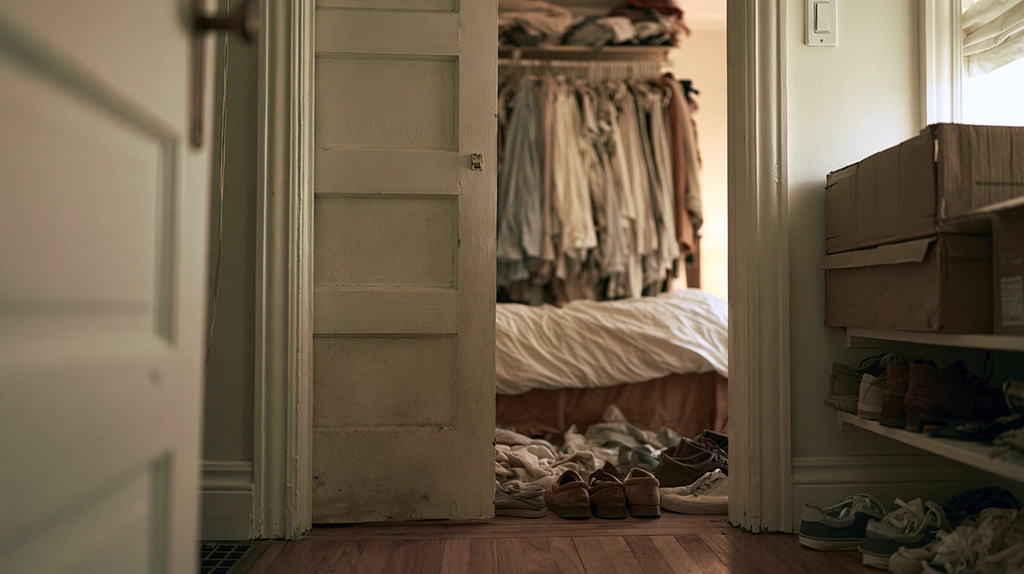
Closets, storage boxes, drawers, and suitcases all share one defining feature:
👉 Limited air movement
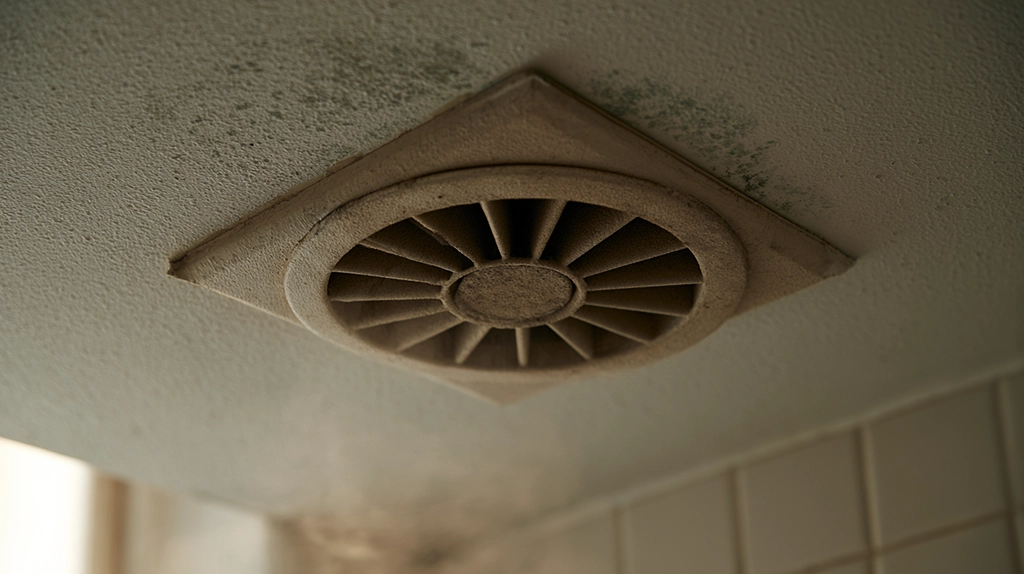
When moist air becomes trapped in a small, enclosed space, humidity remains elevated and moisture cannot easily dissipate. Environmental protection agencies emphasize that poor ventilation combined with moisture accumulation creates ideal conditions for mold growth, even when the surrounding room appears dry (EPA guidance on moisture and mold growth).
This is why mold often appears inside wardrobes or storage containers rather than in open areas of a room.

- Stored Materials Absorb and Hold Humidity
Many commonly stored items are made of hygroscopic materials, meaning they readily absorb moisture from the air.
Examples include:
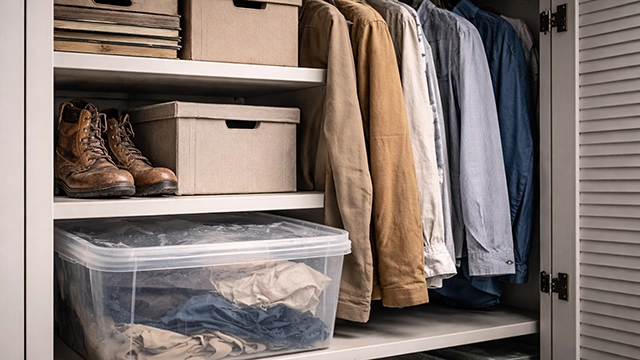
Clothing made from cotton, wool, or linen
Books and paper products
Leather and fabric goods
Preservation science shows that textiles and paper can absorb moisture during periods of high humidity and release it slowly over time, creating a localized high-humidity environment inside storage spaces. This phenomenon is well documented in studies on mold prevention in stored collections and archives (mold prevention in books, textiles, and stored collections).

- Temperature Differences Cause Hidden Condensation
Even when storage areas do not feel damp, temperature fluctuations can generate moisture.
When warm, humid air comes into contact with cooler surfaces inside cabinets, near exterior walls, or inside suitcases, condensation can form. This moisture may be invisible, but research in building science shows it can still support mold growth on material surfaces.
Classic laboratory studies demonstrate that mold can develop on materials under relatively low visible moisture conditions, as long as surface humidity remains high for extended periods (studies on mold growth under low water activity conditions).

- Storage Gives Mold Time to Grow Undisturbed
Mold growth does not happen overnight.
In open spaces, humidity often fluctuates and air movement disrupts growth. Inside storage spaces, however, elevated humidity can persist for days or even weeks without disturbance.
Research indicates that when relative humidity remains above approximately 70–80 percent for extended periods, the likelihood of mold colonization increases significantly. Storage environments provide mold with one of its most critical requirements:
👉 Time without interruption

Why Do Stored Items Mold When the Room Does Not?
This is a common source of confusion.
The explanation lies in the concept of micro-environments. Mold responds not to the average conditions of a room, but to the immediate conditions at the surface of a material.
A room may be well ventilated and comfortable for people, while the inside of a cabinet, box, or suitcase exists under entirely different humidity and airflow conditions. Public health guidelines consistently emphasize that hidden damp micro-environments are a major contributor to indoor mold problems (WHO guidelines on indoor dampness and mould).

Storage Is Not the Problem — Trapped Moisture Is
Environmental and public health organizations agree that mold prevention depends primarily on moisture management, not on cleaning frequency or chemical treatments.
The critical questions are:
Were items completely dry before storage?
Can air circulate inside the storage space?
Is excess moisture able to escape?
Without addressing moisture, simply placing items out of sight increases the likelihood that mold will develop unnoticed.

Conclusion: Mold Is Not Caused by Storage, but by What Storage Retains
Stored items do not become moldy because they are hidden away.
They become moldy because moisture is stored along with them.
When organic materials, humidity, and time coexist in a confined space, mold growth follows well-established biological rules. Understanding these mechanisms is far more effective than relying on repeated cleaning or strong mold-removal products.
References
Academic sources
Grant, C., Hunter, C. A., Flannigan, B., & Bravery, A. F. (1989). The moisture requirements of moulds isolated from domestic dwellings. International Biodeterioration, 25(4), 259–284. DOI: 10.1016/0265-3036(89)90002-X.
Rowan, N. J., Johnstone, C. M., McLean, R. C., Anderson, J. G., & Clarke, J. A. (1999). Prediction of toxigenic fungal growth in buildings by using a novel modeling system. Applied and Environmental Microbiology. (PMC article).
Official sources
U.S. Environmental Protection Agency (EPA). Mold (moisture and mold guidance). https://www.epa.gov/mold
World Health Organization (WHO). WHO guidelines for indoor air quality: dampness and mould. https://www.who.int/publications/i/item/WHO-EURO-2010-7821-41892-56883
Library of Congress. Mold. https://www.loc.gov/preservation/care/mold.html
Key Takeaways
- Why Do Stored Items Mold When the Room Does Not?This is a common source of confusion.The explanation lies in the concept of micro-environments.
- Public health guidelines consistently emphasize that hidden damp micro-environments are a major contributor to indoor mold problems (WHO guidelines on indoor dampness and mould).
- They become moldy because moisture is stored along with them.When organic materials, humidity, and time coexist in a confined space, mold growth follows well-established biological rules.
- The moisture requirements of moulds isolated from domestic dwellings.
- WHO guidelines for indoor air quality: dampness and mould.
Frequently Asked Questions
Why does improper storage increase the risk of mold?
Why Do Stored Items Mold When the Room Does Not?This is a common source of confusion.The explanation lies in the concept of micro-environments. Mold responds not to the average conditions of a room, but to the immediate conditions at the surface of a material.A room may be well ventilated and comfor
How does moisture accumulate in stored items and trigger mold?
Storage Is Not the Problem — Trapped Moisture IsEnvironmental and public health organizations agree that mold prevention depends primarily on moisture management, not on cleaning frequency or chemical treatments.The critical questions are:Were items completely dry before storage?Can air circulate in
What storage practices best prevent mold from developing?
Conclusion: Mold Is Not Caused by Storage, but by What Storage RetainsStored items do not become moldy because they are hidden away. They become moldy because moisture is stored along with them.When organic materials, humidity, and time coexist in a confined space, mold growth follows well-establish
What are the main risks associated with Why Storage?
Academic sourcesGrant, C., Hunter, C. A., Flannigan, B., & Bravery, A. F. (1989). The moisture requirements of moulds isolated from domestic dwellings. International Biodeterioration, 25(4), 259–284. DOI: 10.1016/0265-3036(89)90002-X.
What actions are recommended regarding Why Storage?
Rowan, N. J., Johnstone, C. M., McLean, R. C., Anderson, J. G., & Clarke, J. A. (1999). Prediction of toxigenic fungal growth in buildings by using a novel modeling system. Applied and Environmental Microbiology. (PMC article).