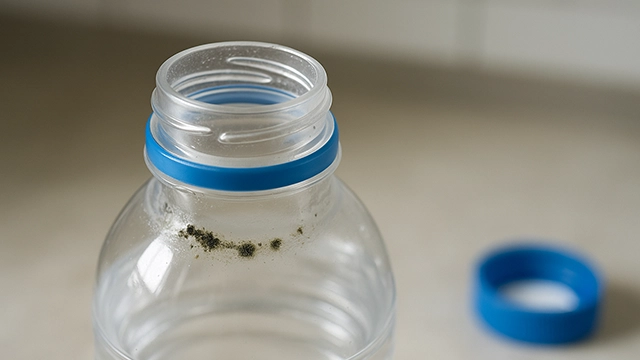

Have you ever picked up your water bottle only to find a black or green ring around the cap or gasket? You might wonder: “It’s just water—how can it get moldy?” Water is supposed to be clean, right? How could mold possibly live in it?
The truth is that these puzzling stains have very logical biological explanations. Mold is far tougher than we imagine, and it can use the tiny micro-environment inside a water bottle to create an invisible home.
Where does the mold come from?
First, water is not completely sterile. Studies show that fungal spores are commonly detected in drinking water systems, including tap and bottled water. Chlorine, which is added to disinfect water, kills many bacteria but is less effective against fungal spores. Spores can survive in pipelines or containers, waiting for the right moment to grow.
Another overlooked source is “backwash” from our mouths. When we drink directly from the bottle, tiny amounts of saliva, food particles, and oral microbes enter the water. For fungi, this is a rich source of nutrients. Suddenly, the bottle is no longer “just water,” but a liquid with carbon and nitrogen to feed growth.
How do fungi cling to the bottle?
Spores and nutrients are not enough. Fungi need a surface to attach to. This is why bottle design matters so much.
Bottle caps and gaskets are usually made from silicone, rubber, or polypropylene plastic. These materials have rough surfaces and can trap water. Research shows that fungi and yeasts easily colonize such materials. In fact, black yeasts like Exophiala and the fungus Aureobasidium pullulans are often found in the rubber seals of dishwashers and bathrooms. In other words, the gasket of a water bottle is a perfect hiding place.

How can fungi “grow in water”?
The most surprising part is that mold does not simply “float” in water. Many filamentous fungi have a special trick: they secrete proteins called hydrophobins that reduce the surface tension of water. This allows fungal filaments to break through the water’s surface and extend into the air.
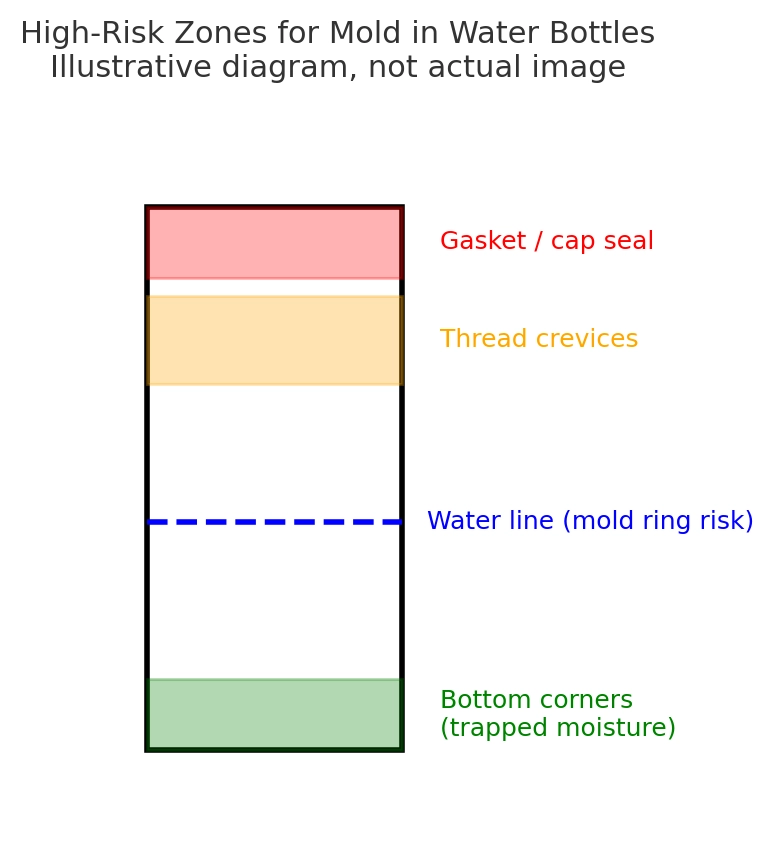
That is why we often see a dark or green ring right at the waterline. It’s mold growing at the water–air interface, climbing up the bottle wall. It looks mysterious, but it’s a well-studied growth strategy.
The usual fungal suspects in bottles
Several fungi are often involved in these cases:
- Black yeasts (Exophiala): Thrive in moist, warm environments; grow well on rubber and plastic.
- Aureobasidium pullulans: Common in water and damp surfaces; produces sticky substances to form biofilms.
- Candida species: Well known for strong adhesion to silicone surfaces and forming thick biofilms.

These fungi are not just floating—they are firmly colonizing the bottle surfaces.
Why scrubbing matters
Many people assume the chlorine in cold water is enough to prevent mold. But chlorine is weak against fungal spores. Plus, chlorine levels naturally decrease over time as water sits in the bottle. Once spores encounter nutrients in stagnant water, they can germinate.
The most reliable way to remove mold is mechanical cleaning. Scrubbing disrupts biofilms, and detergent helps wash them away. Studies show the riskiest spots are the gasket crevices and the waterline. This means cleaning must focus on those hidden areas. After washing, bottles should be fully dried. Removing the gasket and leaving it out to air-dry is the best way to break the mold’s survival cycle.
Mold’s survival wisdom
Mold teaches us one simple truth: clean does not mean sterile. Even plain water, inside a sealed container, can become a mold habitat when combined with the right surface, moisture, and nutrients.
So the next time you see a black ring on your bottle cap, don’t just complain about dirt. That ring is proof of mold’s survival strategy. For us, the smarter response is simple: regular scrubbing and thorough drying. That is the real wisdom of mold prevention.
References
- PubMed. Fungal contamination in drinking water systems. PubMed
- Wikipedia. Exophiala, Aureobasidium pullulans, Candida, Hydrophobin, Silicone, Polypropylene
Key Takeaways
- Have you ever picked up your water bottle only to find a black or green ring around the cap or gasket?
- Mold is far tougher than we imagine, and it can use the tiny micro-environment inside a water bottle to create an invisible home.
- Spores can survive in pipelines or containers, waiting for the right moment to grow.
- Suddenly, the bottle is no longer “just water,” but a liquid with carbon and nitrogen to feed growth.
- Research shows that fungi and yeasts easily colonize such materials.
Frequently Asked Questions
Where does the mold come from?
First, water is not completely sterile. Studies show that fungal spores are commonly detected in drinking water systems, including tap and bottled water. Chlorine, which is added to disinfect water, kills many bacteria but is less effective against fungal spores. Spores can survive in pipelines or c
How do fungi cling to the bottle?
Spores and nutrients are not enough. Fungi need a surface to attach to. This is why bottle design matters so much.
How can fungi “grow in water”?
The most surprising part is that mold does not simply “float” in water. Many filamentous fungi have a special trick: they secrete proteins called hydrophobins that reduce the surface tension of water. This allows fungal filaments to break through the water’s surface and extend into the air.
What should you know about the usual fungal suspects in bottles?
Several fungi are often involved in these cases:
Why scrubbing matters?
Many people assume the chlorine in cold water is enough to prevent mold. But chlorine is weak against fungal spores. Plus, chlorine levels naturally decrease over time as water sits in the bottle. Once spores encounter nutrients in stagnant water, they can germinate.