
Bedrooms look like the safest room in the house. No running water. No steam. No obvious source of moisture. And yet mold appears — on walls behind the bed, inside closets, along window frames — and keeps coming back no matter how many times it’s cleaned.
The source isn’t a leak. It’s you.
The Body as a Moisture Source
Every night, breathing and perspiration release hundreds of milliliters of water vapor into the air around you. In a closed room, that moisture has nowhere to go. It accumulates slowly, settles on cooler surfaces — walls, windows, corners — and repeats the cycle every night.
Mold in bedrooms doesn’t need a plumbing failure. It needs humidity, a surface slightly cooler than the air, and enough time. A closed bedroom provides all three, night after night.
Where It Forms
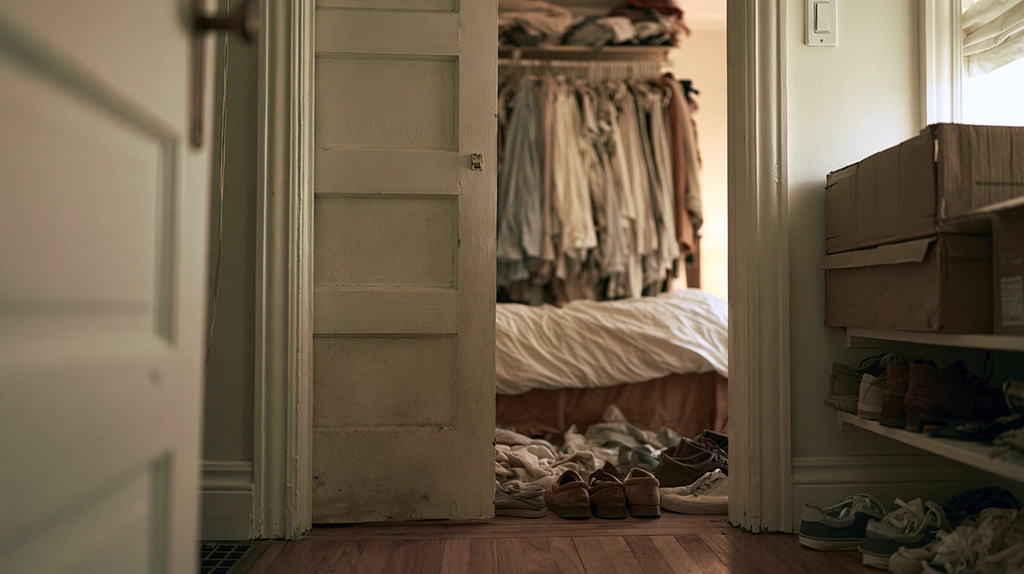
Bedroom mold is predictable once you understand the airflow pattern. It concentrates in zones where air doesn’t move: behind beds pushed against exterior walls, inside closets with poor ventilation, in corners where two cold surfaces meet, and beneath furniture sitting directly on carpet.
These are microclimates — small pockets where humidity stays higher and surfaces stay damper than the rest of the room. The mold isn’t random. It’s following the physics.

The Temperature Problem
Exterior walls are colder than interior air. When warm, moisture-laden bedroom air contacts these surfaces, condensation forms — even when it’s not visible to the naked eye. Push a wardrobe flush against that wall, and you’ve created a sealed pocket where that condensation can’t evaporate.
This is why bedroom mold so frequently appears exactly where the bed or wardrobe was, not where you’d expect a water problem to originate.
Ventilation Is the Real Variable
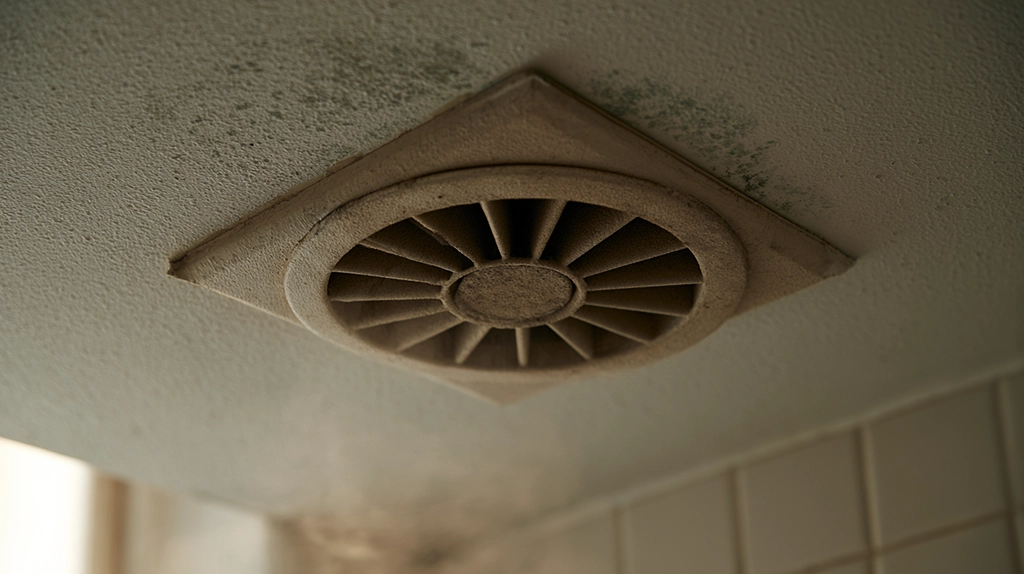
Bathrooms spike in humidity and then recover — the moisture leaves through the exhaust fan or open window. Bedrooms don’t work that way. They accumulate moisture slowly, at low intensity, over eight hours every night, in a closed environment.
Without regular air exchange, the baseline humidity in a bedroom gradually rises. Once relative humidity consistently exceeds 60%, the conditions for mold growth are in place regardless of what’s on the surfaces.
Opening windows daily — even for fifteen minutes — allows moisture to escape. A small fan running overnight can prevent the stagnant pockets that allow humidity to concentrate in corners and behind furniture.
What Furniture Has to Do With It
Room layout determines where microclimates form. A bed or wardrobe placed flush against an exterior wall blocks the airflow that would otherwise carry moisture away from that surface. The gap doesn’t need to be large — even a few centimeters allows enough circulation to significantly reduce condensation risk.
This is one of the most effective and least discussed bedroom mold interventions: moving furniture away from exterior walls.

Soft Materials Hold More Than You Think
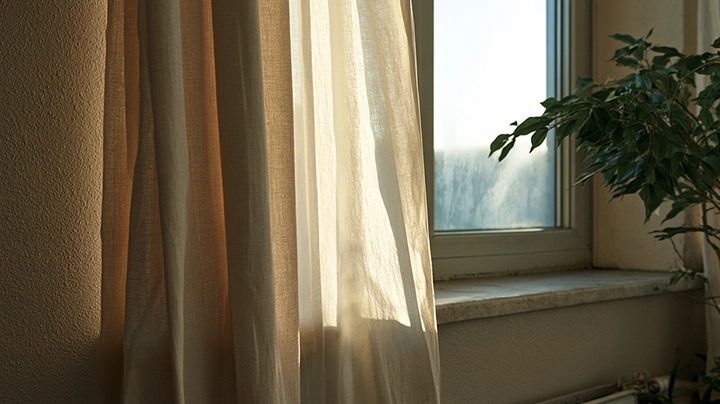
Mattresses, carpets, and curtains absorb moisture and release it slowly. A mattress sitting directly on a slatted base with no airflow underneath becomes a long-term reservoir. Curtains touching cold windows pick up condensation and stay damp. Carpets in poorly ventilated rooms hold moisture at floor level.
Regular airing of bedding, breathable mattress protectors, and keeping curtains away from window glass are small interventions that reduce the moisture load these materials carry.
Why Cleaning Doesn’t Solve It
Cleaning removes visible mold. It doesn’t change the humidity, the airflow, or the temperature differential that allowed the mold to form. Without addressing those factors, the mold returns — often within weeks — in exactly the same location.
Effective bedroom mold management follows this sequence: identify where moisture is accumulating and why, correct the airflow and humidity conditions, then clean what has already grown.
Skipping the first two steps makes the third one temporary.
What Actually Works
Ventilate daily. Open windows or run a fan to move air through the room and allow moisture to escape. Even brief ventilation breaks the overnight accumulation cycle.
Control humidity. Keep indoor relative humidity below 60%. A dehumidifier in consistently damp conditions makes a measurable difference.
Move furniture away from exterior walls. A few centimeters of clearance allows airflow behind large pieces and prevents the sealed microclimates where mold concentrates.
Address soft materials. Air mattresses and bedding regularly. Use breathable materials. Don’t allow moisture to accumulate underneath or within.
These interventions don’t remove mold. They remove the conditions that allow it to exist — which is the only way to stop it from coming back.
FAQ
Why does mold grow in bedrooms without any visible water leaks? Because human breathing and perspiration release significant moisture during sleep. In a closed, poorly ventilated room, this moisture accumulates on cooler surfaces night after night — enough to sustain mold growth without any plumbing involvement.
Where is bedroom mold most likely to appear? Behind furniture placed against exterior walls, inside closets, in corners near windows, and on surfaces with restricted airflow where moisture cannot evaporate.
How do I reduce bedroom humidity? Daily ventilation is the most important step — open windows or run a fan to allow moisture to escape. Dehumidifiers help in persistently damp environments. Avoid drying clothes indoors in the bedroom.
Is cleaning mold enough? No. Cleaning removes visible growth but doesn’t correct the conditions that produced it. Without improving airflow and humidity, mold will return to the same locations.
Does furniture placement affect mold risk? Yes. Furniture placed flush against exterior walls blocks the airflow that would carry moisture away from those surfaces, creating hidden zones where condensation accumulates and mold colonizes.
References
- Economic Times — The One Thing in Your Bedroom That Quietly Collects Moisture All Night: https://economictimes.indiatimes.com/news/international/us/the-one-thing-in-your-bedroom-that-quietly-collects-moisture-all-night/articleshow/130458960.cms?from=mdr
- Sleep Foundation — Mold in the Bedroom: https://www.sleepfoundation.org/bedroom-environment/mold-in-the-bedroom
- U.S. Environmental Protection Agency — Mold and Moisture: https://www.epa.gov/mold
Key Takeaways
- Please login Bedrooms look like the safest room in the house.
- Every night, breathing and perspiration release hundreds of milliliters of water vapor into the air around you.
- It needs humidity, a surface slightly cooler than the air, and enough time.
- It concentrates in zones where air doesn’t move: behind beds pushed against exterior walls, inside closets with poor ventilation, in corners where two cold surfaces meet, and beneath furniture sitting directly on carpet.
- When warm, moisture-laden bedroom air contacts these surfaces, condensation forms — even when it’s not visible to the naked eye.
Frequently Asked Questions
What should you know about please login to bookmark?
Please login Bedrooms look like the safest room in the house. No running water. No steam. No obvious source of moisture. And yet mold appears — on walls behind the bed, inside closets, along window frames — and keeps coming back no matter how many times it’s cleaned.
What should you know about the Body as a Moisture Source?
Every night, breathing and perspiration release hundreds of milliliters of water vapor into the air around you. In a closed room, that moisture has nowhere to go. It accumulates slowly, settles on cooler surfaces — walls, windows, corners — and repeats the cycle every night.
Where It Forms?
Bedroom mold is predictable once you understand the airflow pattern. It concentrates in zones where air doesn’t move: behind beds pushed against exterior walls, inside closets with poor ventilation, in corners where two cold surfaces meet, and beneath furniture sitting directly on carpet.
What should you know about the Temperature Problem?
Exterior walls are colder than interior air. When warm, moisture-laden bedroom air contacts these surfaces, condensation forms — even when it’s not visible to the naked eye. Push a wardrobe flush against that wall, and you’ve created a sealed pocket where that condensation can’t evaporate.
What should you know about ventilation Is the Real Variable?
Bathrooms spike in humidity and then recover — the moisture leaves through the exhaust fan or open window. Bedrooms don’t work that way. They accumulate moisture slowly, at low intensity, over eight hours every night, in a closed environment.