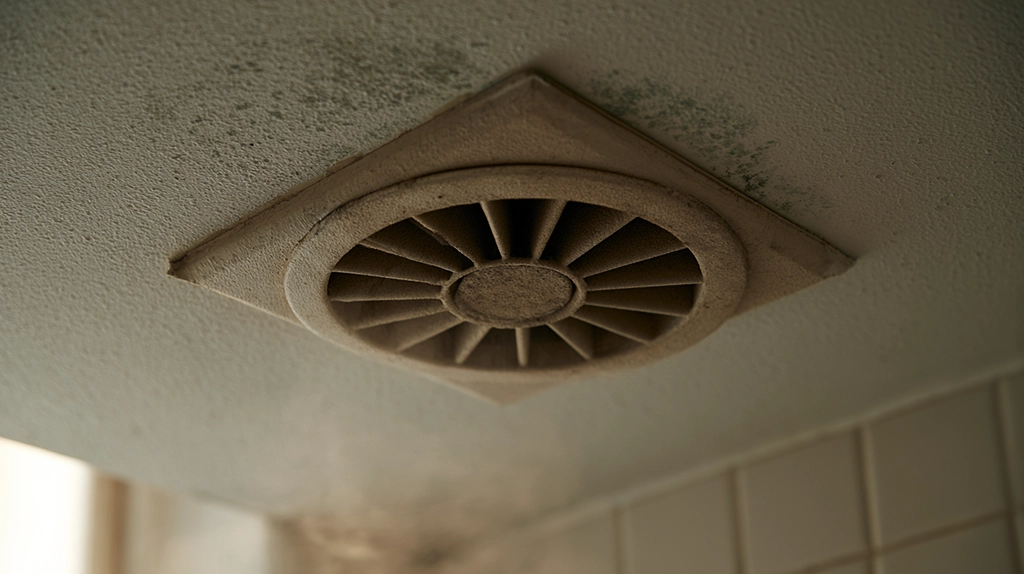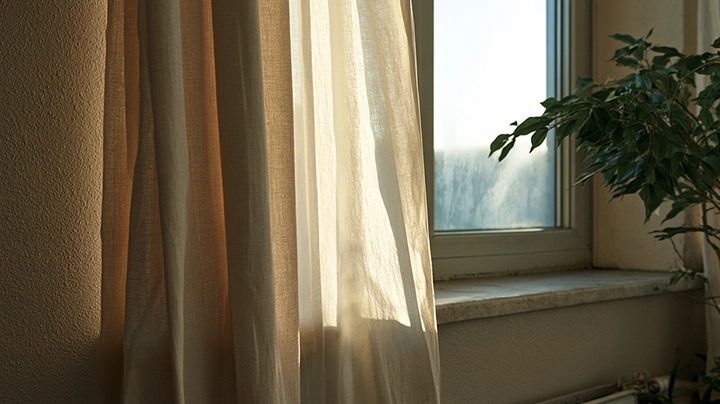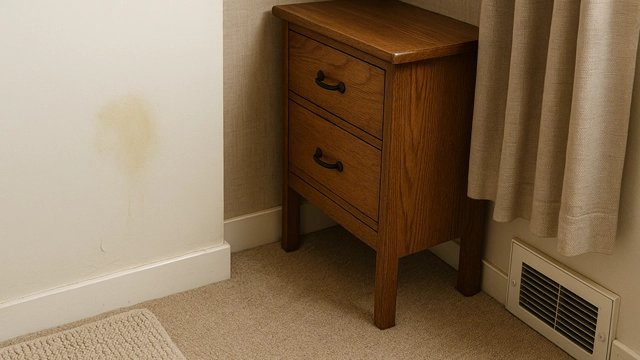


You might notice black spots along a wall corner, yellow stains on a wooden shelf, or a musty smell when opening your closet. These small details often mean one thing: mold has quietly found a home.
To prevent mold, the first step is understanding the materials in your house — some are naturally more welcoming to mold than others. Here’s a closer look, room by room.
1. Drywall (Gypsum Board)
Where it appears: interior walls, ceilings, bathroom partitions.
Why it molds easily:
- The paper surface of drywall contains cellulose, an excellent food source for mold.
- The inner gypsum core is porous and can retain moisture after leaks or condensation.
- When moisture seeps behind paint or wallpaper, the inner layers stay damp, allowing mold to grow unseen (Paroc Group, n.d.).
Watch for: bubbles under paint, yellow water stains, or peeling wallpaper — signs that the wall cavity may already be infected.
2. Wooden Furniture and Flooring
Where it appears: bookshelves, wardrobes, bed frames, parquet or engineered wood floors.
Why it molds easily:
- Wood contains lignin and hemicellulose, organic polymers that fungi can digest (Viitanen & Ojanen, 2007).
- It naturally absorbs and releases moisture, creating microcracks and pores — perfect spots for spores to settle.
- Furniture placed flush against exterior walls traps humidity and limits air circulation.
Watch for: darkened edges, discoloration, or a damp feeling behind wooden panels — signs of hidden mold activity.
3. Fabrics and Textiles (Curtains, Carpets, Clothes)
Where it appears: bathrooms, closets, window areas, under rugs.
Why it molds easily:
- Cotton, linen, and viscose contain natural fibers rich in cellulose and protein, both fungal nutrients.
- Textiles are porous, absorb moisture quickly, and take time to dry, creating a humid microclimate (Lai et al., 2024).
- Stacked clothes or heavy curtains near cold walls trap condensation and dust, giving spores what they need to grow.
Watch for: musty smells in closets, dark edges on curtains, or sticky patches on carpet backing.
4. Air-Conditioning and Ventilation Systems
Where it appears: inside air conditioners, ducts, insulation, or filters.
Why it molds easily:
- Air ducts and insulation often collect dust and condensation — a perfect mix for mold (Zhao et al., 2025).
- Dirty filters trap spores and moisture, then redistribute them throughout the house.
- Drainage problems or poorly maintained units keep internal components damp for long periods.
Watch for: a musty odor when the AC turns on, visible dark spots on vents or filters, or persistent condensation near ducts.
5. Coated or Composite Materials (Wallpaper, Veneer, Laminate)

Where it appears: decorative walls, cabinets, laminated furniture, adhesive coverings.
Why it molds easily:
- Mold can grow behind wallpaper or film layers if moisture becomes trapped underneath (Ojanen & Viitanen, 2010).
- Many decorative coatings use paper or fabric backing, which holds humidity and nutrients.
- In airtight rooms, even a “smooth” wall can hide moisture between layers.
Watch for: yellow stains, loose seams, or air bubbles on wallpaper — often the first visible clue of hidden mold.
✅ Practical Tips for Mold Prevention
- Choose moisture-resistant materials in humid areas, such as treated boards or non-cellulose surfaces.
- Keep furniture at least 5–10 cm away from walls to allow airflow.
- Avoid keeping curtains, rugs, or thick fabrics against cold exterior walls for long periods; wash or sun-dry them regularly.
- Clean AC filters and drain trays at least once a year to prevent spore buildup.
- If you notice odor, discoloration, or dampness — even without visible mold — check humidity and ventilation first before repainting or replacing materials.
References
- Paroc Group. (n.d.). Moisture and mold risk in gypsum-based construction materials.
- Viitanen, H. & Ojanen, T. (2007). Improved model for mold growth: Response to varying humidity and temperature.Building and Environment, 42(5), 4257–4268. DOI:10.1016/j.buildenv.2007.03.003
- Ojanen, T. & Viitanen, H. (2010). Mold growth risk assessment of interior coatings and laminated materials. VTT Technology Reports, T44.
Key Takeaways
- You might notice black spots along a wall corner, yellow stains on a wooden shelf, or a musty smell when opening your closet.
- Where it appears: interior walls, ceilings, bathroom partitions.
- Where it appears: bookshelves, wardrobes, bed frames, parquet or engineered wood floors.
- Watch for: musty smells in closets, dark edges on curtains, or sticky patches on carpet backing.
- Watch for: a musty odor when the AC turns on, visible dark spots on vents or filters, or persistent condensation near ducts.
Frequently Asked Questions
What should you know about 1. Drywall (Gypsum Board)?
Where it appears: interior walls, ceilings, bathroom partitions.
What should you know about 2. Wooden Furniture and Flooring?
Where it appears: bookshelves, wardrobes, bed frames, parquet or engineered wood floors.
What should you know about 3. Fabrics and Textiles (Curtains, Carpets, Clothes)?
Where it appears: bathrooms, closets, window areas, under rugs.
What should you know about 4. Air-Conditioning and Ventilation Systems?
Where it appears: inside air conditioners, ducts, insulation, or filters.
What should you know about 5. Coated or Composite Materials (Wallpaper, Veneer, Laminate)?
Where it appears: decorative walls, cabinets, laminated furniture, adhesive coverings.