
Meta Description
Bathroom mold is not a cleaning problem. It is a moisture problem that cleaning makes temporarily invisible. Here is how to understand the cycle — and what it actually takes to break it.
The Room That Never Fully Resets
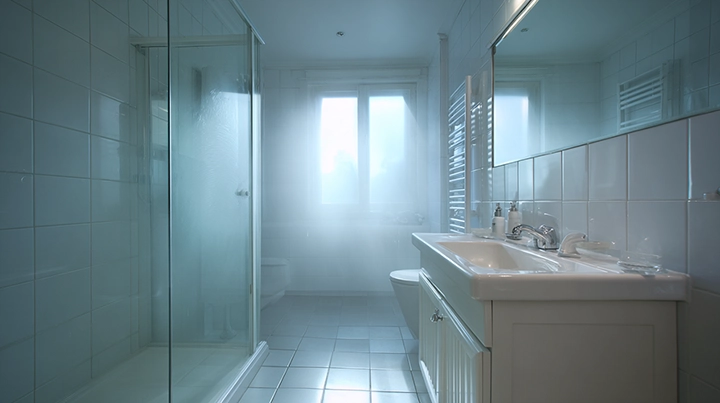
The bathroom is used every day, cleaned regularly, and designed around water. After a shower, the mirror clears, the floor dries, and the space looks normal again. It is easy to assume the room has reset.
It hasn’t. According to the EPA’s guide to mold and moisture, moisture control is the single most important factor in preventing mold — and the bathroom is the room in any home that most consistently fails this test. Not because it is neglected, but because each shower introduces a new cycle of heat, steam, and humidity into an enclosed space. The visible moisture evaporates. The invisible moisture lingers.
Where it lingers is where mold grows.

Why the Bathroom Loses Every Time
Every shower releases roughly half a pound of water vapor into the bathroom air. A family of four taking daily showers introduces significant moisture into the space every single day — not occasionally, not seasonally, but as a structural feature of how the room is used.
Without adequate ventilation, this moisture follows a predictable path. Warm, humid air rises to the ceiling. It contacts cooler surfaces — the ceiling itself, the upper walls, the area above the shower line — and condenses. Water droplets form, surfaces remain damp, and the process repeats the next day before yesterday’s moisture has fully dried.
Over time, specific locations in the bathroom become consistently damp rather than occasionally wet. These are not the areas that receive the most direct water — they are the areas where moisture lingers the longest. Silicone seals along the tub and shower edge. Grout lines between tiles in corners with limited airflow. The ceiling above the shower. The underside of the bathroom door frame.
Mold establishes itself in these locations not because they are wet, but because they are never quite dry.
The Key Distinction: Wet vs. Not Dry
This is the most important concept in bathroom mold prevention, and the one most often overlooked.
A surface that gets wet and dries within a few hours does not support sustained mold growth. The window of opportunity is too narrow for spores to germinate and establish a colony. A surface that remains slightly damp — not visibly wet, but never fully dry — provides exactly the stable conditions mold needs.
This explains why scrubbing visible mold and then considering the problem solved tends to fail. The cleaned surface looks dry. But if the underlying airflow and drying conditions have not changed, the surface will return to its slightly-damp baseline within hours of the next shower. The mold will return — often within days — because the conditions that enabled it were never addressed.
Cleaning is necessary. It is not sufficient.

Ventilation: The System That Changes Everything
The single most effective intervention in bathroom mold prevention is mechanical ventilation — and the single most common failure is using it incorrectly.
Most bathrooms have exhaust fans. Most people turn them on during the shower and off when they leave. This is not sufficient. A typical bathroom exhaust fan needs to run for 20 to 30 minutes after the shower ends to remove the accumulated humidity from the room. Turning the fan off when you step out — when the mirror is still fogged and the air still feels heavy — leaves the majority of that moisture cycle unbroken.
A properly sized exhaust fan creates negative pressure in the bathroom, pulling humid air out and drawing drier air in from under the door or through any gap in the room’s envelope. For this to work, two things must be true: the fan must be adequate for the room’s volume (a general guideline is 1 CFM per square foot of bathroom space), and replacement air must be able to enter. A door with no clearance gap significantly reduces fan effectiveness.
The most reliable solution is a timer switch — set to run the fan for 20 to 30 minutes automatically after use, removing the dependency on remembering. Humidity-sensing fans, which activate when moisture levels rise above a threshold and shut off when the air returns to normal, are more sophisticated and more effective, but any fan used consistently for the right duration is dramatically better than one turned off prematurely.
The Airflow Map of a Bathroom
Understanding where air moves — and where it doesn’t — explains why mold appears in some locations and not others.
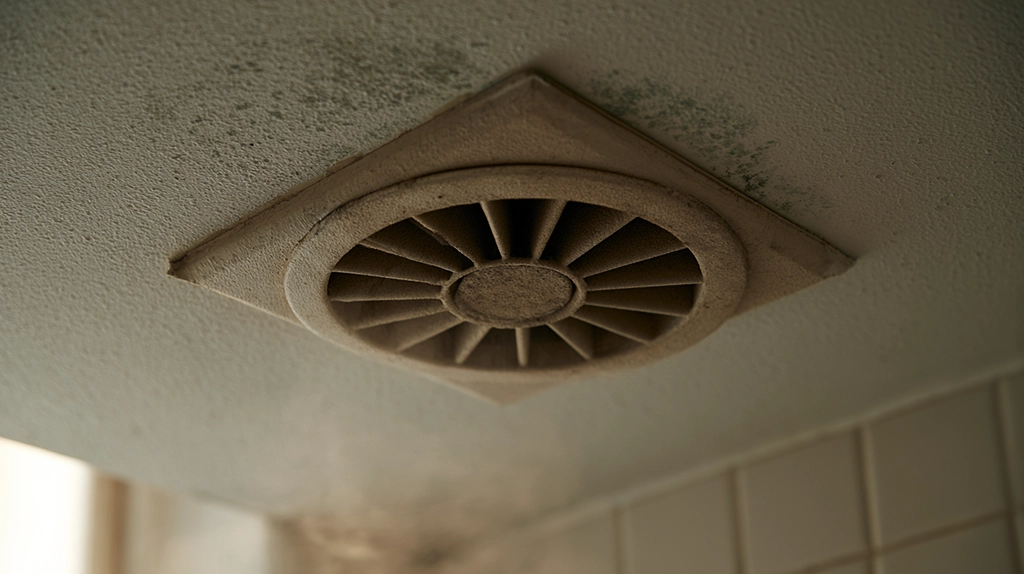
Warm air rises and accumulates at the ceiling level. This is why bathroom ceilings, particularly above the shower, are among the most common mold sites. If the exhaust fan is ceiling-mounted near the shower, it can intercept this rising humid air effectively. If the fan is positioned near the door, far from the moisture source, efficiency drops significantly.
Corners and enclosed spaces receive the least air circulation. Grout lines trap moisture in their texture. The area behind the toilet, the underside of shelving, the interior of vanity units with enclosed bases — all of these are locations where air barely moves, and where moisture that enters has no efficient pathway out.
The practical implication: good ventilation is not just about the exhaust fan. It also involves reducing the number of stagnant zones within the bathroom. Keeping the door open when the bathroom is not in use allows the entire room to participate in the building’s air exchange. Moving items away from corners and walls improves circulation around the surfaces most likely to stay damp.

Practical Habits That Change the Environment
Beyond ventilation, several specific habits alter the bathroom’s moisture dynamics in ways that matter:
Wipe down wet surfaces after showering. A squeegee or towel run across shower walls and glass after use removes a significant proportion of the water that would otherwise evaporate slowly into the room’s air. This reduces the humidity load the ventilation system has to manage.
Hang wet towels outside the bathroom. Wet towels left on bathroom hooks or rails continue releasing moisture into the room’s air for hours. Moving them to a ventilated space outside — or to an outdoor line — removes a sustained moisture source that most people don’t account for.
Keep the bathroom door open when not in use. A closed bathroom door turns the room into a sealed system where any residual moisture has nowhere to go. An open door allows the room to participate in the broader air circulation of the home.
Check and replace silicone seals regularly. Once silicone becomes porous, cracked, or contaminated with embedded mold, no amount of surface cleaning will resolve the problem. Replacing deteriorated seals removes a persistent moisture trap and a site of embedded fungal growth that cannot be fully cleaned.
Maintain indoor humidity below 60%. This applies to the home generally, but the bathroom is where it is hardest to achieve. A hygrometer placed in the bathroom provides actual data rather than guesswork about whether the room is returning to acceptable humidity levels between uses.
When to Identify a Structural Problem
The habits above address the conditions created by normal bathroom use. Some bathrooms have structural problems that no amount of behavioral change can fully compensate for.
Signs that the problem is structural rather than behavioral include: mold that returns within days of cleaning regardless of ventilation habits, persistent musty odor in a bathroom where all surfaces appear dry, exhaust fan that runs but leaves the mirror fogged for more than 15 minutes after showering, and mold appearing on ceiling surfaces far from the shower zone.
These patterns suggest either that the exhaust fan is undersized or incorrectly positioned, that it is venting into a wall cavity or attic rather than to the exterior, or that there is a moisture source other than showering — a slow leak behind the wall, inadequate waterproofing in the shower surround, or condensation from cold water pipes in the wall structure.
In these cases, addressing the surface mold is a temporary measure. The structural moisture pathway needs to be identified and corrected — which typically requires professional assessment.

FAQ: Breaking the Bathroom Mold Cycle
Q: Why does mold keep coming back after I clean it? Because cleaning removes visible growth without changing the conditions that produced it. If surfaces remain consistently damp due to inadequate ventilation or airflow, mold will re-establish within days. The cycle must be broken at the moisture level, not the surface level.
Q: How long should I run the exhaust fan after a shower? At least 20 to 30 minutes. Turning the fan off when you leave the bathroom — while the mirror is still fogged and the air still feels humid — leaves most of the moisture cycle unbroken. A timer switch set for 20 to 30 minutes is the most reliable approach.
Q: Does opening a window replace the need for an exhaust fan? Not reliably. Windows are weather-dependent, seasonal, and often closed for privacy. A properly sized and vented mechanical exhaust fan provides consistent performance regardless of outdoor conditions. Windows can supplement fan ventilation but should not replace it.
Q: Why does mold appear in corners and along seals rather than in the middle of the shower? Because those locations stay damp longest. The wettest areas of the shower dry relatively quickly through evaporation. Corners with limited airflow, silicone seals that trap moisture in their texture, and ceiling areas above the steam source maintain dampness long after the visible water has dried.
Q: What humidity level should the bathroom reach between uses? Below 60%, and ideally in the 40–50% range. Maintaining indoor humidity at these levels removes the primary enabling condition for mold growth. A hygrometer provides direct measurement of whether current ventilation habits are achieving this.
Q: When should I call a professional? When mold returns within days of cleaning regardless of ventilation habits, when the exhaust fan runs but fails to clear the mirror within 15 minutes, or when mold appears in locations that suggest a structural moisture source rather than shower steam. These patterns indicate a problem that behavioral habits cannot resolve.
References
Official Sources
- U.S. Environmental Protection Agency — A Brief Guide to Mold, Moisture and Your Home: https://www.epa.gov/mold/brief-guide-mold-moisture-and-your-home
- U.S. Environmental Protection Agency — Mold Course Chapter 2: https://www.epa.gov/mold/mold-course-chapter-2
- North Dakota State University Extension — Control Mold Growth in the Bathroom: https://www.ndsu.edu/agriculture/extension/control-mold-growth-bathroom
Article prepared by the MoldNewsHub editorial team based on peer-reviewed research and publicly available scientific literature.
Key Takeaways
- It is a moisture problem that cleaning makes temporarily invisible.
- The bathroom is used every day, cleaned regularly, and designed around water.
- Not because it is neglected, but because each shower introduces a new cycle of heat, steam, and humidity into an enclosed space.
- Without adequate ventilation, this moisture follows a predictable path.
- Over time, specific locations in the bathroom become consistently damp rather than occasionally wet.
Frequently Asked Questions
What should you know about meta Description?
Bathroom mold is not a cleaning problem. It is a moisture problem that cleaning makes temporarily invisible. Here is how to understand the cycle — and what it actually takes to break it.
What should you know about the Room That Never Fully Resets?
The bathroom is used every day, cleaned regularly, and designed around water. After a shower, the mirror clears, the floor dries, and the space looks normal again. It is easy to assume the room has reset.
Why the Bathroom Loses Every Time?
Every shower releases roughly half a pound of water vapor into the bathroom air. A family of four taking daily showers introduces significant moisture into the space every single day — not occasionally, not seasonally, but as a structural feature of how the room is used.
What should you know about the Key Distinction: Wet vs. Not Dry?
This is the most important concept in bathroom mold prevention, and the one most often overlooked.
What should you know about ventilation: The System That Changes Everything?
The single most effective intervention in bathroom mold prevention is mechanical ventilation — and the single most common failure is using it incorrectly.