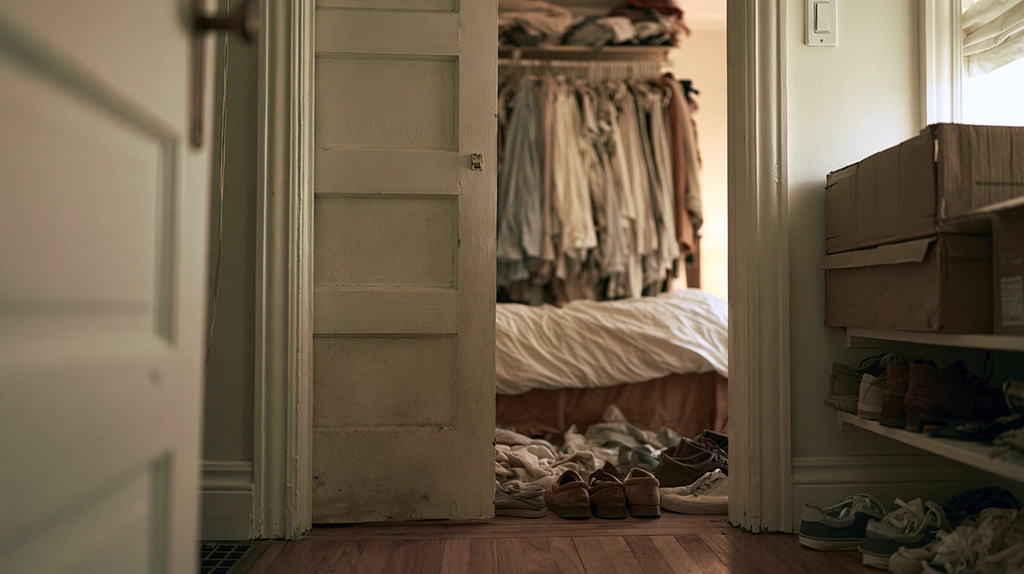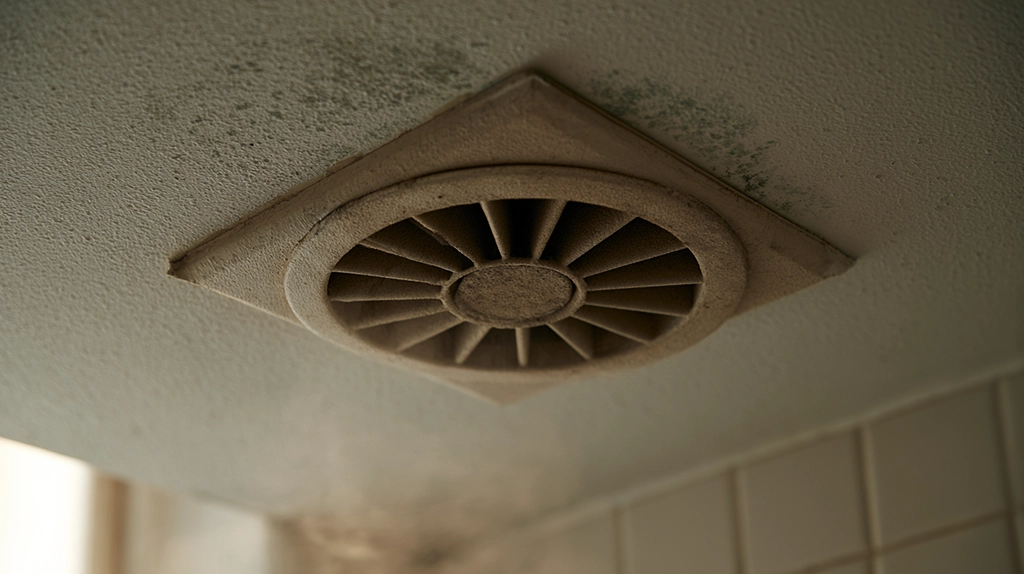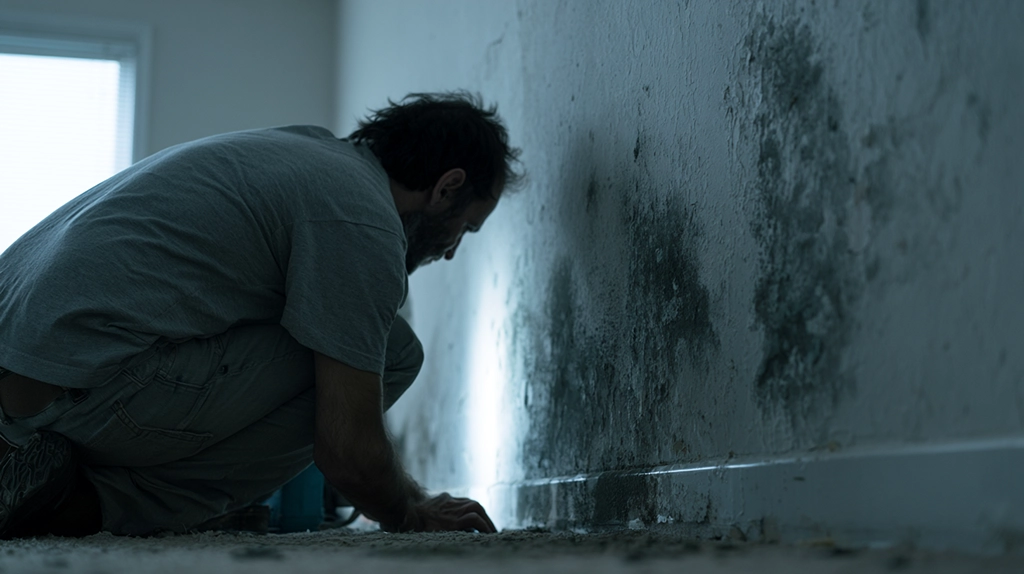

If you’ve ever lived in a damp apartment, the word “fungus” probably triggers memories of dark stains creeping up the bathroom wall or the smell that refuses to leave no matter how aggressively you scrub. We usually treat fungi as intruders—problems to eliminate, not collaborators to welcome.
Yet in several laboratories around the world, scientists are doing something that completely flips our instincts:
They are inviting fungi to help us build the future of construction.
The motivation isn’t aesthetic rebellion or scientific whimsy. It’s a response to a material reality we can no longer ignore. Modern civilization is built on concrete, and concrete is built on cement. Cement production alone accounts for roughly 8% of global CO₂ emissions—more than most countries emit in total. Every building that rises leaves behind a plume of invisible carbon.
So researchers began asking a question that sounds radical but is rooted in necessity:
Does a building material have to be mined, fired, and burned into existence?
Or could it be grown?
Fungi—unexpectedly, almost mischievously—have become one of the most promising answers.
Growing the Material Instead of Making It
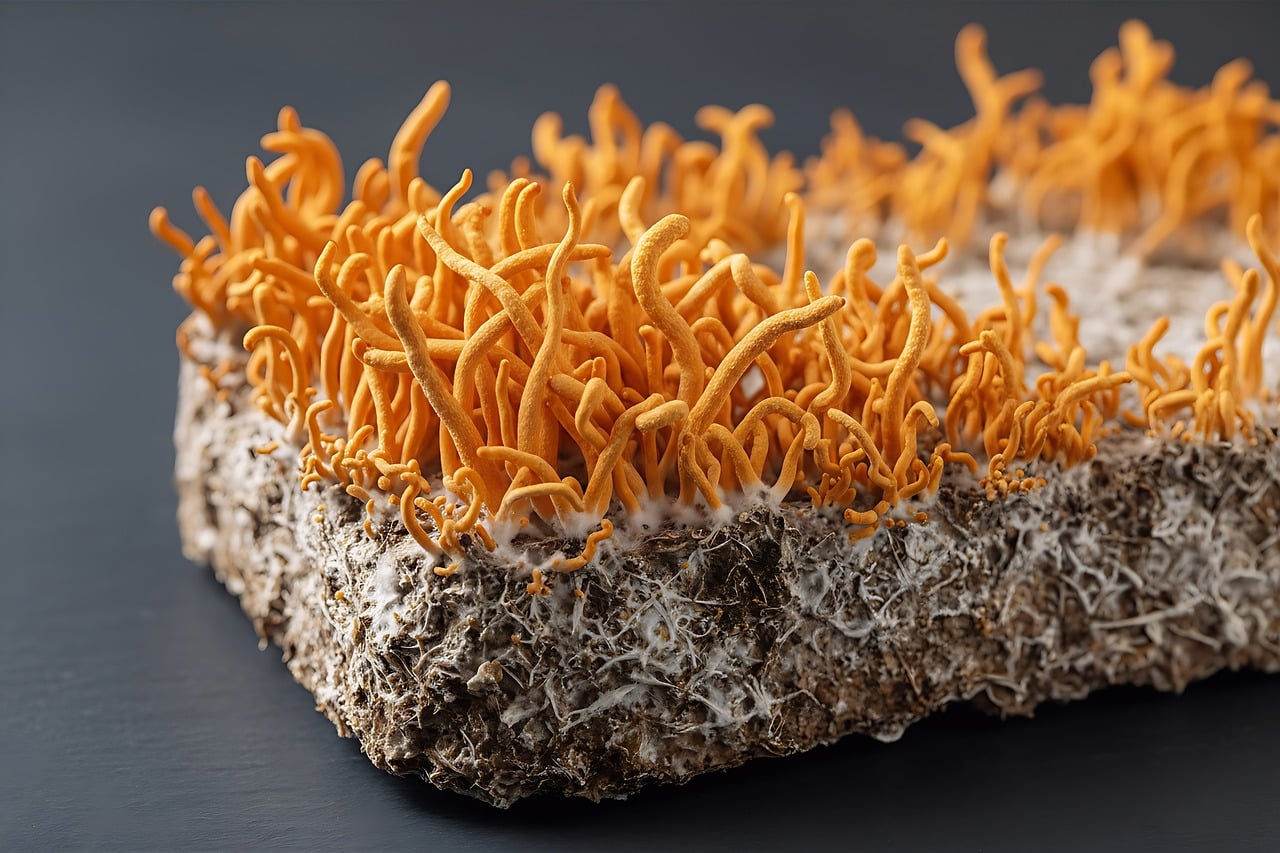
In Montana, a research team is developing what might be described as “semi-living” construction blocks. The process starts with mycelium, the filamentous root-like structure of fungi. Mycelium naturally forms dense, interconnected networks—nature’s version of rebar.
Researchers allow mycelium to colonize a fibrous substrate, weaving it into a lightweight but coherent structure. But a fungal scaffold alone isn’t strong enough, so they introduce a second player: bacteria capable of biomineralization.
These bacteria metabolize urea and produce calcium carbonate, the same mineral found in limestone and seashells. As the mineral deposits accumulate around the mycelium network, the material begins to harden—not instantly like cement, but gradually, as though it’s learning how to become solid.
The outcome is unlike any traditional building material. It is not merely a product but a growth process—a material that strengthens through biological activity. In early experiments, some cracks were partially repaired as mineralization continued, hinting at a primitive form of self-healing materials.
The material’s active lifespan is currently about a month, which means it’s not ready to hold up skyscrapers. But it proves something fundamental: a building block does not have to be fired in a kiln—it can be grown by a community of microorganisms.
Cooler Buildings Without Electricity: The Rise of Fungal Tiles
At Nanyang Technological University in Singapore, another research group is taking fungal construction in a different direction: thermal performance.
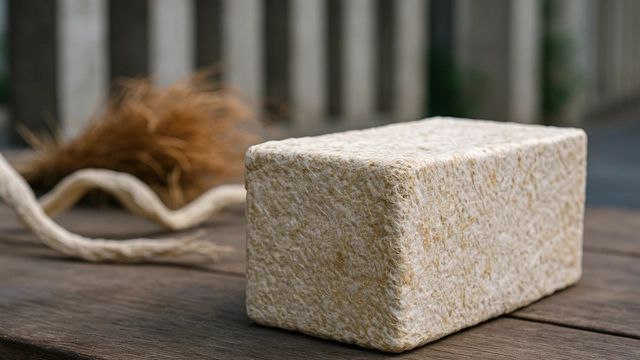
Their material starts with a blend of mycelium, bamboo fibers, oats, and water. As the mycelium grows, it binds and interlaces the organic particles, creating a porous, lightweight solid. Once dried, it becomes what the team calls a fungal tile.
Its structure gives it three important characteristics:
- Low thermal conductivity — heat moves slowly through it, similar to commercial foam insulation.
- Rapid cooling when exposed to water — in simulated rainfall, the tiles shed heat more quickly than conventional surfaces.
- Zero energy production — no kilns, no furnaces, no high-emission processes.
In other words, the tile works like a breathable skin that helps buildings cool down without requiring electricity. It’s not meant for load-bearing; it’s a functional envelope—a climatic interface. But for overheated cities searching for passive cooling solutions, it represents an intriguing shift away from petrochemical-based insulation.
But Won’t Fungal Materials Just… Mold?
If you put fungi into walls, aren’t you just begging for indoor mold problems?
So far, researchers are dealing with this by separating the living and finished stages:
During production, the fungi grow and assemble the material’s structure.
Once the material reaches its desired form, it is dried, heat-treated, or otherwise stabilized so it no longer grows or produces spores.
In an ideal scenario, fungal materials behave more like engineered wood—biologically derived but not biologically active.
Still, several concerns remain:
- Could high humidity environments re-activate microbial growth?
- Would such materials attract colonization by common indoor molds?
- Would coatings or sealants be necessary to protect sensitive individuals from allergens?
- How should these materials be disposed of when buildings are demolished?
Fungal construction does not eliminate risk—it rearranges the categories of risk. The climate burden gets lighter, while health-management questions grow more complex.

The Future: From Cities to Space Stations?
Even with these uncertainties, fungal materials are already reshaping the boundaries of architectural imagination.
For the first time, buildings are being envisioned not just as static objects, but as extensions of biological processes. We are learning to think of materials as structures that can grow, interlock, and in some cases even repair.
Some researchers suggest that if humans ever build on the Moon or Mars, sending lightweight fungal spores and growth substrates might be far more efficient than transporting massive loads of concrete. Whether or not that becomes reality, the point remains: we are entering a design era where the line between biology and architecture is blurring.
For a species that spent centuries fighting mold on walls, the irony is striking. The very organisms we scrub away in our bathrooms may one day help us build sustainable cities—perhaps even civilizations beyond Earth.
Fungi were once the enemy of our walls. Now they might become the architects.
References
Academic
- Jones, M., Huynh, T., & John, S. (2018). “Mycelium composites: A review of engineering characteristics and growth kinetics.” Journal of Bionic Engineering. DOI: 10.1007/s42235-018-0018-9
- De Jong, W., & Roman, M. (2020). “Biomineralization and sustainable construction materials.” Materials Today. DOI: 10.1016/j.mattod.2020.03.007
- Nguyen, T. et al. (2023). “Passive cooling performance of mycelium-based tiles.” Building and Environment. DOI: 10.1016/j.buildenv.2023.109986
Official Sources
- NASA — Biological building materials: https://www.nasa.gov
- UNEP — Cement and CO₂ emissions: https://www.unep.org
Key Takeaways
- If you’ve ever lived in a damp apartment, the word “fungus” probably triggers memories of dark stains creeping up the bathroom wall or the smell that refuses to leave no matter how aggressively you scrub.
- It’s a response to a material reality we can no longer ignore.
- Every building that rises leaves behind a plume of invisible carbon.
- Or could it be grown?Fungi—unexpectedly, almost mischievously—have become one of the most promising answers.
- Mycelium naturally forms dense, interconnected networks—nature’s version of rebar.
Frequently Asked Questions
What should you know about growing the Material Instead of Making It?
In Montana, a research team is developing what might be described as “semi-living” construction blocks. The process starts with mycelium, the filamentous root-like structure of fungi. Mycelium naturally forms dense, interconnected networks—nature’s version of rebar.
What should you know about cooler Buildings Without Electricity: The Rise of Fungal Tiles?
At Nanyang Technological University in Singapore, another research group is taking fungal construction in a different direction: thermal performance.
What should you know about but Won’t Fungal Materials Just… Mold??
If you put fungi into walls, aren’t you just begging for indoor mold problems?
What should you know about the Future: From Cities to Space Stations??
Even with these uncertainties, fungal materials are already reshaping the boundaries of architectural imagination.
What are the key findings about When Walls Don’t Just?
If you’ve ever lived in a damp apartment, the word “fungus” probably triggers memories of dark stains creeping up the bathroom wall or the smell that refuses to leave no matter how aggressively you scrub. We usually treat fungi as intruders—problems to eliminate, not collaborators to welcome.Yet in