
How climate change is quietly shifting the global boundaries of Aspergillus—and what that means for exposure
Climate as an Invisible Mapmaker
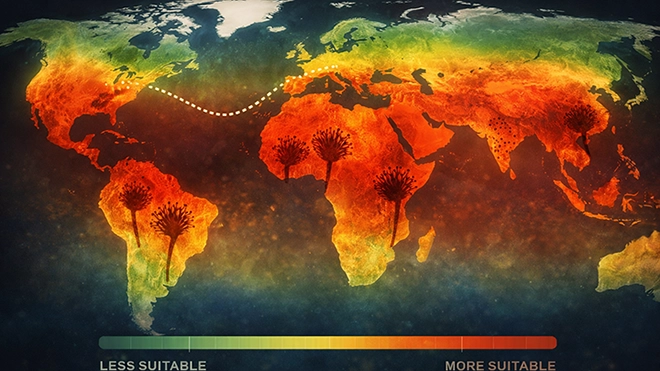
Fungi do not appear randomly across the world like scattered dust; they follow rules, boundaries, and environmental limits that define where they can exist. Temperature and moisture act as invisible borders, shaping where fungal species can grow, reproduce, and persist over time. A recent modeling study highlights how climate change may begin to redraw these boundaries for several Aspergillus species, not by creating new organisms, but by shifting the environmental zones that support them. In this sense, climate does not act as a trigger for sudden biological change—it acts as a mapmaker, quietly redrawing the conditions under which life can exist.
Familiar Fungi in a Changing World
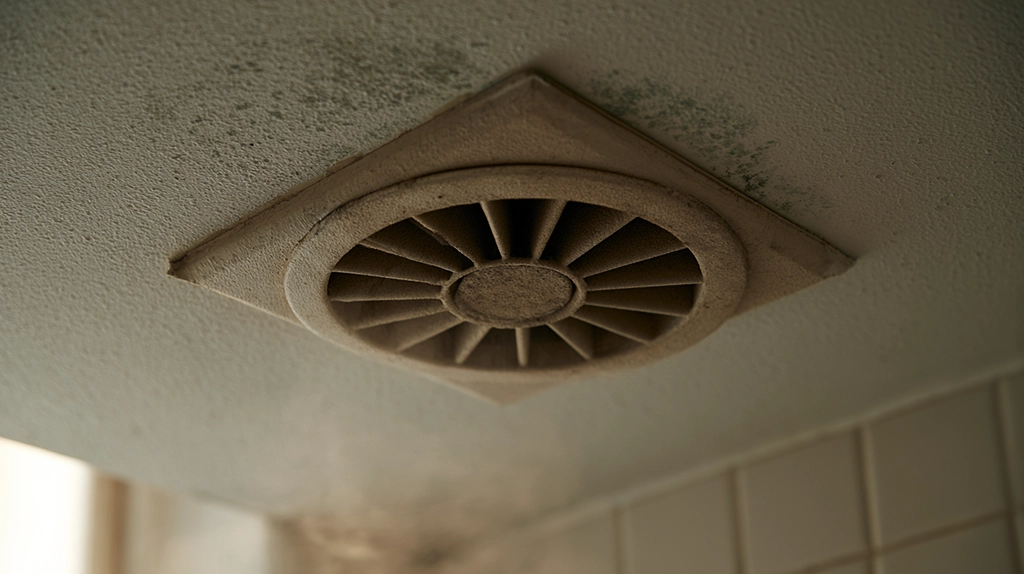
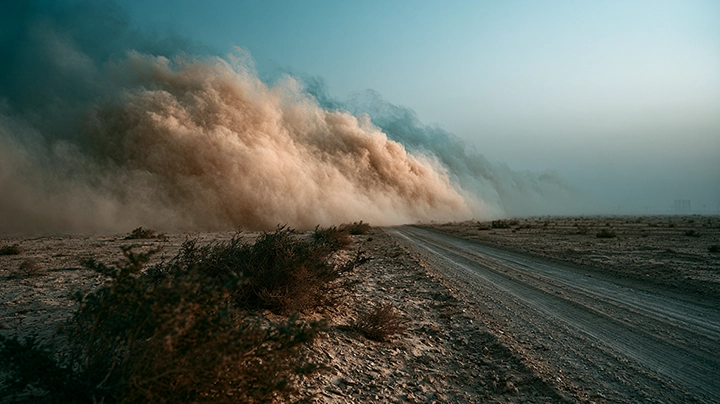
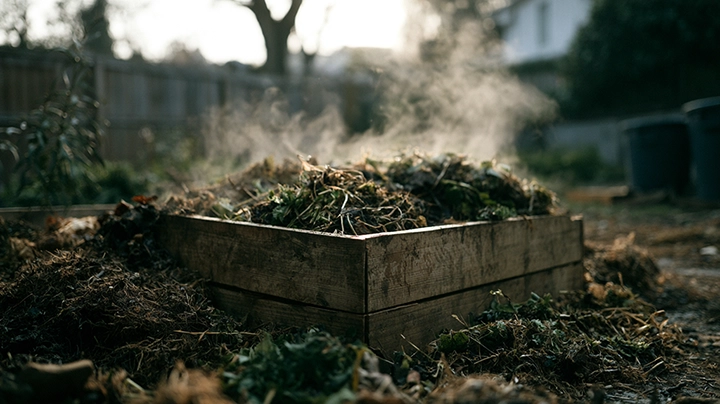
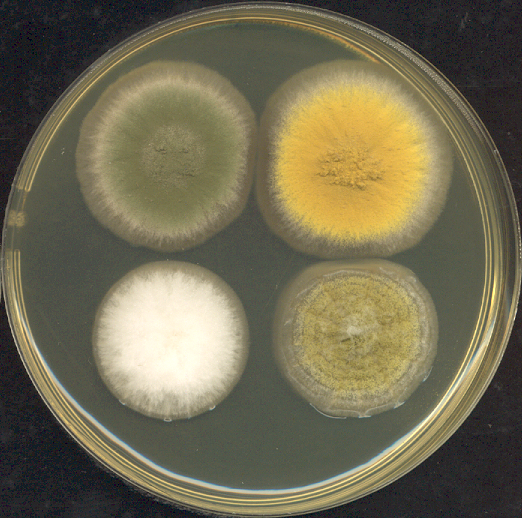
The species examined in the study—Aspergillus fumigatus, Aspergillus flavus, and Aspergillus niger—are not rare or emerging threats. They are already deeply embedded in both natural and built environments, commonly found in soil, decaying organic matter, and even the air we breathe. Under most circumstances, their presence goes unnoticed, forming part of the background microbial world that surrounds daily life. However, these fungi occupy a dual role: they are both ordinary environmental organisms and potential contributors to health and agricultural risks under specific conditions. This duality becomes especially important when the environments that define their range begin to shift.

Modeling a Moving Boundary
To understand how these fungi might respond to climate change, researchers use climate-based models to simulate future environmental conditions. These models estimate where temperature and moisture levels will remain suitable, become newly suitable, or no longer support fungal survival. The projections suggest a pattern of redistribution rather than simple expansion. Regions that were previously too cold—such as parts of Europe and other temperate zones—may become more hospitable, allowing these fungi to persist more consistently. At the same time, regions that become excessively hot may fall outside optimal conditions, potentially reducing fungal presence. The result is not a uniform spread, but a shifting map defined by changing environmental thresholds.


Redistribution, Not Emergence
A critical clarification in the study is that these fungi are not new arrivals. They already exist across the globe, often unnoticed because of their ubiquity. Climate change does not introduce them into the system—it changes where they are more likely to thrive. This distinction matters because it reframes the narrative. The concern is not about new pathogens suddenly appearing, but about existing organisms moving into new environmental contexts. As the climate shifts, the boundaries of fungal suitability move with it, altering patterns of exposure without changing the fundamental biology of the organisms themselves.
Exposure: The Hidden Variable
As environmental suitability shifts, so does human exposure. Regions that previously experienced limited fungal presence may begin to encounter these organisms more frequently, while others may see a reduction. However, exposure does not automatically translate into disease. For species such as A. fumigatus, health impacts are closely tied to individual vulnerability, including immune status and underlying respiratory conditions. This means that climate-driven changes in fungal distribution influence risk indirectly, by altering the likelihood of contact rather than guaranteeing outcomes. The system becomes one of probability, not certainty.


Implications for Food Systems
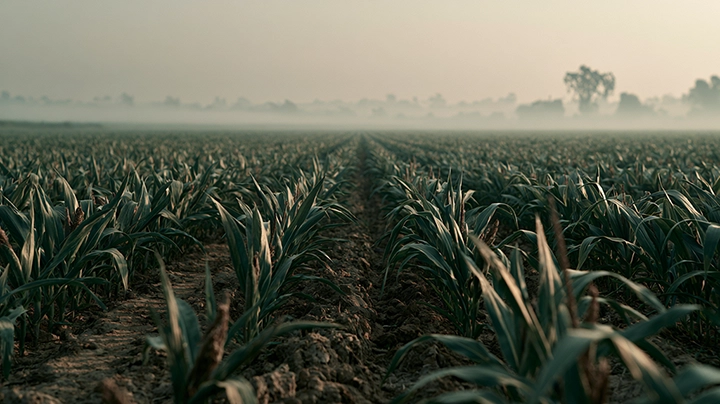
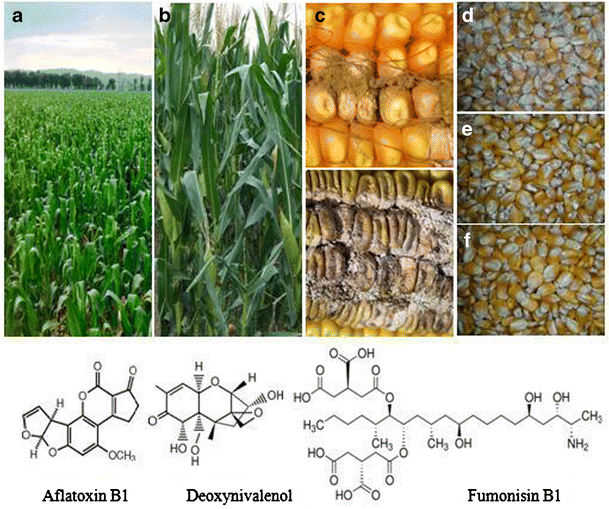
The influence of Aspergillus extends beyond human health into agricultural systems, where certain species play a role in crop contamination. Aspergillus flavus, for example, is associated with the production of aflatoxin—compounds that can affect food safety and trade. As climate conditions shift, the regions where these fungi can thrive may also change, potentially expanding contamination risks into new agricultural zones while reducing them in others. This creates a moving landscape of food safety challenges, where monitoring and management must adapt to changing environmental realities rather than fixed geographic assumptions.
The Role of Modeling in Understanding Change
The study relies on climate modeling to explore future scenarios, offering a structured way to anticipate how environmental conditions might evolve. These models integrate temperature, moisture, and ecological thresholds to estimate potential distribution patterns. However, they are not direct predictions of the future. Real-world outcomes depend on additional factors such as local ecosystems, land use, and human intervention. As such, the findings should be understood as informed projections—maps of possibility rather than precise forecasts. They provide direction, not certainty.
A System-Level Shift
At a broader level, the study reflects a fundamental principle of environmental science: microbial systems respond systematically to changes in climate. Fungal distribution is not random, and when environmental limits shift, biological patterns adjust accordingly. These adjustments may not be immediately visible, but they influence how ecosystems function, how exposure occurs, and how risks emerge over time. The movement of fungi across geographic boundaries is not a sudden event—it is a gradual reorganization of the biological landscape.
❓ FAQ: Climate Change and Aspergillus
What is the main finding of the study?
Climate change may shift where certain Aspergillus species can live by altering environmental conditions.
Are these fungi new or emerging?
No. They already exist globally; the study focuses on changes in their distribution.
Does increased exposure mean more infections?
Not necessarily. Health outcomes depend on individual susceptibility and environmental context.
Why does climate affect fungi?
Fungi depend on temperature and moisture, which determine where they can grow and survive.
Is this based on real-world data?
The study uses climate models to project possible future scenarios.
References
Academic Sources
Fisher, M. C., et al. (2012). Emerging fungal threats to animal, plant and ecosystem health. Nature. https://doi.org/10.1038/nature10947
Bebber, D. P., et al. (2013). Crop pests and pathogens move polewards in a warming world. Nature Climate Change. https://doi.org/10.1038/nclimate1990
van der Heijden, M. G. A., et al. (2015). Mycorrhizal ecology and ecosystem processes. New Phytologist. https://doi.org/10.1111/nph.13372
Official Sources
Intergovernmental Panel on Climate Change (IPCC) – Climate Change Reports: https://www.ipcc.ch
World Health Organization (WHO) – Environmental health and fungi: https://www.who.int
Key Takeaways
- Please login How climate change is quietly shifting the global boundaries of Aspergillus—and what that means for exposure
- A recent modeling study highlights how climate change may begin to redraw these boundaries for several Aspergillus species, not by creating new organisms, but by shifting the environmental zones that support them.
- They are already deeply embedded in both natural and built environments, commonly found in soil, decaying organic matter, and even the air we breathe.
- This duality becomes especially important when the environments that define their range begin to shift.
- The projections suggest a pattern of redistribution rather than simple expansion.
Frequently Asked Questions
What should you know about please login to bookmark?
Please login How climate change is quietly shifting the global boundaries of Aspergillus—and what that means for exposure
What should you know about academic Sources?
Fisher, M. C., et al. (2012). Emerging fungal threats to animal, plant and ecosystem health. Nature. https://doi.org/10.1038/nature10947Bebber, D. P., et al. (2013). Crop pests and pathogens move polewards in a warming world. Nature Climate Change. https://doi.org/10.1038/nclimat
What should you know about official Sources?
Intergovernmental Panel on Climate Change (IPCC) – Climate Change Reports: https://www.ipcc.chWorld Health Organization (WHO) – Environmental health and fungi: https://www.who.int
What are the key findings about When the Map Moves?
Please login How climate change is quietly shifting the global boundaries of Aspergillus—and what that means for exposure
How does When the Map Moves affect public health or safety?
Fungi do not appear randomly across the world like scattered dust; they follow rules, boundaries, and environmental limits that define where they can exist. Temperature and moisture act as invisible borders, shaping where fungal species can grow, reproduce, and persist over time. A recent modeling s