
We often treat mold spots on walls or food as everyday nuisances, but under the microscope, fungi are highly organized life systems. Traditional biology has long assumed that every nucleus carries a full set of chromosomes, a complete genome. This idea has shaped research and testing practices—we usually regard the nucleus as the fundamental unit of function and heredity.
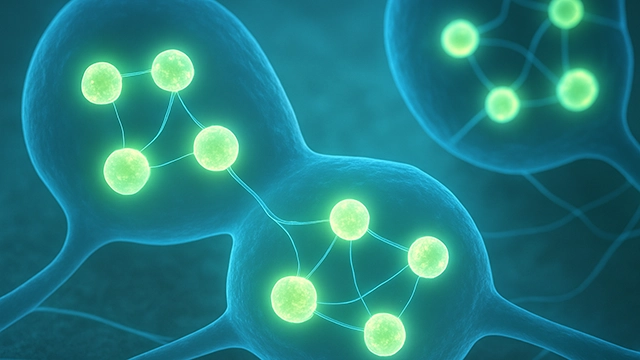
Recent studies have overturned this view. Scientists discovered that in some fungi, although the cells are multinucleate, a single nucleus does not necessarily carry a complete genome. Instead, genetic information is “distributed” across different nuclei, and only through complementing each other can the cell maintain its full functionality. In well-known plant pathogens such as Sclerotinia sclerotiorum (the causal agent of white mold) and Botrytis cinerea (the gray mold pathogen), this phenomenon has been observed. This means that in these fungi, multiple nuclei are not just backups, but a form of division of labor and cooperation.
Why Does This Change the Way We Think About Mold Control?
In the old view, where “every nucleus is complete,” having multiple nuclei meant redundancy and backup. But under the “distributed genome” model, nuclei resemble storage units holding different essential parts. As long as the nuclear group is complete and communication is smooth, the cell can function; but once nuclear distribution becomes uneven or nuclei are spatially separated during development or reproduction, some functions may go missing, and the organism may display weaknesses in growth or adaptation.
This suggests that the resilience of certain molds does not simply come from having more copies of the same genome. Rather, it comes from collaboration at the nuclear-group level. At the same time, it exposes their dependence on maintaining “nuclear completeness.”

Detection and Monitoring: Where the Real Challenge Lies
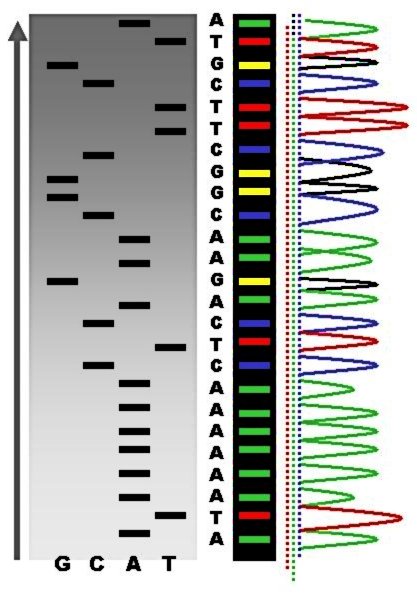
DNA-based assays remain critical tools for mold research, used in tracking contamination or detecting resistance. But this discovery reminds us that multinucleate fungi cannot be simplistically treated as carrying multiple identical genome copies. In reality, different nuclei may carry different sets of chromosomes, and the cell relies on nuclear cooperation to function.
This means that while we can still detect the presence of fungal genes, how these genes are distributed, coordinated, and regulated across nuclei is still largely unknown. To more accurately understand fungal resistance and adaptability, future research may need methods capable of observing fungi at the “nuclear-group” level, not just at the bulk DNA level.
Mold Control: From “Single-Point Suppression” to “System Management”
If molds rely on nuclear cooperation, then our prevention strategies must adapt accordingly:
- Prioritize Environmental Control
Nuclear complementarity requires stable physiological conditions. By rigorously managing humidity, temperature, nutrient availability, and surface moisture, we can raise the cost of nuclear cooperation, making it easier for missing components to manifest as growth defects. - Multi-Target and Stage-Specific Interventions
A single treatment pathway can often be bypassed. Diversifying strategies across multiple metabolic nodes and structural layers, while focusing on critical time windows (such as germination or early invasion), reduces the chance that fungi establish stable nuclear cooperation. - Monitoring Aligned with Biological Reality
Where possible, sampling should cover multiple genetic markers, different growth stages, and quantitative thresholds, to improve sensitivity to nuclear-level variability. The goal is not necessarily expensive technology, but designing monitoring that better reflects the fungal life cycle.
From Farmland to Factories: The Common Thread Is “Conditional Management”
Sclerotinia and Botrytis have long plagued agriculture. If part of their success comes from nuclear cooperation, it highlights the importance of cultivation management, microclimate control, and surface hygiene. By steadily reducing environmental suitability, we can hinder fungi before they establish effective nuclear partnerships.
The same logic applies in industrial and domestic settings. In food, textile, or pharmaceutical production, if more fungi exhibit distributed genomes, then mold control must shift from single-point inhibition to system-level management. Instead of relying on a “magic bullet” antifungal, it is more realistic to design processes and environments that are universally hostile and consistently erosive to fungal survival.
Understanding Nuclear Cooperation to Build Smarter Defenses
This discovery does not mean that all fungi follow the same model, nor that traditional detection methods are useless. What it shows is that in multinucleate fungi, genetic information is not necessarily neatly stored in each nucleus, and functionality may be achieved only through nuclear cooperation.
For mold control, the takeaway is clear: design environments and processes that disrupt nuclear cooperation, while research gradually fills in the gaps in our understanding of how nuclei share and regulate genes. Once we grasp how fungi truly operate, our defenses will naturally become more precise and effective.

References
- Derbyshire M & Denton-Giles M. (2016). The control of Sclerotinia sclerotiorum. Frontiers in Plant Science.DOI:10.3389/fpls.2016.00459
- Williamson B et al. (2007). Botrytis cinerea: The cause of grey mould disease. Molecular Plant Pathology.DOI:10.1111/j.1364-3703.2007.00464.x
- WHO. Fungal Pathogens Priority List. WHO
Key Takeaways
- We often treat mold spots on walls or food as everyday nuisances, but under the microscope, fungi are highly organized life systems.
- This idea has shaped research and testing practices—we usually regard the nucleus as the fundamental unit of function and heredity.
- Instead, genetic information is “distributed” across different nuclei, and only through complementing each other can the cell maintain its full functionality.
- In the old view, where “every nucleus is complete,” having multiple nuclei meant redundancy and backup.
- This suggests that the resilience of certain molds does not simply come from having more copies of the same genome.
Frequently Asked Questions
Why Does This Change the Way We Think About Mold Control?
In the old view, where “every nucleus is complete,” having multiple nuclei meant redundancy and backup. But under the “distributed genome” model, nuclei resemble storage units holding different essential parts. As long as the nuclear group is complete and communication is smooth, the cell can functi
What should you know about detection and Monitoring: Where the Real Challenge Lies?
DNA-based assays remain critical tools for mold research, used in tracking contamination or detecting resistance. But this discovery reminds us that multinucleate fungi cannot be simplistically treated as carrying multiple identical genome copies. In reality, different nuclei may carry different set
What should you know about mold Control: From “Single-Point Suppression” to “System Management”?
If molds rely on nuclear cooperation, then our prevention strategies must adapt accordingly:
What should you know about from Farmland to Factories: The Common Thread Is “Conditional Management”?
Sclerotinia and Botrytis have long plagued agriculture. If part of their success comes from nuclear cooperation, it highlights the importance of cultivation management, microclimate control, and surface hygiene. By steadily reducing environmental suitability, we can hinder fungi before they establis
What should you know about understanding Nuclear Cooperation to Build Smarter Defenses?
This discovery does not mean that all fungi follow the same model, nor that traditional detection methods are useless. What it shows is that in multinucleate fungi, genetic information is not necessarily neatly stored in each nucleus, and functionality may be achieved only through nuclear cooperatio