According to UCLA HEALTH
A Silent, Often Overlooked Fungal Condition
Toenail fungus is a condition many live with quietly—thickened, discolored nails that some treat as a purely cosmetic issue.
A reader from northern Los Angeles County shared that he’s had the condition since his teenage years and is now nearing 80.
He asked: “At my age, should I take this more seriously and consider prescription treatment?”
In healthy individuals, a fungal nail infection often doesn’t cause severe harm.
But in certain circumstances—especially in older adults or those with medical conditions—this seemingly minor issue can escalate.
Below is a detailed review of what toenail fungus is, when it demands medical attention, how it is diagnosed, and what treatment strategies are currently used.

Source: Wikimedia Commons, CC BY-SA 4.0
What Is Toenail Fungus (Onychomycosis)?
Onychomycosis is a fungal infection of the nail plate or nail bed.
It often starts as a skin fungus (e.g., athlete’s foot) that invades the nail (UpToDate).
Typical signs include:
- Discoloration: yellow, brown, white, or black
- Thickening of the nail
- Brittle or crumbly edges
- Detachment of part of the nail from the bed
- Distorted shape or increased curvature
Because nails grow slowly, visible improvement may take many months even after effective therapy begins.
When Toenail Fungus Should Be Evaluated by a Doctor
Although many cases are mild, professional evaluation is warranted under these conditions:
Underlying Health Conditions
Individuals with diabetes, vascular disease, or immune suppression are at risk of complications such as secondary bacterial infections.
Impact on Mobility and Balance
Severely thickened or misshapen nails may interfere with walking or trimming, especially in older adults where balance is critical.
Diagnostic Uncertainty
Conditions like psoriasis, trauma, or other nail changes can mimic fungal infection.
A clinician can confirm or rule out fungus via laboratory testing.
Failure of Over-the-Counter Treatments
If topical or nonprescription measures yield no improvement after months, stronger prescription therapies may be needed.
Medication Risks and Interactions
Oral antifungals may carry risks—including liver toxicity and interactions with other drugs.
A doctor can assess safety and monitor accordingly.
Progression or Symptoms
If the infection spreads, worsens, or causes pain, prompt medical attention is recommended.
How Diagnosis Works
Proper diagnosis improves treatment success. Key diagnostic steps include:
- Physical exam of the affected nail(s)
- Nail clippings or scrapings sent for microscopy or fungal culture
- In some cases, advanced tests (molecular assays) to identify fungus species
- Assessment of patient health (e.g., liver function) prior to systemic therapy
Correct identification helps choose the appropriate treatment and avoid unnecessary or ineffective therapies.
Treatment Options
Treatment depends on severity, the infecting organism, number of nails involved, and patient health.
Topical Therapies
Nail lacquers (e.g., ciclopirox) and newer agents (efinaconazole, tavaborole) help in mild or superficial cases.
Efficacy is constrained by penetration of the nail.
Best when combined with debridement (thinning of the nail) or as adjuncts.

Source: Wikimedia Commons, CC BY-SA 4.0
Oral (Systemic) Antifungals
Drugs like terbinafine or itraconazole are often more effective for deeper or widespread infections.
Standard regimens last several weeks; full cure takes much longer as the nail grows out.
Monitoring for side effects (e.g., liver enzymes) is standard practice.
Combination & Adjunctive Approaches
Some cases benefit from combining systemic + topical therapy for better outcomes.
Nail removal or partial debridement is sometimes used when infection is severe or painful.
Maintenance of foot hygiene, protective footwear, and environmental control helps prevent recurrence.

Source: Wikimedia Commons, CC BY-SA 4.0
Jock Itch: A Related Fungal Condition
The article also mentions jock itch (tinea cruris), a fungal skin infection affecting the groin and upper thighs.
Typical causative organisms:
Trichophyton rubrum, Epidermophyton floccosum
Symptoms:
An itchy, red, scaly rash in warm and moist areas.
Diagnosis is often clinical; skin scrapings or KOH testing may confirm the fungus.
Treatment usually involves topical antifungal creams; oral therapy reserved for severe, recurrent cases.
Preventive measures include wearing loose, breathable clothing and keeping the groin area dry.
In the anecdote cited, switching to boxers helped reduce moisture and improved outcomes—an example of how simple changes in clothing choice can assist in controlling fungal growth.

Source: Wikimedia Commons, CC BY-SA 4.0
References
- Centers for Disease Control and Prevention (CDC). (2024). Fungal Nail Infections (Onychomycosis).
- National Institutes of Health (NIH). (2023). LiverTox: Clinical and Research Information on Drug-Induced Liver Injury.
According to UCLA HEALTH
Key Takeaways
- Toenail fungus (onychomycosis) affects approximately 10% of the global population and is far more common than generally recognised—its persistence and gradual progression mean many people dismiss it as a cosmetic inconvenience rather than seeking treatment.
- Untreated onychomycosis can lead to serious complications including nail loss, secondary bacterial infection, cellulitis of the foot, and in diabetic patients, can precipitate or worsen diabetic foot syndrome.
- Medical evaluation is important because toenail discoloration has multiple causes—including psoriasis, trauma, alopecia areata, and other conditions—and many are misdiagnosed without laboratory confirmation of fungal infection.
- Dermatophytes (Trichophyton rubrum accounting for ~70% of cases) are responsible for the vast majority of onychomycosis, though Candida and non-dermatophyte molds each account for a minority of cases with different treatment implications.
- Oral antifungal therapy (terbinafine or itraconazole) is significantly more effective than topical nail lacquers for established onychomycosis—cure rates of 70–80% with oral treatment versus 10–20% with topical-only treatment.
Frequently Asked Questions
What causes toenail fungus and how do you get it?
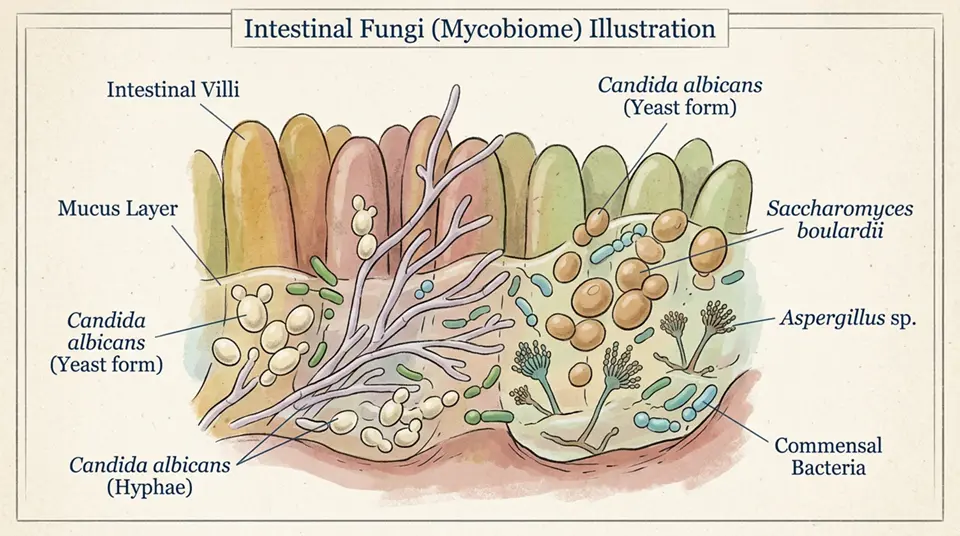
Toenail fungus (onychomycosis) is caused by fungal organisms—predominantly dermatophytes but also some yeasts and non-dermatophyte molds—that infect the nail plate, nail bed, and surrounding nail structures. Causative organisms: dermatophytes (70–90% of cases): Trichophyton rubrum—by far the most common cause worldwide; also causes athlete’s foot (tinea pedis); accounts for 60–70% of onychomycosis cases. Trichophyton interdigitale (formerly T. mentagrophytes)—second most common; more common in toenails than fingernails. Epidermophyton floccosum—less common; primarily affects feet. Candida species (5–10% of toenail cases)—more common in fingernails than toenails; often associated with chronic paronychia; Candida albicans and C. parapsilosis are most common. Non-dermatophyte molds (5–10% of cases): Scopulariopsis brevicaulis, Fusarium species, Aspergillus species—important because they have different antifungal susceptibility profiles; many non-dermatophyte molds are resistant to terbinafine. Risk factors for acquiring nail fungus: athlete’s foot (tinea pedis)—the most important risk factor; nail infection often follows prolonged untreated tinea pedis; wearing occlusive footwear that traps heat and moisture; walking barefoot in communal wet areas (swimming pools, locker rooms, showers); trauma to the nail (repeated microtrauma from ill-fitting shoes, sports); older age—nail growth slows with age, giving fungus more time to establish; diabetes mellitus, peripheral vascular disease, or peripheral neuropathy; family history of onychomycosis (genetic susceptibility factors); nail services in salon settings using inadequately sterilised instruments.
Why is toenail fungus not just a cosmetic problem?
While toenail fungus is often dismissed as an aesthetic issue—thickened, discoloured, crumbly nails are unappealing—medical evidence documents significant functional and health consequences that justify medical evaluation and treatment. Non-cosmetic complications: pain and functional limitation—advanced onychomycosis can cause significant pain from nail pressure in shoes; thickened nails press on the nail bed and surrounding skin; walking, exercise, and wearing shoes can become uncomfortable or impossible; quality of life impairment is substantial in severe cases. Secondary bacterial infection—damaged nail provides a portal of entry for bacteria; bacterial paronychia (acute nail fold infection), cellulitis (spreading skin infection), and in extreme cases osteomyelitis (bone infection) can develop from untreated nail fungus. Diabetic foot complications—onychomycosis is a recognised risk factor for diabetic foot complications; in patients with peripheral neuropathy and vascular insufficiency, nail thickening causes pressure sores and small wounds that fail to heal; secondary bacterial infection in the context of diabetic neuropathy can lead to deep tissue infection, ulcers, and amputation; guidelines for diabetic foot care include prompt treatment of all nail fungal infections. Spread to other areas: the same dermatophyte causing nail infection can spread to skin (tinea pedis, tinea corporis), groin (tinea cruris), or scalp; the infected nail acts as a reservoir for continuous reinfection of skin; nail infection also poses a risk of infecting household contacts. Social and psychological impact: onychomycosis is associated with reduced self-esteem, social withdrawal, and occupational disadvantage—particularly in professions where bare feet are common (sports, health care in some cultures).
What treatments work best for toenail fungus?
Onychomycosis treatment efficacy data is well-established from multiple randomised controlled trials, with oral antifungal therapy showing substantially better outcomes than topical-only approaches for established nail infection. Treatment hierarchy by efficacy: oral antifungal therapy—terbinafine (Lamisil): first-line oral treatment for dermatophyte toenail infection; 250 mg daily for 12 weeks (toenails), 6 weeks (fingernails); mycological cure rate approximately 70–80%; works by accumulating in nail keratin and inhibiting ergosterol synthesis; contraindicated in severe liver disease; liver function monitoring recommended; drug interactions with CYP2D6-metabolised medications; itraconazole (Sporanox): alternative oral agent; pulse dosing protocol (400 mg daily for 1 week per month for 3–4 months) is widely used; slightly lower cure rates than terbinafine for dermatophyte infection but broader spectrum including Candida and some non-dermatophyte molds; drug interactions with several medications; not recommended in congestive heart failure. Topical antifungal nail lacquers—amorolfine (Loceryl) 5% nail lacquer: European market; requires weekly application for 6–12 months; mycological cure rate approximately 40–50% in superficial nail infections, lower for established infection; efinaconazole (Jublia) 10% solution: US market; daily application; better efficacy than older topicals. Ciclopirox (Penlac) nail lacquer: daily application for 12+ months; mycological cure rate approximately 29–36% in clinical trials. Laser and device-based treatments—multiple laser technologies marketed for onychomycosis; current evidence does not support laser as a primary treatment; may have adjunctive role; generally considered expensive and lacking strong evidence.
How long does it take to cure toenail fungus?
Toenail fungus treatment requires exceptional patience because cure is measured in nail regrowth—the killed fungus must be physically grown out of the nail, which is a slow process inherent to nail biology. Nail growth rates and their implications: toenails grow approximately 1.5–2 mm per month on average; a complete toenail takes approximately 12–18 months to fully replace from base to tip; this means that even with effective antifungal treatment, it takes 12–18 months for a completely cleared, healthy-looking nail to emerge—even if the fungus is killed within the first few weeks of treatment. What ‘cure’ means in clinical trials: mycological cure—no fungal organisms found on culture or microscopy of nail clippings; considered the most important outcome measure; clinical cure—nail appears normal (normal thickness, colour, and surface); complete cure—both mycological and clinical cure; these outcomes are typically assessed at 52 weeks post-treatment completion, and even at that timepoint, not all patients who are mycologically cured will have complete clinical cure because the nail has not fully grown out. Patient expectations: patients who expect to see improvements within weeks will be disappointed; typical progression with effective treatment: no visible change in the first 4–8 weeks (the fungus may be dying but the damaged nail is still growing forward); a new clear nail beginning to emerge at the nail base after 8–12 weeks is a good prognostic sign; continued gradual transition from affected to clear nail over 12–18 months. Recurrence rates are significant: even after successful treatment, 20–40% of patients experience recurrence within 2 years; ongoing prevention (antifungal foot powder, treating concurrent tinea pedis, avoiding risk environments) is important.
Can toenail fungus go away on its own without treatment?
Spontaneous resolution of onychomycosis without treatment is extremely uncommon—the condition is almost universally progressive and will not resolve without intervention in the vast majority of cases. Why toenail fungus doesn’t resolve spontaneously: nail is a privileged sanctuary—the nail plate provides a physically protected environment for fungal colonisation; the hard keratin matrix limits immune cell access; even if systemic immune responses are fully functional, they cannot efficiently reach and destroy the fungus within the nail plate keratin. Progressive nature—dermatophytes that cause onychomycosis are adapted to long-term survival in keratin; the nail infection slowly expands from the initial infection site (usually the free edge and lateral margins) toward the nail base; without treatment, most cases progressively involve more of the nail and may spread to other nails over months to years. Evidence for spontaneous cure rate: clinical studies of onychomycosis typically use placebo groups to measure background cure rates; spontaneous cure rates are reported at approximately 1–5% over 12 months in clinical trial populations; this is extremely low for a condition affecting 10% of the population. When does observation without treatment make sense: in elderly patients with mild discoloration of one nail, minimal symptoms, and no risk factors (no diabetes, no immune compromise, adequate circulation)—the risk-benefit balance of oral antifungal side effects and drug interactions may favour watchful waiting. In patients unable to tolerate systemic medications. For patients who choose to prioritise other medical concerns. In all other cases—including everyone with diabetes, vascular disease, or immune compromise, and anyone with substantial nail involvement or symptoms—medical evaluation and treatment are recommended.