
We live in a world of sprays, wipes, and chemicals aiming to eliminate mold the moment we see it creeping across a wall or corner. But what if I told you the most effective way to stop mold is not a product at all—but a condition? The key to prevention isn’t finding the next miracle killer; it’s creating an environment in which mold simply cannot thrive. This article argues the central fact: the best thing to stop mold is controlling moisture.
Understanding Mold’s Growth Triangle: Moisture, Nutrients, and Temperature
Mold doesn’t appear out of the blue—it requires three essential conditions: moisture (or water availability), nutrients (organic matter), and a suitable temperature. In most indoor settings, nutrients (like dust, wallpaper paste, detergents, cellulose from textiles) and ambient temperature are relatively fixed or hard to eliminate entirely. What we can control is moisture: the relative humidity of the air, the presence of water films, and condensation. Indeed, research shows that while temperature may influence mold growth, relative humidity (RH) and moisture availability dominate the story. For example, a 2022 study demonstrated that spores of Cladosporium cladosporioides exposed to dry cycles at 40% RH showed significantly lower survival compared to higher RH levels, regardless of temperature. Likewise, modelling of mold growth in domestic environments found that persistently elevated RH (above ~70 %) strongly correlates with mold development. In short: if you cannot eliminate nutrients and you cannot dramatically alter temperature in a typical home, the most actionable axis is moisture.
Why Moisture Is the Decisive Factor

Once a mold spore lands on a surface, it remains dormant until conditions allow it to activate. That activation begins only when a film of water or elevated humidity supports germination. A recent experimental chamber study found that mold growth rates at RH 56–61% were negligible compared to those at 75–76% or 83–86% under identical temperature settings. Similarly, the World Health Organization (WHO) guidelines on indoor air quality conclude that “the most important means for avoiding adverse health effects is the prevention (or minimization) of persistent dampness and microbial growth on interior surfaces.” This insight flips the mindset from “kill mold” to “deny mold conditions.” You don’t fight the mold directly—you change the habitat so mold cannot settle. By keeping RH below thresholds that support germination—typically in the range of 60 % or lower—you essentially render spores inert. A meta‐analysis of indoor fungal growth conditions indicates that RH above 65 % markedly increases mold risk.
The Best Strategy for Moisture Control: A Three-Step Practice

If moisture is the decisive variable, then the best thing to stop mold is how you control it. A practical strategy emerges, composed of three actionable parts:
- Monitor moisture (Measure RH).
Install hygrometers in rooms, especially in high‐risk zones (bathrooms, basements, behind wardrobes). If RH regularly exceeds 65 % in living spaces, you are in a high‐risk zone for mold growth. Research supported the value of continuous measurements as a predictive tool for mold risk. - Actively dehumidify and ventilate (Remove moisture).
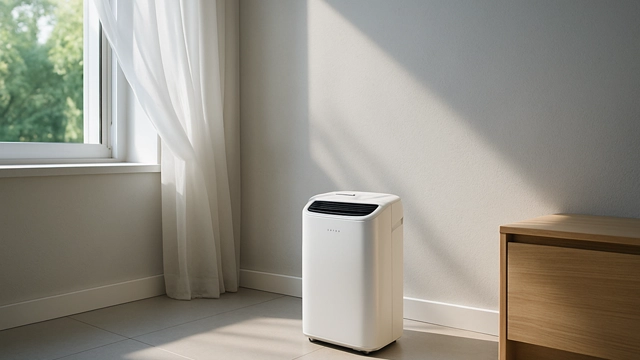
Use dehumidifiers or enable dry modes on air-conditioning units. Increase air movement to accelerate evaporation. One study showed that higher air‐velocity in a high‐humidity chamber (28 °C, 80 % RH) increased mold growth rate, unless ventilation removed moist air quickly. Make sure high-moisture events (cooking, showering, indoor drying of clothes) are well-vented and followed by active drying. The goal: dry the surface before a water film forms.

- Design and build for dryness (Prevent moisture accumulation).
The design of walls, floors, and building envelope matters. Moisture may accumulate via leaks, condensation, or poor drainage. The American Society of Heating, Refrigerating and Air-Conditioning Engineers (ASHRAE)position document states the foundation: “Limiting indoor mold and dampness in buildings… requires managing moisture in building systems.” This means choosing materials with low water absorption, avoiding condensation traps, ensuring drainage, and having ventilation ducts or humidistat controls built in. Design and maintenance become part of the mold prevention system, not just after‐the‐fact fixes.
Why Other Methods Are Auxiliary, Not Primary
Many will still ask: “But what about bleach? Or expensive anti‐mold coatings?” These are not incorrect—but they serve a secondary role. Chemical treatments (bleach, hydrogen peroxide, antifungal coatings) may remove visible mold, but they do not change the environmental conditions that allowed it to grow in the first place. For example, the U.S. Environmental Protection Agency (EPA) states that bleach “may remove surface mold, but doesn’t prevent the underlying moisture problem from inviting new growth.” Thus, chemical treatment is a supplement to the true core: moisture control.
Wrapping Up: The Simple Truth
When asked, “What is the best thing to stop mold?” the answer may disappoint some: not a product, but a condition. Keeping the indoor environment sufficiently dry—through monitoring, active moisture removal, and smart design—is the single most effective step.
Remember: mold will always exist as spores, but if you deny it the conditions to grow, it remains inert. Changing moisture conditions is the foundation; everything else builds upon it.
So next time you pick up a spray bottle, ask yourself: have you first measured the humidity? Have you removed the water film? Have you designed the building or space for dryness? The best mold prevention tool isn’t in your hand—it’s in your environment.
References
- World Health Organization (2009). Guidelines for Indoor Air Quality: Dampness and Mould. WHO Europe
- U.S. Environmental Protection Agency (2023). Mold Remediation in Schools and Commercial Buildings. EPA
- ASHRAE (2018). Position Document on Limiting Indoor Mold and Dampness in Buildings. ASHRAE
Key Takeaways
- We live in a world of sprays, wipes, and chemicals aiming to eliminate mold the moment we see it creeping across a wall or corner.
- This article argues the central fact: the best thing to stop mold is controlling moisture.
- What we can control is moisture: the relative humidity of the air, the presence of water films, and condensation.
- Likewise, modelling of mold growth in domestic environments found that persistently elevated RH (above ~70 %) strongly correlates with mold development.
- That activation begins only when a film of water or elevated humidity supports germination.
Frequently Asked Questions
What should you know about the Best Strategy for Moisture Control: A Three-Step Practice?
If moisture is the decisive variable, then the best thing to stop mold is how you control it. A practical strategy emerges, composed of three actionable parts:
Why Other Methods Are Auxiliary, Not Primary?
Many will still ask: “But what about bleach? Or expensive anti‐mold coatings?” These are not incorrect—but they serve a secondary role. Chemical treatments (bleach, hydrogen peroxide, antifungal coatings) may remove visible mold, but they do not change the environmental conditions that allowed it to
What should you know about wrapping Up: The Simple Truth?
When asked, “What is the best thing to stop mold?” the answer may disappoint some: not a product, but a condition. Keeping the indoor environment sufficiently dry—through monitoring, active moisture removal, and smart design—is the single most effective step. Remember: mold will always exist as spor
What are the key findings about The One Step That?
We live in a world of sprays, wipes, and chemicals aiming to eliminate mold the moment we see it creeping across a wall or corner. But what if I told you the most effective way to stop mold is not a product at all—but a condition? The key to prevention isn’t finding the next miracle killer; it’s cre
How does The One Step That affect public health or safety?
Mold doesn’t appear out of the blue—it requires three essential conditions: moisture (or water availability), nutrients (organic matter), and a suitable temperature. In most indoor settings, nutrients (like dust, wallpaper paste, detergents, cellulose from textiles) and ambient temperature are relat