
Mold is usually something we try to avoid, but not all mold is bad. Some, like Penicillium, have changed the world for the better. This humble fungus, which can be found in cheese, soil, and even in your home, led to one of the most groundbreaking medical discoveries of all time—penicillin.
But Penicillium is a fungus with two faces. While some species have given us life-saving antibiotics and delicious blue cheeses, others are responsible for food spoilage, indoor mold problems, and even toxic exposure. How did one mold become both a medical marvel and a household nuisance? Let’s explore the fascinating history, benefits, and hidden dangers of Penicillium.
A Mold That Changed Medicine Forever
In 1928, Scottish scientist Alexander Fleming made a discovery that would change medicine forever—and it was all by accident. He had left a petri dish of bacteria uncovered in his lab before going on vacation. When he returned, he noticed that a bluish-green mold had grown on the dish, and around it, the bacteria had been completely wiped out.
That mold was Penicillium notatum (now classified as Penicillium rubens), and it was producing a substance that killed bacteria. Fleming called this discovery penicillin, the world’s first antibiotic.
At first, penicillin was difficult to produce in large amounts, and many dismissed it as an impractical curiosity. But when World War II created a desperate need for infection-fighting drugs, a team of scientists, including Howard Florey and Ernst Boris Chain, found a way to mass-produce penicillin. By the mid-1940s, penicillin was being used to treat infections that had once been fatal, from battlefield wounds to pneumonia.
Today, penicillin and other antibiotics derived from Penicillium have saved millions of lives, transforming medicine and making once-deadly infections treatable. But while some strains of Penicillium are medical heroes, others can be problematic—especially when they invade our homes.
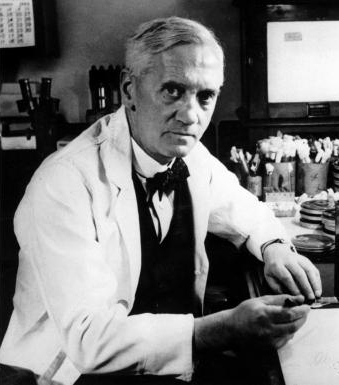
Alexander Fleming in his lab – Wikimedia Commons (Public Domain)

Penicillium under microscope – Wikimedia Commons (CC BY-SA 3.0)
The Good, the Bad, and the Moldy: Not All Penicillium Is Helpful
Penicillium is a large family of fungi, with hundreds of species. Some have been harnessed for medicine and food production, while others are responsible for moldy walls, spoiled food, and health issues.
The good species include Penicillium rubens, which produces penicillin, and Penicillium roqueforti and Penicillium camemberti, which are used in making blue cheese, Roquefort, and Camembert. These molds contribute to the distinct flavors and textures of some of the world’s finest cheeses.
The bad species, however, can cause serious problems. Penicillium chrysogenum is a common household mold that thrives in water-damaged buildings, producing airborne spores that can trigger allergies and respiratory issues. Penicillium expansum is a major culprit in fruit and vegetable spoilage, producing a toxin called patulin, which can be harmful if ingested. Even more concerning is Penicillium marneffei, a species that can cause serious infections in people with weakened immune systems, particularly in parts of Southeast Asia.
So while Penicillium has given us antibiotics and gourmet cheeses, it can also be a persistent and unwanted guest in homes and food storage areas.
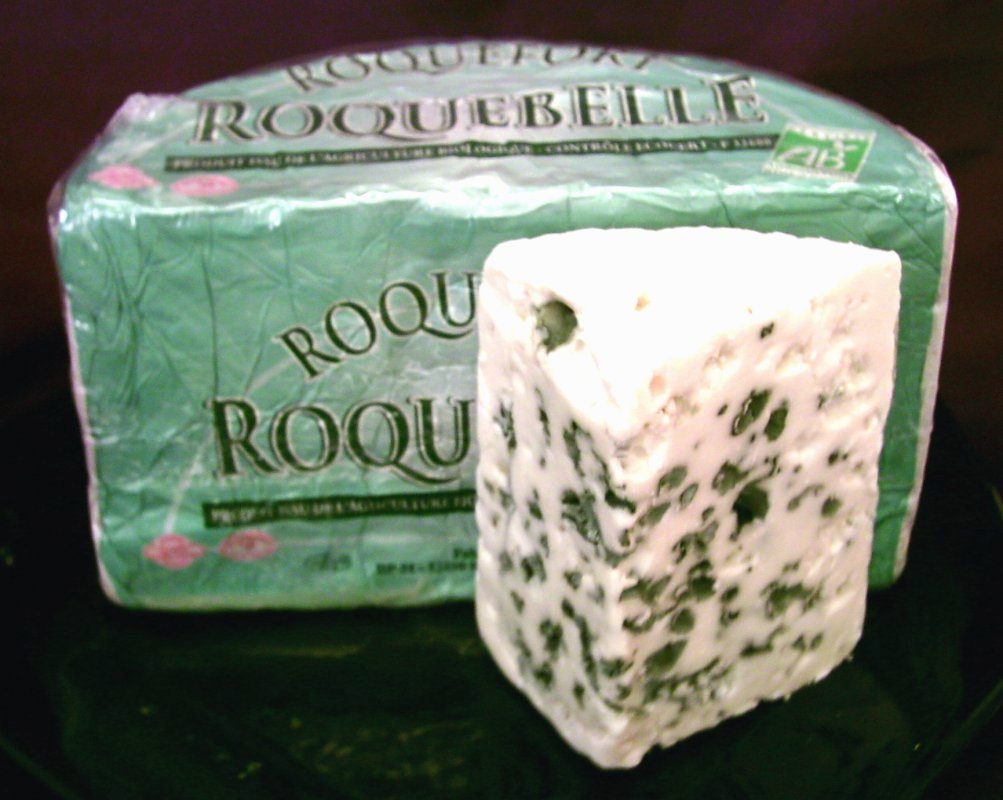
Roquefort cheese with Penicillium – Wikimedia Commons (CC BY-SA 3.0)

Moldy apple with Penicillium expansum – Wikimedia Commons (CC BY-SA 4.0)
Where Penicillium Hides in Your Home
Unlike some molds that prefer warm conditions, Penicillium is perfectly happy in cold environments. That means it can thrive in places you might not expect—like your refrigerator. It spreads easily and can settle on walls, fabrics, food, and even inside HVAC systems, making it difficult to get rid of once it takes hold.
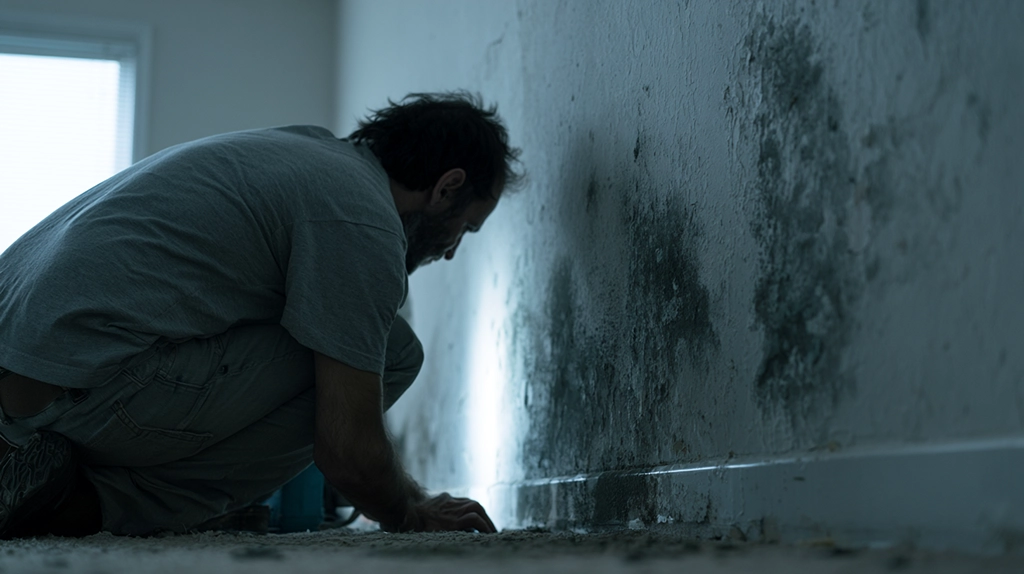
One of the most common places to find Penicillium is in water-damaged buildings. If a home has had leaks, flooding, or condensation buildup, Penicillium spores can settle and grow on drywall, wooden surfaces, and insulation. If left untreated, it can cause a musty smell, discoloration, and potential health issues.
Refrigerators and spoiled food are another frequent hiding spot. If you’ve ever opened a forgotten bag of fruit or a moldy loaf of bread, chances are you’ve seen Penicillium at work. Unlike other food molds that tend to stay on the surface, Penicillium can penetrate deep into soft foods, making them unsafe to eat—even if you cut off the moldy part.
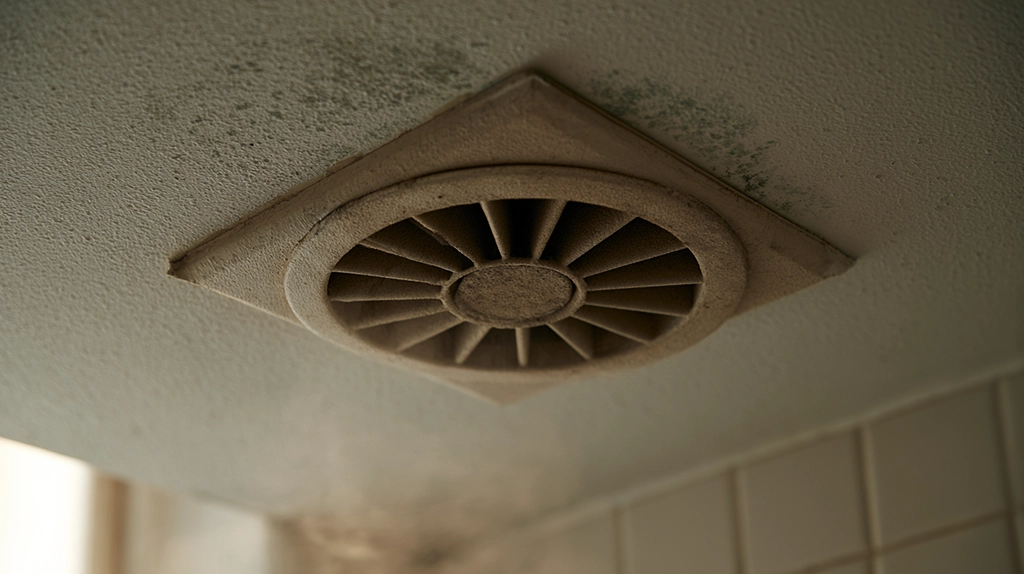
Penicillium also lurks in basements and attics, where poor ventilation allows moisture to build up. HVAC systems and air vents can become breeding grounds for mold spores, spreading them throughout an entire home. Even carpets and upholstered furniture can trap moisture, allowing Penicillium to grow undetected.

Moldy bread – Wikimedia Commons (CC BY-SA 3.0)
Is Penicillium in Your Home Dangerous?
Most people won’t get sick from occasional exposure to Penicillium, but prolonged contact with mold spores can cause health issues—especially for people with asthma, allergies, or weakened immune systems.
Some of the most common effects of indoor Penicillium exposure include:
- Allergic reactions, such as sneezing, congestion, and itchy eyes.
- Worsening asthma symptoms, especially in children and sensitive individuals.
- Respiratory irritation, leading to coughing, shortness of breath, and sinus infections.
- Possible mycotoxin exposure, which, in rare cases, can affect the nervous system or immune function.
If you notice persistent musty odors, allergy symptoms, or visible mold growth, it’s a sign that Penicillium may be present in your home.

Asthma inhaler – Wikimedia Commons (CC BY-SA 4.0)
How to Keep Your Home Penicillium-Free
Since Penicillium thrives in moist, cool environments, the best way to prevent it is to control humidity and improve airflow in your home.
Fix leaks immediately, even small ones under sinks or behind appliances, since even minor moisture problems can allow mold to take hold. Improving ventilation is also key—use exhaust fans in bathrooms and kitchens, open windows when possible, and ensure basements and attics have proper airflow.
If humidity is a problem, consider using a dehumidifier to keep levels below 50%. Mold-resistant paint, drywall, and insulation can also help prevent Penicillium growth in moisture-prone areas.
Regularly clean and inspect your refrigerator, removing spoiled food promptly to prevent mold from spreading. And if mold does appear on food, remember that Penicillium can penetrate deeper than it looks—when in doubt, throw it out.
If mold is growing on walls, carpets, or furniture, clean it with vinegar or hydrogen peroxide rather than bleach, which can only remove surface mold. But if the problem covers more than 10 square feet or keeps returning, professional mold removal may be needed.

Dehumidifier unit – Wikimedia Commons (CC BY-SA 4.0)
Final Thoughts: A Mold That Gave Us a Miracle—and a Headache
Penicillium is a perfect example of how mold can be both a lifesaver and a problem. While it gave us penicillin, one of the most important medical discoveries of all time, it is also responsible for food spoilage, indoor mold growth, and potential health risks.
By understanding where it grows and how to prevent it, we can protect our homes from the harmful strains—while still appreciating its incredible impact on medicine.
So the next time you throw away a moldy piece of bread, just remember—you’re looking at the same type of fungus that changed the course of human history.
References
Official & Regulatory Sources
Scientific & Educational Sources
- Penicillium – Wikipedia
- Penicillin – Wikipedia
- Alexander Fleming – Wikipedia
- Howard Florey – Wikipedia
- Ernst Boris Chain – Wikipedia
- Penicillium roqueforti – Wikipedia
- Penicillium camemberti – Wikipedia
- Penicillium chrysogenum – Wikipedia
- Penicillium expansum – Wikipedia
- Patulin – Wikipedia
- Talaromyces marneffei (formerly Penicillium marneffei) – Wikipedia
- Mycotoxin – Wikipedia
- HVAC – Wikipedia
- Dehumidifier – Wikipedia
- Vinegar – Wikipedia
- Hydrogen Peroxide – Wikipedia
Image Sources (CC Licensed / Public Domain)
- Alexander Fleming in lab – Wikimedia Commons (Public Domain)
- Penicillium spores – Wikimedia Commons (CC BY-SA 3.0)
- Roquefort cheese – Wikimedia Commons (CC BY-SA 3.0)
- Moldy apple – Wikimedia Commons (CC BY-SA 4.0)
- Moldy bread – Wikimedia Commons (CC BY-SA 3.0)
- Asthma inhaler – Wikimedia Commons (CC BY-SA 4.0)
- Dehumidifier – Wikimedia Commons (CC BY-SA 4.0)
Key Takeaways
- Please login Mold is usually something we try to avoid, but not all mold is bad.
- This humble fungus, which can be found in cheese, soil, and even in your home, led to one of the most groundbreaking medical discoveries of all time—penicillin.
- Let’s explore the fascinating history, benefits, and hidden dangers of Penicillium.
- When he returned, he noticed that a bluish-green mold had grown on the dish, and around it, the bacteria had been completely wiped out.
- At first, penicillin was difficult to produce in large amounts, and many dismissed it as an impractical curiosity.
Frequently Asked Questions
What should you know about please login to bookmark?
Please login Mold is usually something we try to avoid, but not all mold is bad. Some, like Penicillium, have changed the world for the better. This humble fungus, which can be found in cheese, soil, and even in your home, led to one of the most groundbreaking medical discoveries of all time—penicil
What should you know about a Mold That Changed Medicine Forever?
In 1928, Scottish scientist Alexander Fleming made a discovery that would change medicine forever—and it was all by accident. He had left a petri dish of bacteria uncovered in his lab before going on vacation. When he returned, he noticed that a bluish-green mold had grown on the dish, and around it
What should you know about the Good, the Bad, and the Moldy: Not All Penicillium Is Helpful?
Penicillium is a large family of fungi, with hundreds of species. Some have been harnessed for medicine and food production, while others are responsible for moldy walls, spoiled food, and health issues.
Where Penicillium Hides in Your Home?
Unlike some molds that prefer warm conditions, Penicillium is perfectly happy in cold environments. That means it can thrive in places you might not expect—like your refrigerator. It spreads easily and can settle on walls, fabrics, food, and even inside HVAC systems, making it difficult to get rid o
Is Penicillium in Your Home Dangerous?
Most people won’t get sick from occasional exposure to Penicillium, but prolonged contact with mold spores can cause health issues—especially for people with asthma, allergies, or weakened immune systems.