
Most people meet mold only in passing: a shadow in the shower corner, a faint musty smell drifting from a forgotten box, a stain that wasn’t there last month. But once mold settles into a home, it becomes something quieter and more persistent, shaping the air long before anyone notices the first patch on the wall.
Mold belongs to a large fungal family that thrives wherever moisture lingers. Indoors, it usually settles into places that stay damp longer than they should: a bathroom that doesn’t quite dry out, a basement that feels cool but humid, or a kitchen where steam regularly curls up the walls. Leaks, flooding, or even day-to-day high humidity can provide the foothold mold needs to flourish within materials we rarely think about—drywall, insulation, wood framing, or the underside of flooring.

How the Body Responds to a Moldy Environment
Exposure to mold rarely announces itself dramatically. For many people, the first signs resemble seasonal discomfort: a persistent runny nose, itchy eyes, a tickle in the throat, or a cough that seems out of place. Those with allergies or asthma tend to feel these shifts more quickly, as though the air itself has become a little sharper.
Yet the subtle symptoms can deepen over time. Large population studies have shown that children growing up in mold-affected homes are more likely to develop asthma. Adults and children alike may experience heightened stress or mood changes when mold lingers in their surroundings—effects that surface slowly, almost imperceptibly, as days in a damp environment accumulate. Some research also hints at increased markers of inflammation in people chronically exposed to mold, suggesting that the immune system continues to react long after the environment begins to feel “normal.”
Black Mold and the Question of Risk
Few phrases create as much unease as “black mold.” The term generally refers to Stachybotrys chartarum, a species that prefers wet cellulose-rich materials such as cardboard, wood, and gypsum board. Its dark appearance and past headlines have cemented its reputation as uniquely dangerous.
But specialists emphasize that the real issue is not the color of the mold, nor the specific species, but the duration of exposure. Any mold growing indoors can contribute to respiratory irritation, chronic inflammation, or cognitive strain if people live around it for long enough. In that sense, “black mold” is a symbol—but not a singular threat.

Recognizing Mold When It Doesn’t Want to Be Seen
Mold is not always easy to spot. It often grows behind wallpaper, beneath carpet padding, inside cabinetry, or within corners where light seldom reaches. People usually sense a change before they see it—a dense, earthy odor, a humid heaviness in a room, a stain that shifts in color or texture.
Occasionally the signs remain invisible until materials are disturbed. Removing a cabinet, pulling back a rug, or adjusting a piece of furniture may reveal what the air has been carrying all along. In homes where moisture repeatedly returns to the same place, mold rarely grows alone; it follows water like a shadow.

Why Mold Appears: The Story Always Leads Back to Moisture
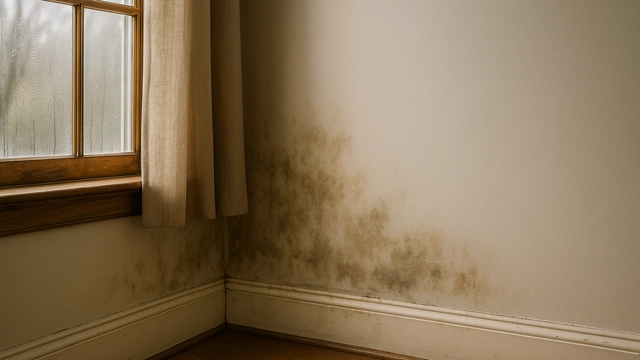
Wherever water lingers, mold finds opportunity. A minor pipe leak, a roof that drips only during storms, condensation that forms every morning on a bedroom window—each can begin the slow transformation of a dry surface into a hospitable home for fungal growth. Even after surfaces appear dry, moisture can remain within building materials long enough for mold to persist or reawaken when humidity rises again.
This is why people often clean a wall only to find the same spot darkening weeks later. The stain is not the problem; the moisture behind it is.

Addressing the Problem: When Cleaning Is Enough—and When It Isn’t
Small, isolated patches of mold on hard surfaces can usually be removed with careful cleaning and thorough drying. The key is not just scrubbing away the visible growth, but ensuring that the surface and the surrounding air lose their excess moisture. If the same area continues to darken or the smell returns, moisture is still entering the space.
More extensive contamination—spreading across walls, ceilings, carpeting, or structural elements—requires a different approach. In such situations, the real work begins not with removal, but with locating the source of water: a hidden leak, a structural weakness, or a ventilation issue. Without that step, any cleaning is temporary.
Prevention Is Less About Killing Mold and More About Managing Moisture
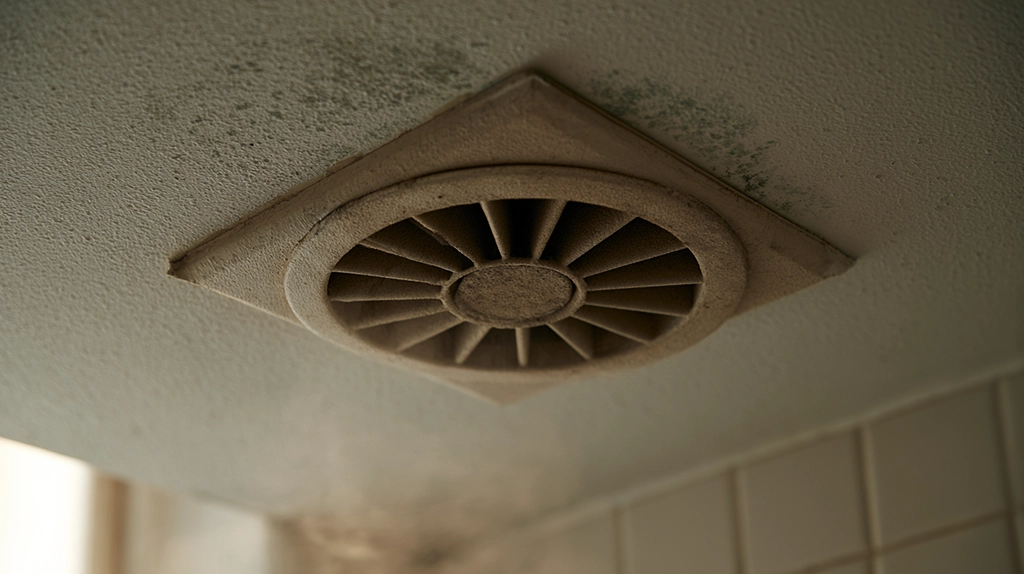
A home becomes resistant to mold not by eliminating spores—they are everywhere—but by maintaining conditions where spores cannot take hold. Good ventilation allows rooms to dry after showers or cooking. Balanced humidity prevents windows from collecting beads of water that soak into frames. Spaces that feel “stuffy” or chronically damp often benefit from improved air circulation or adjustments to how air flows through the home.
Mold thrives on opportunity. Reducing those opportunities is the most reliable form of prevention.
References
Academic & Medical
- Mendell, M. J., et al. (2011). Respiratory and allergic health effects of dampness, mold, and dampness-related agents. Environmental Health Perspectives. https://doi.org/10.1289/ehp.1002410
- World Health Organization. (2009). WHO guidelines for indoor air quality: dampness and mould.
Official Sources
- WHO — https://www.who.int/
- CDC Mold Guidance — https://www.cdc.gov/mold/
- EPA Indoor Air Quality — https://www.epa.gov/indoor-air-quality-iaq
Key Takeaways
- Most people meet mold only in passing: a shadow in the shower corner, a faint musty smell drifting from a forgotten box, a stain that wasn’t there last month.
- For many people, the first signs resemble seasonal discomfort: a persistent runny nose, itchy eyes, a tickle in the throat, or a cough that seems out of place.
- Adults and children alike may experience heightened stress or mood changes when mold lingers in their surroundings—effects that surface slowly, almost imperceptibly, as days in a damp environment accumulate.
- Any mold growing indoors can contribute to respiratory irritation, chronic inflammation, or cognitive strain if people live around it for long enough.
- People usually sense a change before they see it—a dense, earthy odor, a humid heaviness in a room, a stain that shifts in color or texture.Occasionally the signs remain invisible until materials are disturbed.
Frequently Asked Questions
How the Body Responds to a Moldy Environment?
Exposure to mold rarely announces itself dramatically. For many people, the first signs resemble seasonal discomfort: a persistent runny nose, itchy eyes, a tickle in the throat, or a cough that seems out of place. Those with allergies or asthma tend to feel these shifts more quickly, as though the
What should you know about black Mold and the Question of Risk?
Few phrases create as much unease as “black mold.” The term generally refers to Stachybotrys chartarum, a species that prefers wet cellulose-rich materials such as cardboard, wood, and gypsum board. Its dark appearance and past headlines have cemented its reputation as uniquely dangerous.But special
What should you know about recognizing Mold When It Doesn’t Want to Be Seen?
Mold is not always easy to spot. It often grows behind wallpaper, beneath carpet padding, inside cabinetry, or within corners where light seldom reaches. People usually sense a change before they see it—a dense, earthy odor, a humid heaviness in a room, a stain that shifts in color or texture.Occasi
Why Mold Appears: The Story Always Leads Back to Moisture?
Wherever water lingers, mold finds opportunity. A minor pipe leak, a roof that drips only during storms, condensation that forms every morning on a bedroom window—each can begin the slow transformation of a dry surface into a hospitable home for fungal growth. Even after surfaces appear dry, moistur
What should you know about addressing the Problem: When Cleaning Is Enough—and When It Isn’t?
Small, isolated patches of mold on hard surfaces can usually be removed with careful cleaning and thorough drying. The key is not just scrubbing away the visible growth, but ensuring that the surface and the surrounding air lose their excess moisture. If the same area continues to darken or the smel