
From Cannabis Fields to Fungal Labs
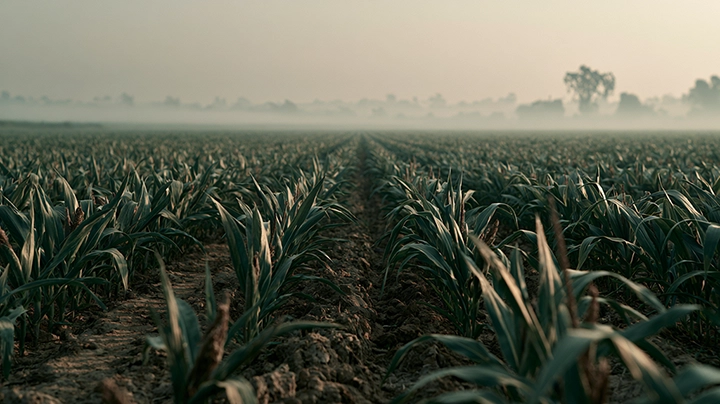
Once upon a time, cannabinoids came only from a carefully tended cannabis plant, coaxed to flower by farmers in fields or under the glow of grow lamps. That era is fading fast. Thanks to a new wave of synthetic biology, scientists are turning to an unlikely new “grower”—fungi. In a move that blends old wisdom with cutting-edge biotech, researchers are transforming yeasts and molds into microfactories, able to churn out cannabinoids such as CBD and THC without a cannabis leaf in sight.
The potential here is as striking as it is strange: what if the next wave of cannabinoid medicines, painkillers, or anxiety treatments were brewed in fermentation tanks, not grown from seed?

— Source: Wikimedia Commons
What’s Being Engineered—And Why
The answer lies in the bottlenecks of the Cannabis sativa plant itself. Traditional cultivation is resource-hungry, slow, and highly regulated. Growing rare cannabinoids means extra plants, more land, and often disappointing yields. Extraction and purification require heavy processing, and legal hurdles make consistency and quality a constant headache.
Enter the fungal revolution. Using CRISPR-Cas9 gene editing, modular biosynthetic pathways, and strain engineering, researchers have begun to equip common lab fungi—such as Saccharomyces cerevisiae (baker’s yeast) and Aspergillus nidulans—with the full suite of genes needed to synthesize cannabinoids from basic carbon sources. Instead of waiting months for a harvest, scientists can now prompt a tank of yeast to produce cannabinoids in days, under tightly controlled and scalable conditions.
What’s truly game-changing is the versatility of this system. Engineered fungi can be programmed not only to make common cannabinoids like cannabidiol (CBD) and Δ9-tetrahydrocannabinol (THC), but also rarer compounds such as cannabigerol (CBG), cannabinol (CBN), and tetrahydrocannabivarin (THCV)—molecules under investigation for epilepsy, chronic pain, inflammation, and neurodegenerative disorders.
Why Fungi?
Fungi have long been pharmaceutical chemistry’s quiet champions. Penicillin, statins, and cyclosporine all originated from fungal metabolism. What sets fungi apart in the cannabinoid arena is their metabolic flexibility, genetic tractability, and compatibility with industrial fermentation.
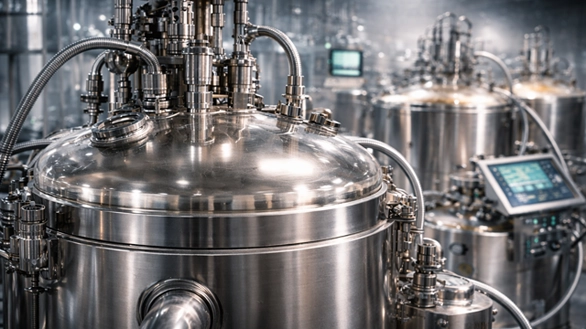
In stainless-steel bioreactors, fungi convert simple sugars into complex secondary metabolites with remarkable efficiency. Unlike plant cultivation, fungal fermentation does not depend on climate, soil, or seasons. It fits seamlessly into existing pharmaceutical manufacturing infrastructure.
There is also a compelling sustainability argument. Compared with cannabis agriculture—which consumes significant land, water, electricity, fertilizers, and pesticides—fungal production drastically reduces environmental impact. No greenhouses, no agricultural runoff, no harvest waste. From a life-cycle perspective, mycofactories offer a far smaller carbon footprint.

— Source: Wikimedia Commons (Public Domain)
Applications and Implications
The implications extend well beyond recreational or wellness markets.
For the pharmaceutical industry, fungal platforms promise consistent, pharmaceutical-grade cannabinoids with precise dosing—essential for clinical trials and regulated medicines. Rare cannabinoids, once too scarce or expensive to study, become accessible at scale.
From an environmental standpoint, “brewed” cannabinoids reduce land use, water demand, and chemical inputs, aligning drug production with sustainability goals.
Scientifically, the platform enables exploration of novel cannabinoids—molecules not found in nature but designed for specific therapeutic profiles. This opens the door to treatments with improved safety, reduced psychoactivity, or entirely new mechanisms of action.
Still, challenges remain. Cannabinoids can be toxic to the host cells that produce them, limiting yield. Metabolic burden, pathway instability, regulatory uncertainty, and scale-up complexities continue to shape the field. Yet, as with antibiotics and insulin before them, these obstacles resemble engineering problems—difficult, but solvable.
Donna’s Perspective: Progress and Its Questions
Reading this, I’m struck by how quickly our definitions of “natural” and “medicine” are shifting. There’s excitement in imagining cannabinoid therapies tailored to individual needs, produced anywhere in the world, independent of land or climate. But there is also a pause—a moment to ask what patients value and trust.
Will “nature-identical” cannabinoids be embraced as fully as plant-derived ones? What does it mean to cultivate healing in a bioreactor rather than a field? These questions are not scientific barriers, but cultural ones.
Still, fungi have always thrived in the spaces we overlook. That they may now anchor the next chapter of medicine feels fitting—quiet, efficient, and transformative. The future of cannabinoids may look less like a greenhouse and more like a laboratory, but the wonder remains the same.
References
Academic
- Luo, X., et al. (2019). Complete biosynthesis of cannabinoids and their unnatural analogues in yeast. Nature, 567, 123–126.
DOI: https://doi.org/10.1038/s41586-019-0978-9 - Valliere, M. A., et al. (2023). Engineering microbial platforms for cannabinoid biosynthesis. Trends in Biotechnology, 41(2), 145–158.
DOI: https://doi.org/10.1016/j.tibtech.2022.09.004
Official / Authoritative
- NIH – Cannabinoids and health
https://www.nccih.nih.gov/health/cannabis-cannabinoids - FDA – Cannabis and cannabis-derived compounds
https://www.fda.gov/news-events/public-health-focus/fda-and-cannabis
Key Takeaways
- Once upon a time, cannabinoids came only from a carefully tended cannabis plant, coaxed to flower by farmers in fields or under the glow of grow lamps.
- In a move that blends old wisdom with cutting-edge biotech, researchers are transforming yeasts and molds into microfactories, able to churn out cannabinoids such as CBD and THC without a cannabis leaf in sight.
- The answer lies in the bottlenecks of the Cannabis sativa plant itself.
- Extraction and purification require heavy processing, and legal hurdles make consistency and quality a constant headache.
- What’s truly game-changing is the versatility of this system.
Frequently Asked Questions
What should you know about from Cannabis Fields to Fungal Labs?
Once upon a time, cannabinoids came only from a carefully tended cannabis plant, coaxed to flower by farmers in fields or under the glow of grow lamps. That era is fading fast. Thanks to a new wave of synthetic biology, scientists are turning to an unlikely new “grower”—fungi. In a move that blends
What’s Being Engineered—And Why?
The answer lies in the bottlenecks of the Cannabis sativa plant itself. Traditional cultivation is resource-hungry, slow, and highly regulated. Growing rare cannabinoids means extra plants, more land, and often disappointing yields. Extraction and purification require heavy processing, and
Why Fungi?
Fungi have long been pharmaceutical chemistry’s quiet champions. Penicillin, statins, and cyclosporine all originated from fungal metabolism. What sets fungi apart in the cannabinoid arena is their metabolic flexibility, genetic tractability, and compatibility with industrial fer
What should you know about applications and Implications?
The implications extend well beyond recreational or wellness markets.
What should you know about donna’s Perspective: Progress and Its Questions?
Reading this, I’m struck by how quickly our definitions of “natural” and “medicine” are shifting. There’s excitement in imagining cannabinoid therapies tailored to individual needs, produced anywhere in the world, independent of land or climate. But there is also a pause—a moment to ask what patient