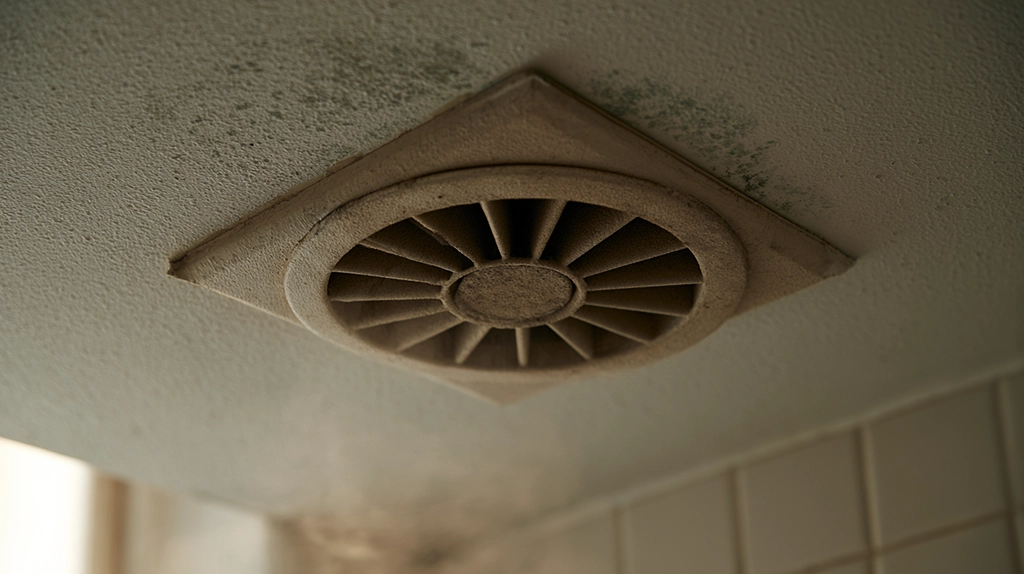

In the quest to combat mold in homes, factories, or storage facilities, one of the most tempting solutions is reaching for a chemical agent—spray it, wipe it, and the mold is gone. But is there truly a “one-and-done” compound that permanently kills mold? The short answer: no. Synthetic compounds can kill or suppress mold, but they cannot eliminate the underlying conditions that allow mold to regrow. In this article, we explore how chemical agents work at the molecular level, their strengths and limitations, and why they must be paired with environmental control for lasting results.
1. The Mechanisms: How Chemical Agents Attack Mold

Molds are fungal organisms with cell walls composed of chitin, β-glucans and a lipid-rich cell membrane. To interfere with mold growth or kill it, synthetic agents use a few principal routes:
- Oxidative destruction: Agents such as sodium hypochlorite (bleach) or hydrogen peroxide act by oxidizing fungal cell membranes and inactivating enzymes. However, according to the U.S. Environmental Protection Agency (EPA), bleach is not recommended for routine mold remediation, because while it may kill surface mold, it cannot reach mold roots in porous materials and the spores will remain.
- pH/Auxiliary environment disruption: Acidic compounds (e.g., acetic acid) or borate salts alter the local environment so mold metabolism is impaired. Yet their effect is often surface-limited and time-bound.
- Metal/ion interference & biocide embedding: Compounds containing metal ions like copper (Cu²⁺), silver (Ag⁺), or quaternary ammonium compounds (QACs) disrupt fungal membranes or enzyme systems, or are embedded in materials to provide long-term suppression. For example, QACs are widely used in coatings as antimicrobial agents.
These mechanisms show that chemical agents work, but their effectiveness depends heavily on material, penetration, concentration, contact time, and the substrate’s nature. They suppress—they rarely eradicate completely.
2. A Comparison of Common Synthetic Mold-Control Agents
Below is a comparison of several widely-used synthetic agents, highlighting their practical benefits and limitations:
- Bleach (Sodium hypochlorite): Rapidly kills mold on non-porous surfaces like tile or glass. However it cannot penetrate drywall or wood; water in the bleach may carry chlorine away while leaving moisture behind, enabling regrowth.
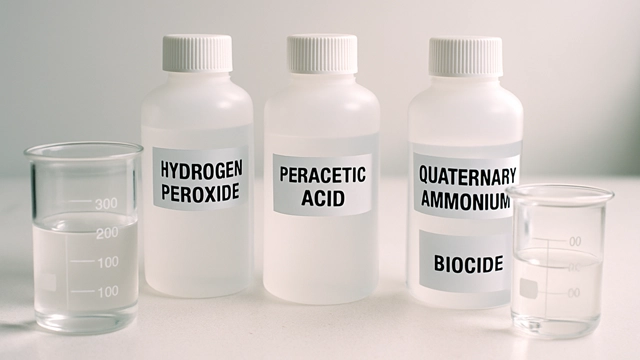
- Hydrogen peroxide / peracetic acid: These oxidizing agents are less corrosive and more environmentally friendly than bleach, but they also suffer from short contact time, rapid decomposition and limited residual action.
- Acetic acid / borate salts (e.g., borax): These compounds alter the pH or residual nutrient conditions; they are useful on some surfaces but weaker overall, and seldom “kill” spores deeply embedded.
- Quaternary ammonium compounds (QACs) / antimicrobial coatings: These materials offer longer-term suppression by binding biocide to material matrices or by incorporating nanoparticles; research shows broad-spectrum antimicrobial action including fungi.
- Metal-ion embedded materials (silver, copper): These are used mostly in industrial or material-engineering contexts (e.g., wood preservatives, coatings) rather than standard household sprays. Their cost, material compatibility and safety profile limit home use.
In summary: every chemical can play a role—but none acts as a universal, permanent “mold eraser.” Material type, environment, and maintenance all matter.
3. From Cleaning to Material Engineering: The Next Step
Chemical mold control has evolved beyond simple sprays into embedded systems and material design. For example, coatings now incorporate QACs that are chemically bonded to polymer matrices to avoid rapid loss of activity. Such coatings provide continuous antimicrobial action, making them suitable for construction, healthcare settings or furniture. Similarly, building materials can include copper-quat combinations or slow-release biocides for wood or drywall systems.
But even these advanced systems are not stand-alone solutions. They reduce the risk of mold growth, but they do not replace the need for moisture control, ventilation, substrate integrity, and cleaning. Simply embedding chemicals without addressing humidity, leaks, or nutrient sources is like applying a band-aid to a systemic issue.
4. Safety, Resistance and Environmental Considerations

The adoption of chemical agents also carries responsibilities and risks. Bleach, for instance, can produce volatile by-products and is not endorsed by the EPA for mold control because the underlying moisture problem remains.
QACs raise further concerns: recent research highlights potential for microbial resistance, persistence in wastewater, and ecological impact.
Regulatory frameworks—such as the REACH program in Europe, or biocide registration in the U.S.—now require rigorous assessment of toxicity, user exposure, and material compatibility. The trend is moving toward lower-toxicity alternatives, such as modified organic acids, plant-derived compounds, or hybrid systems combining mechanical/architectural control with chemical backup.
Chemistry Helps—but Control Wins
In the end, synthetic chemical compounds are powerful tools—but they do not constitute a complete solution to mold. They act as suppression systems, not permanent eradication. Without changing the environmental conditions—humidity, substrate, airflow, nutrient load—mold can and will return.
A robust mold-control strategy therefore combines three pillars:
- Structural/material design — selecting non-porous or treated substrates, ensuring drainage, embedding biocides appropriately.
- Chemical intervention — choosing the right agent for the right substrate, understanding penetration and action.
- Environmental control — managing moisture, airflow, nutrient sources, and habit maintenance.
Chemistry kills spores; science prevents their return. When you understand that it’s not about obliterating mold—but denying the conditions to grow, you gain real control. Mold might be persistent, but with smart design, smart chemistry, and smart maintenance, you can keep it under check.
Key Takeaways
- In the quest to combat mold in homes, factories, or storage facilities, one of the most tempting solutions is reaching for a chemical agent—spray it, wipe it, and the mold is gone.
- Synthetic compounds can kill or suppress mold, but they cannot eliminate the underlying conditions that allow mold to regrow.
- To interfere with mold growth or kill it, synthetic agents use a few principal routes:
- Below is a comparison of several widely-used synthetic agents, highlighting their practical benefits and limitations:
- For example, coatings now incorporate QACs that are chemically bonded to polymer matrices to avoid rapid loss of activity.
Frequently Asked Questions
What should you know about 1. The Mechanisms: How Chemical Agents Attack Mold?
Molds are fungal organisms with cell walls composed of chitin, β-glucans and a lipid-rich cell membrane. To interfere with mold growth or kill it, synthetic agents use a few principal routes:
What should you know about 2. A Comparison of Common Synthetic Mold-Control Agents?
Below is a comparison of several widely-used synthetic agents, highlighting their practical benefits and limitations:
What should you know about 3. From Cleaning to Material Engineering: The Next Step?
Chemical mold control has evolved beyond simple sprays into embedded systems and material design. For example, coatings now incorporate QACs that are chemically bonded to polymer matrices to avoid rapid loss of activity. Such coatings provide continuous antimicrobial action, making them suitable for
What should you know about 4. Safety, Resistance and Environmental Considerations?
The adoption of chemical agents also carries responsibilities and risks. Bleach, for instance, can produce volatile by-products and is not endorsed by the EPA for mold control because the underlying moisture problem remains.QACs raise further concerns: recent research highlights potential
What should you know about chemistry Helps—but Control Wins?
In the end, synthetic chemical compounds are powerful tools—but they do not constitute a complete solution to mold. They act as suppression systems, not permanent eradication. Without changing the environmental conditions—humidity, substrate, airflow, nutrient load—mold can and will return.