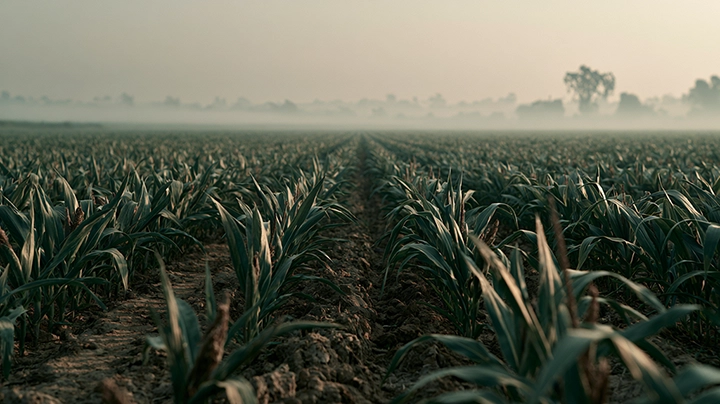

In the realm of plant pathology, the “disease triangle“ has long served as a conceptual compass: three elements—host, pathogen, and environment—must align for disease to occur. But as climate change reshapes ecosystems and pathogen behavior evolves, scientists are discovering that this triangle may not be as rigid as once thought. A growing body of research now suggests a fourth player may be weaving its way through all three corners: SUMOylation.
In a recent review article, scientists have positioned SUMOylation, a post-translational modification involving the attachment of Small Ubiquitin-like Modifier (SUMO) proteins to target proteins, as a molecular integrator across plant stress responses, pathogen virulence, and environmental triggers. Far from being a passive background process, SUMOylation may be the hidden regulatory force tuning the immune responses of both plants and their pathogenic adversaries.
What is SUMOylation, and Why Does It Matter?
SUMOylation is a biochemical switch that alters the structure, localization, or interaction of proteins after they’ve been made. In plants, it’s already recognized for roles in abiotic stress responses such as drought, salinity, and oxidative damage. But this new synthesis reveals its underappreciated importance in biotic stress—particularly fungal infections.
The review sheds light on Magnaporthe oryzae, the rice blast fungus, as a case study. Under oxidative and osmotic stress, M. oryzae ramps up its SUMOylation machinery, boosting its survival and infectivity. When researchers disrupted key SUMO pathway genes in the fungus, its ability to grow and cause disease dropped dramatically. This finding flips the narrative: SUMOylation is not just a host defense strategy—it’s also a pathogen weapon.

SUMOylation in a Climate-Challenged World
As climate change intensifies, the interactions between plants, pathogens, and their environment are becoming more volatile. Extreme weather events, prolonged droughts, and unpredictable temperature swings are all abiotic stressors that weaken plant defenses and complicate pathogen behavior.
SUMOylation appears to act as a molecular buffer under such stress, enabling plants to maintain immune function even in compromised conditions. Simultaneously, it may be helping fungi amplify their virulence precisely when plants are most vulnerable. This bidirectional role makes SUMOylation not a neutral player, but a determinant of disease outcome in a destabilized biosphere.
Redefining the Disease Triangle
Traditionally, the plant disease triangle has been depicted as static geometry: disease requires alignment of a susceptible host, a virulent pathogen, and favorable environmental conditions. But this review reframes the triangle as a feedback-responsive system in which SUMOylation acts as a real-time modulator of interactions.
SUMOylation can influence all three axes:
- Host susceptibility: by modulating plant defense signaling and stress responses.
- Pathogen adaptation: by enhancing fungal survival and invasiveness under stress.
- Environmental response: by altering how both plant and pathogen perceive and respond to external cues.

In this model, SUMOylation acts like a biological algorithm that recalibrates disease potential as conditions shift. Understanding this dynamic opens the door to predictive disease modeling and more adaptive crop protection strategies.
Experimental Evidence: SUMO Pathway and Pathogenicity
Below is experimental evidence from Magnaporthe oryzae: disruption of the MoMaf1 gene (a SUMO pathway regulator) reduces pathogenicity compared to wild type, as shown by fewer and smaller lesions on rice leaves.

From Molecule to Field: Implications for Agriculture
For plant breeders, SUMOylation provides a promising target. If crops can be engineered or selected for tuned SUMO pathway activity, they may become more resilient to both abiotic stress and fungal attack—a rare dual trait that could be critical in an era of climate unpredictability.
For disease management, fungicides that target pathogen SUMOylation systems could weaken virulence without necessarily killing the pathogen outright, reducing the risk of resistance development. This opens the door for a new class of molecularly informed antifungal agents.
For policy makers, forecasting models that incorporate SUMOylation signatures could offer earlier warning of disease outbreaks tied to environmental stress events, enabling better resource allocation and climate-adaptive planning.

The New Frontier in Basic Research
What this review also makes clear is that SUMOylation’s influence is under-mapped. Its crosstalk with other post-translational modifications (like ubiquitination and phosphorylation), its species-specific roles across different fungal pathogens, and its timeline of activity during plant-pathogen interactions all remain largely unexplored.
There is enormous potential in building detailed SUMOalome atlases across crop species and pathogens. These could become foundational tools for systems biology approaches to plant immunity—ones that move beyond single genes or pathways to consider regulatory networks under real-world conditions.
In the high-stakes era of climate-accelerated crop disease, SUMOylation offers more than an academic curiosity. It emerges as a keystone mechanism that helps explain why some plants resist disease in hostile conditions while others succumb. It offers answers to questions we didn’t yet know to ask: Why do certain pathogens become hyper-virulent after storms? Why do previously resistant crops fail under heatwaves?
By repositioning SUMOylation at the center of plant-pathogen-environment interactions, this review doesn’t just extend the triangle—it animates it. The future of plant immunity may depend less on holding disease at bay, and more on understanding the molecular switchboards that govern every cellular decision made under stress.
With SUMOylation as our lens, plant immunity is no longer a static defense. It becomes a negotiation between chaos and control—a molecular dance of adaptation in an increasingly uncertain world.
References
- Verma V. et al. (2021). SUMOylation: A regulatory hub in plant stress and immunity. Frontiers in Plant Science. PMC
- Nayak A. et al. (2020). SUMOylation machinery in Magnaporthe oryzae and its role in pathogenicity.Molecular Plant-Microbe Interactions. PubMed
- IPCC. Climate Change Reports. IPCC
Key Takeaways
- In the realm of plant pathology, the “disease triangle“ has long served as a conceptual compass: three elements—host, pathogen, and environment—must align for disease to occur.
- A growing body of research now suggests a fourth player may be weaving its way through all three corners: SUMOylation.
- In plants, it’s already recognized for roles in abiotic stress responses such as drought, salinity, and oxidative damage.
- The review sheds light on Magnaporthe oryzae, the rice blast fungus, as a case study.
- This finding flips the narrative: SUMOylation is not just a host defense strategy—it’s also a pathogen weapon.
Frequently Asked Questions
What is SUMOylation, and Why Does It Matter?
SUMOylation is a biochemical switch that alters the structure, localization, or interaction of proteins after they’ve been made. In plants, it’s already recognized for roles in abiotic stress responses such as drought, salinity, and oxidative damage. But this new synthesis reveals its un
What should you know about sUMOylation in a Climate-Challenged World?
As climate change intensifies, the interactions between plants, pathogens, and their environment are becoming more volatile. Extreme weather events, prolonged droughts, and unpredictable temperature swings are all abiotic stressors that weaken plant defenses and complicate pathogen behavior.
What should you know about redefining the Disease Triangle?
Traditionally, the plant disease triangle has been depicted as static geometry: disease requires alignment of a susceptible host, a virulent pathogen, and favorable environmental conditions. But this review reframes the triangle as a feedback-responsive system in which SUMOylation acts as a real-tim
What should you know about experimental Evidence: SUMO Pathway and Pathogenicity?
Below is experimental evidence from Magnaporthe oryzae: disruption of the MoMaf1 gene (a SUMO pathway regulator) reduces pathogenicity compared to wild type, as shown by fewer and smaller lesions on rice leaves.
What should you know about from Molecule to Field: Implications for Agriculture?
For plant breeders, SUMOylation provides a promising target. If crops can be engineered or selected for tuned SUMO pathway activity, they may become more resilient to both abiotic stress and fungal attack—a rare dual trait that could be critical in an era of climate unpredictability.