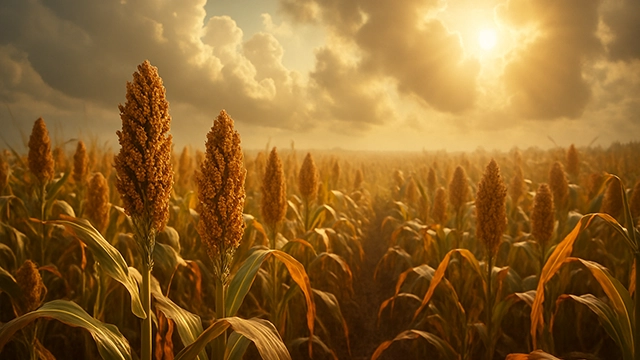
Sorghum is often cast as the rugged survivor of the grain world. It grows where others fail—on cracked, sunbaked soil, under relentless skies. In regions where drought is routine and climate volatility is the norm, sorghum has become both lifeline and staple. But what happens when this tough crop meets a force equally persistent, yet far more insidious? Enter: Fusarium.

In the heat of summer, while the sun bakes the earth and moisture lingers just long enough to dampen the grain, Fusarium graminearum and Fusarium proliferatum begin their quiet invasion. Invisible to the eye, these fungi colonize sorghum grains and release toxins that pose a serious risk to global food systems. A recent study has pulled back the curtain on how these fungal agents behave—and what the findings reveal isn’t just academic. It’s a warning.
A Climate-Driven Equation: Temperature, Humidity, and Toxicity
The study in question set out to answer a fundamental question: under what conditions do F. graminearum and F. proliferatum grow and, more importantly, produce mycotoxins in sorghum? To simulate real-world environments, researchers exposed the fungi to combinations of temperature (15°C, 25°C, 30°C) and water activity (aw = 0.95, 0.98, 0.995)—a proxy for grain moisture.

The result? Both fungi can grow across a wide range of temperatures. F. graminearum thrived at 25–30°C. F. proliferatum preferred 30°C. In short, summer is their season.
But the real threat wasn’t just growth—it was what came after. At high humidity (aw ≥ 0.98), both species began to synthesize a cocktail of mycotoxins: DON (deoxynivalenol), ZEN (zearalenone), NIV, 15-AcDON, 3-AcDON, FB1 and FB2 (fumonisins). These aren’t harmless byproducts. They’re chemically stable, biologically potent compounds linked to gastrointestinal disorders, immune suppression, and even carcinogenic effects.
And they don’t go away with cooking.
The Illusion of Safety: When Grains Look Fine but Kill Quietly
Here’s the subtlety that complicates things: growth and toxin production are not the same. A fungal colony might thrive on grain without producing measurable toxins—until a slight shift in temperature or humidity flips the switch. That means a clean-looking sorghum harvest can carry biochemical threats invisible to the naked eye. By the time contamination is detected, it’s often too late. This study marks the first time researchers have directly mapped how these two Fusarium species behave on sorghum itself. It’s a granular dataset that gives regulators, producers, and scientists a more precise model for predicting risk. And as our climate trends toward hotter, wetter summers, those predictions become more than theoretical—they become survival tools.

Silos as Incubators: The Post-Harvest Problem
While much attention is paid to disease management during the growing season, this research highlights an oft-overlooked vulnerability: post-harvest storage. If grains are not dried rapidly or stored in well-ventilated, humidity-controlled environments, fungal colonization can escalate quickly. A poorly managed silo becomes an incubator, turning a heatwave into a food safety crisis.

And it’s not just about the individual farmer. For exporters, the presence of mycotoxins—even in trace amounts—can derail entire shipments. Many countries enforce strict maximum allowable levels for compounds like DON and fumonisins. Fail those tests, and you’re looking at financial loss, regulatory penalties, or damaged brand trust.
Redefining Resilience: From Agronomy to Toxicology
Sorghum has long been labeled “climate-resilient.” But this study forces us to ask: resilience against what? If a crop survives drought but succumbs to fungal toxicity after harvest, can we still call it resilient?
True resilience must now include fungal resistance and mycotoxin mitigation. That means rethinking breeding priorities, improving drying technologies, and deploying real-time environmental monitoring systems that detect fungal thresholds in storage facilities.
The Mycelial Message: Time, Temperature, and the Cost of Delay
One of the most powerful takeaways from the study is that time matters. The longer sorghum sits in humid, warm environments, the higher the probability of contamination. Monitoring efforts must therefore move from reactive to predictive. Storage facilities should be equipped not just with thermometers and moisture meters, but with early-warning systems tied to fungal behavior models.
This is where interdisciplinary research becomes crucial. Agronomy, mycology, climatology, and supply chain logistics are no longer separate silos—they must operate as one fungal-aware network.
The MoldNews Verdict: A Crisis in the Making—Unless We Act
This isn’t about fear. It’s about foresight. The fungi are not waiting for permission to act—they’re already here, tuned to the signals of seasonal humidity and harvest timing. If we don’t build systems that respond just as quickly, we’re letting a slow, invisible crisis ferment beneath our feet.
Sorghum’s future remains bright—but only if we match its strength with ours. Because summer isn’t just hot anymore. It’s fungal.
References
Academic
- Zhang, L., et al. (2023). Interaction of Fusarium species and mycotoxin production in sorghum under temperature and humidity shifts. Food Microbiology, Elsevier. Link
Official
- FAO (2022). Mycotoxin contamination in cereals and global food safety. FAO Website
Key Takeaways
- Summer heat and humidity create ideal conditions for Fusarium and Aspergillus infection of sorghum grain, with aflatoxin and fumonisin contamination increasing under high-temperature, drought-stressed growing conditions.
- Drought stress in sorghum paradoxically increases mycotoxin contamination risk—plants stressed by water limitation have compromised physical and biochemical defenses against Aspergillus infection, and warm temperatures simultaneously favour aflatoxin production.
- Aflatoxins produced by Aspergillus flavus in heat-stressed sorghum represent a direct food safety risk—these potent liver carcinogens are regulated globally and can cause rejection of contaminated grain shipments.
- Fumonisins from Fusarium verticillioides and related species are among the most economically and toxicologically significant mycotoxins in sorghum-growing regions, with links to esophageal cancer and neural tube defects in high-exposure populations.
- Early-maturing sorghum varieties that complete grain development and can be harvested before the hottest, driest summer conditions represent one of the most practical field management tools for reducing mycotoxin risk.
Frequently Asked Questions
Why does summer heat and humidity increase mold and mycotoxins in sorghum?
The combination of heat and humidity during the sorghum grain filling and maturation period creates conditions that are highly favourable for fungal infection and mycotoxin production while simultaneously stressing the plant’s natural defenses. Fungal biology in hot, humid conditions: Aspergillus flavus—the primary aflatoxin producer—grows optimally at 35–38°C, precisely the temperatures reached in sorghum-growing regions during grain fill; infection of sorghum grain by A. flavus is facilitated by: high temperature opening grain pericarp through physical stress (cracking), creating entry points for fungal hyphae; insect damage (particularly from sorghum midge) creating wound entry sites; silk and other plant surface desiccation that reduces the protective moisture film that inhibits fungal penetration. Fusarium verticillioides—the primary fumonisin producer—produces fumonisins most actively at high temperatures (25–32°C); infection occurs through silk channels and kernel wounds; fumonisin production is stimulated by temperature fluctuations and plant stress. The drought-aflatoxin paradox: drought stress during grain fill dramatically increases aflatoxin risk through multiple pathways: stressed plants produce fewer antifungal compounds (phenolics, chitinases); drought increases soil dust dispersal (carrying A. flavus spores); insect damage increases under stressed conditions; and simultaneously, the intermittent heat of drought conditions is optimal for A. flavus growth when any moisture does become available during irrigation or sporadic rain.
What are the health effects of eating mycotoxin-contaminated sorghum?
Sorghum contaminated with the major mycotoxins—aflatoxins, fumonisins, deoxynivalenol (DON), and zearalenone—poses documented health risks that range from acute poisoning to chronic cancer risk and developmental effects. Aflatoxin health effects: acute aflatoxicosis—at very high exposures, aflatoxins cause acute liver disease (aflatoxicosis) with jaundice, liver failure, and potentially death; outbreaks of acute aflatoxicosis have been documented in East Africa (Kenya 2004, outbreak with 317 cases and 125 deaths from highly contaminated maize). Chronic aflatoxin exposure—the most significant global health concern; aflatoxin B1 is classified as a Group 1 human carcinogen by IARC; it forms DNA adducts in liver cells, causing mutations in the TP53 tumour suppressor gene; chronic dietary aflatoxin exposure is a major risk factor for hepatocellular carcinoma (liver cancer), particularly in co-exposure with hepatitis B virus; aflatoxin is estimated to contribute to 4.6–28% of global liver cancer cases (Groopman et al., 2008). Fumonisin health effects: oesophageal cancer association—epidemiological studies in Transkei (South Africa) and Huaian County (China) found correlations between fumonisin-contaminated maize consumption and high oesophageal cancer rates; experimental evidence: fumonisins inhibit ceramide synthesis, disrupting sphingolipid metabolism with potential carcinogenic consequences. Neural tube defects—a controversial association: fumonisins can inhibit folate cellular transport by blocking folate receptors; epidemiological studies in Guatemala and Texas-Mexico border regions have found associations between high fumonisin exposure and increased neural tube defect rates; biological mechanism is plausible.
How do farmers reduce mycotoxin contamination in sorghum?
Mycotoxin contamination management in sorghum requires integrated field management practices that address the fungal infection risk from pre-planting through post-harvest storage, as no single intervention eliminates risk. Pre-planting and variety selection: resistant varieties—some sorghum varieties have lower grain mold and mycotoxin contamination susceptibility due to hard pericarp, tighter grain heads, and biochemical resistance; ICRISAT has released grain mold-resistant sorghum varieties in several African and Asian countries; early-maturing varieties—selecting varieties that complete grain development before the peak high-temperature drought stress period reduces the overlap of susceptibility and contamination risk. Agronomic practices: irrigation management—supplemental irrigation during critical grain fill reduces drought stress and the associated drought-aflatoxin relationship; in irrigated systems, maintaining adequate soil moisture during grain fill is the most effective aflatoxin management practice. Fertilisation—adequate nitrogen nutrition maintains plant health and reduces susceptibility; however, excessive nitrogen can increase stalk lodging and insect pressure, so balanced nutrition is key. Insect management—controlling stem borer, sorghum midge, and other insects that cause kernel wounds reduces entry points for Aspergillus and Fusarium. Harvest timing—harvest at physiological maturity and dry down to storage moisture (< 13% grain moisture) as quickly as possible; delayed harvest in the field extends the period of potential fungal infection and mycotoxin accumulation. Post-harvest storage: drying—grain must be dried to < 13% moisture content (Aw < 0.70) within 48 hours of harvest; this is the most critical post-harvest step; solar dryers and mechanical dryers are used in different contexts. Hermetic storage—sealed storage bags (PICS bags, GrainPro bags) maintain low oxygen levels that inhibit Aspergillus growth; proven effective for aflatoxin management in small-scale farmer storage systems in Africa.
What are the regulatory limits for mycotoxins in sorghum?
Mycotoxin regulation in sorghum varies significantly by country and region, reflecting different risk assessments, analytical capacities, and trade policy considerations. US FDA (Food and Drug Administration) action levels for aflatoxins: total aflatoxins (B1+B2+G1+G2): 20 ppb (20 μg/kg) for human food; 20 ppb for feed for cattle and swine; lower limits for dairy cattle feed and poultry (20 ppb and 100 ppb respectively); these are action levels, not regulatory limits—FDA can take enforcement action against products exceeding these levels. EU maximum levels (Commission Regulation 1881/2006): aflatoxin B1: 5 μg/kg for cereals (including sorghum) for human consumption; total aflatoxins (B1+B2+G1+G2): 10 μg/kg for cereals for direct human consumption; EU limits are stricter than US limits, making EU market access more challenging for potentially contaminated grain from tropical regions. Fumonisins in sorghum: EU maximum levels: 4,000 μg/kg (4 ppm) total FB1+FB2 for unprocessed maize; sorghum is not explicitly covered by EU fumonisin regulations though the principles apply; US FDA guidance for fumonisins in corn: 2,000–4,000 ppb (2–4 ppm) for human food depending on product type; no specific sorghum limits but corn guidance is referenced. Deoxynivalenol (DON): EU: 1,750 μg/kg for unprocessed cereals; US: 1,000 ppb for finished wheat products; 10,000 ppb for grains for livestock. Trade implications: exceeding these limits can result in rejection of export shipments; Sub-Saharan African sorghum exports to EU markets have historically faced challenges with aflatoxin compliance.
How does climate change affect sorghum mycotoxin risk?
Climate change is expected to substantially alter mycotoxin contamination patterns in sorghum and other cereal crops through several interacting mechanisms that affect both the fungal pathogens and the host plant. Temperature effects: rising temperatures in sorghum-growing regions directly increase the risk of Aspergillus flavus infection and aflatoxin production; A. flavus optimal growth and aflatoxin production temperatures (35–38°C) will be more frequently reached in key producing regions; projections for major African sorghum-growing regions show average temperature increases of 1.5–4°C by 2050 under various emissions scenarios; both the frequency of individual high-temperature events (heat stress on the crop) and the average growing season temperature will increase. Rainfall pattern changes: more frequent and severe droughts in many sorghum-growing regions exacerbate the drought-aflatoxin relationship described above; more intense rainfall events following drought periods can increase Fusarium infection pressure; reduced rainfall reliability affects farmer decisions about irrigation and harvest timing. Modelling studies: Battilani et al. (2016, Nature Climate Change) modelled aflatoxin contamination in European maize under climate change scenarios; projections showed dramatic increases in aflatoxin contamination in southern Europe by mid-century; similar modelling for African sorghum systems shows comparable increases. Adaptation options: developing drought-tolerant and heat-tolerant sorghum varieties with maintained mold resistance; identifying Aspergillus resistance mechanisms that function under heat stress; expanding mycotoxin surveillance in currently low-risk regions to detect newly emerging contamination; climate-smart storage technologies (hermetic storage, modified atmosphere) to reduce post-harvest risk.