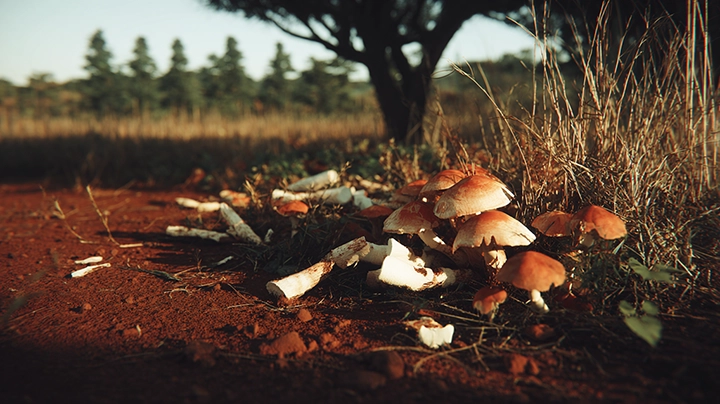
When biologists talk about biodiversity, they usually mean two things: plants and animals. Conservation funding, policy frameworks, and public awareness have been built around these visible kingdoms. Protected areas are designed to shelter iconic mammals and forest ecosystems. Biodiversity indices count species of trees, birds, and insects.
What’s missing from almost every framework? The fungi.
A growing movement among African scientists is working to change that — arguing that the world has been protecting ecosystems while systematically ignoring one of their most essential operating systems.
The Invisible Infrastructure
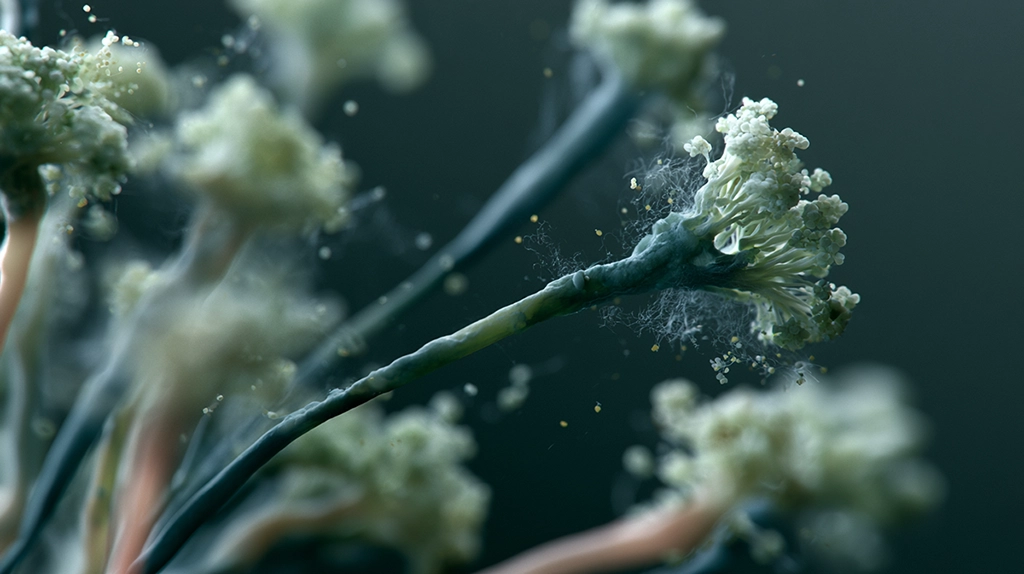
Underground, beneath every forest floor, fungi are doing work that no plant or animal can replicate. Through mycorrhizal networks, they extend the root systems of trees, ferrying phosphorus, nitrogen, and water across distances the roots themselves can’t reach. They break down dead organic matter into forms that plants can absorb. They bind soil particles together, influencing erosion resistance and carbon retention.
Remove the fungi, and the ecosystem above ground eventually collapses. Yet these organisms appear in no column of most biodiversity assessments, hold no protected status in most conservation agreements, and in many parts of Africa, haven’t even been formally described as species.
A Knowledge Gap Measured in Tens of Thousands of Species
The scale of what remains unknown is striking. In Madagascar alone, researchers estimate tens of thousands of fungal species may exist — but only a small fraction have been formally identified. Across much of sub-Saharan Africa, the situation is similar: a continent with some of the world’s most diverse ecosystems, where the fungal layer of those ecosystems remains largely unmapped.
This isn’t a minor research gap. It means that organisms playing foundational roles in forest structure, soil health, and agricultural productivity are being lost before scientists even know their names.

Scientists Building From the Ground Up
Researchers across Madagascar, Kenya, the Democratic Republic of the Congo, Zimbabwe, and Benin are working to change this — conducting field surveys, building specimen collections, and training the next generation of mycologists. These efforts are happening largely without the institutional support that plant and animal research has received for decades.
The challenge is layered. Fungal conservation isn’t like protecting a known endangered species. It requires, first, determining that species exist — then characterizing their ecological roles, then building the case for their conservation. Discovery and protection are happening simultaneously, often in resource-limited environments.
Why Policy Has Lagged
Conservation policy reflects what’s well-documented. Protected area boundaries are drawn around visible habitat types. Biodiversity monitoring protocols count species that scientists can see. Funding flows toward organisms with established taxonomies and public appeal.
Fungi don’t fit these frameworks — partly because they’re largely invisible, partly because the scientific capacity to study them has been limited, and partly because the case for their inclusion has never been formally assembled at the policy level. Researchers in this movement are now making that argument directly: treat fungi as a third major category of biodiversity, alongside flora and fauna, and push for their inclusion in international frameworks, environmental impact assessments, and conservation strategy documents.
Carbon, Climate, and the Fungal Connection
One dimension drawing broader scientific interest: the role of fungi in carbon dynamics. Mycorrhizal networks influence how carbon is transferred between plants and soil — and how much of it stays stored underground. As climate policy focuses increasingly on ecosystem-based carbon storage, the organisms regulating those stores deserve more careful accounting.
The relationship is complex and still being studied. But research is pointing in a consistent direction: fungal communities are not peripheral to carbon storage questions — they may be central to them.

What Recognition Would Change
If fungi gain formal recognition in biodiversity policy, the practical effects would be significant. Environmental impact assessments would need to account for fungal communities. Conservation funding would flow toward mycological survey work. Protected area management would incorporate soil and root-zone ecological health — not just above-ground habitat.
For African researchers, the stakes are especially high. The continent holds biodiversity that is still being discovered. Building scientific capacity now — before those species are lost — creates the foundation for conservation strategies that reflect the full complexity of African ecosystems.
The movement is asking a straightforward question: if we don’t know what’s there, how can we protect it?
Key African Fungal Species
Among the better-studied African fungal species: Termitomyces titanicus (one of the world’s largest edible mushrooms, cultivated within termite mounds across central Africa), Cantharellus densifolius (a chanterelle species of both ecological and culinary significance), and Amanita zambiana, important in woodland ecosystems of southern Africa. Ectomycorrhizal and arbuscular mycorrhizal fungi are among the most ecologically significant functional groups across the continent.
FAQ
Why are fungi often excluded from conservation efforts? Because they are less visible and less studied than plants and animals, fungi have historically received less attention in biodiversity policy. They lack the taxonomic baseline that most conservation frameworks rely on.
How much fungal biodiversity is actually known? Only a small fraction has been formally described. In many regions, including much of Africa, most fungal species remain undocumented — making any loss essentially invisible to science.
Do fungi play a role in climate systems? Yes. Fungi contribute to carbon cycling through interactions with plant roots and soils, though these contributions exist within a broader ecological system and are still being quantified.
What makes fungal conservation uniquely difficult? The absence of baseline data. You can’t develop a protection strategy for species you haven’t identified yet — which means conservation and discovery must happen simultaneously.
Why focus on Africa specifically? Africa hosts some of the world’s highest biodiversity but remains underrepresented in fungal science. It’s both where the knowledge gap is largest and where the scientific capacity-building opportunity is most significant.
References
African scientists lead a push to include fungi in biodiversity conservation. The Guardian, 14 April 2026. https://www.theguardian.com/environment/2026/apr/14/african-scientists-fungal-conservation-movement-aoe