According to Los Angeles Times
The Invisible Crisis: Redefining Home Design for Mold Prevention and Public Health
The modern architecture and interior design landscape is undergoing a profound, health-driven transformation, shifting its focus from mere aesthetics and energy efficiency to the critical issue of indoor air quality and mold prevention. A recent analysis reveals that what was once dismissed as a minor maintenance inconvenience—a patch of unsightly growth—has escalated into a central public health and design conversation, redefining the standards for what constitutes a truly healthy home. This paradigm shift addresses the “Invisible Design Problem” that can render the very space intended for shelter a source of illness, giving rise to the pervasive concern known as “Sick Home Syndrome”, a direct relative of Sick Building Syndrome.

Source: Wikimedia Commons, CC BY-SA 4.0
I. The Paradigm Shift: From Maintenance Nuisance to Design Crisis
For decades, the presence of mold in residential and commercial properties was typically categorized as a localized, post-construction maintenance issue, often attributed to specific leaks or isolated poor ventilation. Contemporary analysis, however, has recast this view. Mold is no longer just an “eyesore,” but a direct indicator of compromised structural integrity and, more critically, a significant threat to respiratory health and overall well-being. This reclassification has forced architects, builders, and designers to approach mold not as a post-occupancy repair, but as a fundamental consideration in the initial design and material selection phases.
The term “sick home” has emerged from the established “sick building syndrome” (SBS), but brings the crisis into a deeply personal, residential context. SBS historically referred to ailments linked to commercial office environments. Now, the realization that an individual’s most personal space—their home—can be the source of chronic illness has galvanized the design community. This problem often lurks unseen, concealed behind layers of drywall, beneath flooring, and within HVAC systems, making prevention the only viable long-term strategy. The conversation is no longer about visible cleanup; it is an “air-quality and material-choice conversation” centered on mitigating threats that are often invisible to the naked eye.
II. The Modern Home’s Vulnerability: Why Efficiency Breeds Contamination
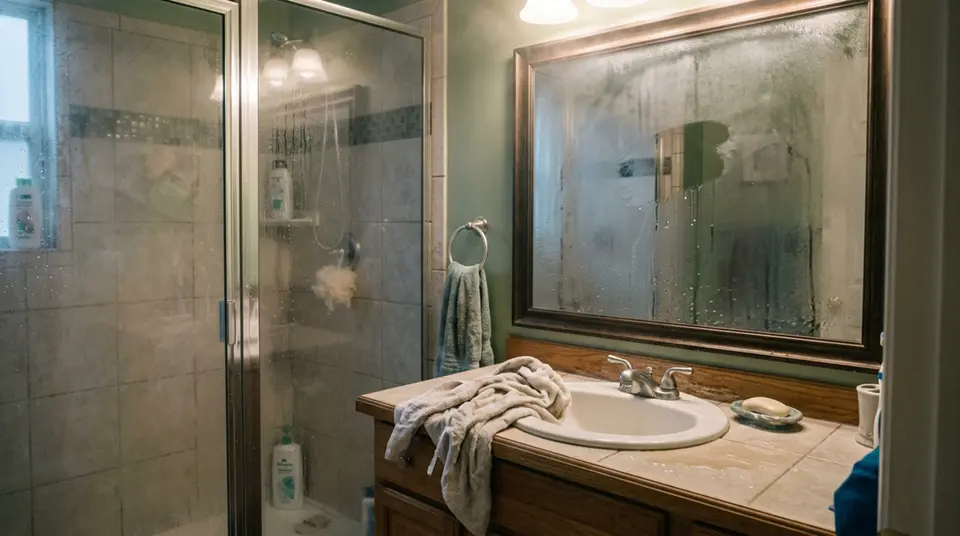
Ironically, the drive for energy efficiency—a core tenet of modern, sustainable architecture—has inadvertently created environments highly conducive to mold proliferation. Modern building practices prioritize sealing the structure tight to minimize energy loss from heating and cooling. While this achieves thermal efficiency, it also effectively traps humidity and severely limits natural ventilation and air exchange. Mold, which flourishes in stagnant air and high-moisture environments, finds these sealed, modern envelopes to be ideal habitats.
The risk is amplified in regions characterized by coastal humidity or significant temperature fluctuations. These changes create a temperature differential between the indoor and outdoor environments, leading to condensation within wall cavities and on cooler surfaces. This condensation provides the persistent moisture needed to feed mold spores. Los Angeles, and similar locales where older housing stock meets fluctuating humidity levels, represents a high-risk intersection where the sealed nature of modern renovations or new builds can exacerbate a pre-existing moisture problem. The consequence is a dwelling that is efficient on paper but fundamentally unhealthy in practice.

Source: Wikimedia Commons, CC BY-SA 4.0
III. The Proactive Architectural Toolkit: Strategies for Mold-Resistant Design
The solution to the mold crisis lies in a systemic shift toward proactive, high-performance residential design. Architects are now integrating materials and mechanical systems specifically intended to manage moisture and promote breathability.
A. Material Selection and Breathability:
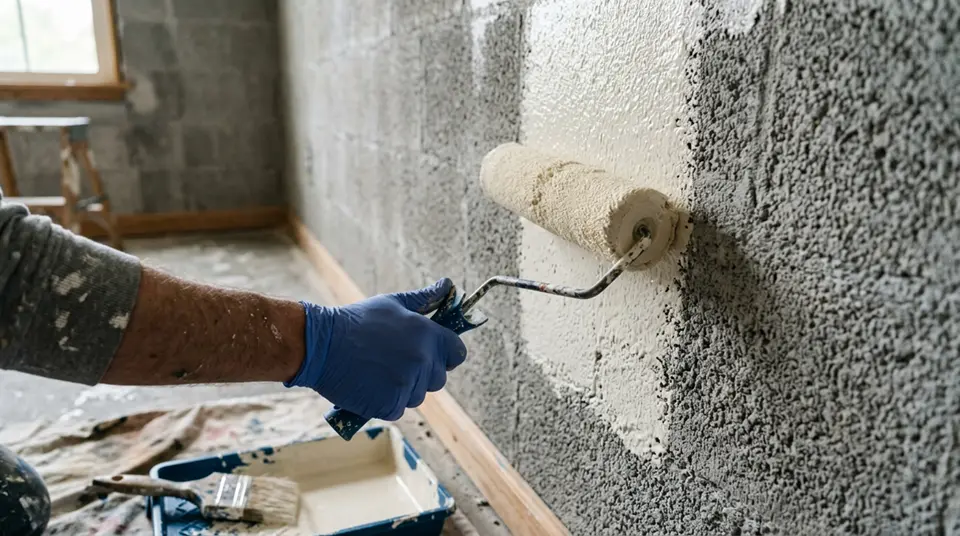
The foundational strategy is the selection of vapor-permeable and breathable materials. Unlike conventional finishes that act as non-porous barriers, these materials allow moisture vapor to move through the wall assembly, preventing it from becoming trapped and condensing internally.
- Vapor-Permeable Walls: The structure itself is designed to manage moisture flow, allowing the building to “exhale” excess humidity.
- Natural Finishes: There is a pronounced move toward finishes that inherently resist moisture retention and offer superior breathability. Examples include:
B. Surface Protection and Remediation Primers:
While design focuses on long-term prevention, specialized products are utilized for both new construction and remediation of older spaces:
- Mold-Resistant Primers and Paints: products such as Zinsser Perma-White, KILZ Mold & Mildew Primer, and Zinsser Mold Killing Primer—used to neutralize spores and resist growth.
C. Mechanical Systems and Airflow:
The reliance on airtight construction necessitates sophisticated mechanical solutions to maintain a balanced, healthy internal environment.
- Integrated Dehumidification
- Automatic and Sensor-Driven Exhaust
- Ventilated Cabinetry to prevent micro-climates

Source: Wikimedia Commons, CC0
D. Exterior Planning:
Prevention extends beyond the walls. Outdoor planning is recognized as essential to managing the water that is the source of all mold issues:
- Proper grading
- Permeable paving
- Climate-smart landscaping
IV. Materials Revolution and Sustainability: Function Meets Wellness
The architectural movement toward mold prevention is perfectly aligned with broader sustainability goals. Preventing mold is inherently sustainable because it promotes material longevity and reduces waste.

Source: Wikimedia Commons, CC BY-SA 4.0
A wall assembly that stays dry remains structurally intact for decades. Conversely, a mold-infested wall requires costly and resource-intensive remediation, sending tons of debris to landfills. Therefore, the simple, preventative steps—proper flashing, high-quality materials, and ventilation—are far cheaper than the eventual cost of remediation and contribute directly to minimizing construction waste.
The focus on mold resistance has led designers to re-examine material chemistry, moving toward inert, non-toxic alternatives:
- Rice Husk Composite Boards
- Food-Safe Coatings
- Plant-based sealants for children’s rooms
V. Data-Driven Wellness and the Health-Architecture Nexus
The mold crisis is increasingly being addressed at the intersection of environmental science and medical data.
Estimates suggest that over 50% of U.S. homes exhibit signs of dampness or mold. Yet mold-related illness remains an “invisible health crisis” due to inadequate diagnostics and clinical awareness.
Platforms integrating environmental lab testing, clinical treatment, and digital support represent a new era of mold-aware healthcare. The design world is now learning from this data and translating medical findings into built-environment strategies.
Today, designing a healthy home means architects must understand airflow, humidity, and human biology—not just aesthetics.
VI. Economic Imperative and Environmental Stewardship
Preventing mold is an investment with decades of structural return. Simple, low-cost steps—such as humidity sensors or automatic ventilation—protect a home’s structural integrity, securing long-term value and minimizing remediation costs.
The healthiest interiors are those that combine scientific rigor with material sensitivity, prioritizing the well-being of both the inhabitants and the structure itself. By designing to keep buildings dry and breathable, we ensure longevity, reduce waste, and protect public health from the inside out.
References
According to Los Angeles Times
Key Takeaways
- Mold prevention is increasingly being incorporated into home design from the architectural phase, with moisture management replacing post-construction remediation as the primary strategy.
- Key design elements that prevent mold include: continuous air barriers, vapour retarders on the correct side of the wall assembly, balanced mechanical ventilation, and thermal-bridge-free construction.
- Building codes in many jurisdictions now mandate minimum ventilation rates and moisture management details following evidence that airtight construction without ventilation significantly increases mold risk.
- Public health research documents that mold-associated respiratory illness represents a substantial but largely preventable burden—estimated at billions of dollars annually in the United States alone.
- Retrofit mold prevention in existing homes focuses on the same principles as new construction: controlling moisture entry, controlling vapour diffusion, and ensuring adequate ventilation.
Frequently Asked Questions
How is home design changing to prevent mold?
Contemporary residential building science has fundamentally shifted away from the intuitive ‘let the house breathe’ approach that dominated 20th-century construction toward a precisely engineered approach to moisture management. Modern mold-resistant design principles include: building tight and ventilating right—constructing airtight building envelopes that prevent uncontrolled moisture-laden air from infiltrating and exfiltrating through wall and ceiling assemblies, then introducing controlled mechanical ventilation (ERV or HRV systems) that maintains air quality without the moisture problems of infiltration; vapour retarder placement based on climate—placing vapour barriers on the warm side of insulation in heating-dominated climates (inside in cold climates, outside in hot-humid climates) to prevent condensation within wall assemblies; thermal bridge elimination—ensuring continuous insulation prevents cold spots on interior surfaces where condensation can form; and condensation-resistant window and door specification.
What building materials are most resistant to mold?
Material selection is an important component of mold-resistant construction but secondary to moisture control—any material will support mold growth if kept sufficiently wet. That said, some materials are inherently more resistant than others. Mold-resistant gypsum board (‘green board’, ‘purple board’): standard gypsum drywall with paper facing is highly susceptible to mold; mold-resistant varieties use fiberglass mat facing and treated gypsum core, rated to resist mold growth even at 95% RH for extended periods. Cement board and tile backer: inorganic composition provides no nutritional substrate for mold; appropriate for wet areas. Pressure-treated lumber: lumber treated with borates or other preservatives resists decay fungi (wood rot) but this is distinct from surface mold on finished wood. Vapour-permeable house wraps: allowing accumulated moisture to dry outward rather than trapping it. Most plastics, metals, and glass: inherently mold-resistant surfaces, though they will develop mold from organic dust accumulation if perpetually wet.
What is the public health cost of indoor mold?
The economic and public health burden of indoor mold exposure is substantial and partially quantified in several large-scale studies, though precise estimates are difficult due to the multi-causal nature of respiratory disease. US estimates: a 2017 study published in Indoor Air estimated that excess respiratory disease attributable to dampness and mold in US homes cost approximately $3.7 billion annually in direct healthcare costs; adding indirect costs (lost productivity, caregiver burden) substantially increases this figure. Asthma attributable fraction: studies using population attributable fraction methodology estimate that 21% of asthma cases in the US are attributable to residential dampness and mold (approximately 4.6 million cases). European estimates: the WHO Regional Office for Europe estimated that 10–50% of European buildings have significant dampness problems, affecting tens of millions of people. The cost-effectiveness of mold prevention: several economic analyses have found that mold-preventive building measures (improved vapour management, mechanical ventilation) have positive cost-benefit ratios when healthcare cost savings are included.
How does building airtightness affect mold risk?
Building airtightness has a paradoxical relationship with mold risk. Leaky buildings (common in pre-1980 construction) allow relatively uncontrolled air infiltration that, in cold climates, brings warm moist indoor air into contact with cold exterior surfaces within wall cavities, causing condensation and mold growth. Very airtight buildings (common in energy-efficient modern construction) eliminate this infiltration pathway but, without mechanical ventilation, allow indoor humidity to accumulate—occupant activities (cooking, bathing, breathing, plants) generate 3–20 litres of water vapour per day per household; without ventilation, this moisture has nowhere to go and indoor humidity rises until it condenses on the coldest surfaces. The solution is airtight construction combined with controlled mechanical ventilation (Passivhaus standard): this combination provides the best mold resistance by eliminating both uncontrolled moisture transport through the envelope and indoor humidity accumulation. Buildings that are moderately airtight (better than old leaky construction but without mechanical ventilation) often have worse mold problems than either extreme.
What is the most important thing homeowners can do to prevent mold?
The single most impactful action homeowners can take for mold prevention is controlling indoor relative humidity below 50%, which requires understanding and managing the moisture sources in their specific home. Practical priority actions: install a digital hygrometer in the most humidity-affected rooms and use it to assess current conditions; run bathroom exhaust fans during every shower and bath and for 15–30 minutes afterward (fan should be sized for the bathroom area—minimum 1 CFM per square foot of bathroom area); ensure the clothes dryer exhausts to the exterior (not into a crawl space or garage); identify and repair any water leaks promptly (a slow drip under a sink causes more mold than a single flood event that is quickly dried); use kitchen exhaust that vents to the exterior during cooking; maintain crawl space and basement humidity with a dehumidifier if necessary; ensure gutters are clear and discharge water away from the foundation; and annually inspect the roof, especially at penetrations, for signs of water infiltration.