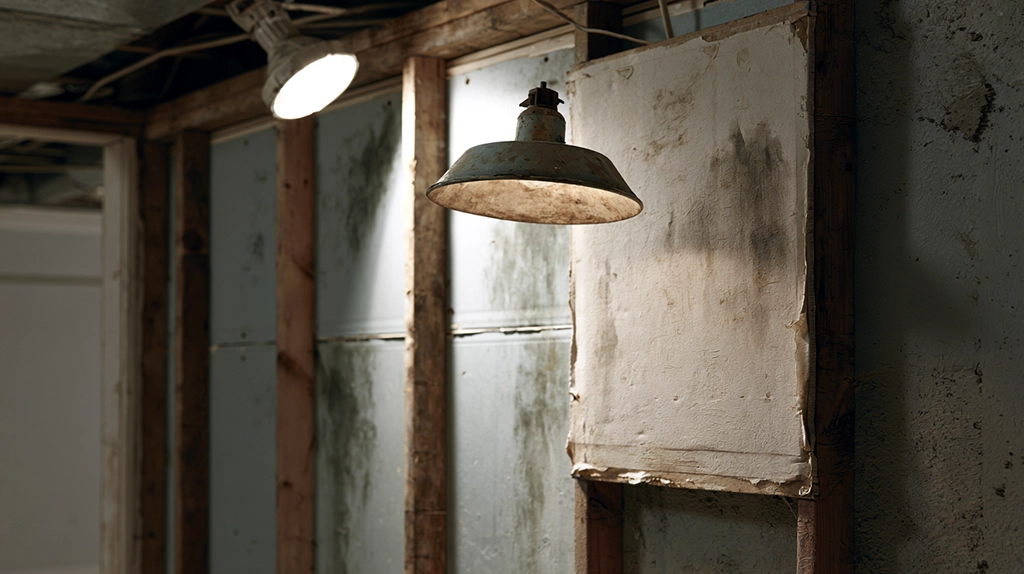
A Mold Name Everyone Recognizes — For the Wrong Reasons
Few mold names carry as much cultural weight as Stachybotrys chartarum. For many homeowners, it has become synonymous with “toxic black mold” — a phrase that triggers alarm while oversimplifying a more nuanced picture. The reality is more useful than the myth.
Stachybotrys chartarum is a greenish-black microfungus that grows best on chronically wet, cellulose-rich building materials. Paper-faced drywall, ceiling tiles, fiberboard, wallpaper, cardboard, and similar organic materials become ideal habitat when moisture persists long enough. Its presence indoors is not random. It is a building-condition signal — evidence that water has stayed where it should not.
What Stachybotrys chartarum Actually Is
Stachybotrys chartarum is a filamentous microfungus in the genus Stachybotrys. Like other indoor molds, it grows as branching threads called hyphae that spread across and into damp materials, using organic matter as a food source. It does not form a visible cap and stem like a mushroom. Instead, it produces microscopic structures that generate spores when conditions allow.
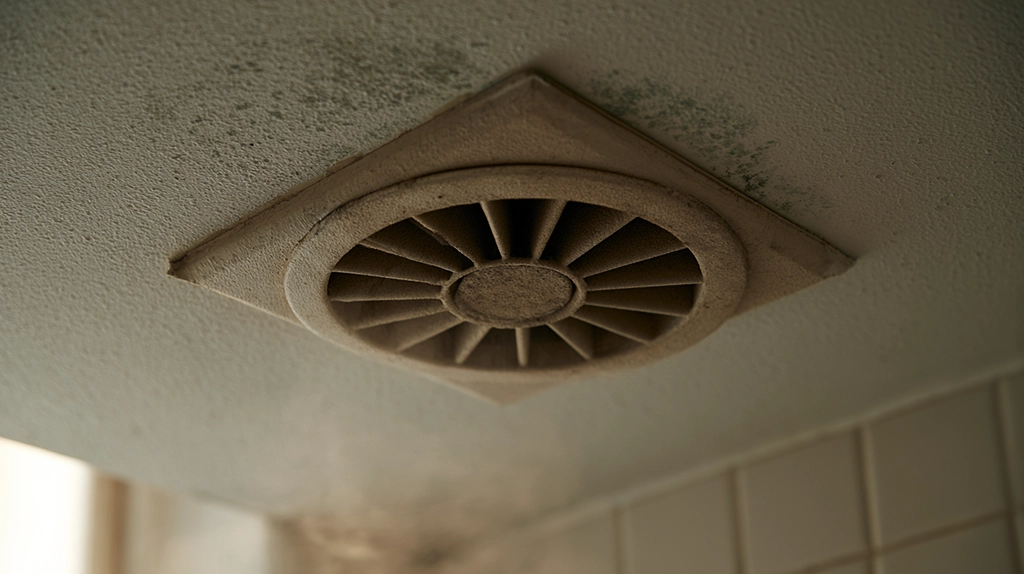
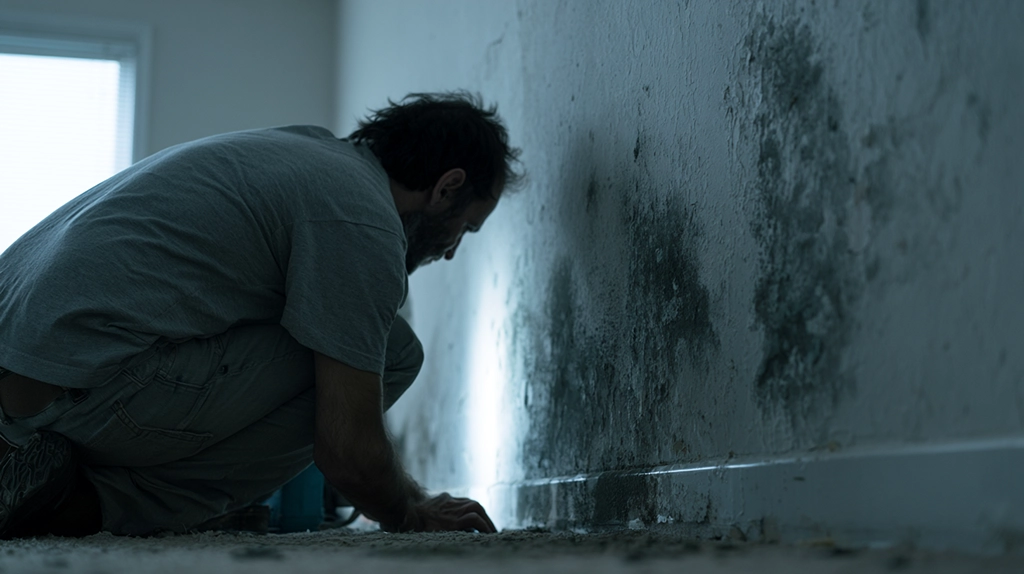
To the naked eye, it may appear as a dark greenish-black patch — slimy when actively wet, sooty when drying. But visual appearance is not a diagnostic tool. Many indoor molds can appear black, dark green, gray, olive, or brown: Cladosporium, Ulocladium, Chaetomium, Aspergillus, and other species can all produce dark colonies. A dark stain on a wall is a moisture warning, not a species diagnosis.
Why This Mold Needs Sustained Moisture
The most important ecological fact about S. chartarum is its relationship to chronic moisture. Unlike faster-colonizing molds that can establish after brief periods of elevated humidity, this species is more strongly associated with persistent water damage. A brief splash or short-term condensation event is usually not enough. Long-term leaks, flooding, roof infiltration, plumbing failures, and poorly dried wall cavities provide the conditions it requires.
This is why its presence reframes the primary question. Finding S. chartarum indoors should prompt: “Why did this material stay wet?” — not simply “What species is this?” Mold control begins with moisture control. The fungus is the symptom; sustained dampness is the building problem.

Where It Grows and Why That Matters
Indoors, S. chartarum most commonly appears on water-damaged porous and semi-porous building materials. Paper-faced drywall is a classic substrate — the paper layer provides cellulose, and the gypsum board can hold moisture after flooding or leaks. Fiberboard, ceiling tiles, wallpaper, cardboard, paper products, and insulation facings are other documented substrates.
The more serious concern is growth inside wall cavities, above ceilings, or beneath flooring — places where moisture can remain hidden long after the original intrusion. Porous materials dried within 24 to 48 hours have a substantially lower probability of supporting mold colonization. Materials that remain damp for days to weeks create increasingly favorable conditions.
Color Cannot Diagnose Risk
The phrase “black mold” has created a durable communication problem. Many people assume black color confirms S. chartarum — and that this confirmation means toxicity. Neither assumption is reliable.
Color does not identify species. A pale mold can cause allergy symptoms in a sensitive individual. A dark mold may be present in small amounts with limited exposure. A heavily contaminated wall cavity may contain multiple species simultaneously. The color-based risk framework is not useful in practice and can distract from the more important questions: Where is the moisture coming from? How much material is affected? What is the safest way to address it?

Health Risk: Accurate Communication Matters
Stachybotrys chartarum can produce mycotoxins under certain conditions, which is a key reason it received widespread public attention. However, careful risk communication is essential. It is inaccurate to say every dark mold patch is “toxic black mold.” It is equally inaccurate to claim the presence of S. chartarum automatically proves a specific illness. Mold-related symptoms are often nonspecific and overlap with allergies, asthma, irritation, dust exposure, and unrelated medical conditions.
What public-health guidance consistently supports: indoor mold exposure can contribute to allergic reactions, asthma worsening, airway irritation, coughing, and eye and skin irritation, particularly in sensitive individuals. People with asthma, allergies, chronic lung disease, weakened immune systems, infants, and older adults may require additional caution. The CDC has noted that a proven causal link between S. chartarum and acute idiopathic pulmonary hemorrhage in infants has not been established.
A Building Problem First, a Species Problem Second
The most practical framing for S. chartarum is as evidence of building failure. When it appears on gypsum board, ceiling tiles, wallpaper, or cardboard, it usually reflects a moisture history: a roof that leaked without prompt repair, a plumbing failure incompletely dried, a basement wall that held condensation for years, or a flood that was not fully remediated.
If the moisture source remains active, cleaning visible mold from the surface is insufficient. EPA guidance emphasizes that mold control begins with moisture control: identify the water source, stop it, dry the structure, and remove unsalvageable porous materials. Surface cleaning without source correction typically results in recurrence.
Safe Removal: Containment Before Cleanup
Spores of S. chartarum are often held in moist clusters rather than released as freely as the dry spores of some other indoor molds. However, that does not make disturbance safe. Drying, scraping, sanding, demolition, or rough cleanup can spread spores, fragments, and contaminated dust into previously unaffected areas.
For small, limited areas, homeowners may follow basic safety guidance: avoid dry scraping, prevent dust spread, use appropriate personal protection, bag contaminated material securely, and correct the moisture source before remediation begins. For larger areas, hidden damage, sewage-related flooding, recurring growth, or occupants with health vulnerabilities, professional remediation is the appropriate choice.
What Homeowners Should Do First
When dark mold appears on a wall, ceiling, or floor, the first step is not species identification. The first step is a moisture investigation. Is there an active leak? Has the wall been wet before? Is there condensation from a pipe, HVAC duct, or window? Is the affected material soft, stained, swollen, or crumbling?
Once the water source is understood, material condition can be assessed. Non-porous surfaces with limited growth may sometimes be cleaned. Porous materials with heavy growth or long-term water damage generally require removal and replacement. Routine species testing is not always necessary — visible mold on water-damaged building materials already provides sufficient reason to act.
Frequently Asked Questions
Is Stachybotrys chartarum the same as toxic black mold?
S. chartarum is one mold that can appear greenish-black and may produce mycotoxins under some conditions. It is misleading to call every dark patch “toxic black mold.” Many dark molds are not S. chartarum, and toxin production is conditional, not automatic.
Can it be identified by color?
No. Reliable identification requires laboratory analysis. A dark patch on a wall should be treated as a moisture and cleanup problem. Species identity is secondary to correcting the water source and addressing damaged materials.
Where does it usually grow indoors?
It is most commonly associated with chronically wet cellulose-rich materials: paper-faced drywall, fiberboard, ceiling tiles, wallpaper, cardboard, and some insulation facings.
What should someone do if they find dark mold indoors?
Identify and fix the moisture source. Dry, clean, remove, or remediate damaged materials with appropriate precautions. Avoid disturbing large moldy areas without protection. Seek professional help for extensive contamination or when occupants are vulnerable.