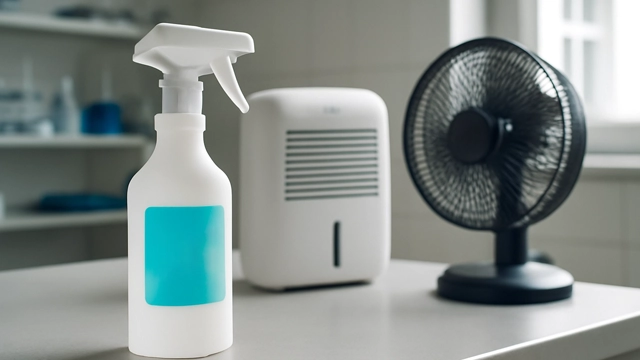

Walk down any cleaning aisle, and you’ll find shelves full of sprays that promise to “kill mold instantly.” The label sounds comforting — one quick spray, and the dark stains are gone. But here’s the truth: no spray, no matter how strong, can keep mold away for good. The power is not in the bottle. It’s in how we manage moisture, airflow, and time.

1. Sprays Kill Mold, but Not Its World
Most mold sprays can kill surface spores on contact, but they can’t change the environment that invited the mold in.
Mold spores are built for survival — they can remain dormant for years, waiting for moisture to return. When humidity rises above 60%, those resting spores wake up and start growing again.
As the U.S. Environmental Protection Agency (EPA) clearly states, “The key to mold control is moisture control.” Sprays may silence mold temporarily, but unless the air stays dry, the silence won’t last long.
In other words, a bottle can remove mold, but only your room can keep it from coming back.
2. Not All Sprays Are Created Equal
Different ingredients work in different ways, and knowing their limits is crucial to using them effectively.
Bleach-based sprays (sodium hypochlorite) work fast — they remove stains and kill surface colonies. But bleach cannot penetrate porous materials like wood or drywall, so the deeper mold remains alive. It’s a quick fix, not a cure.
Quaternary ammonium compounds (QACs) form an antimicrobial layer that can last for weeks, making them popular in industrial or commercial cleaning. They’re effective when applied to nonporous surfaces and can delay recontamination, though they still depend on humidity control.
Hydrogen peroxide is an oxidizer. It destroys spores and breaks down organic residues, but it requires longer contact time to be truly effective. If wiped off too quickly, most of its potential is lost.
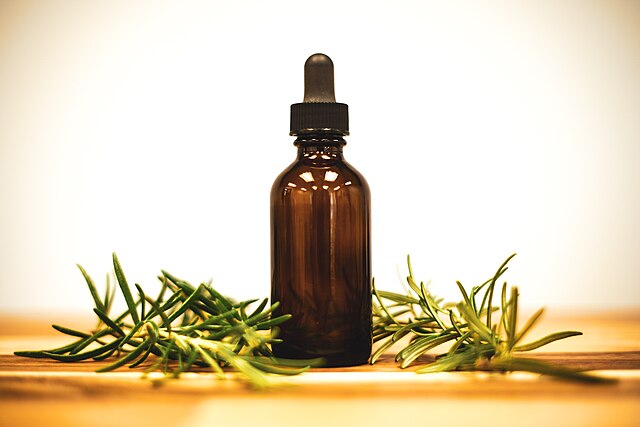
Natural essential oils such as tea tree, clove, or thyme oil are now backed by scientific research. Studies show they inhibit the growth of Aspergillus, Penicillium, and Cladosporium species, often matching the performance of synthetic fungicides. Tea tree oil, for example, can stop spore germination within hours. The key, however, is consistency — essential oil sprays need to be reapplied regularly, especially in humid climates, to maintain their antifungal effect. These oils also offer an eco-friendly alternative for long-term use, combining pleasant scent with real antimicrobial action.
3. When Spraying Goes Wrong
Sprays can do harm when used carelessly. Spraying on wet or dirty surfaces traps moisture under the chemical film, providing an even better habitat for mold to return. Some harsh chemicals, like bleach, also degrade paint and coatings, making surfaces more absorbent and prone to future growth.
The irony is that improper cleaning can make the environment better for mold. That’s why every application should be followed by proper drying and ventilation — otherwise, the problem just changes shape.

4. How to Use Sprays the Right Way
Experts, including EPA and IICRC (Institute of Inspection Cleaning and Restoration Certification), recommend a simple three-step method for safe and effective mold treatment:
- Pre-clean: Remove dust, dirt, and any loose mold residue first. Sprays work best on clean, dry surfaces.
- Apply evenly: Cover the area completely and let the product sit long enough to act — typically 10–15 minutes for peroxide or oil-based sprays.
- Dry and ventilate: After spraying, use a fan, dehumidifier, or open window to ensure full drying. Airflow prevents the next wave of spores from taking hold.
Some sprays, especially those containing QACs or essential oils, leave behind a thin protective film that can delay future growth — but only if the surface stays dry and clean.
5. No Spray Works Forever
Every formula, whether chemical or natural, has limits.
Even the best antimicrobial coatings lose their protection once humidity rises or condensation forms. According to ASHRAE (American Society of Heating, Refrigerating and Air-Conditioning Engineers), any environment that stays above 60% relative humidity creates conditions where mold can reactivate, regardless of treatment.
Sprays, then, are not the final defense. They are maintenance tools — useful, necessary, but only as part of a larger system of moisture control and ventilation. Think of them as your short-term allies, not long-term guardians.

6. The Real Secret: Sprays + Habits
Sprays can kill mold, but habits keep it from coming back.
Make a routine of drying wet areas, ventilating bathrooms, inspecting corners, and running dehumidifiers during wet seasons. A light reapplication of essential oil spray every week or two keeps high-risk areas protected while keeping your home smelling fresh.
A bottle can help you fight mold, but the real victory happens when your air stays dry and your walls stay breathing.
The Long Game Against Mold
There’s no magic spray that can stop mold forever — because mold isn’t the enemy, moisture is.
Sprays are the short sprints of prevention, but dryness is the marathon. The best protection is not about strength, but rhythm: clean, spray, dry, repeat.
When spraying becomes part of a larger habit of airflow and humidity control, your environment transforms. The mold doesn’t vanish from the world — it simply loses the chance to grow in yours.
References
Key Takeaways
- Walk down any cleaning aisle, and you’ll find shelves full of sprays that promise to “kill mold instantly.” The label sounds comforting — one quick spray, and the dark stains are gone.
- Mold spores are built for survival — they can remain dormant for years, waiting for moisture to return.
- Bleach-based sprays (sodium hypochlorite) work fast — they remove stains and kill surface colonies.
- They’re effective when applied to nonporous surfaces and can delay recontamination, though they still depend on humidity control.Hydrogen peroxide is an oxidizer.
- Studies show they inhibit the growth of Aspergillus, Penicillium, and Cladosporium species, often matching the performance of synthetic fungicides.
Frequently Asked Questions
Can spray bottles alone stop mold, or does prevention require a broader strategy?
Walk down any cleaning aisle, and you’ll find shelves full of sprays that promise to “kill mold instantly.” The label sounds comforting — one quick spray, and the dark stains are gone. But here’s the truth: no spray, no matter how strong, can keep mold away for good. The power is not in the bottle.
Why do surface sprays often fail to solve long-term mold problems?
Most mold sprays can kill surface spores on contact, but they can’t change the environment that invited the mold in.
What approaches actually work for sustainable mold control?
Mold spores are built for survival — they can remain dormant for years, waiting for moisture to return. When humidity rises above 60%, those resting spores wake up and start growing again.As the U.S. Environmental Protection Agency (EPA) clearly states, “The key to mold control is moisture control.”
What are the main risks associated with Spray or Strategy? The?
Different ingredients work in different ways, and knowing their limits is crucial to using them effectively.
What actions are recommended regarding Spray or Strategy? The?
Bleach-based sprays (sodium hypochlorite) work fast — they remove stains and kill surface colonies. But bleach cannot penetrate porous materials like wood or drywall, so the deeper mold remains alive. It’s a quick fix, not a cure.Quaternary ammonium compounds (QACs) form an antimicrobial layer that