According to SCIENCE ALERT
New Research Reveals Intelligence-Like Behavior Without a Nervous System
Researchers have uncovered new insights into how slime mold, a simple organism lacking a brain or nervous system, is capable of making surprisingly sophisticated decisions.
The study provides evidence that physical processes within the organism’s body allow it to evaluate options, process information, and coordinate behavior without relying on specialized neural structures.
The findings challenge traditional assumptions about intelligence and decision-making, suggesting that complex behaviors can emerge from biological systems far simpler than previously thought.
By investigating how slime mold responds to its environment, physicists have revealed mechanisms that may help explain how decentralized living systems solve problems and adapt to changing conditions.

Meet Physarum polycephalum
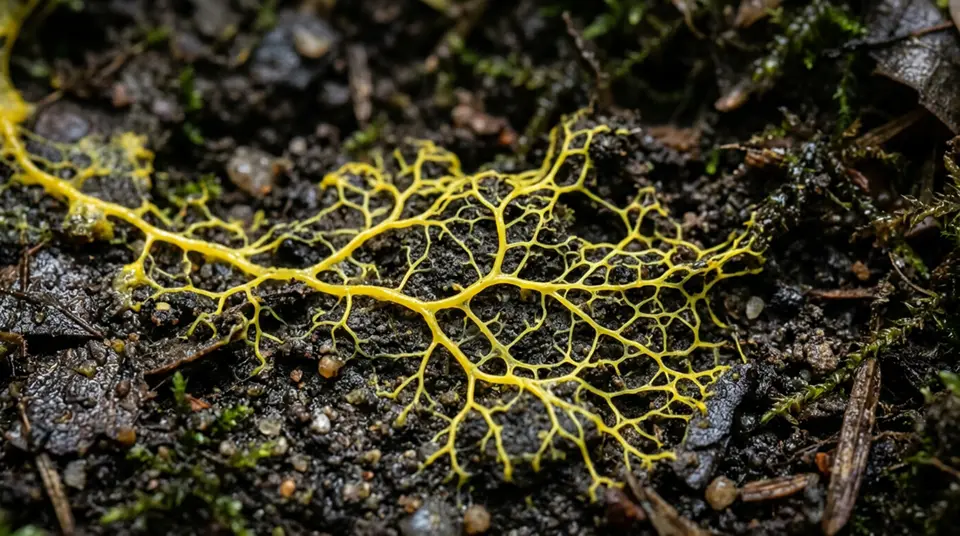
The research focused on Physarum polycephalum, a species of slime mold widely studied for its remarkable ability to navigate mazes, optimize transportation-like networks, locate food sources, and adapt to environmental challenges.
Despite possessing no brain, neurons, or central control system, the organism consistently demonstrates behaviors that resemble decision-making.
Slime molds belong to a group of amoeba-like organisms that spend part of their life cycle as a giant single cell containing millions of nuclei.
During its active growth stage, Physarum polycephalum forms an extensive network of tubular structures through which nutrients and internal fluids circulate.
This network continuously expands and reorganizes in response to environmental conditions.
Scientists have long been fascinated by the organism’s apparent ability to solve complex spatial problems.
Previous experiments demonstrated that slime molds can identify efficient routes between food sources, avoid unfavorable environments, and dynamically reconfigure their network structures to maximize resource acquisition.
However, the mechanisms underlying these behaviors remained poorly understood.
Rhythmic Oscillations Drive Decision-Making
The new study reveals that decision-making emerges from rhythmic oscillations occurring throughout the slime mold’s body.
These oscillations generate waves of internal fluid movement that transport nutrients, chemical signals, and mechanical information through the organism’s network.
Rather than relying on a centralized processing center, information is distributed across the entire organism.
Researchers found that the slime mold effectively integrates environmental information through changes in these internal flow patterns.
Chemical and mechanical signals generated by external stimuli influence the oscillatory behavior of the network, allowing the organism to compare alternative pathways and allocate resources accordingly.
When confronted with multiple options, different regions of the slime mold network compete for resources through dynamic interactions.
Tubes associated with more favorable conditions gradually strengthen, while less advantageous pathways weaken over time.
This process allows the organism to select beneficial routes without requiring conscious thought or centralized control.

The Body Functions as Both Computer and Sensor
According to the researchers, the organism’s physical structure itself contributes to information processing.
Rather than separating computation from biological architecture, slime mold appears to perform calculations through the interactions of its tissues, fluid flows, and mechanical properties.
In essence, the organism’s body functions simultaneously as a sensor, processor, and response system.
The findings support the concept of “embodied computation”, in which physical structures participate directly in information processing.
This contrasts with conventional views of intelligence that emphasize centralized nervous systems and dedicated computational organs.
Researchers observed that fluid oscillations create a feedback system that continuously updates the organism’s internal representation of its environment.
As conditions change, information rapidly propagates throughout the network, enabling coordinated responses across the entire organism.
This allows slime mold to adapt efficiently to new opportunities and threats.
Intelligence May Not Require a Brain
The study suggests that decision-making may not require a brain in the traditional sense.
Instead, complex behavior can emerge from interactions among simple biological components operating under physical laws.
These findings contribute to a growing body of research indicating that intelligence-like behaviors may exist across a much broader range of life forms than previously recognized.
The implications extend beyond biology.
Understanding how decentralized organisms process information could inspire new approaches in robotics, artificial intelligence, network design, and distributed computing.
Engineers have already looked to slime molds as models for optimizing transportation systems, communication networks, and resource distribution strategies.
Because slime molds can identify efficient pathways while adapting to changing environments, their behavior offers valuable lessons for designing resilient systems.
Unlike centralized networks that may fail when a critical component is damaged, decentralized systems can often continue functioning even when parts of the network are disrupted.
Lessons for Artificial Intelligence and Robotics
Researchers believe that studying organisms such as Physarum polycephalum may reveal fundamental principles governing collective decision-making across biological systems.
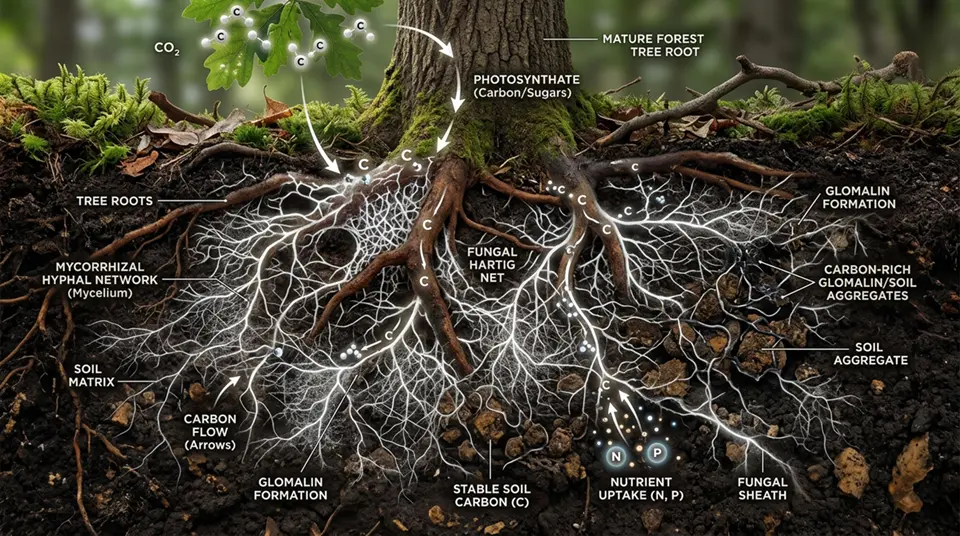
Similar mechanisms may operate in microbial communities, plant root networks, fungal mycelia, insect colonies, and other distributed living systems.
The work also contributes to broader scientific discussions about the nature of intelligence itself.
Traditionally, intelligence has been closely associated with brains and nervous systems.
However, the ability of slime molds to solve problems, adapt to environmental changes, and make effective decisions raises questions about how intelligence should be defined.
Scientists emphasize that slime mold is not conscious and does not think in the human sense.
Nevertheless, its behavior demonstrates that complex adaptive responses can emerge from physical and biological processes without requiring cognition as commonly understood.
Expanding Our Understanding of Intelligence
The research highlights the importance of viewing living systems as integrated networks rather than collections of isolated components.
In slime mold, behavior emerges from the interactions between structure, movement, and environmental feedback.
These interactions allow the organism to gather information, evaluate alternatives, and respond effectively to challenges despite lacking any centralized command center.
As investigations into unconventional forms of intelligence continue, slime mold remains one of the most intriguing model organisms in biology.
Its ability to perform sophisticated tasks with minimal biological complexity provides valuable insights into the origins of decision-making and the evolution of adaptive behavior.
The study ultimately demonstrates that intelligence-like processes can arise from physical organization alone.
By revealing how slime mold makes decisions without a brain, the research expands scientific understanding of information processing in living systems and opens new avenues for exploring the fundamental principles that govern behavior across the natural world.

References
Encyclopaedia Britannica – Slime Mold
According to SCIENCE ALERT