A Living Material, Not a Manufactured One
It is a rare moment in science when a discovery changes how we think about both biology and materials at once. The study of Marquandomyces marquandii, an unassuming soil fungus, may be such a turning point. Researchers have shown that, under carefully controlled liquid culture conditions, this filamentous organism produces a naturally layered hydrogel—one that is fully grown, not fabricated, with a structure so sophisticated it rivals the most advanced synthetic designs.
Most hydrogels, whether for medicine or industry, are made through intricate chemical processes: monomers are crosslinked, additives blended, and properties carefully tuned in sterile laboratories. Even so, it is notoriously difficult to achieve a combination of high water retention, mechanical resilience, and subtle variation in texture or strength. This fungus does it all, quietly, using nothing but its own mycelium.
The Architecture of a Fungal Marvel
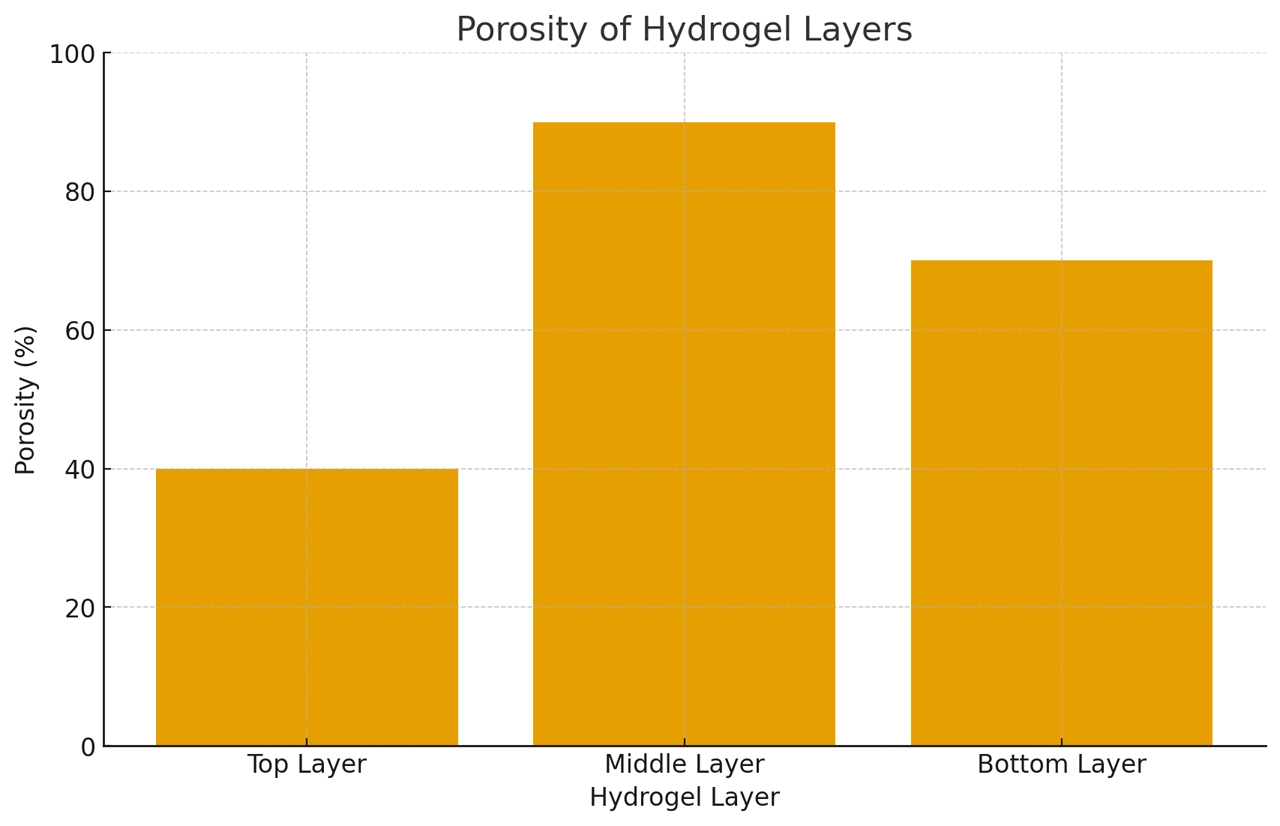
The heart of the discovery is the functionally graded hydrogel. Where a synthetic material might require laborious layer-by-layer engineering to achieve a gradual change in porosity, M. marquandii grows a hydrogel that is naturally zoned. The uppermost layer maintains about 40% porosity, an intermediate section rises to around 90%, and deeper zones settle at 70%. These gradations form spontaneously, as the fungus matures—no external molds, pumps, or precision instruments required.
This is not simply a thick fungal mat. Instead, it is a true composite structure, shaped by the biological rhythm of the organism itself. In materials science, such functionally graded architectures are coveted for their unique mechanical and transport properties. They can support tissue, guide fluids, and dissipate stress more efficiently than uniform structures.

Mechanical Performance: Resilience Without Additives
Testing the properties of the fungal hydrogel revealed its second set of surprises. It can absorb water equivalent to 83% of its own mass and yet, under repeated compression, it returns to 93% of its original shape and strength. This elasticity—so rare in hydrogels with high water content—is usually achieved in synthetic systems only through chemical crosslinkers, complex polymers, or additives that bring their own problems of toxicity or instability.
The M. marquandii hydrogel’s ability to recover from deformation while maintaining hydration and integrity means it could be especially useful in environments where dynamic stresses and frequent mechanical loading are the norm: in the human body, in robotics, or in wearable devices. It also hints at the potential for longevity—a crucial criterion for any real-world material.
Potential Across Medicine and Technology
The implications for biomedical science are immediate and significant. Hydrogels are the backbone of many tissue engineering strategies, wound dressings, and drug delivery platforms. They must be soft, wet, porous, and—most critically—biocompatible. The graded porosity of the fungal hydrogel could be tailored to guide different cell types, support the diffusion of nutrients or therapeutics, and tolerate the mechanical shifts of living tissue.
If further research confirms biocompatibility and safety—no small task, given the need to eliminate all immunogenic or toxic fungal byproducts—then this natural hydrogel could become a platform for soft tissue repair, bone regeneration (if mineralized), or even for constructing artificial organs.
Beyond medicine, there is promise in flexible electronics, soft robotics, and green packaging. The hydrogel’s natural architecture could provide a scaffold for conductive materials, allowing sensors or circuits to be embedded in a soft, adaptable, and environmentally benign carrier. Imagine electronic skin or wearable devices that are not only comfortable and flexible, but also compostable at the end of their lifecycle.

From Laboratory Flask to Industrial Future
Of course, formidable challenges remain before this fungal marvel leaves the lab bench. Biocompatibility is paramount; any risk of immune response, inflammation, or toxicity from residual fungal compounds must be eliminated. Techniques for sterilizing the hydrogel—removing all living cells without damaging the matrix—will be essential.
Scalability is another question. Laboratory cultures are predictable and controlled, but growing uniform hydrogels at industrial scale will demand sophisticated bioprocess engineering. Variables such as nutrient flow, oxygenation, and reactor shape could all influence the consistency of layer thickness, porosity, and mechanical behavior.
Finally, regulatory pathways for fungal-derived biomaterials are less developed than those for synthetic polymers. Long-term safety, degradation, and environmental impact studies will be required.
Yet these hurdles are not insurmountable. The research team’s movement toward patent protection suggests confidence in the platform’s potential, even if its first commercial uses are outside of medicine. Hydrogels grown from fungi could one day serve as packaging foams, biofilters, or the foundations of soft machines—built up through cellular growth rather than by chemical synthesis.
In Marquandomyces marquandii, we see the future of materials science: one where the line between organism and object blurs, and where the most efficient, elegant architectures are not made but grown. The fungal hydrogel’s functionally graded structure, water management, and resilience are the result of biological evolution solving engineering problems in ways our own factories rarely achieve. It suggests a paradigm shift—moving from a world where nature is a resource to one where nature is an active collaborator.
If fungi can build hydrogels that challenge the boundaries of medicine, robotics, and sustainability, what other blueprints might be waiting in the shadows of soil and forest?

References
Academic
- Zhang Y., et al. (2024). Biogenic hydrogels with graded porosity from filamentous fungi. Advanced Functional Materials.
- Hoffman A.S. (2012). Hydrogels for biomedical applications. Advanced Drug Delivery Reviews. DOI: 10.1016/j.addr.2012.09.010
Official
- NIH PubChem
- WHO – Biomaterials and medical device biocompatibility guidance
- FDA – Tissue engineering and biomaterial regulatory pathways
Key Takeaways
- Please login A Living Material, Not a Manufactured One It is a rare moment in science when a discovery changes how we think about both biology and materials at once.
- Even so, it is notoriously difficult to achieve a combination of high water retention, mechanical resilience, and subtle variation in texture or strength.
- The heart of the discovery is the functionally graded hydrogel.
- The uppermost layer maintains about 40% porosity, an intermediate section rises to around 90%, and deeper zones settle at 70%.
- Instead, it is a true composite structure, shaped by the biological rhythm of the organism itself.
Frequently Asked Questions
What should you know about please login to bookmark?
Please login A Living Material, Not a Manufactured One It is a rare moment in science when a discovery changes how we think about both biology and materials at once. The study of Marquandomyces marquandii, an unassuming soil fungus, may be such a turning point. Researchers have shown that, unde
What should you know about a Living Material, Not a Manufactured One?
It is a rare moment in science when a discovery changes how we think about both biology and materials at once. The study of Marquandomyces marquandii, an unassuming soil fungus, may be such a turning point. Researchers have shown that, under carefully controlled liquid culture conditions, this
What should you know about the Architecture of a Fungal Marvel?
The heart of the discovery is the functionally graded hydrogel. Where a synthetic material might require laborious layer-by-layer engineering to achieve a gradual change in porosity, M. marquandii grows a hydrogel that is naturally zoned. The uppermost layer maintains about 40% porosi
What should you know about mechanical Performance: Resilience Without Additives?
Testing the properties of the fungal hydrogel revealed its second set of surprises. It can absorb water equivalent to 83% of its own mass and yet, under repeated compression, it returns to 93% of its original shape and strength. This elasticity—so rare in hydrogels with high water con
What should you know about potential Across Medicine and Technology?
The implications for biomedical science are immediate and significant. Hydrogels are the backbone of many tissue engineering strategies, wound dressings, and drug delivery platforms. They must be soft, wet, porous, and—most critically—biocompatible. The graded porosity of the fungal hydrogel could b