
A Hidden Mold Problem Inside the Feed Chain
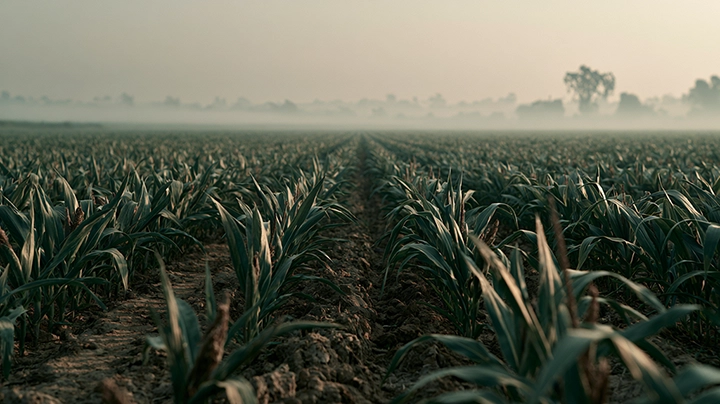
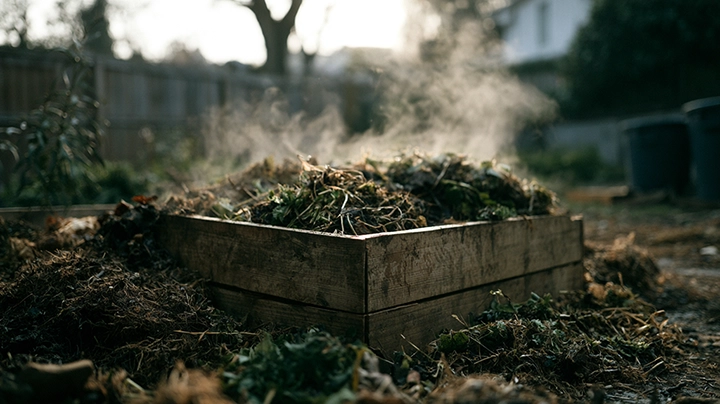
The conversation about mold contamination in agriculture usually ends at the feed bunk. Spoiled grain, contaminated silage, infected maize, visible fungal growth in storage — these are the markers that trigger concern and corrective action. Once contaminated feed is identified and either removed or consumed, the mold problem is often considered resolved.
But the biological impact of mold contamination does not necessarily end when the feed disappears.
A 2025 study published in Frontiers in Microbiology examined what mycotoxin-contaminated diets do to the ruminal and fecal microbiota of finishing beef steers — and whether a yeast cell wall extract-based mycotoxin adsorbent could reduce those effects. The findings point toward something that changes how mold contamination in livestock systems should be understood: fungal toxins may continue disrupting biological processes long after the visible contamination is gone, operating inside the animal by reshaping the microbial ecosystem responsible for digestion itself.
Mold, in this frame, is not just a storage problem. It is a microbiome problem.
Why the Rumen Microbiome Matters
Cattle digest feed through a process that most monogastric animals — including humans — cannot replicate. The rumen, the first and largest compartment of the bovine stomach, contains one of the most complex and productive microbial ecosystems known in biology. Bacteria, fungi, protozoa, and archaea work continuously to ferment fiber, recycle nitrogen, convert nutrients, and produce volatile fatty acids that fuel growth and maintain metabolic efficiency.
Think of the rumen as a biological fermentation chamber operating inside the animal — one where billions of microorganisms are doing the biochemical work that allows a steer to extract energy and protein from grass, hay, and grain that would pass through a simpler digestive system largely unused.
When this microbial ecosystem functions well, feed efficiency is high, growth is consistent, and the animal is metabolically stable. When it is disrupted — by diet changes, environmental stress, disease, or toxic compounds in the feed — the consequences extend through the entire production system. Nutrient utilization falls. Growth rates slow. Feed conversion efficiency declines. The animal may show no dramatic clinical symptoms while quietly losing productivity.
Mycotoxins Affect More Than the Animal — They Affect the Ecosystem Inside It
Ruminants are often described as more resistant to mycotoxins than non-ruminant livestock, and there is a genuine biological basis for that observation. Rumen microbes can transform certain toxic compounds into less harmful metabolites, providing a degree of protection that pigs and poultry lack. This is one of the reasons that the same mycotoxin concentrations that would cause obvious clinical disease in a monogastric animal may produce subtler effects in cattle.
But this protection has limits that are not always well understood in practical livestock management.
Its effectiveness depends on the microbial composition of the rumen at the time of exposure, the type and concentration of the toxins present, the complexity of the contamination, the animal’s nutritional status, and the physiological stress it is experiencing. Under conditions where multiple mycotoxins are present simultaneously — which is common in real feed systems — the detoxification capacity of the rumen microbiome may be exceeded or redirected in ways that compromise other functions.
The study moves beyond the question of whether mycotoxins harm the animal directly, and toward the question of what they do to the microbial ecosystem the animal depends on. The answer is that they reshape it — and not in ways that support efficient production.

Credit: Billy Hathorn, via Wikimedia Commons, CC BY-SA 3.0
When More Microbial Diversity Is Not Necessarily Better
One of the study’s most counterintuitive findings involves microbial diversity.
Mycotoxin-contaminated diets increased rumen microbial richness and diversity. For anyone familiar with ecology, the instinct is to read this as good news — diversity is generally associated with resilience, stability, and functional redundancy in biological systems. A diverse ecosystem is usually a more robust one.
In the rumen, this intuition does not hold under contamination conditions.
The increased diversity observed in contaminated diets was associated with microbial communities linked to inefficient nitrogen utilization, disrupted microbial growth, altered protein synthesis pathways, and impaired metabolic efficiency. More species were present — but the species dominating the community were not the ones that drive productive rumen function. The ecosystem had become more varied and less effective simultaneously.
This is one of the most important conceptual contributions of the research. Microbial diversity is a meaningful measure of ecosystem health in many contexts, but it is not a reliable proxy for functional performance in the rumen. The question is not how many microbial species are present. It is whether the right species are present in the right proportions, performing the right functions. Mycotoxin contamination can shift those balances while appearing to increase ecological richness by conventional measures.
Yeast Cell Wall Extract as a Mitigation Strategy
The study also evaluated yeast cell wall extract as a practical intervention.
Yeast-derived adsorbents typically contain compounds including β-glucans and mannan oligosaccharides — structural components of the yeast cell wall that have affinity for certain mycotoxin molecules. When included in feed, these compounds can bind mycotoxins in the digestive tract, reducing their biological availability and limiting the extent to which they interact with rumen microbes and intestinal tissues.
In practical livestock systems, these additives are one layer within a broader defense strategy that also includes crop monitoring, appropriate drying and storage practices, routine feed testing, and moisture control throughout the feed chain. They are not a substitute for contamination prevention. They are a mitigation tool for situations where contamination has already occurred.
The study found that yeast cell wall extract supplementation partially restored several microbial metabolic pathways that had been disrupted by mycotoxin exposure — particularly pathways related to purine and pyrimidine metabolism, which are associated with microbial growth and nucleic acid synthesis. This suggests the additive may help preserve certain rumen functions under contaminated feeding conditions, at least partially offsetting some of the microbiome disruption that contamination produces.
The Results Were Context-Dependent
The study’s findings about yeast cell wall extract come with an important qualification that matters for practical application.
The additive’s effects were not uniform across dietary conditions. It appeared most beneficial in contaminated diets, where it helped restore disrupted microbial functions. When added to uncontaminated diets, supplementation also reduced some pathways associated with protein synthesis — a finding that suggests biological responses to the additive may vary depending on the nutritional context and baseline contamination status.
This is a meaningful nuance for livestock managers. Feed additives are not universal protective agents. Their effectiveness depends on the specific contamination profile present, the toxin types and concentrations involved, the diet composition, the type and physiological stage of the animals, and the environmental conditions of production. An intervention that helps in one context may have neutral or complex effects in another.
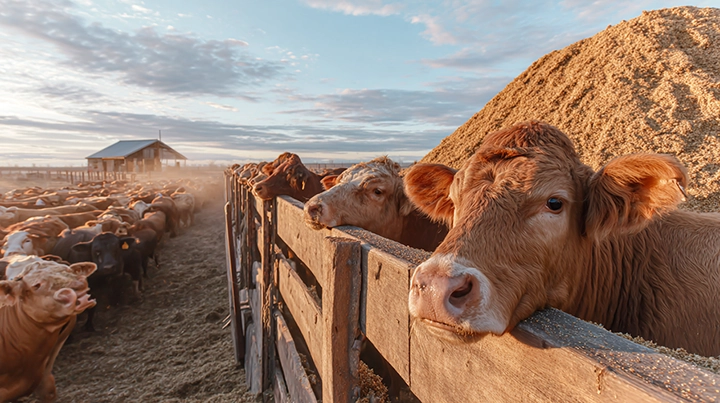
The study involved eight rumen-cannulated Nellore steers in a controlled experimental design — a configuration that provides valuable microbiome data while representing an early stage of evidence rather than a definitive production recommendation. The findings are directionally informative and scientifically meaningful, but they do not constitute a universal protocol for feed additive use across beef cattle systems.

Credit: Peter Barr, via Wikimedia Commons, CC BY-SA 2.0
Why Mycotoxins Are a Food-System Issue
The economic implications of mycotoxin-induced microbiome disruption extend across the entire feed-to-food production chain.
Feed efficiency — the ratio of feed input to weight gain — is one of the most important economic variables in beef cattle production. Even modest reductions in rumen function, if sustained over a finishing period of several months, translate into measurable losses in feed conversion efficiency, growth rate, and carcass quality. These losses accumulate without triggering the kind of obvious clinical disease that would prompt immediate diagnostic attention.
Previous research in Nellore steers has shown that multiple mycotoxin contamination can reduce fiber digestibility and nitrogen retention — effects that directly reduce the productivity of the rumen’s core functions. The current study adds a mechanistic dimension: mycotoxins may produce these effects partly by reshaping the microbial communities that perform those functions. The toxin is not only acting directly on animal tissues. It is acting indirectly by disrupting the biological system that converts feed into usable energy and protein.
This reframes mycotoxin management as a microbiome management issue rather than simply a toxin management issue.
Climate Pressure May Increase Future Feed Risks
The implications of the research extend beyond the feeding systems studied.
Climate instability is changing the conditions under which feed crops are grown, harvested, and stored. Heat stress during grain fill, irregular rainfall affecting drying rates, flooding events that damage stored grain, and extended warm and humid conditions in storage facilities all create environments where fungal growth and mycotoxin accumulation are more likely. As contamination patterns become more complex — involving multiple mycotoxin types simultaneously — livestock systems may face feed quality challenges that exceed what historical management practices were designed to address.
The visibility problem compounds this. Mycotoxins can remain in grain after fungal growth is no longer visible. Feed that passes a visual inspection may still carry residual toxin loads sufficient to affect rumen microbiology. Future feed safety will require testing and monitoring practices calibrated to detect chemical contamination, not just biological growth.
From Feed Additives to Microbiome Preservation
The study’s most valuable contribution for the future of livestock production may be how it connects microbiome science to the economics of feed efficiency.
If the goal of mycotoxin management is ultimately to protect the biological system that converts feed into food, then the measure of success is not only whether a specific toxin is bound or reduced in concentration. It is whether the rumen microbiome is functioning effectively — whether the microbial communities responsible for fiber fermentation, nitrogen recycling, and volatile fatty acid production are intact, stable, and performing at the level that efficient production requires.
This is a more demanding standard than conventional toxin-binding assays. It requires understanding not just whether an additive traps a molecule, but whether it preserves a biological ecosystem. The research points toward that more advanced framing — one where mold control in livestock systems is understood as ecological protection as much as chemical management.
Mold Risk Does Not Stop at the Feed Bunk
The study ultimately expands what mold contamination means in agriculture.
In buildings, mold threatens indoor air quality. In crops, it reduces yield and food safety. In livestock feed systems, fungal toxins may continue acting inside the animal long after the feed is consumed — disrupting the microbial ecosystems that determine whether cattle can efficiently convert feed into the meat and protein that food systems depend on.
Understanding those interactions, and developing management strategies that address them, may become increasingly important as climate instability and agricultural pressure continue to reshape the conditions under which feed is grown, stored, and consumed.
FAQ
What are mycotoxins in cattle feed? Toxic compounds produced by fungi contaminating grains, silage, and other feed ingredients — capable of affecting animal health and production efficiency even at low concentrations.
How do mycotoxins affect the rumen microbiome? They can alter microbial composition, increase diversity in ways that reduce functional efficiency, and disrupt metabolic pathways related to digestion, protein synthesis, and nutrient utilization.
Are cattle naturally protected against mycotoxins? Partially. Rumen microbes can detoxify some compounds, but this protection depends on microbial stability, the specific toxins present, contamination levels, and the animal’s physiological condition.
What is yeast cell wall extract? A feed additive containing β-glucans and mannan oligosaccharides that may bind certain mycotoxins in the digestive tract, reducing their biological availability and partially preserving rumen function.
Can feed additives completely eliminate mycotoxin risk? No. Additives are one component of a broader feed-safety strategy that includes crop monitoring, testing, storage control, and nutritional management — not a substitute for contamination prevention.
References
- Frontiers in Microbiology — Mycotoxin-Contaminated Diets and Rumen Microbiota in Beef Steers: https://www.frontiersin.org/journals/microbiology/articles/10.3389/fmicb.2025.1675653/full
Key Takeaways
- Please login A Hidden Mold Problem Inside the Feed Chain The conversation about mold contamination in agriculture usually ends at the feed bunk.
- Once contaminated feed is identified and either removed or consumed, the mold problem is often considered resolved.
- The rumen, the first and largest compartment of the bovine stomach, contains one of the most complex and productive microbial ecosystems known in biology.
- When this microbial ecosystem functions well, feed efficiency is high, growth is consistent, and the animal is metabolically stable.
- Ruminants are often described as more resistant to mycotoxins than non-ruminant livestock, and there is a genuine biological basis for that observation.
Frequently Asked Questions
What should you know about please login to bookmark?
Please login A Hidden Mold Problem Inside the Feed Chain The conversation about mold contamination in agriculture usually ends at the feed bunk. Spoiled grain, contaminated silage, infected maize, visible fungal growth in storage — these are the markers that trigger concern and corrective action. On
What should you know about a Hidden Mold Problem Inside the Feed Chain?
The conversation about mold contamination in agriculture usually ends at the feed bunk. Spoiled grain, contaminated silage, infected maize, visible fungal growth in storage — these are the markers that trigger concern and corrective action. Once contaminated feed is identified and either removed or
Why the Rumen Microbiome Matters?
Cattle digest feed through a process that most monogastric animals — including humans — cannot replicate. The rumen, the first and largest compartment of the bovine stomach, contains one of the most complex and productive microbial ecosystems known in biology. Bacteria, fungi, protozoa, and archaea
What should you know about mycotoxins Affect More Than the Animal — They Affect the Ecosystem Inside It?
Ruminants are often described as more resistant to mycotoxins than non-ruminant livestock, and there is a genuine biological basis for that observation. Rumen microbes can transform certain toxic compounds into less harmful metabolites, providing a degree of protection that pigs and poultry lack. Th
When More Microbial Diversity Is Not Necessarily Better?
One of the study’s most counterintuitive findings involves microbial diversity.