
When Fungi Become a Material, Not a Contaminant
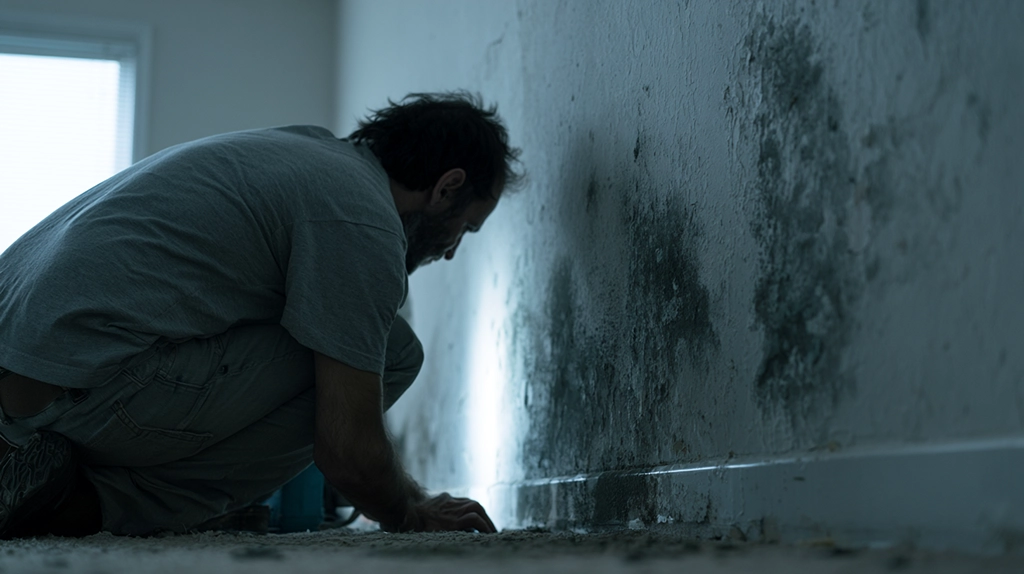
The standard introduction to fungi goes something like this: mold on walls, crop infections, food spoilage, airborne spores. The organism arrives in context as a problem to manage or remove.
In Bandung, Indonesia, a different introduction is being written.
MYCL — Mycotech Lab — is a biotechnology company producing leather-like materials from fungal mycelium and agricultural waste. Its premise is a direct inversion of the standard fungal narrative: fungi are not contamination. They are living infrastructure. And in the right conditions, they can grow into something you might wear.
Bandung is an appropriate place for this idea to take root. The city has long been a center of creative industry in Indonesia, sitting close to Java’s agricultural landscapes and the fermentation traditions that run through the region’s food culture. What MYCL is doing draws on both — and points toward something that extends well beyond either.
A Biotechnology Idea Rooted in Tempeh Culture
MYCL was founded in 2015 by Adi Reza Nugroho, an architecture graduate from the Bandung Institute of Technology. The conceptual starting point was not a materials science paper or a trend report from a European design school. It was tempeh.
Tempeh is a traditional Indonesian food made from fermented soybeans. What holds it together — what transforms loose soybeans into a dense, sliceable block — is fungal mycelium. The same network of filaments that most people associate with mold on bread is, in tempeh, doing structural work. It binds. It consolidates. It creates cohesion from what would otherwise be separate particles.
Nugroho’s insight was to ask what else that same biological mechanism might bind together. If mycelium can turn soybeans into food, perhaps it can turn agricultural waste into material.
That question became a company — and eventually a product category.

Credit: Snigdha4work, via Wikimedia Commons, CC BY-SA 4.0
What Is Mylea™, and How Does It Work?
MYCL’s flagship material is Mylea™ — a leather-like sheet grown from fungal mycelium cultivated on sawdust and agricultural residues. The process follows the same basic logic as tempeh production, scaled and redirected toward material rather than food.
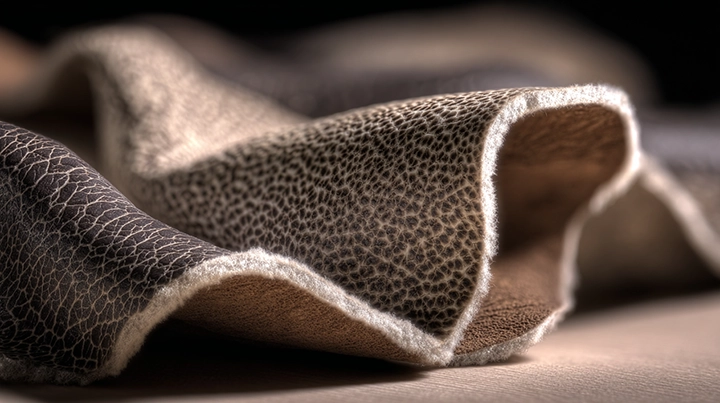
Mycelium — the root-like network of fungal filaments — grows through and around the substrate, gradually binding the loose biomass into a dense, interconnected mat. Once the growth reaches the desired density and structure, the material is harvested, dried, and finished. Natural dyes derived from roots, leaves, and food waste give it color. The final sheet resembles leather in appearance and flexibility.
From there, brands convert the material into shoes, bags, wallets, watch straps, and automotive interior components.
The deeper point is not that fungi can imitate leather. It is that fungal growth itself becomes the manufacturing process. No stamping, no cutting from a hide, no polymer extrusion. The material assembles itself — biologically, from waste, in conditions that require far less energy than conventional manufacturing.
Why the Fashion Industry Is Searching for Alternatives
Conventional leather carries a well-documented environmental cost. Livestock farming contributes to greenhouse gas emissions, land pressure, and water use. The tanning process — which converts raw hide into stable leather — frequently relies on chromium-based chemicals that, when poorly managed, create significant contamination risks for surrounding water systems and communities.
Synthetic alternatives have not resolved the problem so much as relocated it. Most “vegan leather” products are built on polyurethane or PVC — petroleum-derived materials that raise their own concerns around fossil resource use, microplastic release, and end-of-life disposal. A product made without animal hides but bonded with fossil-derived plastic is not straightforwardly better. It is differently problematic.
Mycelium materials offer a third pathway. They grow from renewable, often waste-derived feedstocks. They do not require petroleum-based polymers as their structural foundation. And the biological process that creates them is, at baseline, lower in energy and chemical intensity than either conventional leather tanning or synthetic plastic manufacturing.

Credit: Camilla.vi, via Wikimedia Commons, CC BY 4.0
Agricultural Waste as a Design Resource
One of the more significant aspects of mycelium manufacturing is its relationship with agricultural residue.
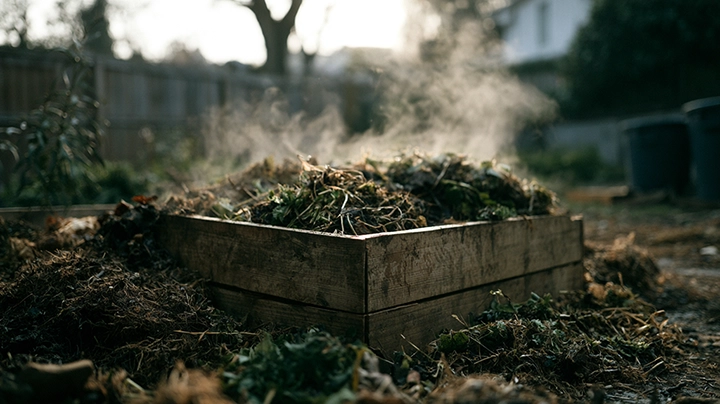
Indonesia generates substantial quantities of agricultural waste — sawdust, crop husks, plant stalks — much of which has limited economic value in its raw form and often ends up burned or left to decompose without being captured for productive use. Mycelium systems can work directly with this material, using it as substrate for growth.
The fungus does not require the waste to be refined or processed into a new form before it can use it. It grows through it, binds it, and converts it into something structurally coherent. The waste becomes the raw material, and the biological process does the manufacturing work.
This matters especially in Southeast Asia, where agricultural biomass is abundant, fermentation traditions are deep-rooted, and mushroom cultivation is already a practiced industry. MYCL is not importing a foreign technology and applying it to a local context. It is recombining things that already exist in Indonesia — fermentation knowledge, agricultural residues, design manufacturing capacity — into a new kind of materials industry.
From Experimental Material to Commercial Supply Chain
Many sustainable materials never leave the prototype stage. They appear in design exhibitions, generate interest from brands, and then encounter the realities of manufacturing — inconsistency at scale, cost pressure, supply chain complexity, durability questions — and quietly disappear.
MYCL has moved further than most. The company has collaborated with Indonesian sneaker brand Brodo on commercial products. It has engaged in conversations with automotive companies including Hyundai and Lexus around interior applications. It has participated in Melbourne Fashion Week, drawing international attention to what is being built in Bandung.
These are not laboratory demonstrations. They are early-stage commercial relationships — signals that mycelium materials can enter real industrial design conversations, not just materials science journals.
The scale, however, remains modest relative to the global leather and textile industries. The question is no longer whether mycelium leather can exist. The question is whether it can scale fast enough, consistently enough, and affordably enough to compete with systems that have had more than a century to optimize.
The Scaling Challenge Cannot Be Ignored
Sustainable materials do not transform industries simply because they are environmentally attractive. They must survive the economics and logistics of manufacturing.
Production volume, quality consistency, durability under use conditions, pricing relative to alternatives, supply chain reliability, and consumer trust all determine whether a material achieves commercial relevance — or remains a compelling niche that never reaches scale.
MYCL describes this transition as the “valley of death” — the difficult passage between scientific validation and industrial adoption. The term is apt. Many materials fail here, not because the science is wrong, but because the gap between laboratory success and factory-floor reliability is wider than early optimism suggests.
Mycelium leather should not be understood as a material destined to automatically replace animal or synthetic leather. Its long-term relevance depends on infrastructure investment, industrial partnerships, transparent lifecycle analysis, and continued process optimization. The environmental case is strong. The commercial case is still being built.
Fungi as Builders of the Circular Economy
MYCL’s work reflects something larger than a single company’s product line. It reflects a shift in how fungi are understood as systems.
In homes, fungi mean moisture problems. In medicine, they mean infections. In forests and soils, they mean decomposition and nutrient cycling. In materials science and biotechnology, they are increasingly being understood as manufacturing collaborators — organisms that can be directed, within limits, to build things of value from things that would otherwise be waste.
Mycelium can already be grown into packaging, insulation, acoustic panels, and now textiles and leather alternatives. Its value in each case comes from the same biological characteristics: network formation, substrate binding, adaptability, structural resilience. These are not properties that need to be engineered into the organism. They are what fungi already do.
What MYCL and companies like it are doing is creating conditions in which those existing capabilities become useful to manufacturing.
Some Materials May Be Grown
For most of industrial history, manufacturing has followed a common logic: extract raw materials, process them chemically or mechanically, assemble them into products. The inputs change; the logic stays roughly the same.
Mycelium materials suggest a different possibility. Rather than forcing inert materials into shape through energy-intensive processes, biological systems can be cultivated to assemble structure from available organic inputs — growing into form rather than being manufactured into it.
Indonesia’s mycelium leather industry is early. The volumes are small, the supply chains are still developing, and the commercial landscape is uncertain. But what MYCL has demonstrated in Bandung already points toward something significant: that materials production does not have to begin with extraction.
Some of it, at least, can begin with a substrate, a fungus, and time.
FAQ
What is mycelium leather? A leather-like biomaterial made from fungal mycelium grown on organic substrates such as sawdust or agricultural waste, then processed into flexible sheets for fashion and design applications.
How does MYCL create leather alternatives from fungi? The company cultivates fungal mycelium on agricultural residues until it forms a dense, cohesive mat, which is then dried, dyed with natural pigments, and finished into sheet material used by brands for products including shoes and bags.
Why is mycelium leather considered sustainable? It uses agricultural waste as its feedstock, avoids animal hides, and reduces dependence on petroleum-based synthetic materials — while the production process is lower in energy and chemical intensity than conventional leather manufacturing.
Can mycelium leather completely replace animal leather? Not yet. Production volumes remain small, and large-scale adoption depends on durability, cost, manufacturing consistency, and supply chain development at industrial scale.
Why is Indonesia significant in fungal biomaterials? Indonesia has deep fermentation traditions, abundant agricultural residues, established mushroom cultivation expertise, and a growing creative manufacturing sector — conditions that MYCL has combined into a functional biomaterials operation.
References
- Asia Media Centre — From Fungi to Fashion: How Indonesia’s MYCL Is Turning Mushrooms into Leather: https://www.asiamediacentre.org.nz/from-fungi-to-fashion-how-indonesias-mycl-is-turning-mushrooms-into-leather
Key Takeaways
- The standard introduction to fungi goes something like this: mold on walls, crop infections, food spoilage, airborne spores.
- MYCL — Mycotech Lab — is a biotechnology company producing leather-like materials from fungal mycelium and agricultural waste.
- Bandung is an appropriate place for this idea to take root.
- MYCL was founded in 2015 by Adi Reza Nugroho, an architecture graduate from the Bandung Institute of Technology.
- What holds it together — what transforms loose soybeans into a dense, sliceable block — is fungal mycelium.
Frequently Asked Questions
When Fungi Become a Material, Not a Contaminant?
The standard introduction to fungi goes something like this: mold on walls, crop infections, food spoilage, airborne spores. The organism arrives in context as a problem to manage or remove.
What should you know about a Biotechnology Idea Rooted in Tempeh Culture?
MYCL was founded in 2015 by Adi Reza Nugroho, an architecture graduate from the Bandung Institute of Technology. The conceptual starting point was not a materials science paper or a trend report from a European design school. It was tempeh.
What Is Mylea™, and How Does It Work?
MYCL’s flagship material is Mylea™ — a leather-like sheet grown from fungal mycelium cultivated on sawdust and agricultural residues. The process follows the same basic logic as tempeh production, scaled and redirected toward material rather than food.
Why the Fashion Industry Is Searching for Alternatives?
Conventional leather carries a well-documented environmental cost. Livestock farming contributes to greenhouse gas emissions, land pressure, and water use. The tanning process — which converts raw hide into stable leather — frequently relies on chromium-based chemicals that, when poorly managed, cre
What should you know about agricultural Waste as a Design Resource?
One of the more significant aspects of mycelium manufacturing is its relationship with agricultural residue.