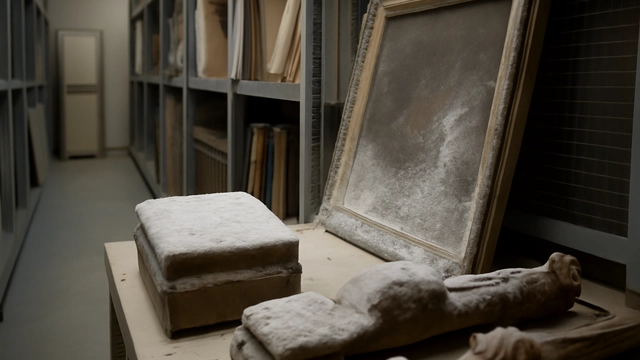

In Denmark, an invisible “mold crisis” is quietly spreading through museums. According to a joint investigation by the National Museum of Denmark and Aalborg University, at least twelve museums nationwide have reported mold contamination in their collection storage rooms—despite maintaining ideal environmental conditions: stable temperatures, relative humidity around 50%, and good air circulation. Yet valuable paintings and wooden artifacts are still veiled by a white haze of mold. Researchers identified the culprit as xerophilic Aspergillus in museums—a group of “extreme xerophilic” molds capable of surviving in environments once believed to be too dry for fungal life.

Even more alarming, Denmark is not alone. Museums across Sweden, the Netherlands, Germany, and the United Kingdom have reported similar findings: active mold growth on paper, canvas, and wood, even when humidity levels remain below 60%. European conservation experts now call this the “mould outbreak in museum repository”, marking a major shift in how we understand preservation. Dryness, it turns out, is no longer synonymous with safety.
Dryness as a Survival Strategy
In the fungal world, “dry” doesn’t mean “dead.” For molds, what truly matters is water activity—the microscopic layer of water that clings to surfaces, invisible to our eyes but vital to theirs. As long as that surface moisture exceeds 0.7 in water activity, mold can thrive even when the air feels dry. Species such as Aspergillus penicilloides, A. conicus, and A. halophilicus can even grow at 0.65, equivalent to about 55% relative humidity.

Their secret lies in extraordinary biological adaptations. These fungi fill their cells with sugar alcohols and glycerol—natural “biological moisturizers” that prevent dehydration. Their cell walls thicken, rich in melanin and flexible polysaccharides, shielding them from cracking and UV damage. When conditions become too harsh, they enter dormancy—essentially switching off—until a slight increase in moisture reawakens them within hours. These traits allow them to persist where other molds perish, silently expanding over years in what we once thought were sterile, controlled environments.
When Control Isn’t Enough
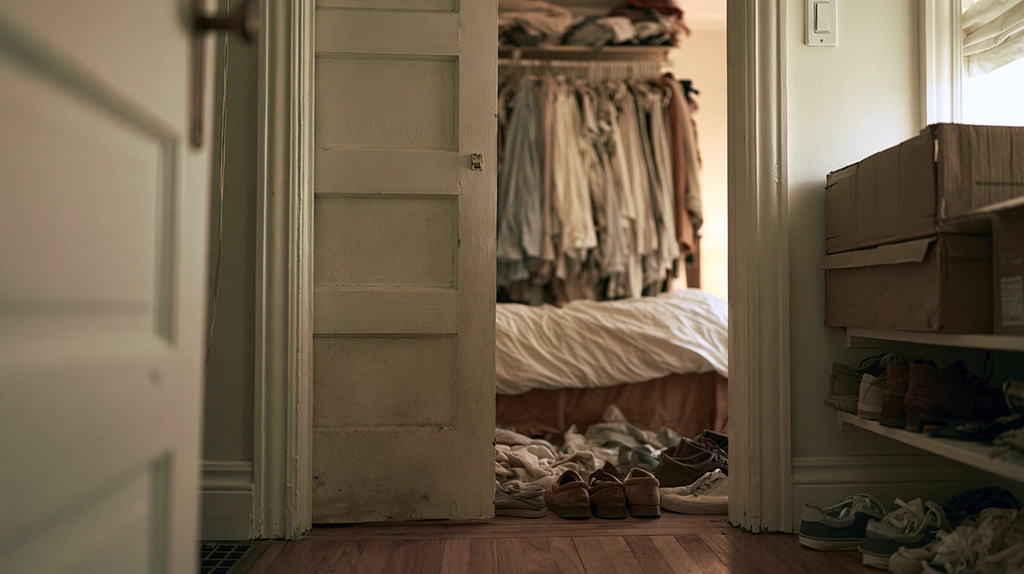
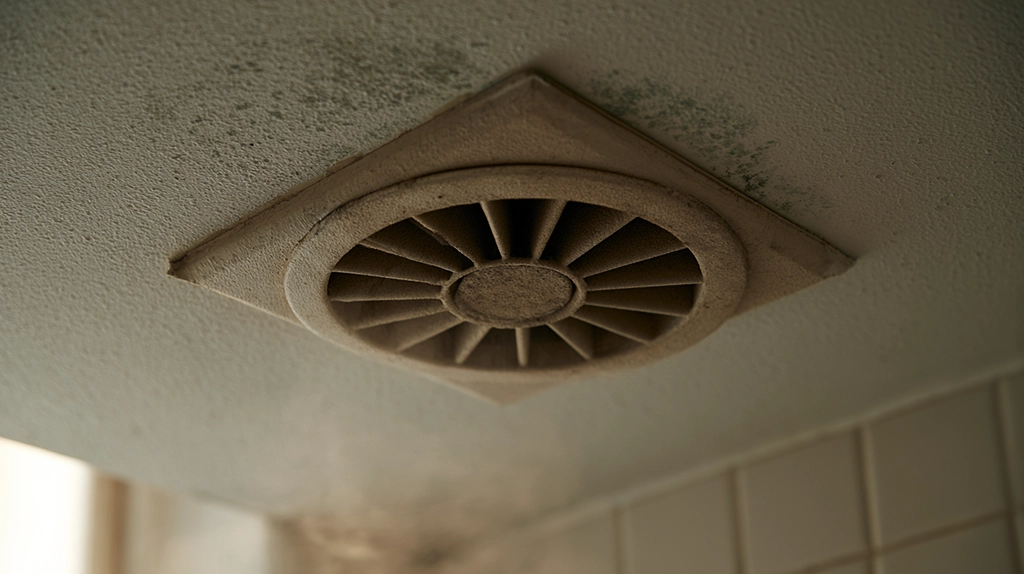
The Danish investigation revealed an unsettling truth: compliance doesn’t equal safety. Though the museum’s air was dry, stagnant airflow and dust accumulation created microzones where moisture lingered. Organic particles within dust became nutrition for molds. Together, these conditions formed what researchers call a “dry paradise”—outwardly stable, yet microscopically damp. Many fungal hotspots were found precisely in those air-dead corners or within porous materials, where traditional humidity sensors cannot reach.
This problem extends far beyond the museum world. In footwear and furniture manufacturing, companies often assume that “a dry warehouse means no mold.” Yet packaging cartons, fabric linings, and wooden parts may retain high surface moisture, especially when sealed. In food and pharmaceutical industries, xerophilic molds have been detected on powdered goods, capsules, and even near desiccants. The same risks haunt electronics and logistics sectors, where packaging materials face fluctuating humidity and uneven airflow—conditions perfect for slow, invisible fungal growth.
From Humidity Control to Microclimate Management
Effective mold prevention today requires more than keeping air dry—it demands microclimate management. Beyond monitoring relative humidity, industries and institutions must track surface water activity, temperature gradients, airflow, and dust accumulation. Museums are now experimenting with xerophilic microfungi threat to collections detection through volatile organic compound (VOC) sensors and DNA-based sampling to identify mold activity early. Industrial sites can deploy smart monitoring patches, microclimate sensors, or even surface-modified materials to resist colonization.

Mold prevention is no longer a passive “drying task,” but an active process of understanding and managing subtle environmental shifts. Molds have already adapted to live beyond our conventional rules—thriving quietly in dry museums, sealed warehouses, and packaged goods. A humidity meter showing 55% and a spotless wall might look reassuring, yet they may simply mean “not visible yet.”
True mold awareness doesn’t end with lowering humidity; it begins with understanding how fungi survive across diverse environments—so we can build smarter, more resilient prevention strategies.
What we perceive as clean may, in truth, be a slow-growing paradise for mold.
Key Takeaways
- In Denmark, an invisible “mold crisis” is quietly spreading through museums.
- Researchers identified the culprit as xerophilic Aspergillus in museums—a group of “extreme xerophilic” molds capable of surviving in environments once believed to be too dry for fungal life.
- Dryness, it turns out, is no longer synonymous with safety.
- halophilicus can even grow at 0.65, equivalent to about 55% relative humidity.
- Their cell walls thicken, rich in melanin and flexible polysaccharides, shielding them from cracking and UV damage.
Frequently Asked Questions
What should you know about dryness as a Survival Strategy?
In the fungal world, “dry” doesn’t mean “dead.” For molds, what truly matters is water activity—the microscopic layer of water that clings to surfaces, invisible to our eyes but vital to theirs. As long as that surface moisture exceeds 0.7 in water activity, mold can thrive even when the air feels d
When Control Isn’t Enough?
The Danish investigation revealed an unsettling truth: compliance doesn’t equal safety. Though the museum’s air was dry, stagnant airflow and dust accumulation created microzones where moisture lingered. Organic particles within dust became nutrition for molds. Together, these conditions formed what
What should you know about from Humidity Control to Microclimate Management?
Effective mold prevention today requires more than keeping air dry—it demands microclimate management. Beyond monitoring relative humidity, industries and institutions must track surface water activity, temperature gradients, airflow, and dust accumulation. Museums are now experimenting with xerophi
What are the key findings about Mold in the Dry??
In Denmark, an invisible “mold crisis” is quietly spreading through museums. According to a joint investigation by the National Museum of Denmark and Aalborg University, at least twelve museums nationwide have reported mold contamination in their collection storage rooms—despite maintaining ideal en
How does Mold in the Dry? affect public health or safety?
Even more alarming, Denmark is not alone. Museums across Sweden, the Netherlands, Germany, and the United Kingdom have reported similar findings: active mold growth on paper, canvas, and wood, even when humidity levels remain below 60%. European conservation experts now call this the “mould outbreak