
When Mold Becomes a Shield
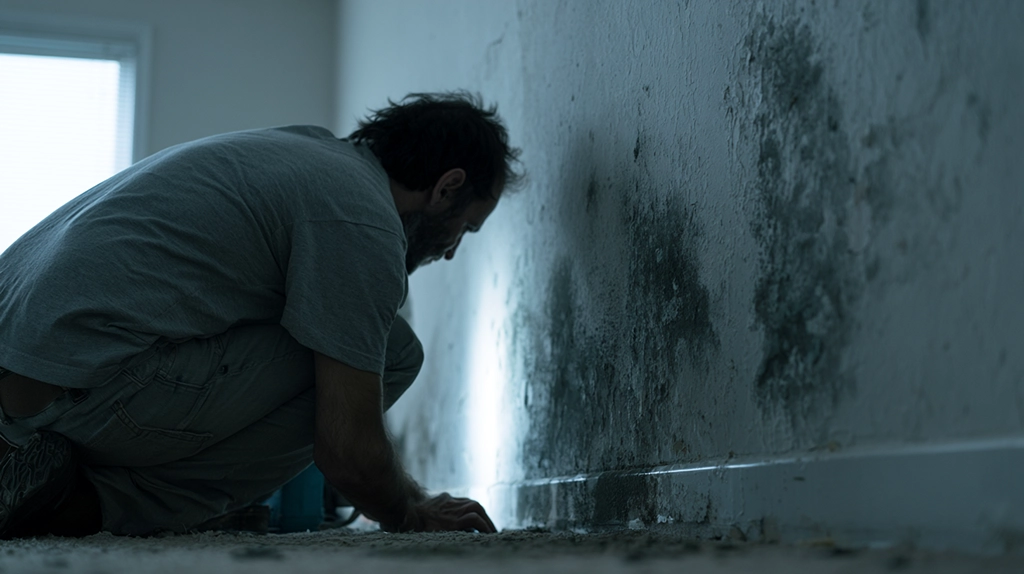
If ever there was a plot twist in the story of mold, this is it. Picture the ruined heart of Chernobyl: metal twisted, concrete fractured, and a black fungus — Cladosporium sphaerospermum — flourishing on walls where few organisms could hope to survive. But this mold isn’t just enduring radioactive fallout; it’s possibly feasting on it.
This fungus is loaded with melanin, the same pigment that colors our skin and shields us from the sun. In the mold, however, melanin may do something even stranger: turn deadly gamma rays into usable energy. Scientists call this “radiosynthesis,” and it’s being hailed as a fungal cousin to photosynthesis — only the food is radiation, not sunlight.


From Disaster Zone to Deep Space
The story doesn’t end at Chernobyl’s barricades. With a little help from NASA and a cadre of forward-thinking bioengineers, Cladosporium sphaerospermum was sent to the International Space Station (ISS). Up there, surrounded by cosmic rays, the fungus didn’t just survive; it grew into a living barrier that measurably reduced radiation beneath its layer. Even a two-millimeter coating had an effect.
The implication? Astronauts heading to Mars may not need to pack lead walls or heavy water. Instead, future space explorers might grow their own radiation shields — lightweight, self-healing, and biodegradable. These fungal barriers could be integrated into habitat walls, space suits, or even 3D-printed structures, cultivated using in-situ resources on the Moon or Mars.

Feeding on Fallout: The Secret of Melanin
What’s behind this superpower? It comes down to melanin. In people, it helps prevent UV damage. In the Chernobyl mold, it might be harvesting the energy from gamma radiation — not just shielding the fungus, but powering its growth. The exact mechanisms are still being unraveled in labs from Johns Hopkins to JPL, but the science is catching up to the science fiction.
This potential energy-conversion process, radiosynthesis, could point to a fundamentally new form of microbial metabolism. Even if it’s not energy-efficient in traditional terms, the resilience it offers could be game-changing for future biological design.

Imagine engineered fungi, optimized for radiation protection, lining habitats on the Moon or Mars. Instead of being an unwelcome invader,
mold could be humanity’s first “living space suit.”
Back on Earth: A New Weapon for Cleanup
The same fungal powers could revolutionize nuclear disaster recovery here on Earth. Traditional cleanup methods at sites like Fukushima and Chernobyl are risky, expensive, and slow. But imagine bioremediation crews deploying fungi that crawl into the deepest cracks, absorb radiation, and possibly even neutralize contaminants.
Because mold can colonize the most irregular, hard-to-reach places, it’s a natural fit for environments where conventional technology can’t go. And unlike many synthetic materials, fungal colonies are regenerative. A small spore sample could be cultivated into a full-scale shielding layer or contaminant-mitigating biomass. Early studies suggest that melanin-rich fungi may also bind or immobilize radioactive isotopes, limiting their environmental mobility.

Beyond disaster zones, these principles could be applied to uranium mines, decommissioned reactors, and even medical facilities. Fungi may become essential tools in a new era of low-impact, high-efficiency environmental remediation.
Rethinking the Mold Narrative
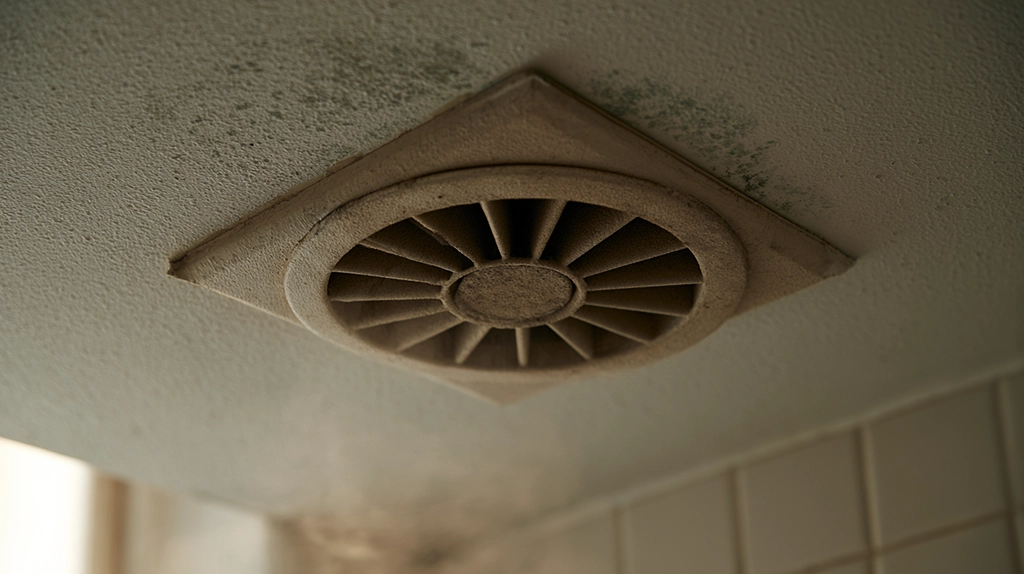
For most of us, “mold” means ruined bread, musty attics, and health hazards. But Cladosporium sphaerospermum and its kin are rewriting the mold story — from villain to hero. From medical innovation to space-age materials and environmental clean-up, fungi are rapidly shifting from problems to partners.
If there’s a moral here, it’s that the biological world is full of surprises – and that sometimes, the solutions to our toughest technological problems have been quietly growing in the shadows all along. In times of global climate change, resource constraints, and interplanetary ambitions, nature’s overlooked systems may offer the most elegant answers. This isn’t just a scientific footnote. It’s a cultural shift: a move toward biomimicry, biological architecture, and co-living systems. The mold that once thrived in abandoned ruins may soon be integral to the blueprints of space stations and sustainable cities.
The Fungal Frontier
Picture this: Martian outposts with fungal walls that grow, repair themselves, and soak up cosmic rays. Disaster zones where mycelium forms a living barrier against invisible threats. Science fiction? Maybe yesterday. Today, it’s real research.
Picture this: Martian outposts with fungal walls that grow, repair themselves, and soak up cosmic rays. Disaster zones where mycelium forms a living barrier against invisible threats. Science fiction? Maybe yesterday. Today, it’s real research. As NASA and global agencies push deeper into space, and as climate and environmental disasters demand new answers here on Earth, the humble mold may be one of our most unexpected allies. Its adaptability is no longer just a curiosity – it may become a foundation for survival in the harshest environments. The future of extreme environments may not belong solely to machines or synthetic materials. Instead, it may be co-authored by microbes — evolved over millennia to survive what we only now dare to explore.
Conclusion: From Mold to Moonshots
What was once dismissed as grime on a reactor wall is now emerging as a biotechnological game-changer. Radiotrophic fungi like Cladosporium sphaerospermum challenge how we define resilience, energy, and survival.
Whether shielding astronauts in deep space or reclaiming radioactive ruins on Earth, this humble mold reveals a truth we’ve barely begun to explore: the future of extreme environments may belong not to machines, but to microbes. And in the race to outsmart radiation, it’s the fungi that might lead the way. In the years ahead, we may look back at these early studies not as fringe curiosities, but as the first chapter in a new era of bio-integrated technology. With every spore, this mold invites us to rethink our relationship with naturenot as something to control, but as something to collaborate with. In doing so, it helps turn crisis into opportunity, decay into innovation, and the invisible threat of radiation into a resource for life.
References
- Dadachova, E., et al. (2007). Ionizing radiation changes the electronic properties of melanin and enhances the growth of melanized fungi. PLoS ONE, 2(5), e457. https://doi.org/10.1371/journal.pone.0000457
- Shunk, G. K., et al. (2020). Radiation shielding potential of melanized fungi. Frontiers in Microbiology, 11, 1706. https://doi.org/10.3389/fmicb.2020.01706
- NASA Ames Research Center — ISS Fungal Radiation Experiments
- Wikimedia Commons, Public Domain / CC BY images as cited above
Key Takeaways
- Please login When Mold Becomes a Shield If ever there was a plot twist in the story of mold, this is it.
- But this mold isn’t just enduring radioactive fallout; it’s possibly feasting on it.
- Scientists call this “radiosynthesis,” and it’s being hailed as a fungal cousin to photosynthesis — only the food is radiation, not sunlight.
- Up there, surrounded by cosmic rays, the fungus didn’t just survive; it grew into a living barrier that measurably reduced radiation beneath its layer.
- These fungal barriers could be integrated into habitat walls, space suits, or even 3D-printed structures, cultivated using in-situ resources on the Moon or Mars.
Frequently Asked Questions
What should you know about please login to bookmark?
Please login When Mold Becomes a Shield If ever there was a plot twist in the story of mold, this is it. Picture the ruined heart of Chernobyl: metal twisted, concrete fractured, and a black fungus — Cladosporium sphaerospermum — flourishing on walls where few organisms could hope to survi
When Mold Becomes a Shield?
If ever there was a plot twist in the story of mold, this is it. Picture the ruined heart of Chernobyl: metal twisted, concrete fractured, and a black fungus — Cladosporium sphaerospermum — flourishing on walls where few organisms could hope to survive. But this mold isn’t just enduring ra
What should you know about from Disaster Zone to Deep Space?
The story doesn’t end at Chernobyl’s barricades. With a little help from NASA and a cadre of forward-thinking bioengineers, Cladosporium sphaerospermum was sent to the International Space Station (ISS). Up there, surrounded by cosmic rays, the fungus didn’t just survive; it grew into a liv
What should you know about feeding on Fallout: The Secret of Melanin?
What’s behind this superpower? It comes down to melanin. In people, it helps prevent UV damage. In the Chernobyl mold, it might be harvesting the energy from gamma radiation — not just shielding the fungus, but powering its growth. The exact mechanisms are still being unraveled in labs from Johns Ho
What should you know about back on Earth: A New Weapon for Cleanup?
The same fungal powers could revolutionize nuclear disaster recovery here on Earth. Traditional cleanup methods at sites like Fukushima and Chernobyl are risky, expensive, and slow. But imagine bioremediation crews deploying fungi that crawl into the deepest cracks, absorb radiation, and possibly ev