According to BRIGHTER SIDE OF NEWS
Advances in wound care have traditionally focused on improved materials, antimicrobial coatings, and better moisture control. A recent scientific development suggests a more radical shift may be possible: living hydrogels grown by fungi that actively participate in the healing process. Researchers report that these fungal-based materials exhibit properties that could redefine how wounds are treated, particularly in complex or chronic cases where conventional dressings fall short.
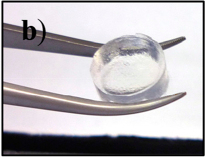
Source: Wikimedia Commons (File:Crosslinked ultrashort peptide hydrogel.jpg), CC BY 4.0.
Unlike inert wound dressings, fungal hydrogels are biologically active. They combine the structural properties of hydrogels—softness, water retention, and flexibility—with the adaptive and self-organizing capabilities of living fungal systems. This hybrid approach positions fungi not merely as passive materials but as functional partners in tissue repair.

Source: Wikimedia Commons (File:Short-peptide-based hydrogel, electron microscope image.jpg), CC BY 4.0.
What Is a Living Fungal Hydrogel?
Hydrogels are networks of polymers capable of holding large amounts of water while maintaining structural integrity. In medicine, they are widely used for wound dressings because they keep wounds moist, reduce pain, and support tissue regeneration.
In this new approach, fungi are used to grow the hydrogel rather than simply being embedded within it. Fungal cells naturally produce extracellular matrices composed of polysaccharides, proteins, and other biopolymers. Under controlled conditions, researchers guide fungal growth to form a cohesive, hydrated structure that functions as a living hydrogel.
This material is not synthetic in the traditional sense. It is biologically produced and sustained by fungal metabolism, giving it properties that static materials cannot replicate.

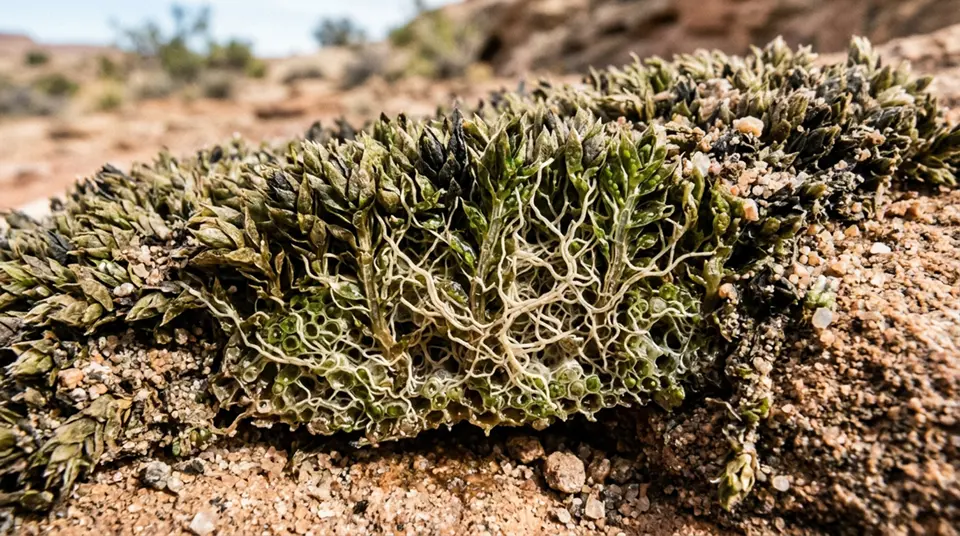
Source: Wikimedia Commons (File:Fungal hyphae and mycelium.jpg), CC BY-SA 4.0.
Why Fungi Are Suitable for Biomedical Hydrogels
Fungi possess several characteristics that make them well suited for this application:
Natural biopolymer production, including polysaccharides similar to those used in medical materials
Structural adaptability, allowing growth into complex shapes and surfaces
Tolerance to varied environments, including low nutrients and fluctuating moisture
Self-repair capabilities, enabling the material to recover from minor damage
In nature, fungi form networks that adapt to their surroundings, respond to stress, and maintain stability over time. Translating these properties into a biomedical context opens new possibilities for responsive wound dressings.
How Living Hydrogels Differ from Conventional Dressings
Traditional wound dressings—gauze, foams, films, and synthetic hydrogels—are passive. They protect wounds and manage moisture but do not change in response to the wound environment.
Living fungal hydrogels differ in several key ways:
Dynamic Response
The material can adjust its structure and biochemical activity in response to environmental changes such as moisture levels, temperature, or pH.
Sustained Moisture Regulation
Rather than simply absorbing or retaining water, living hydrogels can actively regulate hydration through biological processes.
Potential Bioactivity
Fungi can produce compounds with antimicrobial or anti-inflammatory properties, potentially reducing infection risk.
Self-Maintenance
The living matrix may maintain its integrity over longer periods without frequent replacement.
These features suggest a shift from wound coverage to active wound support.
Implications for Wound Healing
Effective wound healing depends on a delicate balance: sufficient moisture, protection from pathogens, oxygen exchange, and support for new tissue growth. Chronic wounds—such as diabetic ulcers or pressure sores—often fail to heal because this balance is disrupted.
Living fungal hydrogels may address several of these challenges simultaneously:
maintaining a stable, moist environment
reducing bacterial colonization through competitive microbial presence
supporting cell migration and tissue regeneration
adapting to wound shape and movement
By functioning as a living interface between the wound and the external environment, fungal hydrogels could shorten healing times and reduce complications.
The Role of Living Systems in Regenerative Medicine
This research reflects a broader trend in regenerative medicine: moving away from static materials toward living or semi-living systems. Cells, tissues, and biological scaffolds are increasingly used to guide healing rather than merely covering damage.
Fungal hydrogels fit within this paradigm by offering a controllable living system that is easier to grow and maintain than human or animal cells. Fungi reproduce rapidly, require fewer resources, and can be cultivated at scale under controlled conditions.
From a manufacturing perspective, this could reduce costs and increase accessibility if clinical applications are realized.
Safety and Biocompatibility Considerations
Any living material intended for medical use must meet strict safety standards. Researchers emphasize that fungal species selected for hydrogel production are non-pathogenic and can be engineered or processed to minimize immune reactions.
Key safety considerations include:
ensuring fungi do not invade surrounding tissue
preventing uncontrolled growth
confirming absence of harmful metabolites
maintaining sterility during application
In many designs, the fungal cells remain metabolically active but spatially constrained within the hydrogel matrix, limiting their interaction with human tissue.
Early laboratory studies suggest promising biocompatibility, but extensive testing will be required before clinical use.
Current Research Limitations
While the concept is compelling, fungal living hydrogels remain in the experimental stage. Several challenges must be addressed:
Scalability: Producing consistent, standardized materials at medical scale
Longevity: Controlling how long the living material remains active
Regulation: Navigating approval pathways for living medical devices (U.S. FDA—Medical Device Overview)
Public acceptance: Addressing concerns about using fungi in wound care
Researchers stress that clinical application is still years away and will require interdisciplinary collaboration across microbiology, materials science, medicine, and regulatory science.
Broader Biomedical Applications
Beyond wound healing, living fungal hydrogels may have applications in other areas:
tissue engineering scaffolds
drug delivery systems
biosensors embedded in medical devices
temporary implants that degrade naturally
Their ability to combine structural support with biological activity makes them attractive for situations where static materials are insufficient.
A Shift in How Materials Are Designed
Perhaps the most significant implication of this research is conceptual. Instead of designing materials that resist biological processes, scientists are learning to collaborate with biology.
Fungi are no longer seen solely as pathogens or industrial organisms but as partners in advanced material design. This shift mirrors developments in other fields, such as bacterial cellulose production and mycelium-based construction materials.
In medicine, this approach challenges long-standing assumptions about sterility and control, suggesting that carefully managed living systems may offer safer and more effective solutions.

Source: Wikimedia Commons (File:Mycelium based composite.png), CC BY 4.0.
Environmental and Sustainability Considerations
Fungal hydrogels may also offer sustainability advantages. Fungi can be grown using low-energy inputs and renewable substrates, reducing reliance on petroleum-based polymers.
As healthcare systems seek to lower environmental footprints, biologically produced materials could play an increasing role in sustainable medical innovation.
Future Outlook
The development of living hydrogels grown by fungi remains at an early stage, but it represents a significant departure from conventional wound care strategies. If successfully translated into clinical practice, these materials could offer:
improved outcomes for chronic wounds
reduced infection rates
fewer dressing changes
enhanced patient comfort
Researchers caution that rigorous testing, transparent communication, and careful regulation will be essential to ensure safety and efficacy.
References
U.S. Food and Drug Administration (FDA). Medical Devices.
According to BRIGHTER SIDE OF NEWS
Key Takeaways
- Researchers have developed living hydrogels grown from fungal mycelium that have potential applications in wound healing due to their biological compatibility, moisture-retaining properties, and structural versatility.
- Fungal mycelium-based hydrogels can be engineered to degrade at controlled rates matching wound healing timescales, potentially eliminating the need for dressing removal that can disrupt healing tissue.
- Chitin—a structural component of fungal cell walls—has documented wound healing properties including promotion of fibroblast proliferation and anti-inflammatory activity, forming part of the biological basis for mycelium wound dressings.
- Living mycelium hydrogels can potentially be functionalised to release therapeutic compounds (antibiotics, growth factors, anti-inflammatory agents) from the gel matrix as the mycelium degrades.
- Clinical translation of mycelium-based wound dressings requires extensive biocompatibility testing, standardisation of production, and regulatory approval—current research is at early proof-of-concept stage.
Frequently Asked Questions
What is a living hydrogel grown from fungi?
A mycelium-based living hydrogel is a biomaterial composed of or derived from the thread-like hyphal networks of fungi, incorporating varying amounts of water within a three-dimensional biopolymer matrix. ‘Living’ hydrogels are those in which viable fungal cells or hyphae are integrated within the gel structure, potentially maintaining biological activity; ‘derived’ hydrogels may use processed mycelium components (chitin, glucan, glycoproteins) without living cells. The gel structure: fungal mycelium naturally produces a hydrogel-like material when grown in defined conditions—the dense hyphal mat, combined with secreted extracellular polysaccharides and proteins, forms a viscoelastic material with high water content (typically 80–95% water by mass in fresh mycelium). The mechanical properties (stiffness, elasticity, viscosity) can be tuned by selecting fungal species, controlling growth conditions, and applying post-processing techniques (heat treatment, chemical crosslinking, freeze-drying and rehydration).
Why might fungal hydrogels be good for wound healing?
Fungal mycelium hydrogels have several properties that align with the requirements for effective wound dressings and tissue engineering scaffolds. Moisture maintenance: wounds heal faster in a moist environment; hydrogels maintain wound moisture by releasing water slowly while absorbing exudate, maintaining optimal water activity at the wound surface. Biological compatibility: fungi are phylogenetically closer to animals than bacteria are, and fungal biopolymers (chitin, β-glucan) are recognised by mammalian cells through specific receptors that mediate beneficial immune responses in wound healing contexts. Chitin wound healing effects: chitin (poly-N-acetylglucosamine) is the primary structural polymer of fungal cell walls; research has demonstrated that chitin and its derivative chitosan promote fibroblast proliferation and migration, accelerate collagen deposition, reduce inflammatory responses in wound models, and have intrinsic antibacterial properties. Porosity: mycelium hydrogels have inherent porosity that allows cell migration and vascular ingrowth into scaffolds used for tissue engineering applications. Biodegradability: fungal hydrogels degrade through enzymatic activity present in wound fluid, with degradation rate tuneable through material processing.
How are scientists growing fungal hydrogels for wound applications?
The production of mycelium-based wound healing materials involves several approaches that vary in complexity and the degree of biological activity retained. Direct mycelium mat production: selected fungal strains (often food-grade or medical mushroom species like Ganoderma, Pleurotus, or specialised species with low immunogenicity) are grown in liquid culture under conditions that produce a cohesive mycelium mat; the mat is harvested, washed, and processed (autoclave sterilisation, chemical treatment, or lyophilisation followed by rehydration) to produce a biocompatible material. Chitin and glucan extraction: cell wall components are extracted from bulk mycelium through alkaline and acid extraction steps; these purified polysaccharides can be formulated into hydrogels, films, or scaffolds with precisely defined composition. Composite materials: mycelium components are combined with other biomaterials (alginate, gelatin, collagen, polyethylene glycol) to create composite hydrogels with engineered mechanical properties and biological activity profiles. The production is typically at small research scale; scaling to quantities required for commercial wound dressing production is an engineering challenge not yet fully addressed.
How does chitin from fungi compare to chitin from shrimp shells for medical use?
Chitin for medical and pharmaceutical applications has historically been produced from crustacean shells (shrimp, crab, krill) as a byproduct of seafood processing—this remains the dominant commercial source. Fungal chitin is attracting increasing interest as an alternative for several reasons. Allergen concerns: crustacean-derived chitin carries shellfish allergen proteins that require removal through purification processes; despite purification, residual allergenicity concern exists for patients with shellfish allergy; fungal chitin is shellfish allergen-free. Supply chain security: crustacean chitin supply depends on seafood processing industry cycles and is geographically concentrated; fungal chitin can be produced year-round in controlled bioreactor conditions with any climate. Structural differences: crustacean chitin is primarily α-chitin (tightly packed crystal structure); fungal chitin composition varies by species (Rhizopus has chitin with different structure than Aspergillus or Ganoderma); the structure affects processing characteristics and biological activity. Fermentation scalability: fungal mycelium can be grown to high density in industrial fermenters on low-cost agricultural waste substrates, potentially offering competitive production costs at scale. Current status: fungal chitin for pharmaceutical use is not yet a major commercial product; most research grade fungal chitosan uses Mucorales fungi (Rhizopus, Mucor) as production organisms.
When might fungal wound dressings become clinically available?
The clinical translation pathway for mycelium-based wound healing materials involves regulatory and safety requirements that extend the timeline from laboratory proof-of-concept to available clinical product significantly. Current stage: most published research is at in vitro (cell culture) or small animal model stages—demonstrating that mycelium-derived materials do not harm cells, that they support cell attachment and proliferation, and that they influence wound healing endpoints in rodent wound models. Required steps to clinical availability: biocompatibility testing following ISO 10993 series (cytotoxicity, sensitisation, genotoxicity testing)—significant but established testing pathway; GMP (Good Manufacturing Practice) manufacturing scale-up and standardisation; clinical trials in humans (Phase I safety, Phase II preliminary efficacy, Phase III confirmatory efficacy); regulatory submissions to FDA (US) and/or EMA (EU) as a medical device (Class II or III depending on design). Realistic timeline: given current research stage, first commercial mycelium-based wound care products are likely 7–15 years away under an optimistic development trajectory. Near-term products using chitin/chitosan derivatives from fungal sources (rather than living mycelium hydrogels) are closer to market as they build on the already-approved chitosan wound dressing category.