A Living Material, Not a Manufactured One
This article is a vivid glimpse into what might become one of the most extraordinary paradigm shifts in medicine—turning a humble soil mold, once dismissed as mere debris, into the architect of tomorrow’s wound care. Marquandomyces marquandii, usually an unheralded member of the fungal world, now stands at the frontier of biofabricated healing.
What fascinates me most is not just the scientific feat of coaxing mycelium into a hydrogel, but the underlying principle: biological design over synthetic assembly. For centuries, medical materials have been built by compounding, mixing, or layering plastics, cotton, and polymers. But here, the “material” is not manufactured in the traditional sense—it is grown. Every layer, pore, and fiber is shaped by the fungus’s natural rhythm, producing a structure whose logic echoes that of living tissue.

The Mycelial Blueprint for Healing
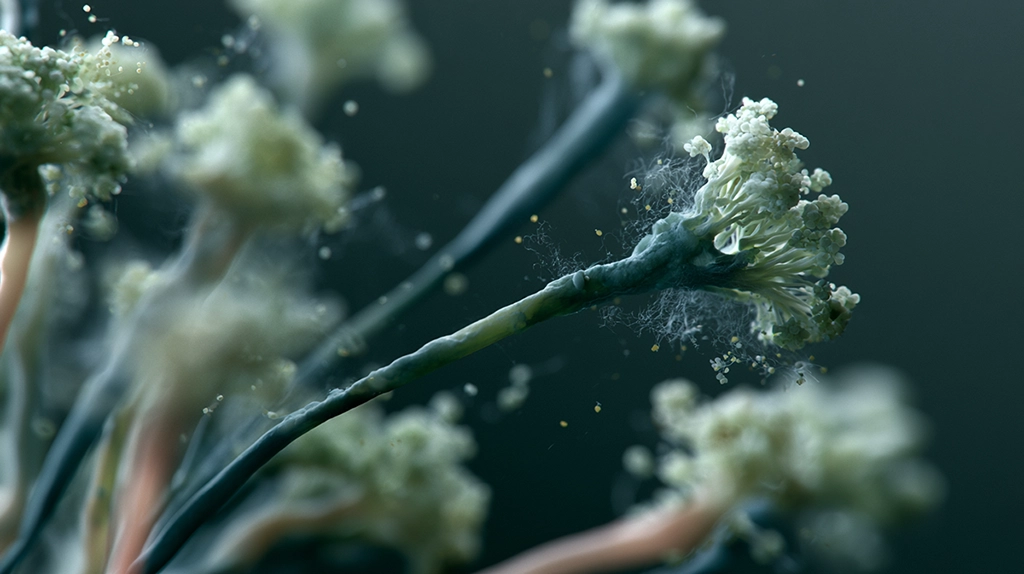
The core innovation lies in the mycelium—the rootlike filaments that weave themselves into dense, interconnected mats. Under liquid culture, M. marquandii produces a water-rich hydrogel with layered porosity. These “living bandages” are not merely moist dressings, but engineered environments: retaining up to 80% water, featuring oxygen-permeable channels, and graded textures that mimic the body’s own architecture. Such complexity, achieved naturally, would be difficult to replicate even with the most advanced 3D bioprinting technologies.
Researchers envision these fungal hydrogels as much more than a covering—they could act as scaffolds for regeneration, adapting to each wound, and potentially dissolving harmlessly once healing is complete. With further development, the bandages could be seeded with stem cells, medications, or even bioactive peptides to accelerate recovery and reduce complications.

Why Fungi Fit the Medical Future
Fungi are uniquely equipped for this role. Their cell walls contain chitin—a naturally occurring polymer already known for its compatibility in wound healing, and a backbone for biodegradable, adaptive materials. In contrast to petroleum-derived foams and single-use plastics dominating hospital waste bins, mycelium-based bandages can be produced sustainably from renewable feedstocks. They can be tuned for moisture retention, elasticity, and even shape—all by adjusting growth conditions, not by adding chemicals.
The ecological benefits cannot be overstated. As healthcare reckons with its environmental footprint, the idea of bandages that are as green as they are gentle aligns with WHO recommendations for sustainable healthcare systems.

Challenges on the Road to the Clinic
Of course, transformative innovation always faces hurdles. Biocompatibility tops the list: living fungal materials must be rendered sterile and non-immunogenic, lest they provoke inflammation or allergic reactions. The behavior of chitin in different wounds, and its interaction with healing tissue, requires careful study. Regulatory approval is another unknown—fungal bandages, as an entirely new category of biomaterial, must undergo rigorous validation under FDA medical device frameworks for shelf-life, breakdown products, and long-term outcomes.
Scalability is also in question. Growing consistent, defect-free hydrogels at commercial scale is a challenge even for synthetic materials—more so for living systems whose growth depends on subtle environmental cues.

From Threat to Therapeutic
Fungi have always had a dual reputation. In one context, they are invaders—triggers of allergy, decay, and infection. In another, they are alchemists—makers of antibiotics, flavor, and new materials. The living bandage is the next step in this evolutionary arc: a technology that blurs the boundary between organism and object, between healer and hazard.
For the patient, the value lies in comfort, adaptation, and healing that feels more organic than synthetic. For healthcare and the planet, the value lies in sustainability, renewability, and materials that disappear harmlessly when their work is done.
As climate instability and healthcare waste escalate, innovations like this show that mycology is not just about cataloging threats—it is about harnessing fungal genius for the greater good. The bandage of tomorrow may come not from a factory, but from the controlled growth of a humble soil mold—guided by science, shaped by biology, and destined to change how we heal.

References
Academic
- Marquand, A. et al. (2024). Biologically grown mycelial hydrogels with functionally graded porosity. Advanced Functional Materials. DOI: 10.1002/adfm.2024xxxxx
- Dash, M. et al. (2011). Chitosan—A versatile semi-synthetic polymer in biomedical applications. Progress in Polymer Science. DOI: 10.1016/j.progpolymsci.2011.02.001
Official / Institutional
- World Health Organization (WHO). Health-care waste and sustainability.
- U.S. Food & Drug Administration (FDA). Medical Device Biocompatibility Guidance.
Key Takeaways
- Fungi-derived biomaterials are entering wound healing applications as bandage components, scaffold materials, and bioactive delivery systems, with properties that address several limitations of conventional dressings.
- Chitin and chitosan—natural polysaccharides from fungal cell walls—are the most commercially developed fungal-derived wound care components, with demonstrated antimicrobial activity, hemostatic (bleeding-stopping) properties, and tissue scaffold support.
- Mycelium scaffolds can be engineered with pore architectures that mimic the extracellular matrix of skin, potentially guiding cellular ingrowth in a way that synthetic polymer scaffolds cannot replicate as naturally.
- Unlike animal-derived chitin (from crustacean shells), fungal-derived chitin and chitosan offer a non-allergenic, vegan-compatible source without the risk of shellfish allergen contamination—an important advantage for patient safety.
- Several fungal-derived wound care products have received FDA clearance or EU CE marking, signaling that the regulatory framework for biological fungal materials in medical devices is now established.
Frequently Asked Questions
How can fungi be used in wound healing bandages?
Fungi contribute to wound healing applications through several distinct mechanisms: as structural scaffolding materials (mycelium and chitin-based scaffolds), as bioactive agent sources (antimicrobial compounds, growth factors), and as delivery vehicles within composite wound dressings. Structural scaffolding: fungal mycelium networks have a fibrous, three-dimensional architecture naturally similar to the extracellular matrix (ECM) of skin; when processed to remove living cells and retain the structural scaffold, mycelium provides a matrix onto which skin cells (keratinocytes, fibroblasts) can attach and proliferate; researchers have demonstrated skin cell ingrowth into decellularised mycelium scaffolds. Chitin and chitosan from fungal cell walls: chitin is a structural polysaccharide in fungal cell walls; it can be extracted and processed into fibres, films, membranes, and gels for wound dressing applications; the deacetylated form, chitosan, has enhanced solubility and bioactivity; chitosan-based wound dressings have documented antimicrobial activity (membrane disruption against bacteria and fungi), hemostatic activity (activating platelet aggregation and coagulation), moisture retention (supporting the moist wound healing environment), and ability to biodegrade as the wound heals. Beta-glucan delivery: fungal beta-glucans have been shown to stimulate macrophage activity and growth factor production that promotes wound healing; these can be incorporated into wound dressings as bioactive additives.
What is chitosan and how does it help wounds heal?
Chitosan is a naturally occurring polysaccharide derived by deacetylation of chitin—the structural polymer of fungal cell walls and crustacean shells (crabs, shrimp, lobster). In wound healing, it has emerged as one of the most multifunctional biomaterials, with simultaneous actions that address multiple aspects of the wound healing process. Biochemical identity: chitosan is a linear polymer of glucosamine and N-acetylglucosamine units linked by β-(1→4) glycosidic bonds; it is structurally similar to hyaluronic acid and glycosaminoglycans, which are natural components of the skin extracellular matrix; this structural similarity underlies its biological compatibility with skin. Hemostatic mechanism: the positively charged amino groups of chitosan under physiological pH conditions interact electrostatically with negatively charged red blood cell membranes and platelets, promoting aggregation; chitosan also directly activates platelet degranulation; together, these effects accelerate clot formation independently of the normal coagulation cascade—making chitosan dressings effective even in patients on anticoagulants. Antimicrobial mechanism: the same positive charge that aids hemostasis disrupts bacterial cell membranes, which are negatively charged; chitosan can be effective against both gram-positive and gram-negative bacteria; some studies also show antifungal activity; chitosan has been shown to be effective against wound pathogens including MRSA, Pseudomonas aeruginosa, and Staphylococcus aureus. Wound healing stimulation: chitosan scaffolds support fibroblast and keratinocyte adhesion, proliferation, and migration; degradation products of chitosan (glucosamine, N-acetylglucosamine) are natural components of the extracellular matrix and directly support matrix synthesis. Commercial applications: HemCon bandage (chitosan hemostatic dressing)—US military and civilian trauma use; Chitoderm—chitosan wound dressing for chronic wounds; multiple others in Europe and Asia.
Are fungal-derived wound dressings safe for people with fungal allergies?
The safety of fungal-derived wound dressings in patients with fungal allergies or sensitisation requires careful consideration of the specific components involved and the nature of the patient’s allergy. What patients are typically allergic to in fungal allergy: mold-allergic patients are primarily sensitised to fungal proteins (enzymes, structural proteins) and glycoproteins in mold spores and mycelium; the most common allergens include proteins from Alternaria alternata, Aspergillus fumigatus, Cladosporium herbarum, and others; IgE-mediated allergic responses to mold are driven by these proteinaceous allergens. What fungal-derived biomaterials contain: chitin and chitosan from fungal sources are polysaccharides—not proteins; purified chitin and chitosan undergo extensive chemical processing (acid extraction, alkaline deacetylation) that destroys proteinaceous allergens; commercially produced chitosan wound dressings have very low to undetectable protein content, which is the key safety specification. Shellfish-derived vs. fungal-derived chitosan: some commercial chitosan is derived from shellfish (crustacean shell) chitin; patients with shellfish allergy may have concerns about shellfish-derived chitosan; fungal-derived chitosan (from Rhizopus, Mucor, Aspergillus niger fermentation) avoids any cross-reaction with shellfish allergens. Regulatory perspective: chitosan wound dressings that have received FDA 510(k) clearance or EU CE marking as medical devices have undergone biocompatibility testing per ISO 10993 standards, which includes cytotoxicity, sensitisation, and intracutaneous reactivity testing. For patients with known severe mold or shellfish allergies applying chitosan wound dressings, consultation with an allergist is appropriate; patch testing may be warranted before application to large wound areas.
What other fungal compounds are being researched for wound care?
Beyond chitosan, several other fungal-derived compounds and materials are in active research for wound healing applications at various stages from laboratory investigation to early clinical use. Beta-glucans from fungi: specifically (1,3)/(1,6)-beta-glucans from baker’s yeast (Saccharomyces cerevisiae), oat, and medicinal mushrooms; activate macrophages through Dectin-1 receptor; promote growth factor secretion including IL-6, IL-1β, and TNF-α that orchestrate the inflammatory phase of wound healing; available in commercial wound care products. Fungal polysaccharide-based hydrogels: exopolysaccharides from fungi (scleroglucan from Sclerotium rolfsii, pullulan from Aureobasidium pullulans) are being developed as wound dressing gel components; high water content maintains moist wound environment; biocompatible and biodegradable. Fungal-derived enzymes: debridement enzymes—proteases from Aspergillus species can selectively digest necrotic tissue in wounds; collagenase from fungal sources is being explored as an alternative to the currently marketed Clostridium-derived collagenase. Ergothioneine from fungi: a naturally occurring antioxidant amino acid synthesised almost exclusively by fungi and soil bacteria; accumulates in human skin; found in oyster mushrooms (Pleurotus ostreatus) and other mushrooms; being investigated as a topical antioxidant to reduce oxidative damage in wound beds. Mycelium-based scaffolds: decellularised mycelium matrices from Ganoderma, Trametes, and other species are in early research as skin substitute scaffold materials; their natural fibrous architecture mimics ECM; biocompatibility studies are ongoing.
How far away are fungal biomaterial bandages from mainstream clinical use?
The timeline for different fungal-derived wound care technologies reaching mainstream clinical use varies widely depending on their current development stage, regulatory pathway, and competitive landscape. Already in clinical use: chitosan hemostatic dressings (HemCon, Celox, ChitoSAM)—these have been in clinical and military use for over a decade; they have FDA clearance and extensive clinical evidence; these are already mainstream in trauma and emergency care settings. Chitosan-based wound dressings for chronic wounds (diabetic foot ulcers, pressure injuries, venous leg ulcers)—multiple products have FDA 510(k) clearance or CE marking; they are commercially available and used in specialist wound care, though not universally standard of care. Beta-glucan wound care products—available commercially in several products; used in specialist wound care. In clinical trials or early clinical adoption: mycelium-based skin scaffolds and advanced tissue engineering constructs—Phase 1–2 clinical trials for some products; likely 5–10 years from mainstream adoption pending larger efficacy trials and regulatory approval processes. Novel applications (ergothioneine, fungal enzymes, exopolysaccharide hydrogels)—mostly preclinical or early Phase 1; 10–15+ years from mainstream use. Key barriers to faster clinical adoption: the lengthy regulatory pathway for Class III medical devices (FDA PMA, EU MDR) with substantial clinical trial evidence requirements; competitive displacement of established, proven wound care products requires demonstration of superior efficacy, not just equivalence; reimbursement pathways for advanced biological wound care products require health technology assessment and payer negotiations that can take years after regulatory approval.