Holiday decorations spend most of the year in storage — often in spaces that are warm, humid, or poorly ventilated. By the time they come out for the next season, the damage is already done: musty fabric, stained cardboard, and in some cases visible mold on items that were packed away in seemingly acceptable condition. Most of these problems trace back to one of five preventable mistakes made at the point of storage.
1. Packing Decorations Before They Are Fully Dry
Decorations that spend time outdoors — lights, wreaths, tree skirts, fabric stockings, artificial greenery, and table runners — can carry moisture in folds, seams, and fiber layers that are not visible on the surface. Rain, cleaning spray, or indoor humidity during the holiday season can add moisture that the decoration appears to have shed but has not fully released.
When these items are packed while still holding internal moisture, that dampness becomes sealed inside the container. Over time, damp fabric, dusty plastic, paper keepsakes, cardboard, and natural decorations develop musty odors, staining, or mold growth — even if the conditions seemed acceptable at the time of storage.
Before sealing anything away, let all items air-dry completely in a well-ventilated space. Wipe hard surfaces with a dry cloth, give fabric items extra drying time, and check folds and seams specifically. A decoration that looks dry on the outer surface may still hold moisture where layers meet.
2. Using the Wrong Container for the Storage Environment
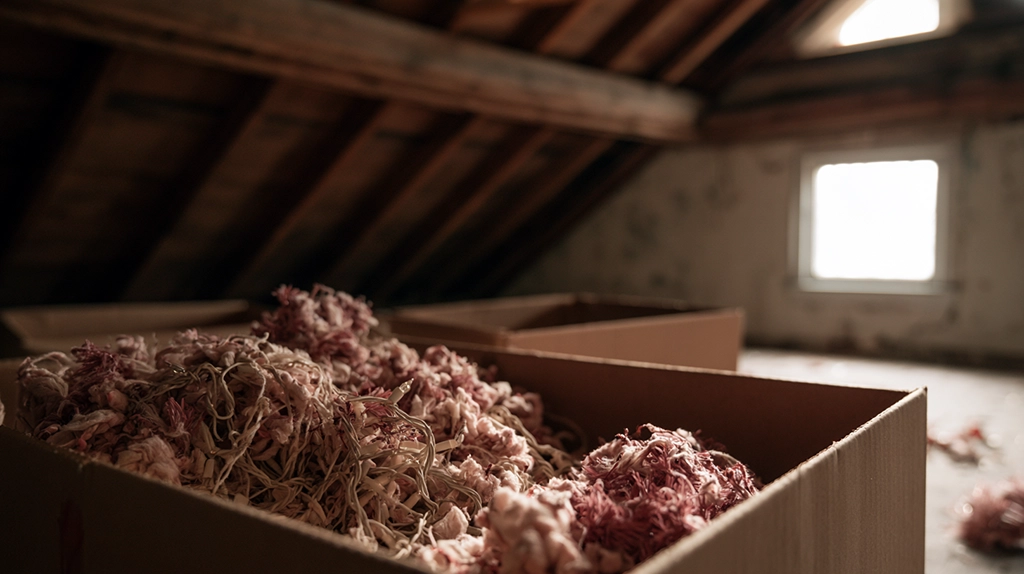
Cardboard boxes are common and convenient, but they absorb moisture from the surrounding environment. In basements, garages, and storage rooms where temperature and humidity fluctuate, cardboard can become soft, stained, and musty. It also provides an ideal growth substrate for fungi if any moisture is present inside or around the box.
Plastic bins offer better protection against external moisture, pests, and damp floors — but they introduce a different risk. If decorations are sealed inside plastic while still holding moisture, the sealed environment traps humidity and can create a consistently damp interior that accelerates mold growth. The choice of container matters, but only damp-free contents make any container effective.
For basements, garages, and storage rooms: clean plastic bins with lids are generally preferable to cardboard. For delicate fabric items stored in dry indoor closets, breathable garment bags may provide adequate protection without creating a sealed humid environment.

3. Storing Boxes Directly on Concrete Floors
Concrete can appear dry while still conducting moisture upward through capillary action. Basements and garages are also prone to temperature fluctuations that encourage condensation at floor level — particularly at the contact point between a cold concrete floor and a box or bin sitting on it.
Cardboard boxes and fabric storage bags placed directly on concrete gradually absorb this dampness from below. Over months of storage, this leads to musty odors, softened cardboard, stained fabric, and mold growth that spreads upward through the container. EPA guidance on mold prevention recommends storage practices that reduce contact with moisture-prone surfaces in damp-risk environments.
A simple lift off the floor makes a measurable difference. Shelves, pallets, raised racks, or plastic storage platforms break the direct contact between stored items and the floor. Even a few inches of elevation improves airflow underneath and eliminates the primary pathway for upward moisture transfer.
4. Mixing High-Risk Materials with Other Decorations
Not all decorations present the same mold risk. Fabric stockings, felt ornaments, paper tags, dried flowers, straw wreaths, pinecones, unfinished wood pieces, leather decorations, and cardboard packaging absorb moisture and provide organic material that supports fungal growth. Research into indoor fungal ecology identifies porous, cellulose-rich materials as the most common growth substrates for storage mold species including Aspergillus niger, Penicillium chrysogenum, and Cladosporium herbarum.
When these higher-risk items are packed tightly alongside low-risk decorations — smooth plastic ornaments, sealed light strings, metal hooks — one damp item can transfer moisture and odor to everything nearby. A slightly wet outdoor wreath or a marginally damp tree skirt can affect an entire container of otherwise dry items if sealed together for months.
Group decorations by material type before storage. Keep fabric, paper, leather, and natural-material items in the driest conditions available, and avoid sealing them with outdoor decorations unless everything has been thoroughly dried and inspected.

5. Skipping Mid-Season Storage Checks
Most mold damage in stored decorations is discovered at the moment of unpacking — when the decorating season begins and there is no time to address it. A brief mid-year inspection prevents this by catching problems while there is still time to dry, replace, or relocate items before the damage spreads.
On a dry day, open containers and check for musty odors, condensation on the interior of plastic bins, soft cardboard, stained tissue paper, or unusual dust accumulation. Also inspect the storage space itself: a leaking wall, a consistently humid basement, a hot attic without ventilation, or a poorly sealed garage door can affect all stored items regardless of how carefully they were packed.
If any item smells musty, remove it, identify whether the issue is the item, the container, or the storage environment, and allow everything to dry fully before repacking. Repacking without resolving the moisture source will produce the same result the following year.
Mold Species Associated with Long-Term Storage
Aspergillus niger, Penicillium chrysogenum, Cladosporium herbarum, and Alternaria alternata are commonly found in damp storage environments with dust and organic material. Stachybotrys chartarum is also documented in stored cellulose-rich materials — primarily associated with sustained high moisture in soaked cardboard or paper rather than typical seasonal storage conditions.
Quick Storage Checklist
- Air-dry every decoration before packing — check folds and seams
- Use plastic bins in basements, garages, and humid storage rooms
- Store bins and boxes on shelves or raised platforms, not directly on concrete
- Keep fabric, paper, leather, and natural-material items separate from outdoor decorations
- Inspect storage containers and the storage space once mid-year
- Address any musty odors, condensation, or soft materials before repacking
- Fix leaks, humidity problems, or ventilation issues in the storage area
Frequently Asked Questions
Can holiday decorations grow mold in storage?
Yes. Mold can develop when decorations are stored with residual moisture, organic materials, and limited airflow — particularly in basements, garages, attics, or poorly ventilated rooms.
Are plastic bins always better than cardboard?
In damp-prone storage areas, yes. Plastic bins resist moisture from the environment better than cardboard, but decorations must be completely dry before sealing — otherwise plastic bins trap internal humidity.
Why do stored decorations smell musty even when they looked fine when packed?
Moisture held internally in fabric, seams, or organic materials often does not manifest as a visible surface issue at the point of packing. Over months in a sealed container, that retained moisture creates conditions for microbial activity and odor development.
Can moldy decorations be cleaned?
Small areas of surface mold on hard, non-porous decorations may often be carefully cleaned and dried. Porous items — paper, fabric, dried plants, or heavily affected cardboard — are generally better replaced, as full removal of mold from absorbent materials is difficult to verify.
Where is the best place to store holiday decorations?
A dry, temperature-stable indoor closet or interior storage room is preferable to a garage, attic, or basement. If those spaces are the only options, use raised shelves, sealed bins, and desiccant packets, and inspect periodically for moisture changes.