
A Global Amphibian Crisis — And the Fungal Twist No One Saw Coming
If you listen closely in the twilight around a pond or wetland, the songs of frogs and toads are softer now than they once were. Across continents, amphibians are in deep trouble. Scientists have tallied more than 500 species teetering on the edge of extinction—a loss that signals more than silence; it signals ecosystem collapse. At the heart of this crisis is a killer no one saw coming until it was almost too late: a fungus named Batrachochytrium dendrobatidis (Bd), joined more recently by Batrachochytrium salamandrivorans (Bsal). These chytrid fungi infect amphibian skin, disrupt their ability to absorb water and salts, and can kill with devastating efficiency.
For years, the focus was straightforward: fight the fungus, stop the die-offs, save the frogs. But as it turns out, the relationship between amphibians and fungi is more nuanced—and, in some cases, unexpectedly hopeful.
The Skin as a Living, Breathing Battleground
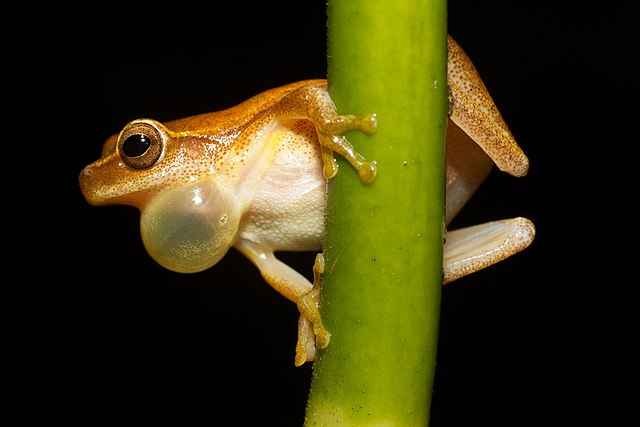
Amphibian skin is unique. Unlike most other animals, frogs and salamanders breathe and drink through their skin, making it both a lifeline and a liability. This surface isn’t bare, either. It’s coated with antimicrobial peptides, protective mucins, and a cocktail of chemicals that can deter would-be invaders. But perhaps most intriguing, amphibian skin teems with life: it is a living ecosystem, a tiny rainforest of bacteria and fungi, all crowded together on a moist, permeable stage.
For years, researchers focused on the bacteria—those that can outcompete pathogens, boost the immune response, and offer a sort of “microbial armor.” Only recently has science started shining the same light on the fungi living there. And what we’re discovering could transform amphibian conservation.

The Overlooked Mycobiome: Fungi as Friends
A new review in Symbiosis (2025) highlights that not all skin fungi are foes. In fact, native fungal species, living harmlessly or even helpfully on amphibian skin, might be an essential part of their defense. These mycobiomes vary with amphibian species, environmental conditions, even life stages—meaning a tadpole’s skin may host a different community than a grown frog. Some of these fungi, research suggests, can outcompete, inhibit, or even directly suppress deadly chytrid pathogens.
And while the science is still young, there’s speculation that skin fungi could also help modulate the amphibian’s own immune system. It’s not just a numbers game; it’s a living, responsive shield.
But here’s the catch: our knowledge is astonishingly limited. Most studies are regional or species-specific, and functional work—understanding what these fungi do, not just who they are—is still in its infancy.

Why This Research Could Change Everything
Why does this matter? Because after decades of seeing fungi only as destroyers in the amphibian story, we’re now realizing they might also be part of the solution. Instead of just attacking pathogens, what if we could nurture or even introduce protective fungi onto threatened amphibians—giving them the microbial tools they need to survive?
There are tantalizing hints from other fields. In agriculture, researchers are already using fungal (and bacterial) probiotics to help plants resist disease. In human health, our own microbiome is known to be key for everything from digestion to immune defense. Applying similar thinking to amphibian conservation could open new, gentler, and more sustainable paths forward.
The review calls for:
High-resolution sequencing of amphibian skin fungi, across species and landscapes.
Longitudinal studies to see how fungal communities change as amphibians grow and migrate.
Experimental trials—both in the lab and in the field—to see if adding “good” fungi actually helps prevent or treat chytrid infections.
Conservation strategies that go beyond eradicating “bad” fungi, focusing instead on restoring a healthy, diverse microbial ecosystem.
Imagine a future where releasing frogs into the wild isn’t just about the animal itself, but about seeding a miniature microbial community along with it.

Rethinking Conservation: Fungi as Both Threat and Ally
This new perspective requires humility—and creativity. Conservation can’t just mean “kill the bad guys.” It may mean learning to support the right allies, even if they’re microscopic and invisible. For field biologists and conservationists, that means changing not only how we diagnose and treat diseases, but how we prepare frogs and salamanders for reintroduction into the wild. Could we one day “probiotic-ize” entire wetlands? Could captive breeding programs include not just the host animal, but a handpicked microbial entourage?
It’s a grand, experimental vision—one that would have sounded like science fiction only a few years ago. A reminder that mold isn’t just a menace. It’s a builder, a protector, and sometimes, a savior. As with so many things in life, what matters isn’t just who’s present, but how they interact. The next breakthrough in conservation might not be a drug or a policy—it might be a living network of fungal friends.
In a world where amphibian populations are disappearing, hope sometimes comes from the smallest, slipperiest places. If we’re clever enough to listen, the answers might already be written on a frog’s skin.

References
Academic Sources
- Fisher, M. C., Garner, T. W. J., & Walker, S. F. (2009). Global emergence of Batrachochytrium dendrobatidis and amphibian chytridiomycosis in space, time, and host. Annual Review of Microbiology, 63, 291–310. https://doi.org/10.1146/annurev.micro.091208.073435
- Scheele, B. C., et al. (2019). Amphibian fungal panzootic causes catastrophic and ongoing loss of biodiversity. Science, 363(6434), 1459–1463. https://doi.org/10.1126/science.aav0379
- Bletz, M. C., et al. (2013). Mitigating amphibian chytridiomycosis with bioaugmentation: characteristics of effective probiotics and strategies for their selection and use. Ecology Letters, 16(6), 807–820. https://doi.org/10.1111/ele.12099
- (2025). Review article on amphibian skin mycobiomes and functional roles. Symbiosis. (Journal citation to be matched to the final published record in Symbiosis.)
Official Sources
- IUCN SSC Amphibian Specialist Group — Amphibian decline and conservation context: https://www.iucn-amphibians.org/
- World Organisation for Animal Health (WOAH) — Amphibian chytrid fungi and wildlife disease framework: https://www.woah.org/en/what-we-do/animal-health-and-welfare/wildlife/
- U.S. Geological Survey (USGS) — Amphibian disease (chytridiomycosis) background: https://www.usgs.gov/
Key Takeaways
- Please login A Global Amphibian Crisis — And the Fungal Twist No One Saw Coming If you listen closely in the twilight around a pond or wetland, the songs of frogs and toads are softer now than they once were.
- But as it turns out, the relationship between amphibians and fungi is more nuanced—and, in some cases, unexpectedly hopeful.
- And what we’re discovering could transform amphibian conservation.
- These mycobiomes vary with amphibian species, environmental conditions, even life stages—meaning a tadpole’s skin may host a different community than a grown frog.
- Because after decades of seeing fungi only as destroyers in the amphibian story, we’re now realizing they might also be part of the solution.
Frequently Asked Questions
What should you know about a Global Amphibian Crisis — And the Fungal Twist No One Saw Coming?
If you listen closely in the twilight around a pond or wetland, the songs of frogs and toads are softer now than they once were. Across continents, amphibians are in deep trouble. Scientists have tallied more than 500 species teetering on the edge of extinction—a loss that signals more than silence;
What should you know about the Skin as a Living, Breathing Battleground?
Amphibian skin is unique. Unlike most other animals, frogs and salamanders breathe and drink through their skin, making it both a lifeline and a liability. This surface isn’t bare, either. It’s coated with antimicrobial peptides, protective mucins, and a cocktail of chemicals that can deter would-be
What should you know about the Overlooked Mycobiome: Fungi as Friends?
A new review in Symbiosis (2025) highlights that not all skin fungi are foes. In fact, native fungal species, living harmlessly or even helpfully on amphibian skin, might be an essential part of their defense. These mycobiomes vary with amphibian species, environmental conditions, even lif
Why This Research Could Change Everything?
Why does this matter? Because after decades of seeing fungi only as destroyers in the amphibian story, we’re now realizing they might also be part of the solution. Instead of just attacking pathogens, what if we could nurture or even introduce protective fungi onto threatened amphibians—giving them
What should you know about rethinking Conservation: Fungi as Both Threat and Ally?
This new perspective requires humility—and creativity. Conservation can’t just mean “kill the bad guys.” It may mean learning to support the right allies, even if they’re microscopic and invisible. For field biologists and conservationists, that means changing not only how we diagnose and treat dise