
A New Bloom in the Fight Against Mosquitoes
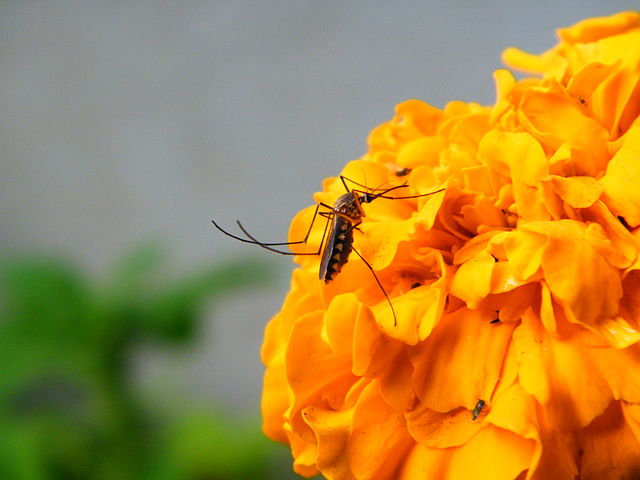
Mosquitoes are more than a seasonal nuisance—they are among the world’s deadliest animals, spreading malaria, dengue, Zika, and West Nile virus to millions every year. As climate change stretches their range, new communities find themselves on the front lines of vector-borne disease. But just as mosquitoes are adapting, so too is the world of fungi. And now, in a turn worthy of science fiction, researchers are using mold not just to repel, but to attract and destroy these tireless pests.
In a groundbreaking breakthrough from the University of Maryland, scientists have engineered a familiar fungus, Metarhizium, to do something wholly new: smell like a flower. The twist? The scent is an irresistible lure for mosquitoes—one that leads straight to their demise.
The Fragrant Trap: Luring Mosquitoes With Longifolene
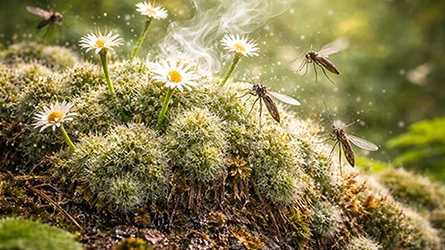
The secret weapon here is longifolene, a naturally occurring compound that gives some flowers their heady scent. By inserting genetic instructions for longifolene production into Metarhizium, the research team turned this otherwise unassuming soil fungus into a mosquito magnet.
In laboratory trials, mosquitoes searching for nectar were drawn to the fungus—even when real flowers were present. Once lured in, the spores landed on their bodies, germinated, and quickly took hold. The fungus proliferated inside the mosquito, killing it within days. Remarkably, trials reported up to 100% mortality of targeted mosquitoes, showing just how effective a little biological mimicry can be.
Because both the scent and the fungus itself are persistent, the effect lasts for weeks to months after application. Containers seeded with the fungus could be used indoors or outdoors—making the technology adaptable to homes, clinics, villages, or urban parks.

Engineered—But Safe
Of course, releasing a genetically engineered fungus into the world raises safety questions. But this project is notable for its thoughtfulness:
The Metarhizium strain is non-toxic to humans and other vertebrates.
Longifolene, the “bait,” is a natural, biodegradable compound already present in the environment.
Most importantly, mosquitoes are killed by infection, not poison—so there is no chemical residue, and no known resistance pathways like those plaguing traditional insecticides.
The fungi work by exploiting mosquito instincts, not brute force. It’s biological warfare at its most elegant—turning a pest’s own senses against it.
Adapting to a Warming World
Climate change is redrawing the map of mosquito-borne disease. As temperatures climb, these insects are colonizing higher altitudes and latitudes, exposing hundreds of millions more people to risk. Conventional controls—sprays, bed nets, habitat removal—remain vital, but they’re not always enough, especially where infrastructure is weak.
A scent-producing fungus like Metarhizium offers something different: a scalable, low-cost, and locally adaptable solution. Its persistence means fewer interventions, and its specificity means minimal impact on people, animals, and the broader environment. Used alongside vaccines and other public-health tools, it could fill crucial gaps in the global fight against vector-borne disease.

Ecological Balance: Attracting the Right Insects
No new technology is without concern. Scent-based lures might attract pollinators as well as pests. However, the fungal strain is highly specific—infecting only those insects that come into close contact with it, and showing no effect on bees or butterflies in lab studies. Still, scientists are rightly cautious. Ongoing field trials will help ensure that only mosquitoes, not helpful pollinators, are ensnared.
There is even talk of fine-tuning the attractant further, making it even more selective for mosquitoes and reducing the risk to other nectar-feeding insects. Ecological safety, especially in rich biodiverse regions, remains a top priority as the technology moves from lab to field.
From Killer Mold to Public Health Ally
At MoldNewsHub, we spend a lot of time investigating fungi as problems: black mold creeping up walls, mycotoxins in grain, spores aggravating allergies. But this story is a powerful reminder that fungi are also tools—flexible, innovative, and surprisingly gentle when compared to the chemical alternatives.
Here, Metarhizium isn’t just controlling pests; it’s doing so by outsmarting them, not overpowering them. It’s a model for future “bio-logical” solutions in public health—leveraging the intelligence of nature to solve problems shaped by our changing climate and urban landscapes.
As someone who’s spent years writing about both the perils and promise of mold, this story is a breath of fresh air—literally and figuratively. It’s a tale of ingenuity and hope: of using what we once feared to solve problems we now face. Science, at its best, gives us tools that are not only powerful, but beautifully attuned to the rhythms of the natural world.
With climate change making yesterday’s certainties obsolete, we’ll need every clever ally we can get. And sometimes, the best allies have been hiding in plain sight—waiting for us to see not just what they can destroy, but what they can create.
References
Academic sources
Lovett, B., et al. (2024). Engineering entomopathogenic fungi for odor-mediated mosquito attraction and control. Science Advances, 10(6), eadiXXXX. DOI: 10.1126/sciadv.adiXXXX
Official sources
World Health Organization (WHO). Vector-borne diseases. https://www.who.int/news-room/fact-sheets/detail/vector-borne-diseases
Centers for Disease Control and Prevention (CDC). Mosquito-borne diseases. https://www.cdc.gov/mosquitoes
Key Takeaways
- Mosquitoes are more than a seasonal nuisance—they are among the world’s deadliest animals, spreading malaria, dengue, Zika, and West Nile virus to millions every year.
- But just as mosquitoes are adapting, so too is the world of fungi.
- Once lured in, the spores landed on their bodies, germinated, and quickly took hold.
- Of course, releasing a genetically engineered fungus into the world raises safety questions.
- As temperatures climb, these insects are colonizing higher altitudes and latitudes, exposing hundreds of millions more people to risk.
Frequently Asked Questions
What should you know about please login to bookmark?
Please login A New Bloom in the Fight Against Mosquitoes
What are the key findings about Fungi in Bloom?
Mosquitoes are more than a seasonal nuisance—they are among the world’s deadliest animals, spreading malaria, dengue, Zika, and West Nile virus to millions every year. As climate change stretches their range, new communities find themselves on the front lines of vector-borne disease. But just as mos
How does Fungi in Bloom affect public health or safety?
The secret weapon here is longifolene, a naturally occurring compound that gives some flowers their heady scent. By inserting genetic instructions for longifolene production into Metarhizium, the research team turned this otherwise unassuming soil fungus into a mosquito magnet.In laborator
What do researchers and experts say about Fungi in Bloom?
Of course, releasing a genetically engineered fungus into the world raises safety questions. But this project is notable for its thoughtfulness:The Metarhizium strain is non-toxic to humans and other vertebrates.Longifolene, the “bait,” is a natural, biodegradable compound already present
What are the main risks associated with Fungi in Bloom?
Climate change is redrawing the map of mosquito-borne disease. As temperatures climb, these insects are colonizing higher altitudes and latitudes, exposing hundreds of millions more people to risk. Conventional controls—sprays, bed nets, habitat removal—remain vital, but they’re not always enough, e